

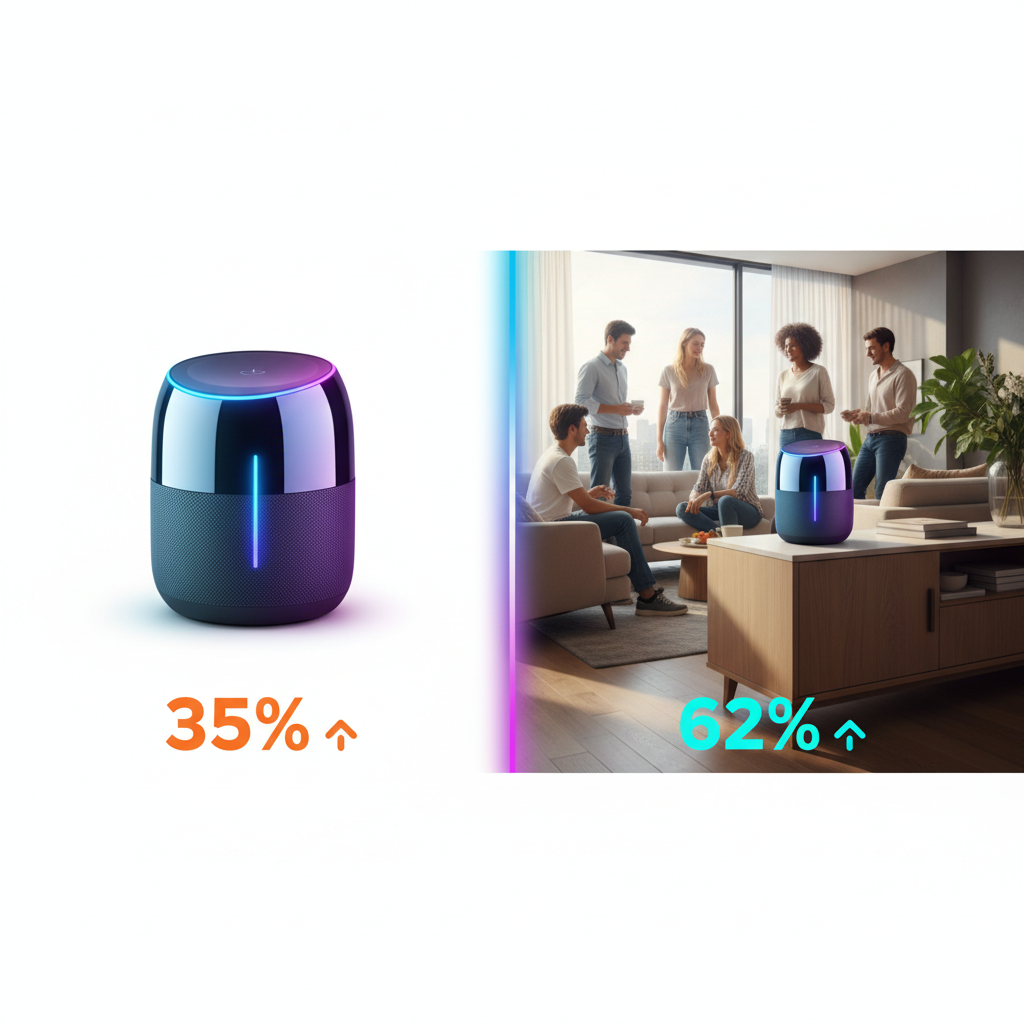
AI Product Photo A/B Testing Guide Strategy Guide
In today’s competitive digital marketplace, understanding AI product photo A/B testing guide principles is crucial for optimizing online sales. This process involves comparing two or more versions of AI-generated product images to determine which performs best in terms of key metrics like click-through rates and conversion rates. By systematically testing different visual elements, businesses can refine their imagery to resonate more effectively with target audiences, ultimately driving significant improvements in their ecommerce performance.
Why A/B Test AI-Generated Product Images for Conversions?
A/B testing AI-generated product images is essential for understanding customer preferences and maximizing sales performance. It allows businesses to move beyond assumptions, providing data-driven insights into which visual elements truly resonate with their audience and drive higher conversion rates. This methodical approach ensures that every pixel works towards attracting and converting potential buyers.
AI-generated product images offer unparalleled flexibility and speed in creating diverse visual assets. However, the sheer volume of options can be overwhelming without a clear strategy. A/B testing provides that strategy, allowing you to systematically evaluate different styles, backgrounds, models, and product angles. For instance, a minimalist background might perform better for one product, while a vibrant lifestyle shot could be more effective for another. Without testing, these insights remain undiscovered, leaving potential conversions on the table.
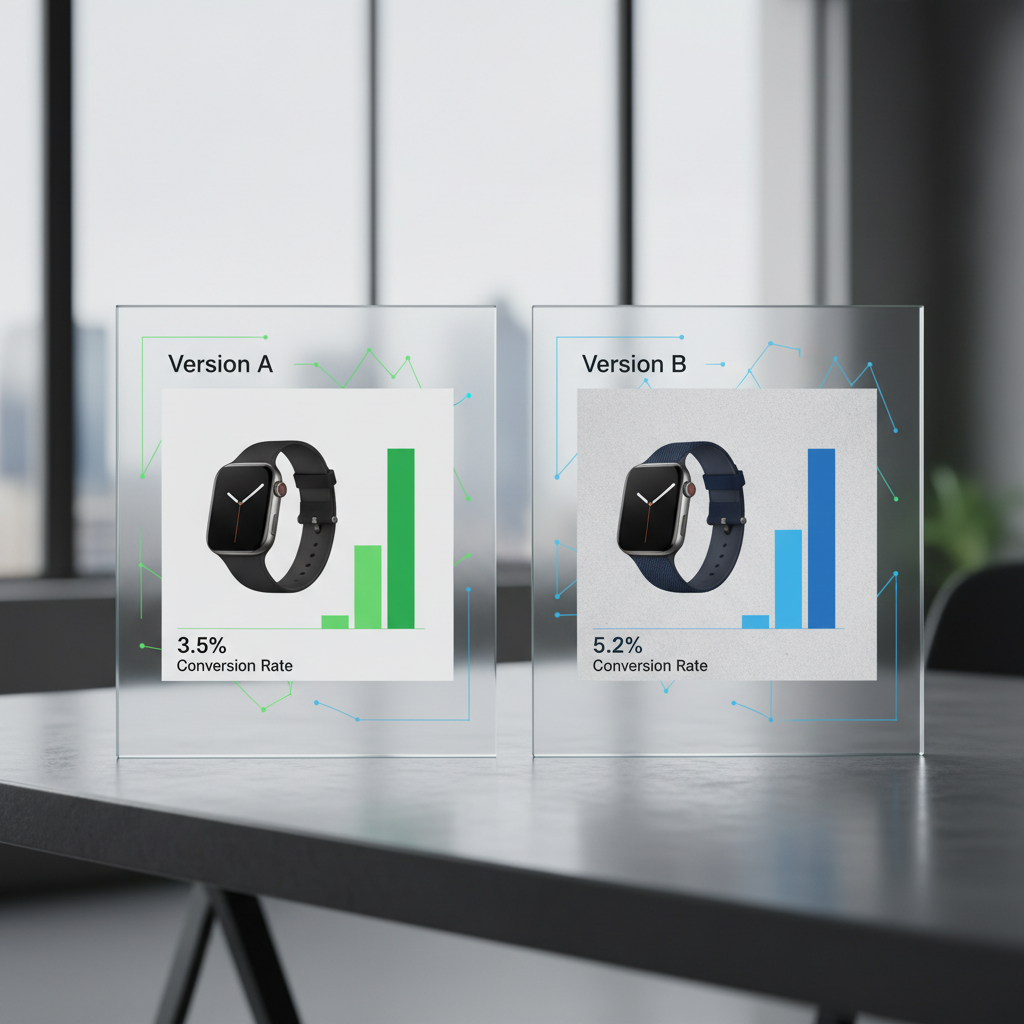
Furthermore, the cost-effectiveness and scalability of AI image generation make A/B testing an even more attractive proposition. Traditional photography can be expensive and time-consuming, limiting the scope of experimentation. With AI, you can generate numerous variations quickly and affordably, enabling more extensive and frequent testing cycles. This agility is critical in fast-paced ecommerce environments where consumer trends and preferences can shift rapidly. Regularly testing your AI-generated visuals ensures your product listings remain fresh, engaging, and optimized for peak performance. It’s a proactive approach to continuous improvement, ensuring your visual content consistently drives sales.
Understanding the Impact of Visuals on Buyer Behavior
Visuals are often the first point of contact between a customer and a product online. High-quality, appealing images build trust and convey product value instantly. Research consistently shows that compelling product photography significantly influences purchase decisions. When customers cannot physically interact with a product, images become their primary source of information and emotional connection.
Poor or unoptimized images can deter potential buyers, leading to higher bounce rates and abandoned carts. Conversely, images that effectively highlight product features, benefits, and emotional appeal can significantly boost engagement and conversion. A/B testing helps pinpoint these effective visual cues. It allows you to understand precisely what aspects of an image—be it lighting, composition, or the presence of a human element—contribute most to a positive customer response. This deep understanding is invaluable for refining your overall visual strategy.
Leveraging AI for Scalable Image Optimization
AI tools revolutionize the creation and optimization of product imagery. They can generate realistic images from text prompts, replace backgrounds, change product variations, and even create entirely new scenes. This capability dramatically reduces the time and resources traditionally required for professional photoshoots. The scalability of AI means you can produce hundreds of image variations in a fraction of the time.
This efficiency directly translates into more robust A/B testing opportunities. Instead of testing just a few options, you can experiment with a wider array of visual hypotheses. For example, you can test different color palettes for a product, various lifestyle scenarios, or even subtle changes in product placement. This extensive experimentation allows for finer tuning of your visual assets, leading to more granular insights and ultimately, higher conversion rates. AI empowers businesses to iterate quickly and continuously improve their visual content.
Setting Up Your AI Product Photo Testing Ideas for Shopify and Amazon
To effectively how to test AI-generated product images for conversions on platforms like Shopify and Amazon, begin by identifying clear objectives and selecting appropriate testing tools. Establishing a structured approach ensures that your experiments yield actionable insights, directly impacting your sales performance. This foundational step is critical for any successful A/B testing initiative.
Platforms like Shopify and Amazon have specific requirements and limitations for product images, which must be considered during testing. For Shopify, apps like VWO, Optimizely, or even built-in theme customization options can facilitate image A/B tests. On Amazon, direct A/B testing of product images is primarily available through the “Manage Your Experiments” tool for Brand Registered sellers, which allows testing of A+ Content and main product images. Understanding these platform-specific tools is vital. You might also consider using third-party tools that integrate with both platforms for a more unified testing approach. The key is to ensure your chosen method can accurately track and attribute conversions to specific image variations.
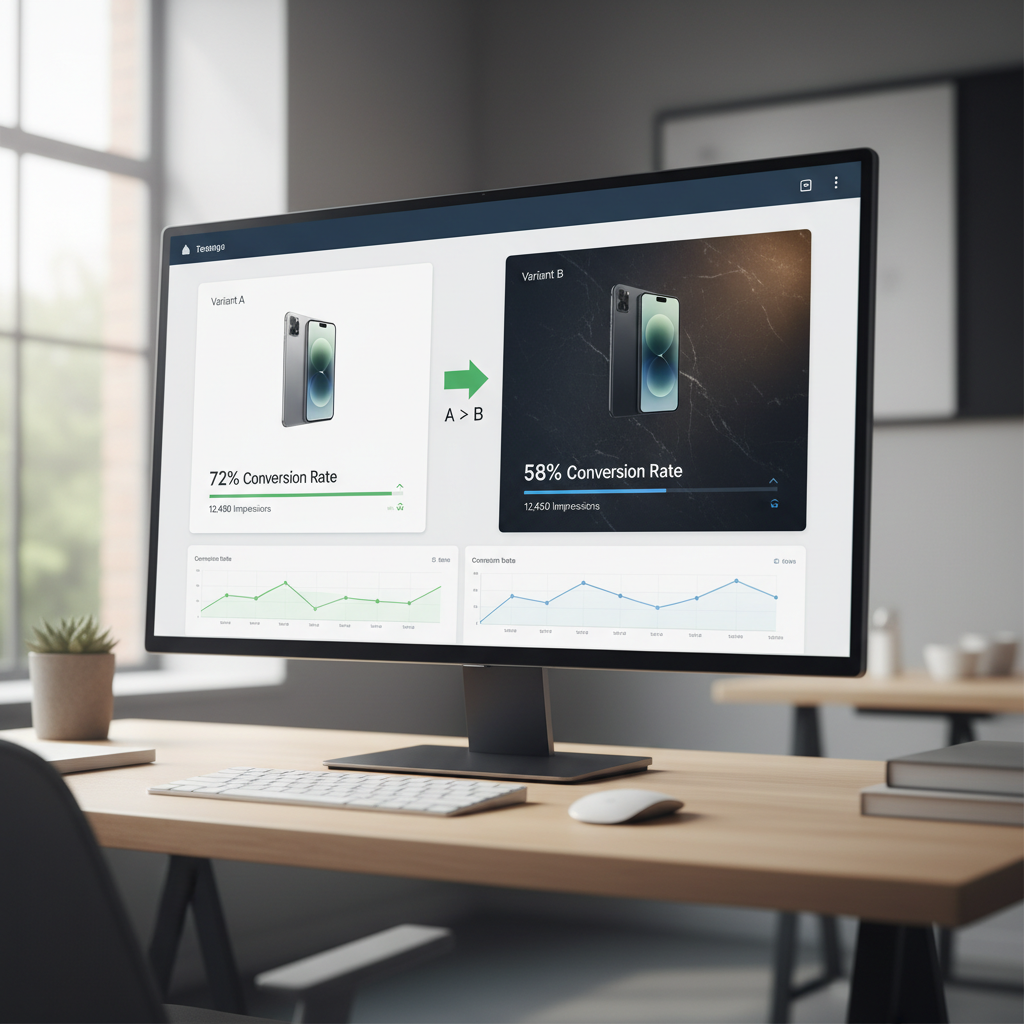
Before launching any test, define your success metrics. Are you aiming for higher click-through rates from search results, increased add-to-cart rates, or ultimately, more completed purchases? Clearly outlining these goals will guide your test design and analysis. Furthermore, ensure you have sufficient traffic to achieve statistical significance within a reasonable timeframe. Testing with too little traffic can lead to inconclusive results, wasting valuable time and resources.
Choosing the Right Testing Platform for Ecommerce Images
Selecting the appropriate A/B testing platform is crucial for seamless execution. For Shopify stores, numerous apps in the app store offer robust A/B testing functionalities. These often integrate directly with your product pages, allowing for easy swapping of image variations and tracking of user behavior. Look for features like visual editors, detailed analytics, and segmentation capabilities.
Amazon Brand Registered sellers have access to the “Manage Your Experiments” tool, which is tailor-made for testing various content elements, including main product images. This native tool provides reliable data directly within the Amazon ecosystem. For those without Brand Registry or seeking more advanced features, external tools like Splitly or PickFu can offer additional testing options, including audience polling and more granular data analysis. The best platform will depend on your specific needs, budget, and technical expertise.
Developing a Hypothesis for AI Image Variations
Every A/B test should start with a clear hypothesis. This is a testable statement predicting the outcome of your experiment. For example, “Changing the AI-generated main product image from a white background to a lifestyle background will increase the conversion rate by 5%.” A well-defined hypothesis guides your image creation and data analysis.
Consider different attributes of your AI-generated images that you want to test. This could include:
* Backgrounds: White, colored, contextual, abstract.
* Models: Diverse demographics, expressions, poses.
* Product Angles: Front, side, top, detailed close-ups.
* Composition: Rule of thirds, centered, dynamic.
* Text Overlays: Infographics, benefit highlights.
* Color Schemes: Warm vs. cool tones, vibrant vs. muted.
By forming specific hypotheses around these elements, you can create targeted AI image variations and accurately measure their impact. This structured approach ensures your testing efforts are focused and yield meaningful insights into what drives customer engagement and purchases.
Effective Strategies to A/B Test Product Main Image, Lifestyle, and Infographic
To effectively A/B test product main image lifestyle image and infographic variations, focus on isolating single variables to understand their individual impact on conversion rates. This methodical approach ensures that you can accurately attribute performance changes to specific image types, leading to optimized product listings. Each image type serves a distinct purpose, and testing them strategically is key.
The main product image is often the first visual a customer sees, making its impact paramount. Lifestyle images help customers visualize themselves using the product, creating an emotional connection. Infographic images communicate key features and benefits clearly and concisely. By testing these distinct types, you gain a comprehensive understanding of what resonates most with your audience at different stages of their decision-making process. Remember to run tests long enough to gather statistically significant data, avoiding premature conclusions based on small sample sizes.
Optimizing the Product Main Image for First Impressions
The main product image is your storefront window online; it needs to be immediately captivating and informative. When testing AI-generated main images, consider variations that focus on clarity, product prominence, and professional aesthetics.
Here are some ideas for main image A/B tests:
* Background variations: Test a pure white background against a subtle, contextual background.
* Product angle: Compare a straight-on shot with a slightly angled view that shows more dimension.
* Zoom level: Experiment with a full product view versus a slightly zoomed-in shot highlighting a key feature.
* Lighting: Test images with soft, natural lighting against those with more dramatic, studio-like illumination.
The goal is to find the image that best showcases the product itself, making it instantly recognizable and appealing to potential buyers. A strong main image can significantly improve click-through rates from search results pages.
Leveraging Lifestyle Images to Build Emotional Connection
Lifestyle images are powerful tools for helping customers envision themselves using your product. They create a narrative and emotional connection that static product shots often miss. When A/B testing AI-generated lifestyle images, focus on scenarios that resonate with your target audience.
Consider these testing points for lifestyle images:
* User demographics: Test images featuring different age groups, ethnicities, or genders interacting with the product.
* Environmental context: Compare the product in an indoor setting versus an outdoor setting, or a home environment versus a professional one.
* Emotional tone: Experiment with images conveying happiness, relaxation, productivity, or adventure.
* Prop inclusion: Test images with minimal props against those with relevant, complementary items.
The aim is to discover which lifestyle scenarios most effectively communicate the product’s benefits and create a desire for ownership. AI can generate a vast array of these scenarios, making extensive testing feasible.
Enhancing Understanding with Infographic Product Images
Infographic images are excellent for communicating complex information, key features, and benefits in an easily digestible visual format. They can clarify product dimensions, highlight unique selling propositions, or explain how a product works.
When testing AI-generated infographic images, focus on clarity, conciseness, and visual appeal:
* Text placement and font: Experiment with different layouts, font styles, and sizes for readability.
* Iconography: Test various icon sets or visual representations of features.
* Color schemes: Compare infographics using your brand colors against those with a more neutral palette.
* Information density: Test an infographic with fewer, bolder points against one with more detailed explanations.
An effective infographic can significantly reduce customer questions and overcome purchase objections, leading to higher conversion rates. Ensure the AI-generated infographics are clear and not overly cluttered.
Designing Your Ecommerce Image Testing Checklist for Better Conversion
Creating an ecommerce image testing checklist for better conversion is fundamental for a systematic and effective A/B testing process. A well-structured checklist ensures that no critical steps are missed, from hypothesis generation to data analysis, thereby maximizing the chances of discovering impactful optimizations. This systematic approach is vital for consistent improvement.
Before initiating any test, ensure all prerequisites are met, and every step is documented. This includes defining your target audience, setting up tracking, and preparing your image variations. A comprehensive checklist acts as a roadmap, guiding you through each phase of the A/B testing cycle and helping to maintain consistency across all experiments. Without such a guide, tests can become disorganized, leading to unreliable results and wasted effort.
| Checklist Item | Description | Status |
|---|---|---|
| Define Clear Hypothesis | What specific change are you testing, and what outcome do you expect? | ✓ |
| Isolate Variables | Test only one significant change per image variation (e.g., background color, model expression). | ✓ |
| Prepare AI Image Variations | Generate all necessary AI product photo versions (A, B, C, etc.). | ✓ |
| Set Up Tracking | Ensure analytics tools are correctly configured to measure conversions for each variation. | ✓ |
| Determine Sample Size & Duration | Calculate required traffic for statistical significance and set test length. | ✓ |
| Launch Test | Implement the A/B test on your chosen platform (Shopify, Amazon, etc.). | ✓ |
| Monitor Performance | Regularly check test progress without making premature judgments. | ✓ |
| Analyze Results | Evaluate data for statistical significance and identify winning variations. | ✓ |
| Implement Winning Variation | Apply the best-performing image(s) to your live product pages. | ✓ |
| Document Findings | Record what was tested, results, and lessons learned for future tests. | ✓ |
Pre-Test Preparation: Ensuring a Solid Foundation
Thorough preparation is the bedrock of any successful A/B test. Before you even generate your first AI image variation, you need to lay the groundwork. This includes clearly defining your test’s objective, such as increasing add-to-cart rates or improving conversion from product page views. Once the objective is clear, identify the specific element of the image you want to change—this is your variable.
Key preparation steps include:
* Audience Segmentation: Decide if you’re testing across your entire audience or a specific segment.
* Baseline Data: Gather current performance metrics for your existing images to establish a benchmark.
* Tool Configuration: Ensure your A/B testing software or platform is correctly integrated and tracking the right metrics.
* Quality Assurance: Double-check that all AI-generated image variations are high-resolution, correctly sized, and free of any visual glitches.
Neglecting these preparatory steps can lead to flawed tests and unreliable data, undermining your optimization efforts.
During Test Execution: Monitoring and Avoiding Pitfalls
Once your A/B test is live, careful monitoring is crucial to ensure its integrity and prevent common pitfalls. Resist the urge to prematurely end a test, even if one variation appears to be winning early on. Statistical significance requires a sufficient sample size and duration. Ending a test too soon can lead to false positives and suboptimal decisions.
Important considerations during execution:
* Traffic Allocation: Ensure traffic is evenly distributed between your control and variations.
* External Factors: Be aware of any external events (e.g., promotions, holidays, news) that could skew your results.
* Technical Glitches: Regularly check for any technical issues that might prevent images from loading correctly or tracking data accurately.
* Patience: Allow the test to run its full course as determined by your sample size calculation, typically several days to a few weeks, to account for daily and weekly user behavior patterns.
Consistent monitoring helps maintain the validity of your test and ensures you collect reliable data for analysis.
Analyzing Results and Scaling Success from AI Photo A/B Tests
Analyzing results from AI product photo testing ideas for Shopify and Amazon requires a keen eye for statistical significance and a clear understanding of your key performance indicators. It’s not enough to simply see which image performed better; you must confirm that the difference is statistically reliable and not just due to random chance. This rigorous analysis ensures that your decisions are data-backed and lead to genuine improvements.
Once a winning variation is identified, the next crucial step is to understand why it performed better. This deeper dive into customer behavior and visual psychology allows you to extrapolate learnings and apply them to future image generation and testing strategies. Scaling success involves not just implementing the winning image but also incorporating the insights gained into your broader visual content strategy across all products and platforms. This iterative process of testing, analyzing, and scaling is the cornerstone of continuous optimization.
Interpreting Statistical Significance in Image Tests
Statistical significance is a measure of how likely your results are due to chance. In A/B testing, it tells you if the observed difference in conversion rates between your image variations is real or just random noise. Most A/B testing tools will provide a confidence level, often expressed as a percentage (e.g., 95% or 99%).
A 95% confidence level means there’s a 5% chance the observed difference is due to random factors. Generally, a confidence level of 90-95% is considered acceptable for most ecommerce A/B tests. If your test results are not statistically significant, it means you cannot confidently say that one image is truly better than the other. In such cases, you might need to run the test longer, increase traffic, or refine your hypothesis for future tests. Understanding this concept prevents you from making decisions based on misleading data.
Extrapolating Insights for Future AI Image Generation
The true value of A/B testing lies beyond simply identifying a winning image. It’s about understanding the underlying reasons for its success. Did a particular background color resonate more? Did a specific model pose convey more trust? Was the infographic clearer? By dissecting the winning elements, you can create a set of best practices for future AI image generation.
For example, if lifestyle images consistently outperform studio shots for a particular product category, you can instruct your AI image generation tools to prioritize creating more lifestyle scenes. If images featuring diverse models show higher engagement, this insight can guide your prompt engineering. These learnings allow you to refine your AI prompts and parameters, leading to the creation of more effective images from the outset, reducing the need for extensive re-testing of basic elements. This strategic application of insights streamlines your visual content pipeline.
Scaling Winning Strategies Across Your Product Catalog
Once you have identified a winning image strategy, the next step is to scale that success across your entire product catalog. This doesn’t mean blindly applying the exact same image to every product. Instead, it means applying the principles learned from your A/B tests.
For instance, if you found that images with clear benefit-driven text overlays convert better, you can implement a similar infographic style across relevant products. If a certain type of lifestyle scenario proved effective, you can generate similar AI-powered scenes for other products that share a similar target audience or use case. This systematic application of proven strategies ensures that your entire product catalog benefits from your testing efforts, leading to a cumulative positive impact on your overall conversion rates and sales. Continuously monitor the performance of these scaled changes and be prepared to iterate further.
Common Pitfalls and Best Practices in AI Product Image Optimization
Navigating the landscape of AI product photo A/B testing guide effectively requires awareness of common pitfalls and adherence to established best practices. Avoiding these mistakes ensures that your testing efforts are efficient, yield reliable data, and ultimately lead to meaningful improvements in conversion rates. A structured approach is key to success.
Many businesses fall into traps like testing too many variables at once or ending tests prematurely. By understanding and implementing best practices, you can mitigate these risks, ensuring your A/B tests are robust and your optimization strategies are sound. This involves everything from proper test setup to meticulous data analysis and strategic implementation of winning variations.
Avoiding Common A/B Testing Mistakes with AI Images
Several common errors can undermine the effectiveness of your AI product image A/B tests:
1. Testing Too Many Variables: Changing multiple elements (e.g., background, model, product angle) between variations makes it impossible to know which specific change caused the performance difference. Always isolate a single variable per test.
2. Insufficient Traffic/Duration: Ending a test before achieving statistical significance can lead to false positives. Ensure you run tests long enough to gather enough data to confidently declare a winner.
3. Ignoring External Factors: Seasonal trends, promotions, or competitor activities can skew results. Be mindful of these external influences when interpreting data.
4. Poor Image Quality: Even AI-generated images can have flaws. Ensure all variations are high-resolution, visually appealing, and free of artifacts. A bad image, regardless of its content, will perform poorly.
5. Lack of Clear Hypothesis: Without a specific prediction, your tests become aimless. Always start with a testable hypothesis to guide your efforts.
By consciously avoiding these pitfalls, you can ensure your AI image A/B tests provide clear, actionable insights.
Implementing Best Practices for Reliable Test Results
Adhering to best practices ensures your AI product photo A/B tests are robust and deliver trustworthy results:
* One Variable at a Time: This is paramount. If you want to test background color and model pose, run two separate tests.
* Clear Hypothesis: Define what you expect to happen and why. This focuses your test and helps in analysis.
* Statistical Significance First: Never make decisions based on preliminary data. Wait for your test to reach statistical significance.
* Segment Your Audience: If applicable, test different image variations on different customer segments (e.g., new vs. returning customers) to uncover nuanced preferences.
* Iterate and Learn: A/B testing is an ongoing process. Use the insights from one test to inform the next. Document your findings to build a knowledge base.
* Consider the User Journey: Think about where the image appears (search results, product page, ad) and optimize it for that specific context.
* Mobile-First Design: Ensure your AI-generated images look great and load quickly on mobile devices, as a significant portion of ecommerce traffic comes from mobile.
These best practices form a solid framework for effective and reliable AI product image optimization.
Integrating AI Image Generation into Your Testing Workflow
Seamlessly integrating AI image generation into your A/B testing workflow maximizes efficiency and scalability. Instead of viewing AI as a separate tool, consider it an integral part of your content creation and optimization loop.
Steps for integration:
1. Automated Variation Creation: Use AI tools to quickly generate multiple versions of an image based on specific prompts derived from your hypotheses.
2. Batch Processing: Leverage AI’s ability to create images in bulk, allowing you to prepare numerous test variations simultaneously.
3. Dynamic Image Serving: Explore platforms that can dynamically serve AI-generated images based on test parameters, simplifying the implementation phase.
4. Feedback Loop: Use the results from your A/B tests to refine your AI prompts and models. For example, if images with brighter lighting convert better, adjust your AI prompts to favor brighter scenes.
This integration creates a powerful, self-improving system where AI generates possibilities, A/B testing validates them, and the insights feed back into AI, leading to a continuous cycle of optimization.
What is AI product photo A/B testing?
AI product photo A/B testing involves comparing two or more AI-generated versions of a product image to determine which one performs better against specific metrics, such as conversion rates or click-through rates. This allows businesses to make data-driven decisions about their visual content. It helps optimize product listings for maximum engagement and sales.
How do I test AI-generated product images for conversions on Shopify?
On Shopify, you can test AI-generated product images using A/B testing apps from the Shopify App Store, such as VWO or Optimizely. These tools allow you to create different image variations for your product pages and track their performance. You can monitor metrics like add-to-cart rates and completed purchases to identify the winning image.
Can I A/B test product images on Amazon?
Yes, Amazon Brand Registered sellers can A/B test product images using the “Manage Your Experiments” tool within Seller Central. This feature allows you to test main product images and A+ Content variations. For non-Brand Registered sellers, third-party tools or audience polling services can provide similar insights into image effectiveness.
What types of AI product images should I A/B test?
You should A/B test various types of AI-generated product images, including main product images (e.g., white background vs. colored), lifestyle images (showing the product in use), and infographic images (highlighting features or benefits). Testing these different formats helps you understand what resonates best with your audience.
How long should an AI product image A/B test run?
The duration of an AI product image A/B test depends on your traffic volume and the magnitude of the expected conversion rate difference. Generally, tests should run for at least one to two full sales cycles (e.g., a week or two) to account for daily and weekly variations in user behavior and to achieve statistical significance. Avoid ending tests prematurely.
What is a good conversion rate for product images?
A “good” conversion rate for product images varies significantly by industry, product, and traffic source. Instead of aiming for an absolute number, focus on improving your current conversion rate through continuous A/B testing. Even small percentage gains can lead to substantial revenue increases over time. Benchmarking against your own historical performance is key.
What metrics are important for ecommerce image testing?
Key metrics for ecommerce image testing include click-through rate (CTR) from search results, add-to-cart rate, conversion rate (purchases), time on page, and bounce rate. Monitoring these metrics provides a holistic view of how different AI-generated images impact user engagement and purchasing decisions throughout the customer journey.
Optimizing your online store’s visual appeal is no longer a luxury but a necessity for ecommerce success. By embracing a robust AI product photo A/B testing guide, businesses can unlock significant conversion rate improvements and gain a competitive edge. The iterative process of generating AI images, testing their performance, and analyzing the data provides invaluable insights into customer preferences.
Key takeaways for effective AI product image testing:
* Always start with a clear hypothesis and isolate variables for each test.
* Leverage AI’s capability to generate diverse image variations quickly and cost-effectively.
* Utilize platform-specific testing tools on Shopify and Amazon, or integrate third-party solutions.
* Focus on statistical significance to ensure your results are reliable and actionable.
* Continuously learn from your tests, applying insights to refine future AI image generation prompts.
This systematic approach transforms guesswork into data-driven strategy, ensuring your product visuals are always working their hardest to convert browsers into buyers. Start testing your AI-generated product images today to discover their full potential.