


AI For Product Image SEO Alt Text And Filename Optimization 2026
In the competitive digital marketplace, leveraging AI for product image SEO alt text and filename optimization is no longer a luxury but a necessity. Artificial intelligence tools are revolutionizing how e-commerce businesses approach visual content, transforming raw images into powerful SEO assets. This guide explores how AI can automate and enhance the critical elements of product image optimization, from crafting descriptive alt text to structuring filenames, ultimately boosting visibility in search engine results. Understanding these AI-driven strategies is crucial for any business aiming to dominate visual search and improve overall online presence.
AI-Powered Alt Text Generation for Enhanced Accessibility and SEO
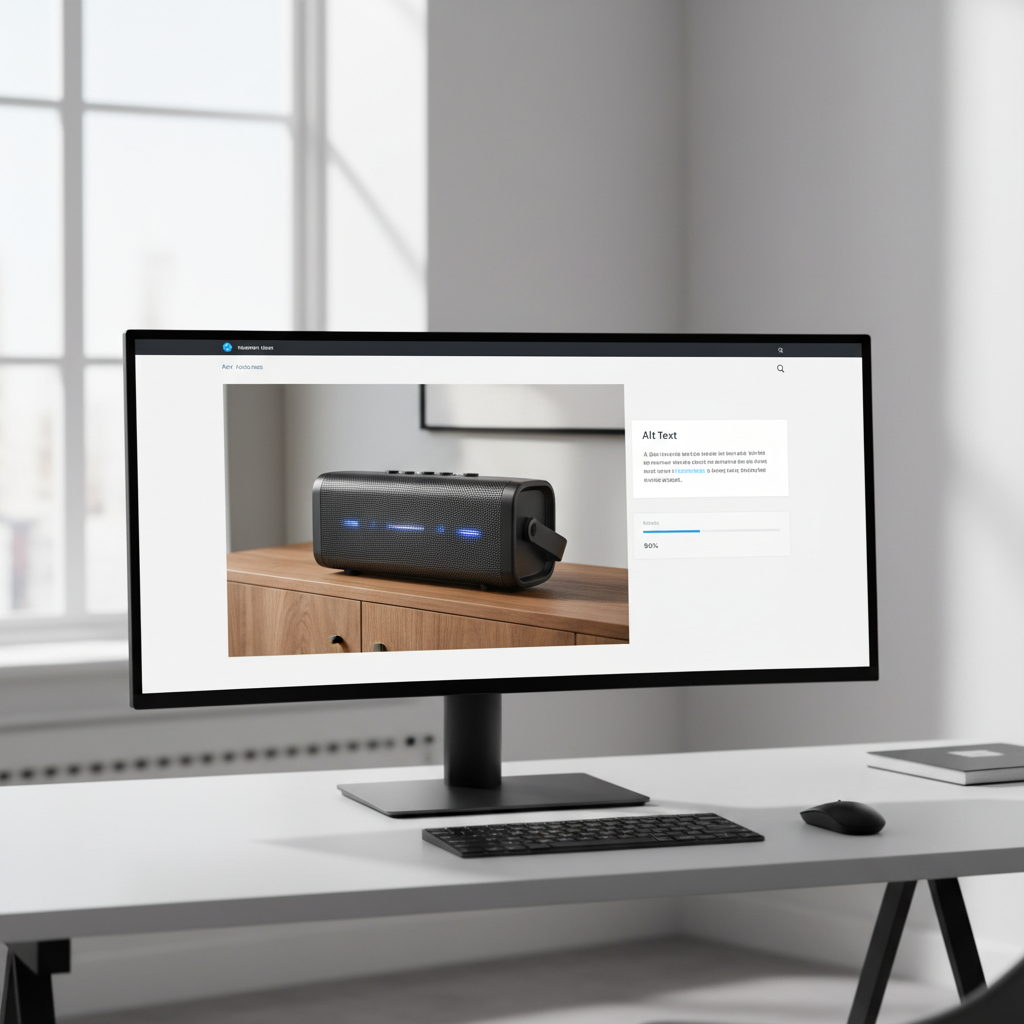
AI-powered tools can automatically generate highly descriptive and keyword-rich alt text for product images, significantly improving both accessibility for visually impaired users and search engine understanding of image content. Alt text, or alternative text, is a crucial HTML attribute that describes an image for those who cannot see it, including screen readers and search engine crawlers. It remains the single most important image SEO ranking factor.
What are the benefits of AI-generated alt text for product images?
AI-generated alt text offers numerous benefits, primarily by scaling the creation of high-quality descriptions across vast product catalogs. Manually writing alt text for thousands of products is time-consuming and prone to inconsistencies. AI tools can process images rapidly, extracting key visual elements and generating relevant, concise descriptions. This automation ensures that every product image has optimized alt text, which is vital for search engine discoverability and user experience. Furthermore, well-crafted alt text enhances accessibility, making your e-commerce site usable for individuals with visual impairments.
How does AI analyze product images to create effective alt text?
AI systems leverage advanced computer vision and natural language processing (NLP) to analyze product images and generate alt text. These systems identify objects, colors, textures, and even the context within an image. For instance, an AI can distinguish between a “red shirt” and a “men’s slim-fit crimson polo shirt with three buttons,” providing a much richer description. Some tools can also incorporate product data, such as product names, brands, and descriptions, to create more specific and keyword-aware alt text. This deep contextual understanding allows AI to produce alt text that is not only descriptive but also semantically relevant to potential search queries.
Best practices for reviewing and refining AI-suggested alt text
While AI is powerful, human oversight remains essential for optimal results. After AI generates alt text, it is crucial to review and refine it to ensure accuracy, natural language, and keyword relevance without stuffing. Aim for descriptions that are specific, descriptive, and concise, typically under 125 characters, as some screen readers may cut off longer text.
Here’s a checklist for refining AI-generated alt text:
* Accuracy: Does the alt text precisely describe what is in the image?
* Conciseness: Is it brief yet informative?
* Keyword Integration: Are relevant keywords included naturally, not forced?
* Contextual Relevance: Does it align with the surrounding page content?
* Uniqueness: Avoid generic phrases; make each alt text distinct for each product variant if applicable.
Tools like AltText.ai, Popupsmart, and Ahrefs’ Image Alt Text Generator offer varying degrees of customization and bulk editing capabilities, making the review process more efficient. Properly optimized alt text is a cornerstone of how to optimize AI product photos for visual search Google Lens, as it provides critical textual context that visual search algorithms rely on.
Optimizing Filenames with AI for Improved Google Image Ranking Factors
AI can optimize product image filenames by incorporating relevant keywords and product identifiers, which helps search engines like Google better understand and rank images for specific queries. Descriptive filenames are a direct signal to search engines about the content of an image. Google explicitly recommends using short, descriptive filenames that reflect the image’s subject matter.

Strategies for AI-driven filename creation for product images
AI tools can automate the creation of SEO-friendly filenames by analyzing product titles, descriptions, and even the image content itself. Instead of generic names like `IMG00023.JPG`, AI can generate filenames such as `blue-ceramic-coffee-mug.jpg`. This process ensures consistency and accuracy across large product inventories.
Key strategies include:
1. Keyword Integration: Automatically extracting primary keywords from product data and incorporating them into filenames.
2. Product Identifiers: Including SKUs, model numbers, or brand names for unique identification.
3. Standardization: Enforcing a consistent format, typically lowercase words separated by hyphens, as Google treats hyphens as word separators.
4. Conciseness: Keeping filenames succinct, ideally between 5-7 words, to avoid appearing spammy.
For e-commerce sites with thousands of images, AI-powered renaming tools can process files in bulk, saving significant manual effort.
Impact of descriptive filenames on Google image search algorithms
Descriptive filenames provide Google’s image search algorithms with “light clues” about an image’s subject matter. This initial context helps crawlers categorize and index images more effectively. In 2023, Google Lens specifically added filenames as a direct ranking signal, highlighting their growing importance in visual search. When a filename accurately reflects the image content, it reinforces other SEO signals like alt text and surrounding page content, leading to better visibility in Google Images and Google Lens results. This is a critical component of understanding AI generated product images and Google image ranking factors.
Consider the difference:
| Generic Filename | SEO-Optimized Filename (AI-Generated) | Search Engine Understanding |
| :————— | :———————————— | :————————– |
| `image123.jpg` | `men-leather-wallet-brown.jpg` | Minimal context |
| `product_a.png` | `women-silk-scarf-blue-floral.png` | Clear, keyword-rich context |
Automating filename optimization across large product catalogs
For large e-commerce operations, manual filename optimization is impractical. AI-driven solutions can integrate with product information management (PIM) systems or e-commerce platforms to automate this process. These tools can automatically rename newly uploaded images and even suggest optimizations for existing ones. When implementing such automation, it’s vital to:
* Prioritize high-traffic pages: Focus on optimizing images for your most important product pages first.
* Establish a naming convention: Ensure the AI adheres to a consistent, SEO-friendly structure (e.g., `product-name-color-attribute.jpg`).
* Regularly audit: Periodically check that filenames are being generated correctly and are free from errors or keyword stuffing.
Consistent referencing of images with the same URL, even if used on multiple pages, is also recommended by Google to conserve crawl budget. AI can help manage this consistency by ensuring unique, standardized filenames are used for each image asset.
Leveraging Structured Data for AI Product Images in E-commerce SEO
Implementing structured data for AI-generated product images provides search engines with explicit information about your products, enhancing their ability to display rich results and improving click-through rates. Structured data, also known as schema markup, is a standardized format for providing information about a webpage and its content. For e-commerce, it acts as a detailed map for AI systems, helping them understand product attributes precisely.
Implementing schema markup for AI-enhanced product visuals
Schema markup, particularly Product schema, is crucial for product images. This markup allows you to specify details such as the product’s name, description, brand, SKU, price, availability, and crucially, its images. By embedding this information directly into your page’s HTML, typically using JSON-LD format, you give AI systems unambiguous signals about your product visuals.
For example, a `Product` schema can include an `image` property that points to the URL of your optimized product photo. This explicit connection helps search engines associate the image with the product’s other attributes, leading to richer search results. Google recommends using JSON-LD because it is clean and unambiguous for AI systems to extract without interference.
The role of product schema in visual search optimization
Product schema plays a pivotal role in visual search optimization by enabling rich results in Google Images and other AI-driven shopping experiences. When your product images are accompanied by comprehensive structured data, they are more likely to appear with additional information like star ratings, prices, and availability directly in search results. These “rich snippets” significantly increase visibility and click-through rates.
Furthermore, AI search engines, including Google’s AI Overviews and Google Lens, rely heavily on structured data to build knowledge graphs and make confident product recommendations. Products with comprehensive schema markup appear in AI-generated shopping recommendations 3-5 times more frequently than those without. This makes structured data a fundamental element in any ecommerce SEO guide for AI product images.
Important schema types for product images include:
* `Product` Schema: The core schema for product pages, detailing product name, description, brand, SKU, price, and images.
* `Offer` Schema: Nested within `Product` schema, it specifies price, currency, availability, and valid dates.
* `ImageObject` Schema: Provides more specific details about the image itself, such as its URL, caption, and dimensions.
* `FAQPage` Schema: For product-related Q&A sections, allowing AI to extract direct answers for featured snippets and AI answer boxes.
Tools and techniques for validating structured data for images
After implementing structured data, validation is crucial to ensure it is correctly parsed by search engines. Google’s Rich Results Test is an essential tool for this purpose. It allows you to check if your structured data is valid and eligible for rich results.
Steps for structured data validation:
1. Use Google’s Rich Results Test: Input your page URL or code snippet to identify any errors, warnings, or missing required fields.
2. Google Search Console: Monitor the “Enhancements” section in Search Console for reports on structured data. This provides an overview of detected schema types and any sitewide issues.
3. E-commerce Platform Features: Many e-commerce platforms (e.g., Shopify, WooCommerce) offer native or plugin-based support for structured data. Ensure these are configured correctly and updated regularly.
By diligently applying and validating structured data, you provide AI systems with the precise, machine-readable information they need to effectively showcase your AI product images in search results, directly impacting your ecommerce SEO guide.
AI Product Photo Compression and Format Optimization for SEO Performance
AI tools can intelligently compress product photos and recommend optimal file formats, significantly reducing load times and improving overall site performance, which are critical factors for SEO. Image file size directly impacts page load speed, a key ranking factor for Google and a crucial element of user experience. Large, unoptimized images are often the primary cause of poor Largest Contentful Paint (LCP) scores, a Core Web Vitals metric.
AI-driven strategies for image compression without quality loss
AI-powered compression tools analyze images to identify areas where data can be reduced without perceptible loss in visual quality. Unlike traditional compression methods that apply a uniform reduction, AI can make smarter, context-aware decisions. For instance, it can apply more aggressive compression to less detailed areas of an image while preserving the fidelity of the product itself.
Many modern AI product photography tools, such as Nightjar and Photoroom, can output optimized images directly. General-purpose tools like Squoosh.app also leverage advanced algorithms for efficient compression with live previews, allowing users to balance quality and file size effectively. The goal is to achieve the smallest possible file size while maintaining a high-quality visual experience for the user.
Choosing the best image formats (WebP, AVIF) with AI guidance
In 2026, next-generation image formats like WebP and AVIF are the standard for web imagery, largely replacing older formats like JPEG and PNG. AI tools can guide the selection and conversion to these formats based on browser compatibility and desired compression levels.
Here’s a comparison:
| Feature | JPEG | WebP | AVIF |
| :—————— | :——————————— | :——————————————— | :————————————————— |
| Compression | Good (lossy) | Better (25-35% smaller than JPEG) | Best (up to 50% smaller than WebP) |
| Quality | Acceptable | High, often imperceptible loss | Superior, especially at low bitrates |
| Transparency | No | Yes | Yes |
| Browser Support | Universal | Near-universal | Growing, but less than WebP |
| SEO Impact | Can hurt speed | Significantly improves speed & LCP | Excellent for Core Web Vitals & LCP |
The recommended strategy for 2026 is to serve AVIF as the primary format, with WebP as a fallback for browsers that don’t yet support AVIF. This multi-format approach ensures optimal performance across all devices and browsers. Many content delivery networks (CDNs) and e-commerce platforms now offer automatic conversion to these formats.
Measuring the SEO impact of optimized image file sizes
The SEO impact of optimized image file sizes is directly measurable through improved page speed metrics. Tools like Google’s PageSpeed Insights and Core Web Vitals reports in Google Search Console provide insights into how image optimization affects performance. Faster loading times lead to better user experience, lower bounce rates, and improved search rankings.
Key metrics to monitor include:
* Largest Contentful Paint (LCP): This measures the loading performance of the largest content element on the screen, often an image. Optimizing image compression and format directly improves LCP.
* Total Blocking Time (TBT): While not directly image-related, a faster LCP can indirectly reduce TBT by freeing up the main thread sooner.
* Cumulative Layout Shift (CLS): Properly sized images prevent layout shifts, contributing to a stable visual experience.
By focusing on AI product photo compression and format optimization for SEO, businesses can ensure their product visuals contribute positively to overall site health and search engine performance.
How to Optimize AI Product Photos for Visual Search with Google Lens
To optimize AI product photos for visual search with Google Lens, focus on high-quality, clear images, descriptive alt text, relevant filenames, and proper structured data to provide comprehensive context to visual search algorithms. Google Lens processes over 12 billion visual queries per month, making it a significant commercial search channel for product discovery.
Key elements for Google Lens recognition of AI-generated images
Google Lens uses sophisticated AI and machine learning to interpret images, identify objects, and match them to relevant products or information. For AI-generated product images to rank well, they must be:
* High-Quality and Clear: Images should be sharp, well-lit, and focused on the product. AI-generated images with clean, minimalist backgrounds often perform well because they have less “noise” for the algorithms to process.
* Product-Focused: The product should be the star of the image, easily recognizable in both thumbnails and full-size views. Lifestyle shots with products in context can also be highly effective for showing use cases.
* Consistent Branding: If using AI to generate backgrounds or scenes, maintain brand consistency in lighting, style, and mood across all product images.
* Descriptive Alt Text: As the #1 ranking factor for images, alt text provides crucial textual context for Google Lens to understand what the image depicts.
* Relevant Filenames: Descriptive filenames with keywords directly aid Google Lens in understanding image content.
* Structured Data: Implementing Product schema and ImageObject schema gives explicit signals to Google Lens about the product shown, including price, availability, and reviews.
Google Lens also supports “multisearch,” where users combine an image with a text query (e.g., “find me a red handbag under €100”). Optimized alt text and structured data are crucial for your products to appear in such targeted results.
Ensuring product discoverability through visual search platforms
Ensuring discoverability on platforms like Google Lens requires a holistic approach to image SEO. Beyond the image itself, the surrounding content and technical setup of your page are vital.
Strategies for enhanced discoverability:
* Contextual Placement: Embed images near relevant text, captions, and headings that describe the product. This reinforces the image’s meaning to visual search algorithms.
* Image Sitemaps: Submit a dedicated image sitemap to Google Search Console to help Google discover and index all your product images, especially for large e-commerce sites.
* Mobile Optimization: Since most visual searches occur on mobile devices, ensure your images are responsive and load quickly on all screen sizes.
* Consistent URLs: Use the same image URL if an image is referenced on multiple pages to optimize crawl budget.
* High-Resolution Images: Use high-resolution images where possible, as Google recommends this for better display in search results and Discover.
By integrating these practices, you can significantly improve how to optimize AI product photos for visual search Google Lens, driving more qualified traffic to your e-commerce store.
Monitoring and adapting to visual search algorithm updates
The landscape of visual search is constantly evolving with advancements in AI. Staying ahead requires continuous monitoring and adaptation. Google frequently updates its algorithms and best practices for image SEO.
Key actions for continuous optimization:
* Regular Audits: Periodically audit your image SEO performance using tools like Google Search Console to identify indexing issues, crawl errors, or opportunities for improvement.
* Stay Informed: Follow Google Search Central blogs and industry news for updates on image SEO and visual search algorithms.
* Analyze Performance: Track traffic from Google Images and Google Lens to understand which product images are performing best and identify areas for further optimization.
* A/B Testing: Experiment with different alt text variations, filenames, or image formats to see what resonates best with search algorithms and users.
* Leverage AI for Insights: Use AI-powered analytics tools to gain deeper insights into how your images are being interpreted by search engines and visual search platforms.
Adapting to these changes ensures that your AI product photos remain discoverable and competitive in the dynamic world of visual search.
Frequently Asked Questions About AI for Product Image SEO
Can AI-generated images hurt my SEO rankings?
No, Google has clarified that AI-generated images themselves do not directly impact SEO rankings or result in penalties. What matters is the quality, relevance, and usefulness of the content, whether human or AI-generated. If AI-generated images are high-quality, relevant, and properly optimized, they can enhance your SEO.
What is the ideal length for alt text generated by AI?
While there’s no strict rule, aim for AI-generated alt text that is descriptive yet concise, ideally around 125 characters or less. This ensures screen readers can fully convey the information and search engines get a clear, succinct description without unnecessary verbosity or keyword stuffing.
How important are image filenames for SEO in 2026?
Image filenames remain an important, though “light,” SEO signal for search engines. Google Lens specifically considers filenames as a direct ranking signal. Descriptive, keyword-rich filenames (e.g., `red-leather-handbag.jpg`) provide crucial context, aiding discoverability and ranking in visual search results.
Should I use WebP or AVIF for my product images?
For optimal performance in 2026, a multi-format approach is recommended. Use AVIF as the primary image format due to its superior compression, offering up to 50% smaller files than WebP at similar quality. Provide WebP as a fallback for broader browser compatibility, as it still offers significant savings over JPEG.
How does structured data help AI product images in e-commerce SEO?
Structured data, like Product schema, provides explicit, machine-readable information about your product images to AI systems. This helps search engines understand the product’s attributes, enabling rich results (e.g., price, ratings) in search and improving visibility in AI-driven shopping recommendations and visual search platforms like Google Lens.
Are there specific AI tools for optimizing product images for Google Lens?
While no single tool is exclusively for Google Lens, AI-powered alt text generators (e.g., AltText.ai) and image compression tools (e.g., Squoosh.app) contribute significantly. Optimizing for Google Lens involves using high-quality images, descriptive alt text, relevant filenames, and structured data, all of which AI tools can enhance.
Does AI help with image compression for SEO?
Yes, AI tools are highly effective for image compression. They can intelligently analyze images to reduce file sizes significantly without compromising visual quality, surpassing traditional compression methods. This directly improves page load speed and Core Web Vitals, which are crucial for SEO performance.
The integration of AI into product image SEO is fundamentally changing how e-commerce businesses compete for online visibility. By automating and enhancing critical optimization tasks, AI tools allow businesses to:
* Generate highly descriptive and accessible alt text at scale, improving both user experience and search engine understanding.
* Create SEO-friendly filenames that provide clear context to algorithms, boosting image ranking factors.
* Leverage structured data to communicate product information explicitly to AI systems, unlocking rich results and enhanced discoverability.
* Optimize image compression and formats (WebP, AVIF) for superior page speed and Core Web Vitals performance.
* Strategically optimize AI product photos for visual search platforms like Google Lens, capturing a growing segment of consumer queries.
Embracing these AI-driven strategies is no longer optional but a strategic imperative for any e-commerce business aiming to thrive in the evolving digital landscape. Start evaluating AI tools and integrating these practices into your workflow today to unlock the full SEO potential of your product imagery.