


AI For Generating Product Photos From 3D CAD Files 2026 Guide
The landscape of product visualization is undergoing a revolutionary transformation, driven by advancements in artificial intelligence. AI for generating product photos from 3D CAD files is rapidly becoming an indispensable tool for businesses aiming to streamline their marketing and sales processes. This cutting-edge technology allows companies to transform raw engineering data into stunning, market-ready product photography without the need for physical prototypes or costly traditional photoshoots. By leveraging AI, manufacturers and marketers can achieve unparalleled speed, flexibility, and cost-efficiency in showcasing their products. This article explores how AI is redefining product imagery, offering deep insights into its applications and benefits in 2026.
How AI is Transforming 3D CAD to Photorealistic Imagery for Products?
AI is fundamentally changing how businesses create product visuals by converting complex 3D CAD files into photorealistic images with unprecedented speed and realism. This process involves sophisticated algorithms that interpret geometric data, apply realistic textures, simulate lighting conditions, and render high-quality images. The result is visual content that is virtually indistinguishable from traditional photography, but generated entirely from digital models.
Traditional product photography often involves significant logistical challenges. Companies must develop physical prototypes, arrange professional photoshoots, and manage extensive post-production editing. This entire process is time-consuming and expensive. AI-powered rendering solutions bypass these hurdles, allowing for the creation of diverse product visuals from the very earliest design stages. Designers and marketers can experiment with various materials, colors, and environments instantly. This agility accelerates time-to-market and enables more dynamic marketing campaigns. Furthermore, AI platforms can generate multiple angles and variations of a product from a single CAD file, providing a comprehensive visual library. This capability is crucial for e-commerce platforms and interactive product configurators. The ability to iterate quickly on visual content empowers brands to respond faster to market trends and customer feedback.
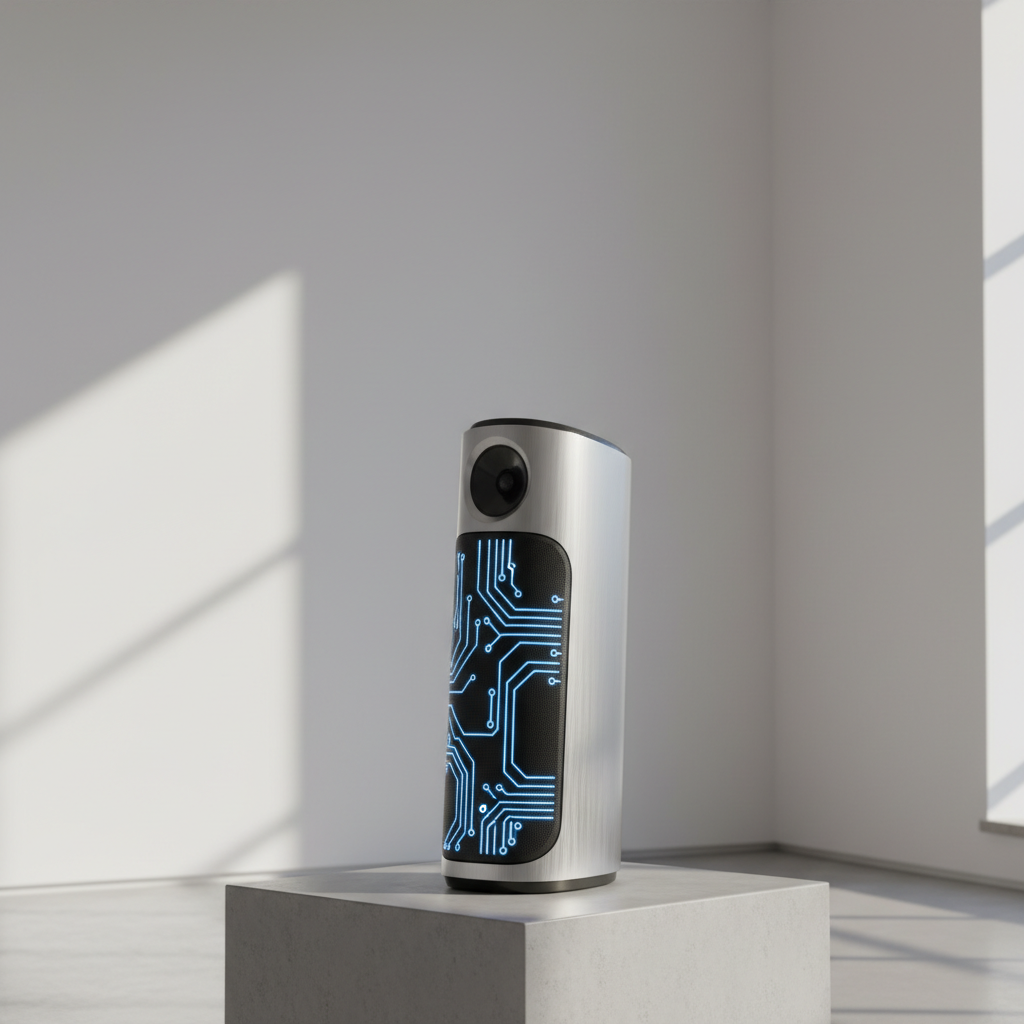
The core of this transformation lies in advanced rendering engines powered by machine learning. These engines learn from vast datasets of real-world images and physical properties. They understand how light interacts with different surfaces, how materials reflect and refract, and how shadows are cast. This deep learning enables them to produce incredibly accurate and visually appealing results. For instance, AI can simulate the subtle sheen of polished metal or the intricate weave of a fabric. It can also place products in diverse virtual environments, from a bustling city street to a serene natural landscape. This level of detail and environmental versatility was previously only achievable through highly skilled manual rendering or expensive physical setups. The integration of AI tools directly into design workflows further streamlines this process. Engineers can export their CAD models, and AI takes over the visualization, freeing up valuable design time.
Understanding AI Rendering Pipelines for CAD Models
AI rendering pipelines for CAD models typically involve several key stages, starting from data ingestion and ending with final image output. Initially, the 3D CAD file (e.g., STEP, IGES, STL) is imported into the AI platform. The AI then processes this geometric data. It identifies different components and their relationships. Next, materials and textures are applied, often chosen from a vast library or generated procedurally. Advanced AI can even suggest optimal material properties based on the product’s function or desired aesthetic. The third stage involves setting up virtual lighting. AI intelligently places light sources, simulates global illumination, and calculates reflections and refractions. Finally, the rendering engine generates the photorealistic image. Many platforms also offer post-processing capabilities, such as color grading and depth-of-field effects, further enhancing the visual quality.
Benefits of AI for Product Visualization Efficiency
The efficiency gains from using AI in product visualization are substantial. Firstly, it drastically reduces the time required to generate high-quality images. What once took days or weeks can now be accomplished in hours or even minutes. Secondly, cost savings are significant, as there’s no need for physical prototypes, studio rentals, or professional photographers. This makes high-quality visuals accessible even for small businesses. Thirdly, AI offers unparalleled consistency in branding. Products can be rendered with identical lighting and environmental setups across an entire catalog. This ensures a cohesive visual identity. Lastly, the flexibility to create endless variations—different colors, materials, configurations, and environments—empowers marketing teams to test and optimize visuals for maximum impact.
Leveraging AI for Converting Engineering Drawings to Product Photography
AI for converting engineering drawings to product photography offers a groundbreaking solution for businesses to visualize products early in the design cycle, transforming technical schematics into compelling marketing assets. This capability is critical for accelerating product development and launch timelines. Instead of waiting for a physical prototype, companies can generate realistic product images directly from 2D engineering drawings or even preliminary sketches.
The challenge with traditional engineering drawings is their technical nature. They are designed for manufacturing and assembly, not for consumer appeal. AI bridges this gap by interpreting the lines, dimensions, and annotations of a 2D drawing. It then extrapolates a 3D model, applying intelligent assumptions about geometry and form. This virtual 3D model then becomes the basis for photorealistic rendering. The process often involves sophisticated computer vision and generative AI techniques. These algorithms learn from vast datasets of similar products and their corresponding 3D models. This allows them to accurately infer the three-dimensional shape and volume from flat, two-dimensional representations. The ability to generate high-fidelity visuals from such early-stage data is a game-changer. It allows marketing teams to start developing campaigns much earlier, gathering feedback and refining messaging before any physical investment is made. This proactive approach significantly reduces risks and potential rework.
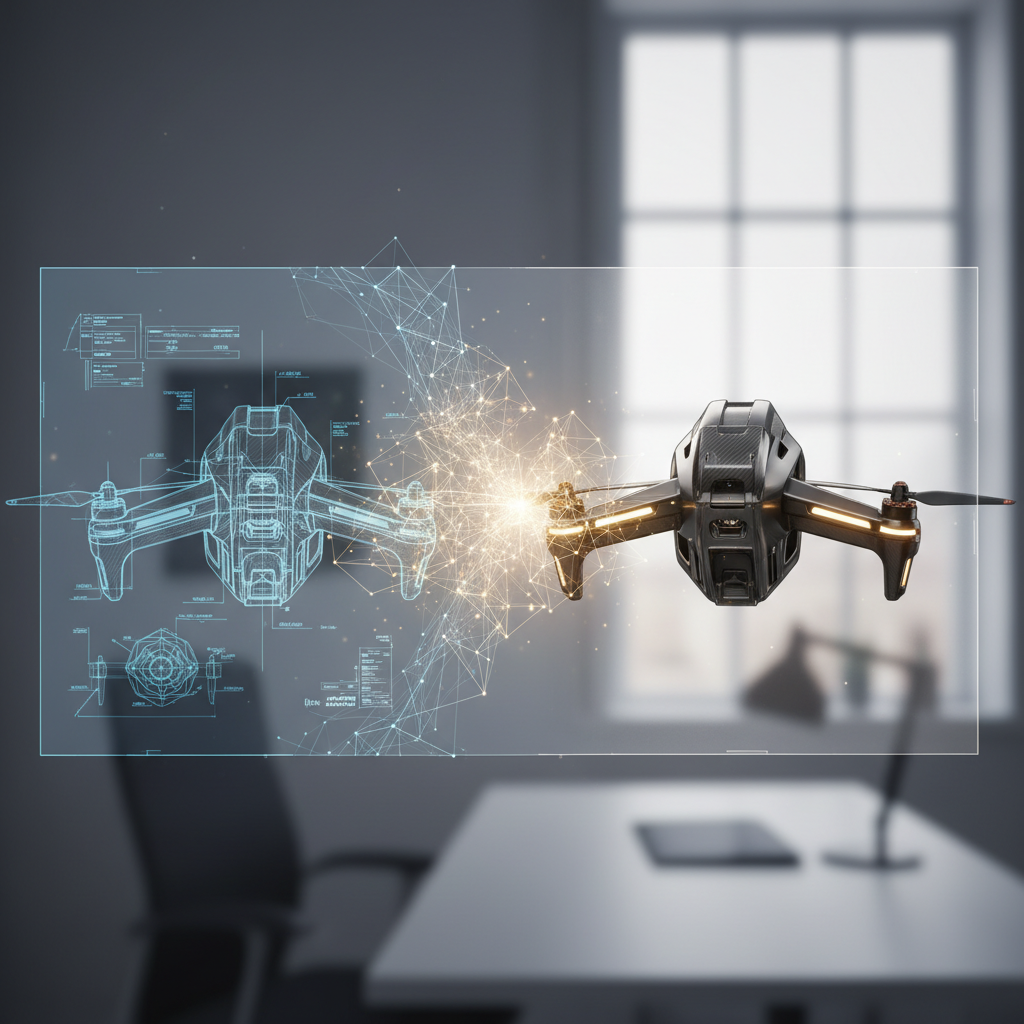
Consider the implications for product design and sales. Engineers can quickly see how their designs will look in a real-world context, facilitating design reviews and improvements. Sales teams can showcase upcoming products to potential clients with stunning visuals, even if the product is still in the conceptual phase. This early visualization can secure pre-orders or valuable market insights. Furthermore, AI can help identify potential design flaws or aesthetic issues that might not be apparent in 2D drawings. By rendering the product in various simulated environments, designers can assess its visual impact and make necessary adjustments. This iterative process, driven by AI, leads to better-designed products and more effective marketing materials. The technology essentially democratizes access to high-quality product imagery, making it available to a wider range of businesses and at earlier stages of development.
The Process of AI-Driven 2D to 3D Conversion for Visuals
The conversion of 2D engineering drawings to 3D product visuals via AI typically involves several steps. First, the 2D drawing is fed into the AI system. This could be a CAD drawing, a scanned blueprint, or even a hand sketch. The AI uses image recognition and feature extraction to identify key elements like outlines, dimensions, and material indicators. Next, a deep learning model, often a Generative Adversarial Network (GAN) or a variational autoencoder, reconstructs a plausible 3D model based on these 2D inputs and its learned understanding of object shapes. This 3D model is then refined, textured, and lit using standard AI rendering techniques to produce the final photorealistic image. The accuracy and detail of the output depend heavily on the quality and complexity of the input drawing and the sophistication of the AI model.
Advantages for Early-Stage Product Marketing with AI
The advantages for early-stage product marketing are profound. AI allows companies to generate compelling visuals long before physical prototypes exist. This means marketing campaigns can be developed and launched much faster. It facilitates market testing of product concepts without significant investment in manufacturing. Companies can gauge customer interest and collect feedback on different design variations. This early validation reduces the risk of launching a product that doesn’t resonate with the target audience. Moreover, it enables a “digital-first” approach to product launches, where all marketing collateral is prepared virtually. This agility is vital in today’s fast-paced market, ensuring that products can be introduced swiftly and effectively.
AI in Creating Product Photos from Technical Specification Sheets
AI for creating product photos from technical specification sheets is a powerful application that allows businesses to generate accurate and visually appealing product imagery using only textual and numerical data. This innovative approach eliminates the need for any visual input, relying solely on the detailed descriptions found in specification sheets. It represents a significant leap forward in automating content creation for product catalogs and e-commerce.
Technical specification sheets are typically dense with information, including dimensions, materials, finishes, weight, and specific features. While invaluable for engineers and procurement specialists, they offer little visual appeal for consumers. AI systems are now equipped to parse this complex data, extracting relevant attributes and translating them into visual characteristics. For instance, if a spec sheet mentions “brushed aluminum finish,” the AI understands how to render that specific texture and reflectivity. Similarly, precise dimensions can be used to construct an accurate 3D model from scratch. This capability is particularly beneficial for products with many configurable options or for standard components that lack unique visual identities. The AI essentially acts as a highly intelligent digital artist, interpreting detailed instructions and bringing them to life visually. This automation is crucial for companies managing vast product portfolios, as it drastically reduces the manual effort and time traditionally associated with creating product visuals. It also ensures a high degree of accuracy, as the visuals are directly derived from the authoritative product data.
The implications for consistency and scalability are immense. Imagine a manufacturer with thousands of product variations, each requiring multiple images. Manually creating these images would be an insurmountable task. AI can process these specification sheets in bulk, generating consistent, high-quality images for every single variation. This ensures that every product, no matter how niche, has professional-grade visual representation. Furthermore, updates to product specifications can be quickly reflected in the imagery. If a material or dimension changes, the AI can re-render the product with the updated information almost instantly. This agility is vital for maintaining accurate product information across all sales channels. The technology also supports the creation of interactive product experiences, such as 3D viewers or augmented reality applications, directly from the parsed data. By building a robust 3D model from the specifications, AI provides the foundation for rich, immersive customer engagement.
How AI Interprets Textual Data for Visual Generation
AI interprets textual data for visual generation through advanced Natural Language Processing (NLP) and machine learning models. First, the AI parses the specification sheet, identifying key entities like material types, dimensions, colors, and functional features. It uses semantic understanding to link these textual descriptions to visual properties. For example, “matte black” translates to a specific RGB value and surface roughness. Dimensions are used to construct the geometric shape of the product in a virtual 3D space. The AI then combines these interpreted attributes to build a preliminary 3D model. This model is subsequently enhanced with textures, lighting, and environmental context, ultimately resulting in a photorealistic image. The system learns from extensive training data associating text descriptions with corresponding visual outputs.
Scaling Product Image Creation with Spec Sheets
Scaling product image creation with specification sheets is one of AI’s most compelling advantages. For companies with extensive product catalogs or highly configurable items, manual photography or rendering is impractical. AI platforms can ingest thousands of spec sheets simultaneously, automating the entire image generation process. This allows for the rapid creation of millions of unique product images, each accurately reflecting its specific configuration. This scalability ensures that every product variation, no as matter how minor, receives professional visual representation. It also enables dynamic content generation for personalized marketing, where images are tailored to individual customer preferences based on their chosen specifications. This level of automation drastically reduces operational costs and accelerates market readiness for complex product lines.
Optimizing AI Photorealistic Rendering from Solidworks and AutoCAD Models
Optimizing AI photorealistic rendering from Solidworks and AutoCAD models is crucial for businesses that rely on these industry-standard CAD software packages. AI enhances the rendering process by significantly improving speed, quality, and creative flexibility, transforming raw engineering models into stunning marketing visuals. These AI tools are designed to integrate seamlessly with existing CAD workflows, making them accessible to a wide range of design and manufacturing professionals.
Solidworks and AutoCAD are powerful tools for mechanical design and drafting, producing highly detailed 3D models. However, their native rendering capabilities often require extensive manual setup and computational power to achieve photorealistic results. This is where AI steps in. AI-powered rendering engines can take these complex CAD models and apply advanced algorithms to generate images that are visually indistinguishable from photographs. They automate tasks like material assignment, lighting setup, and camera positioning, which are traditionally time-consuming. For example, an AI can intelligently analyze the geometry of a Solidworks assembly and suggest appropriate materials based on common manufacturing practices. It can then simulate how light would interact with these materials in a chosen environment, producing accurate reflections, refractions, and shadows. This automation not only saves time but also ensures a consistent level of quality across all rendered images. Furthermore, AI can optimize rendering parameters on the fly, dynamically adjusting settings to achieve the best balance between speed and visual fidelity. This means designers can get quick previews for iteration and then generate high-resolution final renders efficiently.
The integration of AI also opens up new creative possibilities. Designers can rapidly explore different design iterations and visualize them in various contexts without extensive manual effort. Imagine quickly swapping out a plastic component for a metallic one in a Solidworks model and instantly seeing the photorealistic result. This iterative design and visualization process accelerates product development cycles. Moreover, AI can generate synthetic data from these CAD models, which can then be used to train other AI models for tasks like quality inspection or robotic manipulation. This creates a virtuous cycle where CAD data fuels AI, and AI enhances the utility of CAD data. The ability to produce high-fidelity visuals from Solidworks and AutoCAD models with minimal human intervention is a significant competitive advantage. It allows companies to present their products in the best possible light, impressing clients and driving sales. The focus shifts from the technicalities of rendering to the creative aspects of product presentation.
| Feature | Traditional CAD Rendering | AI-Powered CAD Rendering |
|---|---|---|
| Setup Time | High (manual material, lighting, camera) | Low (automated suggestions, intelligent defaults) |
| Rendering Speed | Slow (high computational demand) | Faster (optimized algorithms, cloud processing) |
| Realism | Requires expert knowledge and fine-tuning | High (learned from vast real-world data) |
| Cost | High (software, hardware, expert labor) | Potentially lower (subscription models, reduced labor) |
| Iteration Speed | Slow (each change requires re-rendering) | Fast (quick previews, dynamic adjustments) |
| Consistency | Variable (depends on artist skill) | High (algorithm-driven, standardized output) |
Streamlining Solidworks Rendering with AI Enhancements
Streamlining Solidworks rendering with AI enhancements involves leveraging AI algorithms to automate and accelerate various aspects of the visualization process. AI tools can directly import Solidworks files, interpret their assembly structure, and intelligently apply appropriate materials and textures from a library. They can then set up realistic lighting environments, often using High Dynamic Range (HDR) images, and optimize camera angles for compelling product shots. This automation drastically reduces the manual effort traditionally required for setting up a scene in Solidworks Visualize or other rendering plugins. Designers can focus on the design itself, while AI handles the complex rendering parameters, delivering high-quality outputs much faster than conventional methods.
AutoCAD Model to Marketing Asset via AI Rendering
Transforming an AutoCAD model into a marketing asset through AI rendering involves a similar but often more foundational process, especially for models originating from 2D drawings. AI takes the precise geometric data from AutoCAD, which might be less detailed in terms of material properties than Solidworks models. It then enriches this data by inferring materials and surface characteristics, building a robust 3D representation suitable for photorealism. The AI engine then applies advanced rendering techniques, simulating light, shadow, and reflections to create a compelling visual. This allows architectural visualizations, mechanical parts, or product designs created in AutoCAD to be quickly elevated into professional-grade marketing imagery, suitable for brochures, websites, and presentations, without the need for extensive manual artistic input.
AI for Generating Product Market-Ready Photos from Prototypes
AI for generating product market-ready photos from prototypes is revolutionizing how companies bring new products to market, allowing for high-quality visuals even before final production. This capability is crucial for pre-launch marketing, investor presentations, and early customer feedback. Instead of relying on expensive and time-consuming professional photoshoots of early-stage prototypes, AI provides a fast, flexible, and cost-effective alternative.
Physical prototypes, especially early ones, often lack the polished finish required for market-ready photography. They might show imperfections, temporary materials, or unfinished details. AI can “clean up” these prototypes digitally. By taking a basic photograph or 3D scan of a prototype, AI algorithms can enhance its appearance, remove blemishes, apply realistic textures, and even simulate different finishes that are planned for the final product. This process is akin to having a highly skilled digital retoucher available 24/7, but with far greater speed and consistency. For example, if a prototype is made from a 3D-printed plastic, AI can transform its visual appearance to polished metal, wood, or glass, reflecting the intended final materials. This allows marketing teams to create aspirational imagery that accurately represents the final product, even when only a rudimentary prototype exists. This capability is invaluable for gauging market interest and securing early commitments.
Furthermore, AI can place these enhanced prototype visuals into diverse virtual environments. A single photograph of a prototype taken in a studio can be transformed into multiple lifestyle shots: the product in a home setting, an office, or an outdoor adventure scenario. This versatility allows for targeted marketing campaigns without the logistical complexities of on-location photoshoots. The ability to quickly generate a wide array of high-quality images from a single prototype accelerates the entire product launch cycle. It enables companies to gather feedback on visual presentation, test different marketing messages, and build excitement long before mass production begins. This proactive approach minimizes risks and maximizes the impact of a product launch. AI truly empowers businesses to visualize the future of their products with remarkable clarity and efficiency, turning early concepts into compelling market narratives.
Enhancing Prototype Visuals with AI for Marketing
Enhancing prototype visuals with AI for marketing involves using AI to refine and elevate the appearance of physical prototypes. This process typically starts with a basic photograph or 3D scan of the prototype. AI algorithms then analyze the image, identifying areas for improvement. They can smooth surfaces, remove visible imperfections like print lines or mold marks, and apply realistic textures and material properties that reflect the final product’s specifications. AI can also adjust lighting, shadows, and reflections to create a more professional and appealing look. This digital enhancement ensures that even early-stage prototypes can be presented with the polish and realism necessary for effective marketing campaigns, conveying the intended quality and aesthetic of the final product.
Creating Lifestyle Shots from Prototype Images Using AI
Creating lifestyle shots from prototype images using AI involves digitally placing an enhanced prototype into various realistic environments. After the AI has refined the prototype’s appearance, it can then integrate this 3D model or 2D image into a chosen virtual scene. This can range from an elegant living room to a rugged outdoor landscape. Advanced AI models understand how to blend the product seamlessly into the environment, adjusting lighting, perspective, and scale to ensure a natural look. This eliminates the need for expensive and complex location shoots. Marketers can generate a diverse portfolio of lifestyle imagery from a single prototype, showcasing the product in different use cases and appealing to various target demographics, all with remarkable speed and cost-effectiveness.
Frequently Asked Questions About AI Product Photography
What is AI for generating product photos from 3D CAD files?
AI for generating product photos from 3D CAD files refers to the use of artificial intelligence algorithms to automatically convert three-dimensional computer-aided design models into photorealistic images. This technology leverages machine learning to apply textures, simulate lighting, and render high-quality visuals, often indistinguishable from real photographs, directly from engineering data.
Can AI convert engineering drawings into product photography?
Yes, AI can convert engineering drawings into product photography. Advanced AI systems use computer vision and generative models to interpret 2D engineering schematics, extrapolate 3D geometry, and then render photorealistic images. This allows for product visualization at very early design stages, even before a 3D CAD model is fully developed.
How does AI create product photos from technical specification sheets?
AI creates product photos from technical specification sheets by parsing textual data, such as dimensions, materials, and colors. It uses Natural Language Processing (NLP) to understand these attributes and then constructs a virtual 3D model. This model is subsequently rendered with appropriate textures, lighting, and environments to produce accurate and visually appealing product images.
Is AI photorealistic rendering from Solidworks and AutoCAD models effective?
Yes, AI photorealistic rendering from Solidworks and AutoCAD models is highly effective. AI engines can seamlessly import these CAD files, automate complex rendering tasks like material assignment and lighting setup, and generate stunningly realistic images much faster than traditional methods. This significantly streamlines the visualization workflow for engineers and marketers.
Can AI generate market-ready photos from early prototypes?
Absolutely. AI can generate market-ready photos from early prototypes by digitally enhancing their appearance. It can remove imperfections, apply realistic textures and finishes, and place the prototype into various virtual environments. This allows companies to create compelling marketing visuals for pre-launch campaigns without the need for final production models or extensive photoshoots.
What are the main benefits of using AI for product photography?
The main benefits include significant time and cost savings by eliminating physical prototypes and photoshoots. AI offers unparalleled speed in generating diverse visuals, enhanced consistency across product lines, and greater creative flexibility to explore different designs and environments. It accelerates time-to-market and improves the quality of marketing assets.
What is the future outlook for AI in product visualization?
The future outlook for AI in product visualization is extremely promising. We anticipate even more sophisticated AI models capable of generating highly complex scenes, interactive 3D experiences, and personalized visual content on demand. Integration with AR/VR technologies will deepen, offering immersive product exploration. AI will continue to democratize access to high-end visualization.
The rapid evolution of AI is fundamentally reshaping the landscape of product visualization. Businesses are now empowered to transform raw engineering data, from 3D CAD files to simple technical specification sheets, into stunning, market-ready product photography with unprecedented speed and efficiency. This shift offers a multitude of benefits that extend across the entire product lifecycle, from design and development to marketing and sales.
Key takeaways for businesses considering AI for their product imagery include:
* Accelerated Time-to-Market: Generate visuals instantly, allowing for earlier marketing campaigns and faster product launches.
* Significant Cost Savings: Eliminate the need for expensive physical prototypes, studio rentals, and traditional photoshoots.
* Unparalleled Flexibility: Easily create endless variations in materials, colors, environments, and product configurations.
* Enhanced Consistency: Ensure a uniform brand aesthetic across all product visuals, regardless of scale.
* Early Visualization: Gain critical insights by visualizing products from engineering drawings or even early prototypes.
Embracing AI for product photography is no longer a luxury but a strategic imperative for staying competitive in today’s digital-first market. Explore how AI can revolutionize your product visualization strategy and unlock new possibilities for engaging your customers.