


AI Product Video Prompt Library 2026 Strategy Guide
The advent of AI has revolutionized content creation, and an AI product video prompt library is now an indispensable tool for marketers and businesses aiming to produce compelling visual content at scale. This guide explores how to leverage expertly crafted prompts to generate high-quality product videos, streamlining your marketing efforts and enhancing audience engagement. Understanding the nuances of prompt engineering can transform your video production, making it faster, more efficient, and incredibly effective.
Mastering AI Prompts for Product Videos: Essential Strategies
Mastering AI prompts for product videos involves understanding the core elements that guide AI models to generate desired visual and narrative outcomes. Effective prompts act as precise instructions, leading the AI to create engaging and relevant content that resonates with your target audience. This precision ensures your AI-generated videos accurately reflect your brand message and product features.

Understanding the Anatomy of an Effective AI Video Prompt
An effective AI video prompt is a structured command that includes details about the subject, style, mood, and desired actions within the video. It typically breaks down into several key components, providing the AI with a comprehensive blueprint. By segmenting your prompt, you can ensure clarity and specificity, leading to more accurate and creative video outputs. This structured approach helps in achieving consistent brand messaging across various video assets.
Key elements often include:
* Subject: What is the product? (e.g., “sleek smartwatch,” “eco-friendly water bottle”).
* Action/Narrative: What should the product be doing or what story should be told? (e.g., “demonstrating fitness tracking,” “showing sustainability benefits”).
* Visual Style: What aesthetic should the video have? (e.g., “modern minimalist,” “vibrant and energetic,” “cinematic and luxurious”).
* Target Audience: Who is the video for? (e.g., “young professionals,” “eco-conscious consumers”).
* Key Message/Benefit: What is the primary takeaway? (e.g., “effortless connectivity,” “superior hydration”).
Best Practices for Crafting High-Quality Prompts
Crafting high-quality prompts requires a blend of creativity and technical understanding of AI capabilities. Start with a clear objective for your video, then translate that objective into descriptive language that leaves little room for ambiguity. Iteration is also crucial; refine your prompts based on the AI’s initial outputs to achieve optimal results.
Consider these best practices:
* Be Specific, Not Vague: Instead of “show product,” try “a close-up shot of the smartwatch displaying a heart rate monitor on a runner’s wrist.”
* Use Descriptive Adjectives: Employ words that evoke emotions and visual details, like “dynamic,” “serene,” “innovative,” or “user-friendly.”
* Specify Camera Angles and Movements: Guide the AI with terms such as “overhead shot,” “smooth tracking shot,” or “fast-paced montage.”
* Include Brand Guidelines: Mention colors, fonts, or overall brand aesthetic if the AI model supports it.
* Experiment with Prompt Length and Complexity: Sometimes shorter, focused prompts work best, while other times, detailed narratives yield superior results.
Crafting Copy Paste Prompts for AI Product Videos: Instant Impact
Crafting copy paste prompts for AI product videos empowers marketers to rapidly generate diverse video content without starting from scratch each time. These pre-designed templates offer a foundational structure, allowing for quick customization to suit specific products, campaigns, or target audiences. Leveraging such prompts significantly accelerates the video creation workflow.
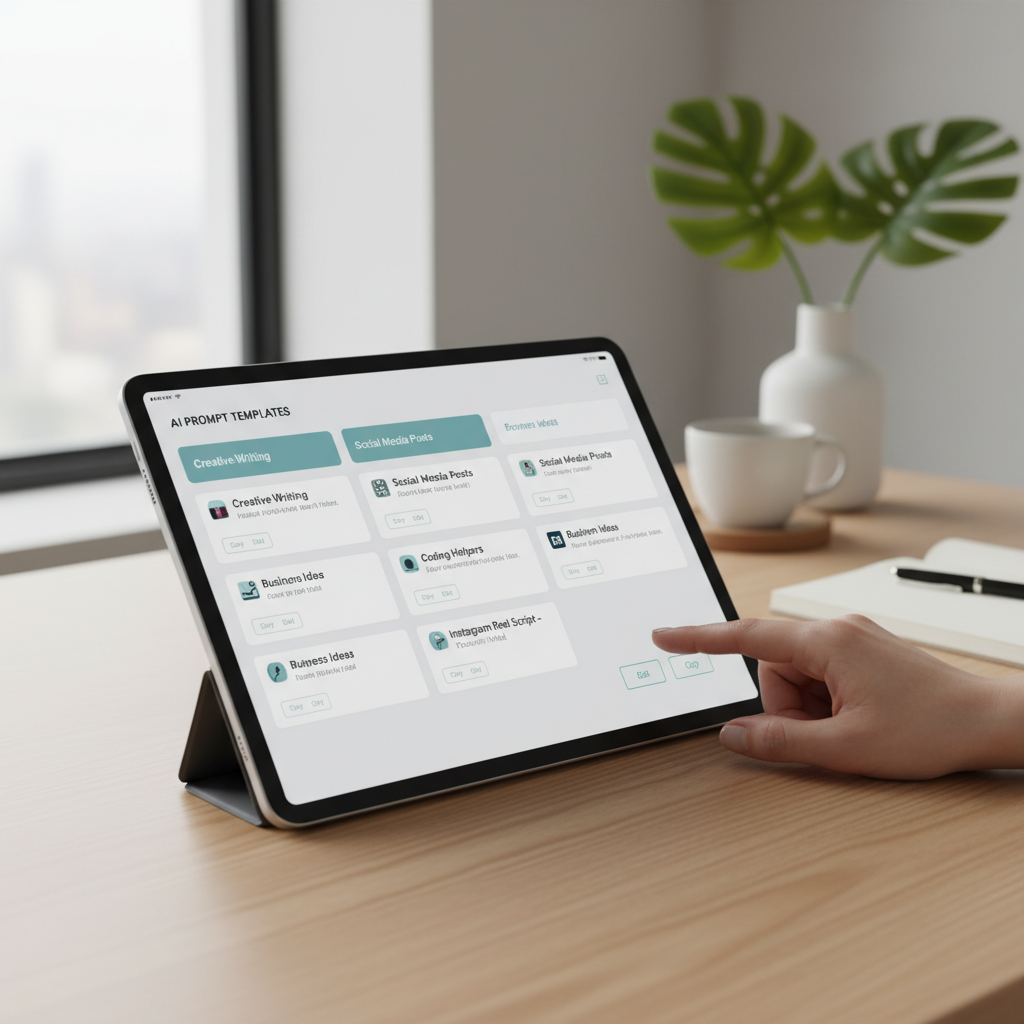
The Power of Reusable Prompt Templates
Reusable prompt templates are invaluable assets in any AI content creation strategy. They provide a consistent starting point, ensuring that essential elements are always included, while still offering flexibility for unique adjustments. This approach not only saves time but also helps maintain brand consistency across all video output. Templates are especially useful for teams, ensuring everyone adheres to a similar quality and style.
Here’s why reusable templates are powerful:
* Efficiency: Drastically reduces the time spent on prompt engineering for each new video.
* Consistency: Helps maintain a uniform brand voice and visual style across multiple videos.
* Scalability: Enables the rapid production of a large volume of videos for various products or marketing channels.
* Learning Curve: Simplifies the process for new users, allowing them to create effective prompts quickly.
Examples of Copy Paste Prompts for Various Product Types
To illustrate the versatility of copy paste prompts, consider examples tailored for different product categories. These templates can be adapted by simply replacing bracketed information with your specific product details. This method makes it easy to generate a variety of videos with minimal effort.
Electronics Product Prompt:
“Create a 30-second AI product video for [Product Name, e.g., ‘Smartwatch X’]. Show a user [action, e.g., ‘effortlessly checking notifications and tracking fitness goals’] in a [setting, e.g., ‘modern urban environment’]. Highlight its [key feature 1, e.g., ‘long battery life’] and [key feature 2, e.g., ‘sleek design’]. Use a [visual style, e.g., ‘dynamic, fast-paced’] aesthetic with [music style, e.g., ‘upbeat electronic music’].”
Beauty Product Prompt:
“Generate a 20-second AI product video for [Product Name, e.g., ‘Glow Serum’]. Feature [demographic, e.g., ‘a diverse group of individuals’] applying the serum and showing [benefit, e.g., ‘radiant, healthy-looking skin’]. Emphasize its [ingredient/benefit, e.g., ‘natural ingredients and anti-aging properties’]. Use a [visual style, e.g., ‘soft, luxurious, and warm-toned’] aesthetic with [music style, e.g., ‘calming, elegant background music’].”
Food & Beverage Product Prompt:
“Produce a 15-second AI product video for [Product Name, e.g., ‘Artisan Coffee Blend’]. Showcase the [product experience, e.g., ‘brewing process and enjoyment of a rich cup of coffee’] in a [setting, e.g., ‘cozy cafe or home kitchen’]. Focus on its [sensory appeal, e.g., ‘aroma, rich crema, and delightful taste’]. Employ a [visual style, e.g., ‘warm, inviting, and rustic’] aesthetic with [music style, e.g., ‘gentle acoustic music’].”
AI Video Prompts for Product Launch Campaigns: Maximizing Buzz
AI video prompts for product launch campaigns are designed to generate excitement and anticipation around new offerings, driving early adoption and market penetration. These prompts focus on storytelling, highlighting unique selling propositions, and creating a sense of urgency or exclusivity. They are crucial for making a strong first impression.
Building Hype with Pre-Launch Teasers
Pre-launch teaser videos are vital for generating initial buzz and curiosity. AI-generated teasers can quickly produce short, intriguing clips that hint at the product without revealing everything. The goal is to pique interest and encourage viewers to seek more information. These videos are often mysterious and visually striking.
Consider these prompt elements for teasers:
* Mystery Element: “Show glimpses of a revolutionary new device, obscured by light and shadow, with futuristic sound effects.”
* Problem/Solution Focus: “Illustrate a common problem faced by [target audience], followed by a quick, elegant visual of the product solving it, without revealing full details.”
* Benefit-Oriented: “Create a montage of people experiencing joy, ease, or success, subtly linked to the forthcoming product’s core benefit.”
| Launch Phase | Prompt Focus | Key Objective |
|---|---|---|
| Teaser | Mystery, intrigue, problem/solution hints | Generate curiosity, build anticipation |
| Reveal | Product features, benefits, innovation | Showcase product, explain value |
| How-To/Demo | User experience, practical application | Educate, build confidence, reduce friction |
| Testimonial | Social proof, emotional connection | Build trust, encourage conversion |
Crafting Prompts for Full Product Reveal Videos
Full product reveal videos require comprehensive prompts that detail every aspect of the product, from its aesthetics to its functionality and benefits. These videos are often the cornerstone of a launch, providing all the necessary information to convert interested viewers into customers. They need to be informative yet captivating.
Prompt considerations for full reveals:
1. Opening Hook: “Start with a cinematic shot of the product emerging from darkness, accompanied by an impactful sound design.”
2. Feature Showcase: “Dedicate 5 seconds to each major feature: [Feature 1], [Feature 2], [Feature 3], demonstrating its practical use in a relatable scenario.”
3. Benefit Articulation: “Visually represent the primary benefits, such as ‘saving time,’ ‘enhancing creativity,’ or ‘improving wellness,’ with on-screen text overlays.”
4. Call to Action: “Conclude with a clear call to action: ‘Learn More at [Website]’ or ‘Pre-order Now,’ with product and brand logo prominently displayed.”
5. Target Audience Appeal: “Ensure the video’s tone and visuals resonate directly with [specific demographic, e.g., ‘tech enthusiasts,’ ‘fashion-forward individuals’].”
Developing AI Product Demo Video Prompt Templates for Showcasing Features
Developing AI product demo video prompt templates is essential for creating instructional and informative content that clearly showcases a product’s features and benefits. These templates guide the AI in producing step-by-step demonstrations, user interface walkthroughs, or practical application scenarios. They are designed to educate potential customers and build confidence in the product.
Designing Prompts for Step-by-Step Feature Demonstrations
Step-by-step feature demonstrations are crucial for complex products or those with multiple functionalities. Prompts for these videos must be highly detailed, breaking down each action into discrete visual segments. The goal is to make the product’s operation seem intuitive and easy to understand. Clarity and conciseness are paramount in these prompts.
Here’s how to structure such prompts:
* Introduction: “Begin with a brief overview of the product and the specific feature being demonstrated.”
* Sequential Steps: “Show a user performing [Step 1, e.g., ‘unboxing and setup’], then [Step 2, e.g., ‘connecting to the app’], followed by [Step 3, e.g., ‘customizing settings’].”
* Visual Cues: “Include close-ups of specific buttons, screens, or interactions. Use on-screen text to highlight key actions or outcomes.”
* Problem/Solution Context: “Frame each feature demonstration within a common user need it addresses, e.g., ‘how to quickly find your keys with our tracking device’.”
* Pacing and Narration: “Specify a calm, clear voiceover style and a moderate pace, allowing viewers to follow along easily.”
Prompts for Highlighting Unique Selling Propositions (USPs)
Prompts focused on Unique Selling Propositions (USPs) aim to create videos that distinguish your product from competitors. These videos should emphasize what makes your product special, whether it’s innovative technology, superior performance, or unique design. The prompts need to clearly articulate these differentiating factors.
To highlight USPs effectively, prompts should include:
1. Direct Comparison (Implied): “Visually demonstrate [Product’s USP, e.g., ‘its superior battery life lasting 48 hours’] in a challenging scenario, contrasting it with common limitations of competitors (without naming them).”
2. Innovation Showcase: “Focus on the cutting-edge technology behind [Product Feature, e.g., ‘our patented noise-cancellation technology’], using animated graphics or X-ray views.”
3. Benefit-Driven Narrative: “Tell a short story where the product’s USP directly solves a significant user pain point, leading to a positive outcome.”
4. Expert Endorsement (simulated): “Show a stylized ‘expert’ interacting with the product, nodding in approval as the USP is highlighted with text.”
5. Before-and-After: “Illustrate a ‘before’ scenario struggling with a problem, followed by an ‘after’ scenario where the product’s USP elegantly resolves it.”
Ecommerce AI Video Prompt Examples by Niche: Tailored for Success
Ecommerce AI video prompt examples by niche provide targeted strategies for generating product videos that resonate with specific industry audiences and product types. Tailoring prompts to a niche ensures the video’s style, tone, and content align perfectly with consumer expectations and market trends. This precision drives higher engagement and conversion rates.
Apparel and Fashion Niche Prompts
For apparel and fashion, prompts should focus on visual appeal, lifestyle, and how the clothing makes the wearer feel. The AI needs to understand styling, movement, and the overall aesthetic. These videos are often aspirational and trend-driven.
Examples for fashion:
* “Seasonal Lookbook”: “Create a 45-second AI product video showcasing the [Season, e.g., ‘Spring/Summer 2026 collection’] of [Brand Name]. Feature models of diverse body types wearing [specific garments, e.g., ‘flowy dresses, tailored suits, and casual streetwear’] in [setting, e.g., ‘a sun-drenched European city’]. Emphasize [style, e.g., ‘comfort, versatility, and modern elegance’]. Use [music style, e.g., ‘upbeat indie pop’] and [visual style, e.g., ‘bright, airy, and dynamic camera movements’].”
* “Product Spotlight”: “Generate a 20-second AI product video focusing on the [Product Name, e.g., ‘Linen Blend Shirt’]. Show close-ups of the fabric texture, stitching, and how it drapes on a model. Demonstrate its versatility by pairing it with different accessories for [occasions, e.g., ‘casual daywear and smart-casual evening wear’]. Use [visual style, e.g., ‘clean, minimalist aesthetic’] with [music style, e.g., ‘subtle, sophisticated jazz’].”
Home Goods and Decor Niche Prompts
Home goods and decor videos need to evoke feelings of comfort, style, and functionality within a living space. Prompts should guide the AI to create inviting atmospheres and demonstrate how products enhance a home’s aesthetic and utility. The focus is often on ambiance and integration.
Examples for home goods:
1. “Room Transformation”: “Produce a 60-second AI product video showing a ‘before and after’ room transformation using [Product Category, e.g., ‘our new line of minimalist furniture’]. Start with a cluttered or bland room, then transition to a beautifully styled space featuring [specific products, e.g., ‘modular sofa, geometric rug, and ambient lighting’]. Highlight [benefits, e.g., ‘space-saving design and calming aesthetic’]. Use [music style, e.g., ‘relaxing instrumental’] and [visual style, e.g., ‘smooth transitions and warm lighting’].”
2. “Product Feature in Context”: “Create a 30-second AI product video for the [Product Name, e.g., ‘Smart Diffuser’]. Show it seamlessly integrated into a [setting, e.g., ‘modern living room’], subtly releasing [aroma, e.g., ‘calming lavender scent’]. Demonstrate its [feature, e.g., ‘app control and customizable light settings’]. Emphasize [benefit, e.g., ‘creating a serene home environment’]. Use [visual style, e.g., ‘soft focus, natural light’] and [music style, e.g., ‘ambient nature sounds with light piano’].”
Advanced Techniques for AI Product Video Prompt Generation
Advanced techniques for AI product video prompt generation go beyond basic descriptions, incorporating sophisticated elements like emotional targeting, narrative arcs, and iterative refinement. These methods allow for the creation of highly nuanced and impactful videos that truly stand out in a crowded market. They require a deeper understanding of both AI capabilities and marketing psychology.
Incorporating Emotional and Psychological Triggers
To create truly compelling videos, prompts should include emotional and psychological triggers that resonate deeply with the audience. This means moving beyond just features and benefits to tap into desires, fears, and aspirations. The AI can then craft visuals and narratives that evoke specific feelings.
Consider these triggers:
* Aspiration: “Show a young professional achieving career success and personal fulfillment, subtly enhanced by [Product Name, e.g., ‘our productivity software’].”
* Fear of Missing Out (FOMO): “Illustrate a vibrant social gathering where individuals are effortlessly connecting, while someone outside looks on, implying the product facilitates these connections.”
* Belonging/Community: “Depict a diverse group of people collaborating and celebrating, unified by their shared experience with [Product Name, e.g., ‘our community platform’].”
* Relief/Problem Solving: “Start with a scene of frustration or struggle, then transition to calm and ease as the product elegantly resolves the issue.”
Leveraging Iterative Prompt Refinement and A/B Testing
Iterative prompt refinement and A/B testing are critical for optimizing AI-generated videos for maximum impact. This process involves generating multiple video variations from slightly different prompts, then testing their performance with target audiences. Analyzing the results helps in understanding which prompt elements are most effective. This data-driven approach ensures continuous improvement.
Steps for iterative refinement and A/B testing:
1. Baseline Prompt: Start with a solid, well-defined prompt.
2. Generate Variations: Create 2-3 variations by altering one key element at a time (e.g., changing the visual style, emotional tone, or call to action).
3. Produce Videos: Use the AI to generate videos for each prompt variation.
4. A/B Test: Deploy the videos to a segment of your target audience and measure key metrics like click-through rates, engagement, and conversion.
5. Analyze and Learn: Identify which prompt elements led to superior performance.
6. Refine and Repeat: Incorporate learnings into your next set of prompts and continue the cycle of testing and refinement.
What is an AI product video prompt library?
An AI product video prompt library is a curated collection of structured text commands designed to guide artificial intelligence models in generating product-focused videos. These prompts serve as blueprints, detailing visual styles, narrative elements, product features, and target audience cues, enabling efficient and consistent video creation.
How do copy paste prompts for AI product videos save time?
Copy paste prompts save time by providing ready-to-use templates that require minimal editing. Instead of crafting each prompt from scratch, users can select a relevant template, insert product-specific details, and generate a video quickly. This streamlines the content creation workflow and ensures consistency.
Can AI video prompts be used for product launch campaigns?
Yes, AI video prompts are highly effective for product launch campaigns. They can be tailored to create teaser videos, full product reveals, and promotional content that builds excitement and informs potential customers about new offerings. Prompts help in crafting compelling narratives that drive initial interest and engagement.
What are AI product demo video prompt templates?
AI product demo video prompt templates are pre-structured prompts specifically designed to generate videos that demonstrate a product’s features, functionality, and user experience. They often include instructions for step-by-step demonstrations, highlighting unique selling points, and showcasing practical applications to educate viewers.
Are there specific ecommerce AI video prompt examples by niche?
Yes, prompts can be highly specialized for different ecommerce niches, such as apparel, home goods, electronics, or food and beverage. These niche-specific examples incorporate industry-relevant aesthetics, language, and consumer preferences to create highly targeted and effective product videos that resonate with specific audiences.
How detailed should an AI product video prompt be?
The level of detail in an AI product video prompt depends on the desired outcome and the AI model’s capabilities. Generally, more specific prompts yield more precise results, covering aspects like visual style, camera angles, emotional tone, product actions, and target audience. Balancing detail with conciseness is key for optimal results.
The strategic use of an AI product video prompt library is transforming how businesses approach video content creation. By leveraging well-crafted prompts, marketers can unlock unprecedented efficiency and creativity, generating high-quality product videos at scale. This approach not only saves valuable time and resources but also ensures brand consistency and targeted messaging across all campaigns.
Key takeaways for maximizing your AI product video efforts:
* Structure is King: Break down your video vision into clear, actionable prompt components for the AI.
* Templates Boost Efficiency: Utilize copy paste prompts for AI product videos to accelerate production and maintain consistency.
* Niche-Specific Prompts Perform: Tailor your ecommerce AI video prompt examples by niche to deeply resonate with your target audience.
* Launch with Impact: Employ specialized AI video prompts for product launch campaigns to build hype and drive conversions.
* Educate with Clarity: Develop robust AI product demo video prompt templates for effective feature showcasing.
* Iterate and Optimize: Continuously refine your prompts based on performance data to achieve superior results.
Embrace the power of prompt engineering to elevate your product video strategy. Start experimenting with your own AI product video prompt library today and discover the boundless possibilities for engaging your audience.