

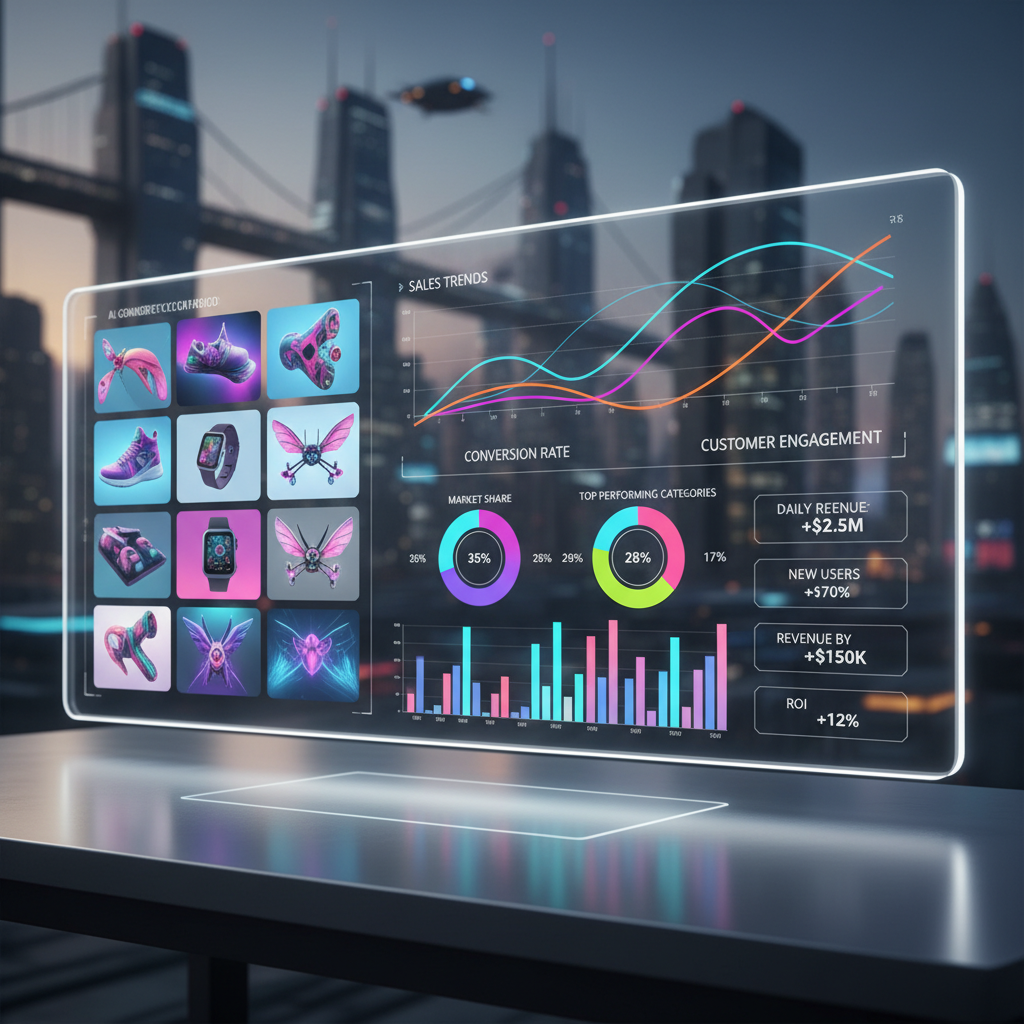
How To Measure AI Product Photo Performance In Ecommerce 2026
In the rapidly evolving landscape of online retail, understanding how to measure AI product photo performance in ecommerce is crucial for optimizing conversion rates and enhancing customer engagement. Artificial intelligence is transforming how product visuals are created, offering unprecedented scalability and customization. By effectively tracking the impact of these AI-generated images, ecommerce sellers can make data-driven decisions to refine their visual strategies and maximize their return on investment. This article delves into the essential metrics, tools, and methodologies for evaluating AI product photo effectiveness, ensuring your visual content consistently drives sales in 2026 and beyond.
Understanding Key Metrics for AI Product Visuals
Measuring the success of AI-generated product photos in ecommerce hinges on analyzing specific performance indicators that directly impact sales and user experience. Key metrics include click-through rates (CTR), conversion rates, time on page, bounce rate, and add-to-cart rates. These metrics provide a comprehensive view of how effectively your AI visuals capture attention and drive purchasing decisions.
To accurately assess how to measure AI product photo performance in ecommerce, businesses must establish clear benchmarks before deploying AI-generated imagery. This involves collecting baseline data from existing real photography to create a comparative framework. Analyzing metrics such as image load speed, visual quality, and consistency across product lines also contributes to a holistic understanding of performance. AI-generated images, by their nature, often offer unparalleled consistency and rapid generation, which can positively influence these technical metrics.
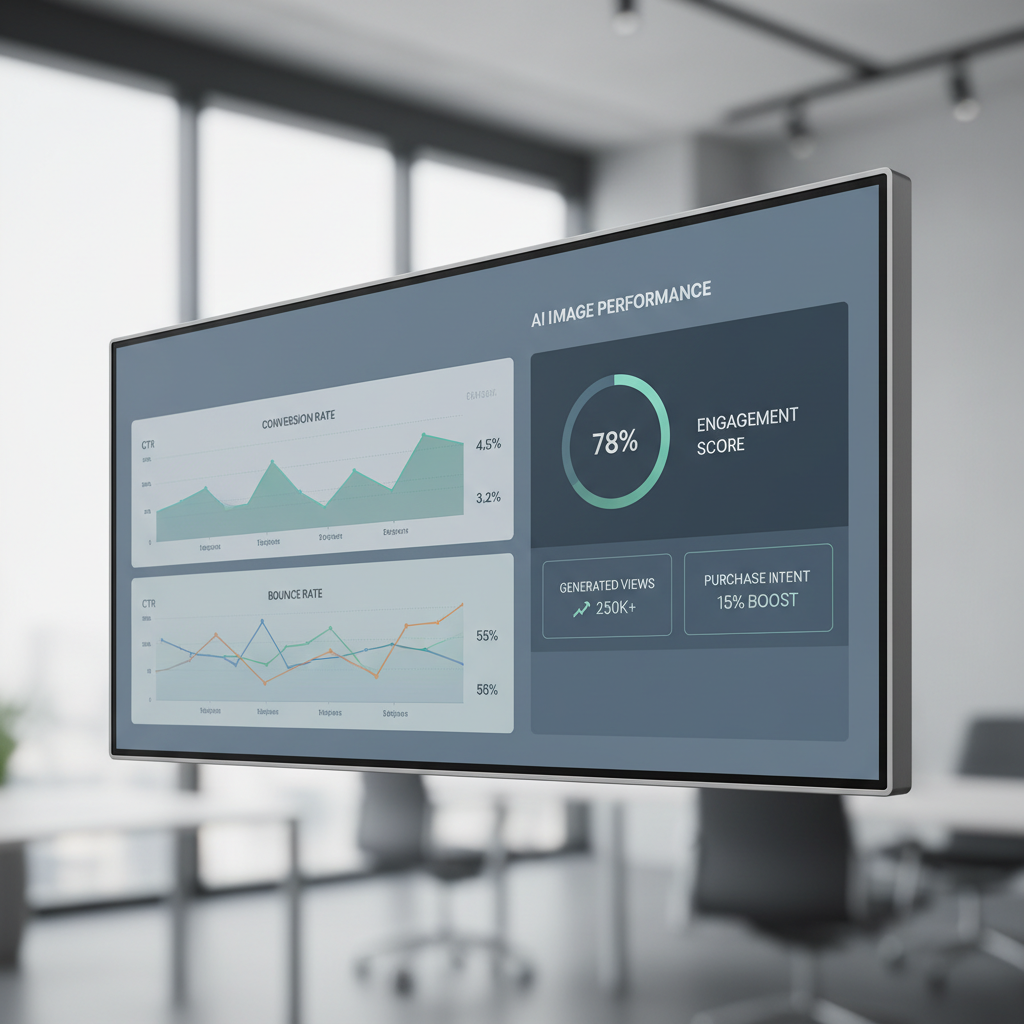
Here are some critical metrics to track:
* Click-Through Rate (CTR): This measures the percentage of users who click on a product listing after seeing its image in search results or category pages. A higher CTR suggests the AI photo is visually appealing and relevant.
* Conversion Rate: The ultimate metric, this tracks the percentage of users who complete a purchase after viewing the product page. Strong AI visuals should directly contribute to improved conversion.
* Add-to-Cart Rate: This indicates how many users add a product to their shopping cart after viewing its images. It’s a strong predictor of purchase intent.
* Time on Page: Longer engagement times often correlate with greater interest in the product. Effective AI images can keep users captivated.
* Bounce Rate: A high bounce rate suggests that the product image or page content did not meet user expectations. Optimizing AI photos can help reduce this.
* Image Interaction Metrics: These include zooms, swipes, and clicks on different image variations. These metrics provide insights into user engagement with the visual content itself.
Understanding these metrics allows ecommerce sellers to identify which AI-generated images resonate most with their target audience. By continually monitoring and comparing these performance indicators, businesses can iterate on their AI image generation strategies, leading to more impactful visual content. This continuous feedback loop is essential for maximizing the benefits of AI in product photography.
What Are the Primary Ecommerce Metrics for AI Product Images?
The primary ecommerce metrics for evaluating AI product images include click-through rate (CTR), conversion rate, add-to-cart rate, time on page, and bounce rate. These metrics collectively indicate how well AI-generated visuals attract attention, engage users, and drive purchasing decisions. Higher engagement and conversion metrics suggest successful AI image implementation.
How Do You Establish Benchmarks for AI Photo Performance?
Establishing benchmarks for AI photo performance involves analyzing historical data from real photography before introducing AI-generated images. This baseline data provides a point of comparison for key metrics like CTR and conversion rates. Regular monitoring and A/B testing against these benchmarks help to quantify the impact and effectiveness of AI visuals over time.
Leveraging AI Product Image Analytics Tools for Ecommerce Sellers
AI product image analytics tools for ecommerce sellers are indispensable for gaining deep insights into the effectiveness of AI-generated visuals. These specialized platforms go beyond basic ecommerce analytics, offering advanced features like image recognition, sentiment analysis, and predictive modeling. Such tools help businesses understand not just what is performing well, but why, enabling more strategic visual content decisions.
These tools integrate with existing ecommerce platforms and leverage machine learning to analyze vast datasets of image performance. They can identify subtle patterns in user behavior, such as which visual elements or compositions lead to higher engagement. For instance, an AI product image analytics tool for ecommerce sellers might reveal that images with a specific background color or product angle consistently outperform others for a particular product category. This level of granular insight is nearly impossible to achieve manually. The core function of these tools is to process visual data and user interaction to provide actionable recommendations.
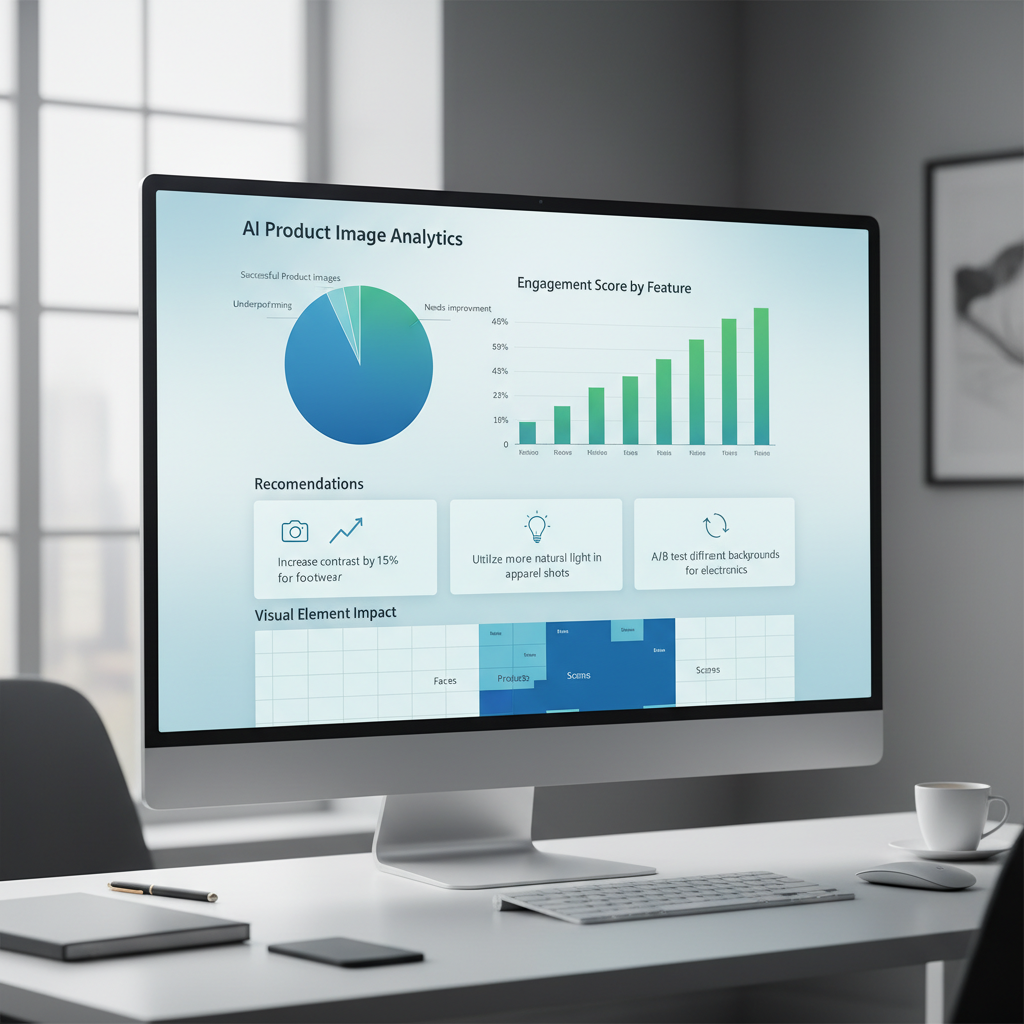
Key features of advanced AI product image analytics tools include:
* Automated A/B Testing: Many tools can automatically run and analyze A/B tests for different AI image variations, identifying winners without manual intervention.
* Visual Search Analytics: Understanding how users search for products visually can inform the creation of more discoverable AI images.
* Competitor Benchmarking: Some tools offer insights into competitor visual strategies and performance, helping to identify opportunities.
* Personalization Engines: AI can suggest the most effective image for individual users based on their past behavior and preferences, dynamically optimizing product displays.
* Performance Reporting: Comprehensive dashboards provide real-time data and customizable reports on all relevant image metrics.
By integrating these powerful analytics tools, ecommerce sellers can move from guesswork to data-driven optimization. They can continuously refine their AI image generation prompts, styles, and contexts to ensure maximum impact on their target audience. This proactive approach to visual content management is a significant competitive advantage in the crowded online marketplace.
What Are the Benefits of Using AI Analytics for Product Images?
Using AI product image analytics tools for ecommerce sellers offers numerous benefits, including automated performance tracking, identification of high-converting visual elements, and data-driven recommendations for image optimization. These tools provide deeper insights into user engagement and preferences, allowing sellers to enhance their visual strategy and improve conversion rates more efficiently than traditional methods.
How Do AI Image Analytics Tools Integrate with Ecommerce Platforms?
AI image analytics tools typically integrate with ecommerce platforms through APIs or direct connectors. This allows them to pull product data, track user interactions on product pages, and push optimized image recommendations or test results back to the platform. Seamless integration ensures that performance data is accurately collected and actionable insights can be applied directly.
Conducting Heat Map Analysis of AI Product Photos vs Real Photography
Heat map analysis of AI product photos vs real photography provides invaluable insights into how users visually interact with different types of product imagery. Heat maps visually represent where users look, click, or scroll on a webpage, highlighting areas of interest and neglect. By comparing heat maps generated from AI photos against those from traditional photography, ecommerce sellers can pinpoint specific visual elements that capture attention and drive engagement.
This comparative analysis is crucial for understanding the psychological impact of AI-generated visuals. For instance, a heat map might reveal that users spend more time examining the texture details in an AI-generated image, or that their eyes are drawn to different areas of the product compared to a real photo. This detailed feedback helps refine AI image generation parameters to create more compelling and effective visuals. It’s not just about aesthetics; it’s about optimizing for user perception and interaction.
Consider the following aspects when performing a comparative heat map analysis:
* Gaze Patterns: Do users’ eyes follow a similar path on both AI and real photos, or do certain AI enhancements redirect their attention?
* Areas of Interest: Which parts of the product or background receive the most attention? Are there differences in how details are perceived?
* Engagement Hotspots: Identify specific regions that trigger clicks or hovers. Are these hotspots more pronounced or strategically located in AI-generated images?
* Scroll Depth: Do certain image types encourage users to scroll further down the page to view more details or related products?
| Feature | AI Product Photos (Heat Map Insights) | Real Photography (Heat Map Insights) |
|---|---|---|
| Detail Focus | Often highlights specific, enhanced product features. Can draw attention to perfectly rendered textures or materials. | Focus might be more diffused, capturing ambient light and slight imperfections. Attention can be drawn to background elements. |
| Background Interaction | Controlled, often minimalistic backgrounds might lead to more direct product focus. Less distraction. | Natural backgrounds can sometimes compete for attention or provide context that users engage with. |
| Emotional Response | Can be optimized to evoke specific emotions through lighting and composition, potentially leading to targeted engagement. | Authenticity can build trust, with heat maps showing engagement with perceived realism. |
| Call to Action (CTA) Proximity | Can be designed to guide the eye towards CTAs more effectively due to precise composition. | Less control over eye flow, requiring careful photography to ensure CTAs are not overlooked. |
By meticulously analyzing these heat maps, businesses can gain a profound understanding of how their visual content is consumed. This data-driven approach allows for targeted improvements in AI image generation, ensuring that every pixel works towards maximizing user engagement and ultimately, conversion. The goal is to leverage the strengths of AI to create visuals that not only look good but also perform exceptionally.
How Do Heat Maps Reveal User Behavior on Product Pages?
Heat maps visually represent user interaction data, showing where visitors click, move their mouse, or scroll on a webpage. For product pages, they reveal which parts of an AI product photo or real photograph capture the most attention, indicating areas of interest or confusion. This helps identify effective visual elements and areas needing improvement.
Why Compare AI and Real Photos with Heat Maps?
Comparing AI and real photos using heat maps helps ecommerce sellers understand the distinct psychological and behavioral impacts of each. It allows businesses to see if AI-generated images are as engaging, more engaging, or less engaging than traditional photography, identifying specific design elements that drive user attention and ultimately inform better AI image generation strategies.
Utilizing AI for Predicting Which Product Photos Will Convert Best
AI for predicting which product photos will convert best is a game-changer for ecommerce, moving beyond reactive analysis to proactive optimization. Predictive AI models analyze historical performance data, user demographics, product attributes, and visual features to forecast the potential conversion rate of new or alternative product images. This allows sellers to select or generate the most effective visuals before they even go live, significantly reducing guesswork and improving efficiency.
These advanced AI systems leverage machine learning algorithms, including deep learning, to identify complex correlations between image characteristics and conversion outcomes. For example, an AI model might learn that for a specific demographic, images featuring products in a lifestyle context convert better than those on a plain white background. Conversely, for another segment, a minimalist, high-detail shot might be preferred. The power of AI for predicting which product photos will convert best lies in its ability to process vast amounts of data and uncover these nuanced preferences at scale. This capability transforms the entire visual content strategy.
The process typically involves:
1. Data Collection: Gathering extensive data on past image performance, including conversion rates, CTRs, and user interactions, along with metadata about the images themselves (colors, composition, objects, lighting).
2. Feature Extraction: AI algorithms extract visual features from images, such as dominant colors, textures, object placement, and even emotional cues.
3. Model Training: The AI model is trained on this data to learn the relationships between visual features and conversion outcomes.
4. Prediction: Once trained, the model can then be fed new or proposed AI-generated images and predict their likely performance.
5. Recommendation: The AI provides recommendations on which images are most likely to achieve desired goals, such as highest conversion or engagement.
This predictive capability is particularly valuable when generating numerous AI product photo variations. Instead of manually A/B testing every permutation, AI can intelligently filter and prioritize the most promising options. This not only saves time and resources but also ensures that product listings are consistently optimized with the most impactful visuals, directly contributing to increased sales and improved customer experience. It’s a fundamental shift from trial-and-error to intelligent, data-driven visual content deployment.
How Does AI Predict Image Conversion Potential?
AI for predicting which product photos will convert best works by training machine learning models on historical data, including past image performance metrics, user demographics, and visual characteristics of the images. The AI identifies patterns and correlations between these factors and conversion outcomes, then uses these learned relationships to forecast the likely success of new or proposed product photos.
What Data Is Needed for AI to Predict Best-Performing Photos?
For AI to predict best-performing photos, it requires a diverse dataset comprising historical image performance data (e.g., conversion rates, CTR), detailed image metadata (e.g., colors, composition, objects, lighting, product angles), and relevant user demographic or behavioral data. The more comprehensive and accurate the data, the more precise the AI’s predictions will be.
Using AI Image Performance Data to Optimize Product Listings
Using AI image performance data to optimize product listings is a continuous process that transforms raw analytics into actionable improvements for ecommerce stores. Once you have gathered insights on how your AI product photos are performing, the next critical step is to apply these learnings directly to enhance your product pages. This involves making informed decisions about image selection, sequencing, number of images, and even the surrounding copy, all driven by data.
The insights gained from metrics like CTR, conversion rates, heat maps, and predictive AI models should guide every aspect of your visual strategy. For example, if data indicates that lifestyle shots generate higher engagement for a specific product category, you should prioritize generating more AI lifestyle images for those products. If a particular angle consistently leads to more add-to-carts, ensure that angle is prominently featured. This proactive optimization ensures that every visual asset contributes maximally to your sales goals.
Here’s how to effectively use AI image performance data:
1. Prioritize High-Performing Images: Promote AI-generated images that have demonstrated superior conversion or engagement rates to primary positions on product pages and in search results.
2. Refine Image Sequencing: Data often reveals the optimal order in which images should appear. For instance, a detailed close-up might perform better after a full product shot.
3. Identify and Address Underperforming Images: Replace or modify AI images that show low engagement or high bounce rates. Use insights from heat maps to understand why they are underperforming.
4. Tailor Images to Specific Audiences: Leverage demographic data linked to image performance to present different AI image sets to different customer segments, enhancing personalization.
5. Inform AI Generation Prompts: Use insights on successful visual elements (e.g., lighting, background, product context) to refine the prompts and parameters used to generate future AI images, ensuring they are optimized from creation.
6. Optimize Image Count: Determine the ideal number of images per product based on performance data. Too few might leave questions, too many could overwhelm.
This systematic approach to using AI image performance data to optimize product listings ensures that your ecommerce store is always presenting its best visual foot forward. It creates a dynamic feedback loop where performance data constantly informs and refines the generation and deployment of AI product photography, leading to sustained improvements in key ecommerce metrics.
How Can AI Data Improve Product Image Selection?
AI image performance data can significantly improve product image selection by identifying which AI-generated visuals resonate most with customers, leading to higher engagement and conversions. By analyzing metrics like CTR and conversion rates, sellers can prioritize and feature the best-performing images, ensuring that product listings consistently display the most effective visual content.
What Role Does Image Sequencing Play in Optimization?
Image sequencing plays a crucial role in optimization as AI performance data often reveals the most effective order for displaying product photos. Placing high-performing hero shots first, followed by detail shots, lifestyle images, or size guides, can guide the customer’s visual journey, answer questions proactively, and ultimately increase the likelihood of conversion.
Implementing A/B Testing and Multivariate Analysis for AI Images
Implementing A/B testing and multivariate analysis is fundamental for rigorously evaluating the performance of AI-generated product images. A/B testing allows ecommerce sellers to compare two versions of an image (A and B) to see which one performs better against a specific metric, such as conversion rate or click-through rate. Multivariate testing, on the other hand, enables the simultaneous testing of multiple variables within an image or across an entire product page, providing a more comprehensive understanding of complex interactions.
For AI images, these testing methodologies are particularly powerful because AI can rapidly generate numerous variations. Instead of guessing which AI-generated image will perform best, businesses can use A/B and multivariate tests to gather empirical evidence. This is essential for understanding the subtle differences that can significantly impact user behavior. For instance, an A/B test might compare an AI-generated image with a plain white background against one with a subtle lifestyle background. A multivariate test could then explore variations in background, product angle, and lighting within a single experiment.
Key considerations for effective A/B and multivariate testing of AI images:
* Define Clear Hypotheses: Before testing, formulate a clear hypothesis about which image variation you expect to perform better and why.
* Isolate Variables: In A/B testing, change only one element at a time to accurately attribute performance differences. For multivariate, carefully design combinations.
* Ensure Statistical Significance: Run tests long enough to gather sufficient data and achieve statistical significance, avoiding premature conclusions.
* Segment Audiences: Consider testing different image variations with different customer segments, as performance can vary widely.
* Track Relevant Metrics: Focus on the metrics most important to your goals, whether it’s CTR, conversion rate, or time on page.
* Automate Where Possible: Many AI product image analytics tools for ecommerce sellers offer automated A/B testing features, streamlining the process and analysis.
By systematically applying A/B and multivariate testing, ecommerce businesses can continuously refine their AI image generation strategies. This iterative process allows for the identification of optimal visual elements, compositions, and contexts that resonate most strongly with their target audience. The insights gained are not just about individual images but contribute to a broader understanding of effective visual communication in ecommerce, making every AI-generated photo a data-backed asset.
What Is the Difference Between A/B and Multivariate Testing for AI Images?
A/B testing for AI images compares two distinct versions (A and B) of an image to determine which performs better against a single metric. Multivariate testing, conversely, allows for the simultaneous comparison of multiple variations across several elements within an image or product page (e.g., background, angle, lighting), revealing how these variables interact and contribute to overall performance.
Why Is Testing Crucial for AI-Generated Product Photos?
Testing is crucial for AI-generated product photos because it provides empirical data on their actual performance, moving beyond assumptions. Given the vast possibilities of AI image generation, A/B and multivariate tests help identify the most effective visual elements and compositions, ensuring that the deployed images are data-backed and optimized to drive higher engagement and conversion rates.
Future Trends in AI-Driven Visual Optimization for Ecommerce
The future of how to measure AI product photo performance in ecommerce is set to become even more sophisticated, with emerging trends pushing the boundaries of visual optimization. As AI technology advances, we can expect more dynamic, personalized, and interactive visual experiences that will require increasingly granular and real-time performance measurement. These trends will further integrate AI into every stage of the visual content pipeline, from creation to analysis and deployment.
One significant trend is the rise of hyper-personalized AI product photos. Imagine an ecommerce site that dynamically generates product images tailored to each individual shopper’s preferences, based on their browsing history, demographic data, and even real-time emotional cues. Measuring the performance of such individualized images will necessitate advanced analytics that can track micro-conversions and engagement at a user-specific level, moving beyond aggregate data. This level of personalization promises unprecedented conversion rates.
Other future trends include:
* Generative AI for 3D and AR/VR Experiences: As 3D models and augmented reality (AR)/virtual reality (VR) become more prevalent, AI will not only generate static images but also entire interactive 3D product experiences. Performance measurement will extend to engagement with these immersive environments.
* Real-time Image Optimization: AI systems will be able to detect subtle shifts in consumer preferences or market trends and automatically adjust or regenerate product images in real-time to maintain optimal performance.
* Emotion AI Integration: Analyzing customer emotional responses to product images through facial recognition or sentiment analysis of reviews will provide a deeper understanding of visual impact, informing future AI image generation.
* Ethical AI in Visuals: As AI becomes more powerful, there will be an increased focus on ensuring AI-generated images are inclusive, unbiased, and ethically responsible. Performance metrics may include measures of perceived authenticity and trust.
* Voice and Conversational AI Integration: Customers might describe their ideal product image, and AI will generate it instantly, with performance measured by how well these custom visuals meet user expectations and lead to conversion.
These future trends highlight a shift towards more intelligent, adaptive, and user-centric visual strategies. The ability to measure the performance of these advanced AI-driven visuals will be paramount for ecommerce businesses to stay competitive. It will require continuous innovation in AI product image analytics tools for ecommerce sellers, ensuring they can capture, process, and interpret the increasingly complex data generated by these evolving visual experiences.
How Will Hyper-Personalization Impact AI Image Measurement?
Hyper-personalization will profoundly impact AI image measurement by requiring analytics to track performance at an individual user level. Instead of aggregate data, metrics will focus on how specific AI-generated images, tailored to a single shopper, influence their unique journey, micro-conversions, and overall engagement. This demands more granular and real-time analytical capabilities.
What Is the Role of Generative AI in Future Ecommerce Visuals?
Generative AI will play a pivotal role in future ecommerce visuals by creating not only static images but also dynamic 3D models and interactive AR/VR experiences. It will enable rapid creation of diverse visual content, tailored to various platforms and customer preferences, pushing the boundaries of what’s possible in product visualization and requiring new methods of performance measurement.
What is AI product photo performance?
AI product photo performance refers to how effectively AI-generated product images contribute to ecommerce goals, such as increasing click-through rates, conversion rates, and customer engagement. It involves measuring various metrics to understand the impact and efficiency of these artificial intelligence visuals on user behavior and sales outcomes.
How often should I analyze AI product photo performance?
You should analyze AI product photo performance regularly, ideally on a weekly or bi-weekly basis, especially when introducing new AI-generated images or running A/B tests. Continuous monitoring allows for quick identification of trends, optimization opportunities, and ensures your visual strategy remains aligned with evolving customer preferences and market dynamics.
Can AI help improve existing real product photos?
Yes, AI can significantly help improve existing real product photos. AI-powered tools can enhance image quality, remove backgrounds, adjust lighting, color correct, and even upscale resolution. Furthermore, AI analytics can identify which elements of real photos are underperforming, guiding targeted improvements or suggesting AI-generated alternatives that might convert better.
What are the main challenges in measuring AI image performance?
The main challenges in measuring AI image performance include isolating the impact of the image from other listing elements, ensuring statistical significance in testing, and accurately attributing conversions. Additionally, the sheer volume of AI-generated variations can make comprehensive analysis complex without specialized AI product image analytics tools for ecommerce sellers.
Is it possible to personalize AI product photos for individual shoppers?
Yes, it is increasingly possible to personalize AI product photos for individual shoppers. Advanced AI models can analyze a shopper’s past behavior, preferences, and demographics to dynamically generate and display product images tailored to their specific tastes. This hyper-personalization aims to maximize relevance and conversion rates for each unique user.
How does AI image performance relate to SEO?
AI image performance directly relates to SEO by influencing key engagement metrics that search engines consider. High-performing AI images lead to better CTR, lower bounce rates, and longer time on page, signaling to search engines that your content is valuable. Optimized images also improve page load speed, another critical SEO factor, ultimately boosting organic visibility.
The ability to effectively measure AI product photo performance in ecommerce is no longer a luxury but a fundamental requirement for success in the digital marketplace. By diligently tracking key metrics, leveraging advanced analytics tools, and embracing predictive AI, ecommerce sellers can transform their visual content strategy from reactive to proactive. The insights gained from comparing AI visuals with real photography, conducting heat map analysis, and rigorously A/B testing provide a clear roadmap for continuous optimization.
Key takeaways for maximizing AI product photo performance include:
* Focus on Data-Driven Decisions: Always base your visual strategy on empirical data from CTR, conversion rates, and user engagement metrics.
* Utilize Specialized Tools: Invest in AI product image analytics tools for ecommerce sellers to gain deeper, actionable insights into visual performance.
* Embrace Comparative Analysis: Regularly conduct heat map analysis of AI product photos vs real photography to understand nuanced user interactions.
* Leverage Predictive AI: Employ AI for predicting which product photos will convert best to optimize image selection before deployment, saving time and resources.
* Iterate and Optimize: Continuously use AI image performance data to optimize product listings through A/B testing and refining AI generation prompts.
As AI continues to evolve, the opportunities for creating and optimizing compelling product visuals will only expand. By staying at the forefront of performance measurement, ecommerce businesses can ensure their AI-generated imagery consistently captivates audiences, drives sales, and builds a stronger brand presence online. Start refining your AI visual strategy today to unlock its full potential.