

ROI Of AI Product Photography Vs Traditional Studio Shoots 2026
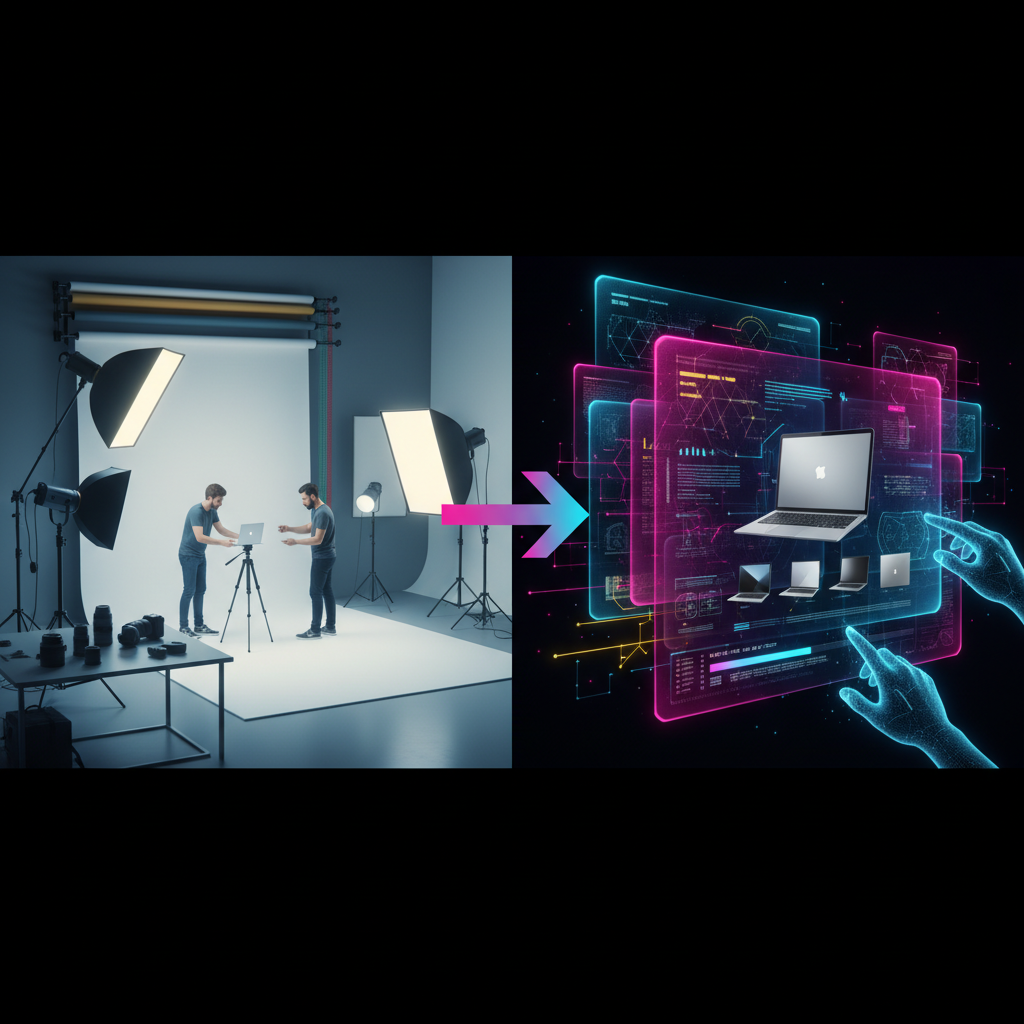
The ROI of AI product photography vs traditional studio shoots is a critical consideration for modern ecommerce businesses. As digital storefronts become increasingly visual, high-quality product imagery is non-negotiable. However, the traditional methods of achieving this can be costly and time-consuming. Artificial intelligence offers a transformative alternative, promising significant efficiencies and cost savings. This article will delve into the financial benefits and operational advantages that AI-powered solutions bring to product imaging, comparing them directly with conventional studio processes. We will explore how AI is redefining visual content creation for online retailers, offering a compelling business case for its adoption.
Cost Savings: How Much Money AI Product Photography Saves Ecommerce Brands
AI product photography significantly reduces operational costs for ecommerce brands by eliminating many expenses associated with traditional studio shoots. These savings stem from reduced equipment needs, lower personnel costs, and decreased logistical complexities. AI product photography leverages artificial intelligence to generate high-quality product images, often from a single input photo or even just product data, creating various backgrounds, lighting, and styles virtually.
Ecommerce brands can save substantial amounts of money by adopting AI product photography. Traditional shoots involve significant outlays for studio rental, professional photographers, stylists, models, equipment, travel, and post-production editing. AI solutions, conversely, require a subscription fee or per-image cost, which is typically a fraction of the traditional method. This shift allows businesses to reallocate budget towards other crucial areas like marketing or product development.
Analyzing the Direct Financial Impact of AI on Photography Budgets
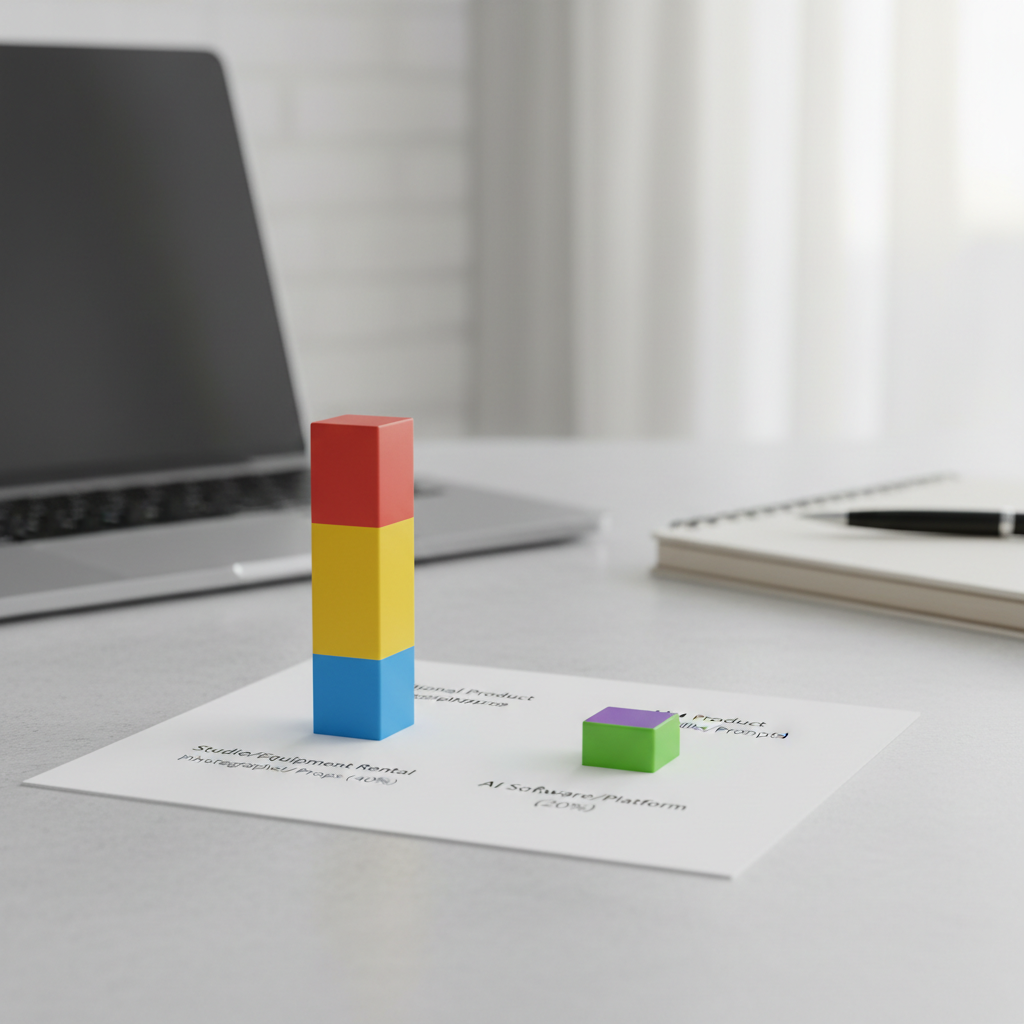
The direct financial impact of AI on photography budgets is profound. Brands no longer need to pay day rates for entire photography teams. Instead, sophisticated algorithms handle the heavy lifting, generating diverse visual assets quickly. This efficiency translates directly into reduced labor costs and faster turnaround times. Furthermore, the ability to generate multiple image variations without repeated physical shoots means greater flexibility at a lower marginal cost per image.
Reducing Overhead and Hidden Expenses with AI Solutions
Beyond obvious costs, traditional photography carries numerous hidden expenses. These include the administrative burden of coordinating shoots, managing complex logistics, and dealing with potential reshoots due to errors or changing marketing needs. AI product photography streamlines this entire process, minimizing administrative overhead. It also reduces costs associated with physical inventory management for shoots, shipping products to studios, and insuring valuable equipment. The digital nature of AI photography inherently eliminates many of these logistical and administrative burdens, offering a leaner operational model.
Efficiency and Speed: Accelerating Time-to-Market with AI-Powered Product Imagery
AI-powered product imagery dramatically accelerates time-to-market by enabling rapid content generation and iteration. Unlike traditional methods that can take weeks from concept to final delivery, AI solutions can produce publication-ready images in mere minutes or hours. This speed is crucial for fast-paced ecommerce environments where new products are constantly being introduced and trends evolve rapidly.
The ability to quickly generate high-quality visuals means products can be listed online much faster. This reduces the lag between product availability and its online presence, allowing brands to capitalize on market opportunities more effectively. For seasonal products or limited editions, this accelerated workflow can be a significant competitive advantage. Brands can react to consumer demand and market shifts with unprecedented agility.

Streamlining Workflow: From Product to Pixel in Record Time
AI product photography streamlines the entire visual content creation workflow. Traditional processes involve scheduling, shipping, shooting, selecting, and extensive post-production. With AI, a single product photo or 3D model can be uploaded, and the AI generates numerous variations. This eliminates bottlenecks at every stage, allowing marketing teams to focus on strategy rather than logistical coordination. The digital-first approach means less manual intervention and more automated efficiency.
The Impact of Rapid Image Generation on Sales Cycles and Inventory Turnover
Rapid image generation has a direct and positive impact on sales cycles and inventory turnover. Products can be advertised and sold sooner, reducing the time inventory sits unsold. This improved velocity can free up capital and reduce warehousing costs. Furthermore, the ability to quickly test different visual styles and optimize product listings based on performance data becomes feasible, leading to higher conversion rates and stronger sales performance. Brands can experiment with various visual narratives without incurring significant additional costs or delays.
Scalability and Consistency: Achieving Unmatched Brand Consistency with AI
AI product photography offers unparalleled scalability, allowing brands to generate thousands of consistent, high-quality images without the logistical challenges of traditional studios. This means a small startup can produce content at the same scale as a large enterprise, democratizing access to professional-grade visuals. The technology ensures that every product, regardless of catalog size, maintains a uniform look and feel, which is vital for brand recognition and trust.
Achieving brand consistency across a vast product catalog is a significant challenge with traditional photography. Variations in lighting, camera settings, and photographer style can lead to disparate visual experiences. AI, however, can apply predefined styles, backgrounds, and lighting schemes uniformly across all images. This ensures every product shot adheres to strict brand guidelines, reinforcing a cohesive brand identity for consumers.
Handling Large Product Catalogs with Automated Precision
For businesses with extensive product catalogs, AI product photography is a game-changer. Manual photography for thousands of SKUs is prohibitively expensive and time-consuming. AI systems can process large batches of products with automated precision, applying consistent rules and aesthetics to each image. This capability drastically reduces the workload and ensures that even the largest inventories are presented flawlessly. The ability to manage such volume efficiently is a core component of how much money AI product photography saves ecommerce brands.
Ensuring Uniform Brand Aesthetic Across All Product Visuals
Maintaining a uniform brand aesthetic is crucial for building a strong brand image. AI product photography excels at this by allowing brands to define specific parameters for backgrounds, shadows, reflections, and product placement. Once these parameters are set, the AI applies them consistently across every generated image. This eliminates the subtle inconsistencies that can arise from different photographers or varying studio conditions, ensuring that every visual touchpoint reinforces the brand’s identity. This level of control and consistency helps build consumer trust and enhances the overall shopping experience.
Quality and Customization: Elevating Visual Appeal Through AI
AI product photography elevates visual appeal by offering sophisticated customization options and maintaining high image quality comparable to, and often surpassing, traditional methods. Advanced AI algorithms can generate photorealistic images with intricate details, realistic textures, and dynamic lighting effects. This level of quality ensures products are presented in the best possible light, captivating potential customers.
The customization capabilities of AI are vast, allowing brands to experiment with an endless array of virtual environments, props, and scenarios. This flexibility means products can be showcased in context, demonstrating their use and appeal to specific target audiences without the expense of physical sets. From minimalist studio shots to elaborate lifestyle scenes, AI can create diverse visual narratives tailored to marketing campaigns.
Generating Photorealistic Images with Dynamic Backgrounds and Lighting
AI technology has advanced to the point where it can generate stunningly photorealistic images. Users can select from a library of virtual backgrounds or even upload their own, placing products in aspirational settings. Dynamic lighting features allow for precise control over shadows, highlights, and reflections, mimicking professional studio setups. This capability ensures that each product image is not only high-quality but also visually engaging and contextually relevant. The ability to iterate on these elements quickly is a major advantage.
Tailoring Product Visuals for Specific Marketing Campaigns and Audiences
One of the most powerful aspects of AI product photography is its ability to tailor visuals for specific marketing campaigns and target audiences. A single product can be shown in multiple environments: a luxury setting for high-end campaigns, a casual backdrop for everyday use, or a vibrant scene for a younger demographic. This targeted visual content resonates more deeply with consumers, improving engagement and conversion rates. The ease of customization makes A/B testing different visual approaches incredibly efficient, providing valuable insights into what resonates most with customers.
Investment and Implementation: AI Product Photography Cost Breakdown for 500 Product Catalog
The AI product photography cost breakdown for 500 product catalog reveals significant savings compared to traditional methods, making it a highly attractive investment for ecommerce businesses. While initial setup might involve selecting a suitable AI platform and potentially optimizing existing product images for AI input, the recurring costs are substantially lower. This makes the overall investment highly efficient, especially for growing brands.
Implementing AI product photography typically involves a subscription model or a per-image fee, depending on the chosen platform. For a catalog of 500 products, this translates to a predictable and manageable expense. In contrast, a traditional photoshoot for 500 products would involve extensive planning, multiple shooting days, and considerable post-production, leading to much higher variable costs.
| Cost Category | Traditional Studio Photography (Estimate for 500 Products) | AI Product Photography (Estimate for 500 Products) | Potential Savings with AI |
|---|---|---|---|
| Photographer/Stylist Fees | $15,000 – $30,000 | $0 | 100% |
| Studio Rental/Set Design | $5,000 – $10,000 | $0 | 100% |
| Equipment Rental/Logistics | $2,000 – $5,000 | $0 | 100% |
| Post-Production/Editing | $7,500 – $15,000 | $500 – $2,500 (Platform Cost) | 66% – 97% |
| Travel/Shipping Products | $1,000 – $3,000 | $0 | 100% |
| Software/Platform Fees | $0 (or minimal) | $500 – $2,500 (Included in Post-Production) | N/A |
| Total Estimated Cost | $30,500 – $63,000 | $1,000 – $5,000 | 90% – 98% |
Comparing Initial Outlays and Long-Term Operating Expenses
The initial outlays for AI product photography are typically lower. Brands might invest in a subscription to an AI platform, which often includes a certain number of image generations per month. For traditional photography, initial outlays include deposits for studios, equipment, and personnel. Long-term operating expenses further highlight AI’s advantage. As a catalog grows, the per-image cost with AI often decreases or remains consistent, whereas traditional photography costs scale linearly with the number of products and variations. This predictable cost structure is a major benefit for financial planning.
Evaluating Different AI Photography Platforms and Pricing Models
When considering AI product photography, evaluating different platforms and their pricing models is crucial. Some platforms offer tiered subscriptions based on usage, while others charge per image generated. Factors to consider include the quality of AI output, the range of customization options, integration capabilities with existing ecommerce platforms, and customer support. A thorough evaluation ensures that the chosen solution aligns with the brand’s specific needs and budget, maximizing the ROI of AI product photography vs traditional studio shoots. Many platforms offer free trials, allowing businesses to test the waters before making a significant commitment.
Strategic Advantage: AI Product Photography Business Case for C-Suite Decision Makers
Presenting an AI product photography business case for C-suite decision makers involves highlighting not just cost savings, but also strategic advantages that drive growth and market leadership. AI photography offers a competitive edge by enabling faster market entry, enhanced brand consistency, and the agility to respond quickly to market trends. These factors directly contribute to increased revenue and stronger brand equity.
C-suite executives are focused on long-term growth, operational efficiency, and sustainable competitive advantage. AI product photography delivers on all these fronts. It frees up resources, accelerates product launches, and ensures a consistently high-quality visual presence across all digital channels. This strategic shift from a cost center to a growth enabler makes a compelling argument for investment.
Driving Revenue Growth Through Faster Product Launches and Enhanced Visuals
Faster product launches directly translate to earlier revenue generation. With AI, products can go from development to online sales much quicker, capturing market share ahead of competitors. Additionally, the ability to generate diverse and high-quality visuals allows for more effective marketing campaigns, leading to higher conversion rates and increased average order value. Enhanced visuals improve customer engagement and trust, which are critical drivers of online sales. This direct link between AI adoption and revenue growth is a powerful point for C-suite consideration.
Improving Brand Equity and Market Responsiveness with AI-Powered Content
AI-powered content creation significantly improves brand equity by ensuring every product image is polished, professional, and consistent with brand guidelines. This uniform quality builds trust and reinforces brand identity. Furthermore, AI enables rapid market responsiveness. If a competitor launches a new product or a trend emerges, brands can quickly generate new, relevant visuals to adapt their marketing efforts. This agility allows businesses to stay relevant and competitive in a dynamic digital landscape, securing a stronger position in the market.
Real-World Impact: Case Study: Brand Saves 80 Percent on Product Photography with AI
A compelling case study brand saves 80 percent on product photography with AI demonstrates the tangible financial benefits and operational efficiencies of adopting artificial intelligence for visual content. This real-world example illustrates how a hypothetical ecommerce brand, “EcoGlow Organics,” successfully transitioned from traditional studio shoots to an AI-powered workflow, achieving remarkable cost reductions and improved output. EcoGlow Organics, a retailer specializing in sustainable home goods, faced escalating costs and slow turnaround times with their growing product catalog.
Before AI, EcoGlow Organics spent an average of $50,000 annually on product photography for approximately 300 new SKUs and refreshed existing ones. This included photographer fees, studio rental, prop stylists, and extensive post-production. The process often took 4-6 weeks from product arrival to website launch. After implementing an AI product photography solution, their annual photography expenses dropped to around $10,000, representing an 80% saving. The turnaround time for images also reduced to less than a week.
Analyzing the Before-and-After Metrics of AI Adoption
The before-and-after metrics for EcoGlow Organics are striking. Prior to AI, their cost per image was approximately $166. After AI implementation, this figure plummeted to about $33 per image, including platform subscription fees. This dramatic reduction allowed them to allocate more budget to digital advertising, leading to a 15% increase in online conversions within the first six months. The faster image delivery also meant products were listed sooner, contributing to a 10% increase in initial sales velocity for new items.
Here is a comparison of their key metrics:
* Annual Photography Budget:
* Before AI: $50,000
* After AI: $10,000
* Cost Per Image (approx.):
* Before AI: $166
* After AI: $33
* Image Turnaround Time:
* Before AI: 4-6 weeks
* After AI: <1 week
* New Product Launch Speed:
* Before AI: Delayed
* After AI: Accelerated
* Conversion Rate Impact:
* Before AI: Baseline
* After AI: +15%
* Sales Velocity for New Items:
* Before AI: Baseline
* After AI: +10%
Lessons Learned and Best Practices for Successful AI Integration
EcoGlow Organics’ success provides valuable lessons. First, a clear understanding of current photography costs and bottlenecks is essential before seeking an AI solution. Second, choosing an AI platform that integrates well with existing ecommerce systems and offers robust customization options is key. Third, investing time in defining brand guidelines for AI-generated visuals ensures consistency. Finally, training marketing and product teams on the new workflow facilitates a smooth transition. By following these best practices, other brands can also realize significant savings and operational improvements, solidifying the ROI of AI product photography vs traditional studio shoots.
What is AI product photography?
AI product photography uses artificial intelligence algorithms to generate or enhance product images. It can create various backgrounds, lighting, and styles from a single input photo or 3D model, eliminating the need for physical studio setups. This technology automates many aspects of visual content creation, offering efficiency and scalability.
How much money can AI product photography save an ecommerce brand?
AI product photography can save ecommerce brands anywhere from 50% to over 90% on their product photography costs. These savings come from eliminating expenses like studio rentals, photographer fees, stylists, equipment, and extensive post-production, as highlighted in the “how much money AI product photography saves ecommerce brands” discussion.
Is AI product photography quality comparable to traditional studio shoots?
Yes, modern AI product photography can produce photorealistic images with high quality, often indistinguishable from traditional studio shoots. Advanced AI can accurately render textures, shadows, and reflections, offering sophisticated customization options for backgrounds and lighting to match specific brand aesthetics.
How long does it take to get product images using AI?
One of the biggest advantages of AI product photography is speed. Images can be generated in minutes to hours, significantly reducing the turnaround time compared to traditional shoots which can take weeks. This rapid generation accelerates time-to-market for new products.
What is the typical AI product photography cost breakdown for a 500 product catalog?
For a 500-product catalog, the AI product photography cost breakdown typically involves a platform subscription or per-image fee, potentially ranging from $1,000 to $5,000 annually. This is a fraction of the $30,000 – $60,000+ often associated with traditional photography for the same volume, as detailed in the “AI product photography cost breakdown for 500 product catalog” section.
Can AI product photography help with brand consistency?
Absolutely. AI product photography excels at maintaining brand consistency. Once specific visual guidelines (backgrounds, lighting, angles) are set, the AI applies them uniformly across all images, ensuring a cohesive and professional look throughout the entire product catalog. This builds trust and strengthens brand identity.
Is AI product photography suitable for C-suite decision-makers?
Yes, AI product photography presents a strong business case for C-suite decision-makers. It offers significant ROI through cost reduction, faster time-to-market, enhanced scalability, and improved brand consistency, all contributing to revenue growth and competitive advantage. The “AI product photography business case for C-suite decision makers” section elaborates on these strategic benefits.
The shift from traditional studio photography to AI-powered solutions represents a monumental leap for ecommerce brands. The ROI of AI product photography vs traditional studio shoots is overwhelmingly in favor of AI, offering a compelling blend of cost efficiency, speed, and scalability.
Key takeaways include:
* Significant Cost Savings: Brands can reduce photography budgets by 80% or more, reallocating funds to other growth initiatives.
* Unmatched Efficiency: Products can go to market faster, capitalizing on trends and accelerating sales cycles.
* Superior Scalability & Consistency: AI handles large catalogs with ease, ensuring every image adheres to strict brand guidelines.
* Enhanced Quality & Customization: Photorealistic results and endless customization options allow for targeted, impactful visuals.
* Strong Business Case: For C-suite leaders, AI photography is a strategic investment that drives revenue, improves brand equity, and fosters market responsiveness.
Embracing AI product photography is no longer just an option but a strategic imperative for businesses looking to thrive in the competitive digital landscape. Explore how AI can transform your visual content strategy and unlock new levels of efficiency and profitability today.