


Kling AI Product Video Prompts for Stunning Marketing
Creating compelling product videos is now more accessible than ever with Kling AI product video prompts. This innovative technology empowers businesses to generate high-quality, engaging visual content quickly and efficiently, transforming how products are showcased to target audiences. By leveraging sophisticated AI models, Kling AI allows users to describe their desired video with simple text prompts, turning ideas into professional-grade product demonstrations and advertisements. This capability is revolutionizing digital marketing, offering a powerful tool for brands looking to enhance their online presence and drive engagement without extensive production costs or technical expertise.
Mastering Kling AI Product Video Prompts: A Step-by-Step Guide
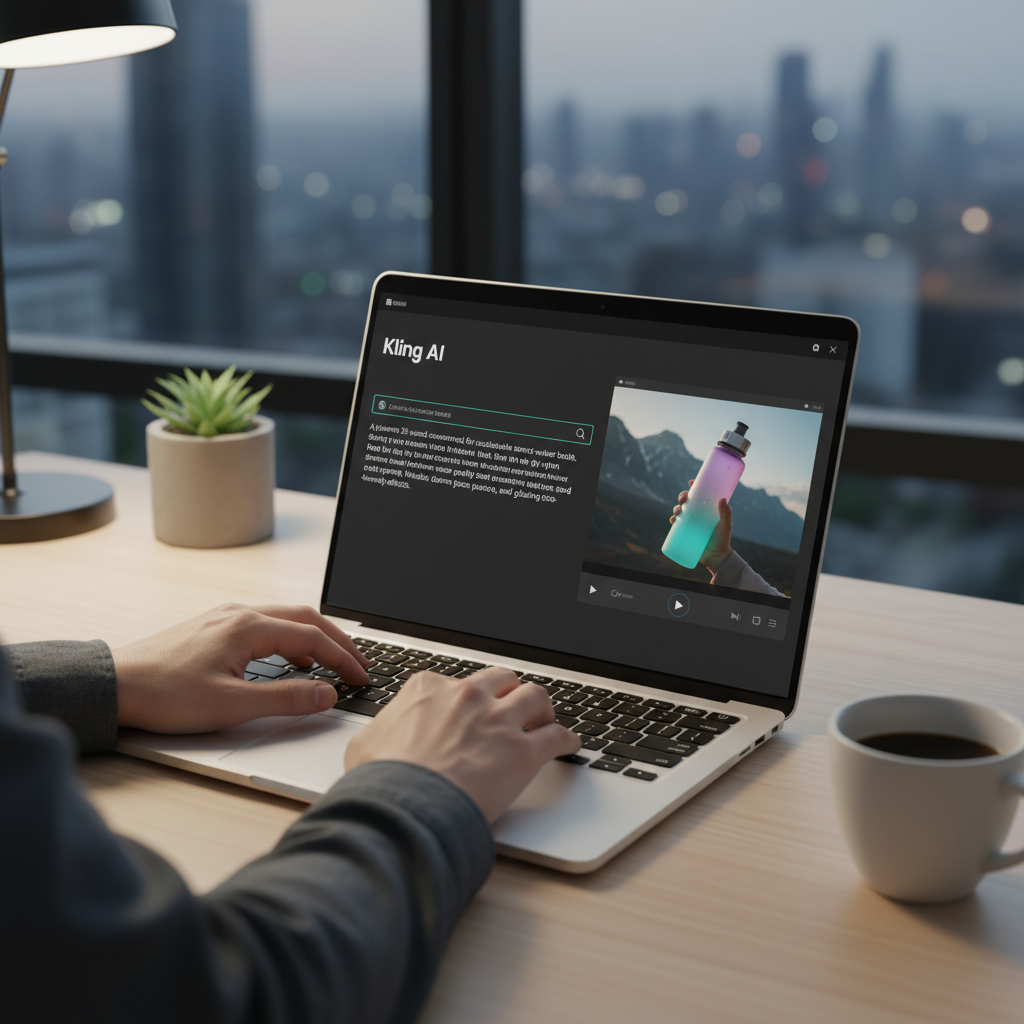
You can create product videos with Kling AI by formulating clear, descriptive text prompts that guide the AI in generating your desired visual content. The process begins with understanding your product’s key features and benefits, then translating these into specific instructions for the AI. This approach allows even novices to produce professional-looking videos.
Crafting Effective Prompts for Optimal Results
To get the best results from Kling AI, your prompts should be detailed yet concise. Think about the specific elements you want to include: the product itself, the environment, camera angles, lighting, and any actions or movements. For instance, instead of “video of a shoe,” try “a sleek, minimalist running shoe rotating slowly on a pristine white pedestal in a brightly lit studio, with soft shadows.” The more descriptive you are, the better the AI can interpret and generate the scene you envision. Consider the mood and tone you want to convey; words like “dynamic,” “luxurious,” or “playful” can significantly influence the output. Experimentation is key to discovering which prompt structures yield the most compelling visuals for your specific product.
Leveraging Kling AI Features for Dynamic Visuals
Kling AI often comes with various settings and parameters that allow for further customization beyond the initial text prompt. These might include options for video length, aspect ratio, resolution, and even stylistic preferences. Learning how to create product videos with Kling AI effectively means exploring these advanced controls. For example, you might adjust the camera’s movement to be a slow pan or a quick zoom, or specify different lighting conditions to highlight particular product features. Utilizing these features can add a layer of polish and professionalism to your AI-generated videos, making them more engaging for your audience. Many users find success by starting with a basic prompt and then iteratively refining it, adding more details and adjusting settings until the output perfectly matches their vision.
Transforming Images to Video with Kling AI for E-commerce Products
Kling AI excels at transforming static images into dynamic product videos, offering a powerful tool for e-commerce businesses to enhance their product listings and marketing materials. This capability allows brands to breathe life into their existing product photography, creating engaging visual stories without the need for new photoshoots or complex video editing software. By providing Kling image to video prompts for ecommerce products, businesses can animate product shots, showcase different angles, and even simulate product usage in various scenarios.

Best Practices for Kling Image to Video Prompts
When using Kling AI to convert images into videos, the quality of your source images is paramount. High-resolution, well-lit product photos will naturally yield superior video results. Your prompts should specify how you want the image to animate. Do you want the product to rotate? Should the camera pan around it? For example, a prompt like “Animate this high-resolution image of a ceramic mug. The mug slowly rotates 360 degrees on a wooden table, with gentle light reflecting off its glaze” provides clear instructions. Consider adding details about the background or any desired visual effects to further enhance the output. Effective Kling image to video prompts for ecommerce products often include descriptions of the desired camera movement, the speed of animation, and any specific focus points.
Showcasing Products with Visual Storytelling
The ability to turn images into videos opens up new avenues for visual storytelling in e-commerce. Instead of just displaying a gallery of static images, businesses can create short, looping videos that highlight key features or demonstrate scale. For instance, an image of a piece of jewelry can be animated to sparkle and shimmer, or a clothing item can be shown from multiple angles as if worn by an invisible model. This dynamic presentation can significantly improve product understanding and customer engagement. By carefully crafting your Kling image to video prompts, you can guide the AI to create mini-narratives around your products, making them more appealing and informative to potential buyers. This method is particularly effective for social media platforms where short, visually rich content thrives.
Generating Engaging Kling AI Product Ad Examples for Social Media
Kling AI is an invaluable tool for generating compelling product advertisements specifically tailored for various social media platforms, allowing marketers to quickly produce diverse ad creatives. The platform’s ability to interpret detailed prompts means you can create a wide array of ad styles, from quick, attention-grabbing snippets to more detailed product demonstrations, all optimized for social media consumption. This significantly reduces the time and resources traditionally required for ad production.
Tailoring Prompts for Different Social Platforms
Different social media platforms have unique content preferences and audience behaviors. For Instagram Reels or TikTok, short, dynamic, and visually striking videos perform best. Your Kling AI product ad examples for social media prompts should reflect this, focusing on quick cuts, trending music (which you’d add post-generation), and engaging visual effects. For platforms like Facebook or YouTube, slightly longer, more informative videos might be appropriate, allowing for more detailed product showcases or testimonials. When crafting prompts, consider the platform’s typical video length, aspect ratio, and the general aesthetic that resonates with its users.
Here are some prompt considerations for different platforms:
* TikTok/Reels: “Fast-paced video of a new vibrant sneaker, quick zooms, spinning motion, energetic background, 9:16 aspect ratio.”
* Instagram Feed: “Elegant video showcasing a luxury watch on a wrist, slow pan, macro shots of details, soft lighting, 1:1 aspect ratio.”
* Facebook/YouTube: “Detailed demonstration of a smart home device, showing setup and key features, clean interface, friendly voiceover (add later), 16:9 aspect ratio.”
Analyzing Successful Kling AI Product Ad Campaigns
To create truly effective Kling AI product ads, it’s beneficial to analyze existing successful campaigns on social media. Pay attention to the types of visuals, pacing, and messaging that resonate with your target audience. Many successful ads leverage strong emotional appeals, clear problem-solution narratives, or direct calls to action. When formulating your Kling AI prompts, try to incorporate elements that mimic these successful strategies. For example, if a competitor’s ad showing a product solving a common pain point performs well, you can prompt Kling AI to generate a similar scenario. Studying these Kling AI product ad examples for social media can provide valuable insights into what works, allowing you to refine your prompts for maximum impact and engagement.
Kling vs Veo: Realistic Product Video Generation Comparison
When it comes to realistic product video generation, both Kling AI and Veo offer compelling capabilities, but they cater to slightly different needs and excel in distinct areas. Understanding these differences is crucial for businesses deciding which platform best suits their specific marketing objectives and production requirements. Both platforms leverage advanced AI to transform text prompts into visual content, yet their underlying models and feature sets can lead to variations in output quality, realism, and creative control.
Feature Showdown: Kling’s Strengths in Product Video
Kling AI often stands out for its user-friendly interface and its ability to quickly generate a wide range of product video styles from relatively simple prompts. Its strengths lie in creating dynamic, marketing-ready content with a focus on visual appeal and quick iterations. Users frequently praise Kling for its intuitive prompt engineering, making it accessible even for those without extensive video production experience. It’s particularly strong for generating diverse angles, environments, and product interactions, making it ideal for creating various Kling AI product video prompts for different campaign needs. The platform may offer more direct controls over stylistic elements like lighting and camera movement through prompt modifiers.
When to Choose Kling for Your Product Video Needs
You should choose Kling AI if your priority is rapid iteration, ease of use, and generating a high volume of diverse product video content for marketing purposes, especially for social media ads and e-commerce listings. If your team has limited video editing expertise or resources, Kling’s streamlined workflow can be a significant advantage. It’s excellent for experimenting with different visual concepts and quickly producing multiple variations of a product video to test audience reception. For businesses that need to frequently update their product showcases or create seasonal campaigns, Kling AI provides a flexible and efficient solution.
Here’s a comparison table between Kling and Veo for realistic product video generation:
| Feature | Kling AI | Veo |
|---|---|---|
| Ease of Use | Generally considered more user-friendly for beginners. | May have a steeper learning curve for advanced features. |
| Prompt Complexity | Effective with clear, descriptive prompts; good for quick iterations. | Often benefits from highly detailed, technical prompts for precision. |
| Realism | High realism, especially for product-focused scenarios. | Known for exceptional photorealism and detailed scene generation. |
| Speed of Generation | Often faster for initial drafts and quick variations. | Can take longer for highly complex or photorealistic outputs. |
| Customization Options | Strong control through prompt modifiers and stylistic settings. | Advanced controls for fine-tuning physics, materials, and lighting. |
| Target Audience | Marketers, e-commerce, small businesses, rapid content creation. | Filmmakers, studios, high-fidelity visualization, complex simulations. |
While Veo might offer unparalleled photorealism for highly complex scenes and simulations, Kling AI provides a robust and accessible platform for businesses focused on generating high-quality, marketing-ready product videos efficiently. The choice between Kling vs Veo for realistic product video generation ultimately depends on your specific project requirements, desired level of realism, and available technical expertise.
Advanced Kling AI Prompt Engineering for Unique Product Showcases
Advanced Kling AI product video prompts go beyond basic descriptions, enabling users to craft highly specific and unique product showcases that stand out in a crowded market. This involves a deeper understanding of how the AI interprets language and leveraging that knowledge to generate truly bespoke visual content. By employing sophisticated prompt engineering techniques, you can guide Kling AI to produce videos that reflect intricate brand aesthetics, complex product interactions, and innovative storytelling.
Integrating Brand Elements into Kling AI Prompts
To create videos that are unmistakably yours, integrate specific brand elements directly into your Kling AI prompts. This could include describing your brand’s color palette (“a vibrant electric blue and stark white color scheme”), specific textures (“a smooth, matte finish with subtle metallic accents”), or even the overall brand philosophy (“a video that evokes a sense of minimalist luxury and cutting-edge technology”). You can also specify the type of environment that aligns with your brand’s image, such as “a sun-drenched, airy loft apartment” for a lifestyle brand, or “a high-tech, futuristic laboratory” for a tech product. The more precisely you define these elements in your prompts, the more cohesive and on-brand your AI-generated product videos will appear. This level of detail helps Kling AI understand the subtle nuances that make your brand unique.
Experimenting with Styles and Angles for Product Videos
Don’t be afraid to experiment with unconventional styles and camera angles in your prompts to create truly unique product showcases. Instead of a standard rotation, consider a “worm’s-eye view tracking shot as the product glides across a reflective surface,” or a “time-lapse effect showing the product assembling itself from individual components.” You can also specify artistic styles, such as “a cinematic, film noir aesthetic with dramatic shadows” or “a bright, pop-art animation style.” Exploring different perspectives, lighting conditions, and visual metaphors can lead to incredibly creative and memorable product videos. Advanced Kling AI product video prompts allow for this level of creative freedom, pushing the boundaries of what’s possible with AI-generated content and helping your products capture attention.
What is Kling AI primarily used for in product video creation?
Kling AI is primarily used for generating dynamic and engaging product videos from text prompts, making it ideal for e-commerce, social media advertising, and marketing campaigns. It simplifies the video production process by allowing users to describe their desired visuals, which the AI then brings to life.
Can Kling AI generate realistic human interactions with products?
While Kling AI excels at rendering products and environments realistically, its ability to generate highly realistic and nuanced human interactions with products is still evolving. It can simulate basic interactions, but complex human movements or expressions might require more advanced prompting or post-production.
How does Kling AI handle different product materials and textures?
Kling AI is designed to interpret descriptions of various product materials and textures, such as glossy, matte, metallic, or fabric, and render them with impressive realism. Specifying these details in your prompts helps the AI accurately reflect the physical properties of your product.
Is Kling AI suitable for small businesses with limited budgets?
Yes, Kling AI is highly suitable for small businesses with limited budgets. It significantly reduces the need for expensive video equipment, studio rentals, and professional videographers, offering a cost-effective solution for creating high-quality product videos.
What are the key benefits of using Kling AI for e-commerce product videos?
Key benefits include rapid content generation, reduced production costs, increased visual engagement on product pages, and the ability to easily create diverse video variations for A/B testing. It helps e-commerce businesses stand out and provide more comprehensive product views.
Can I integrate my own brand’s music or voiceover with Kling AI videos?
Kling AI primarily focuses on generating the visual component of the video. While it doesn’t typically generate audio, the output videos are designed to be easily integrated with your own brand’s music, voiceovers, or sound effects in a separate video editing software.
Harnessing the power of Kling AI fundamentally transforms the landscape of product video creation. By mastering the art of crafting effective Kling AI product video prompts, businesses can unlock unprecedented efficiency and creativity in their marketing efforts. This technology democratizes high-quality video production, making it accessible to a broader range of companies and individuals.
Key takeaways for leveraging Kling AI:
* Prompt Precision is Paramount: Detailed and descriptive prompts yield the most accurate and compelling video outputs.
* Embrace Iteration: Experiment with different prompts and settings to discover the best visual narratives for your products.
* Platform Specificity: Tailor your prompts to the unique requirements and audience behaviors of each social media platform.
* Strategic Comparisons: Understand the strengths of Kling AI against other tools like Veo to make informed decisions for your projects.
* Integrate Branding: Weave brand-specific aesthetics and messaging into your prompts for cohesive and recognizable content.
As AI continues to evolve, tools like Kling AI will become indispensable for marketers seeking to create engaging, high-quality product videos at scale. Start exploring the possibilities today and elevate your product showcases to new heights.