

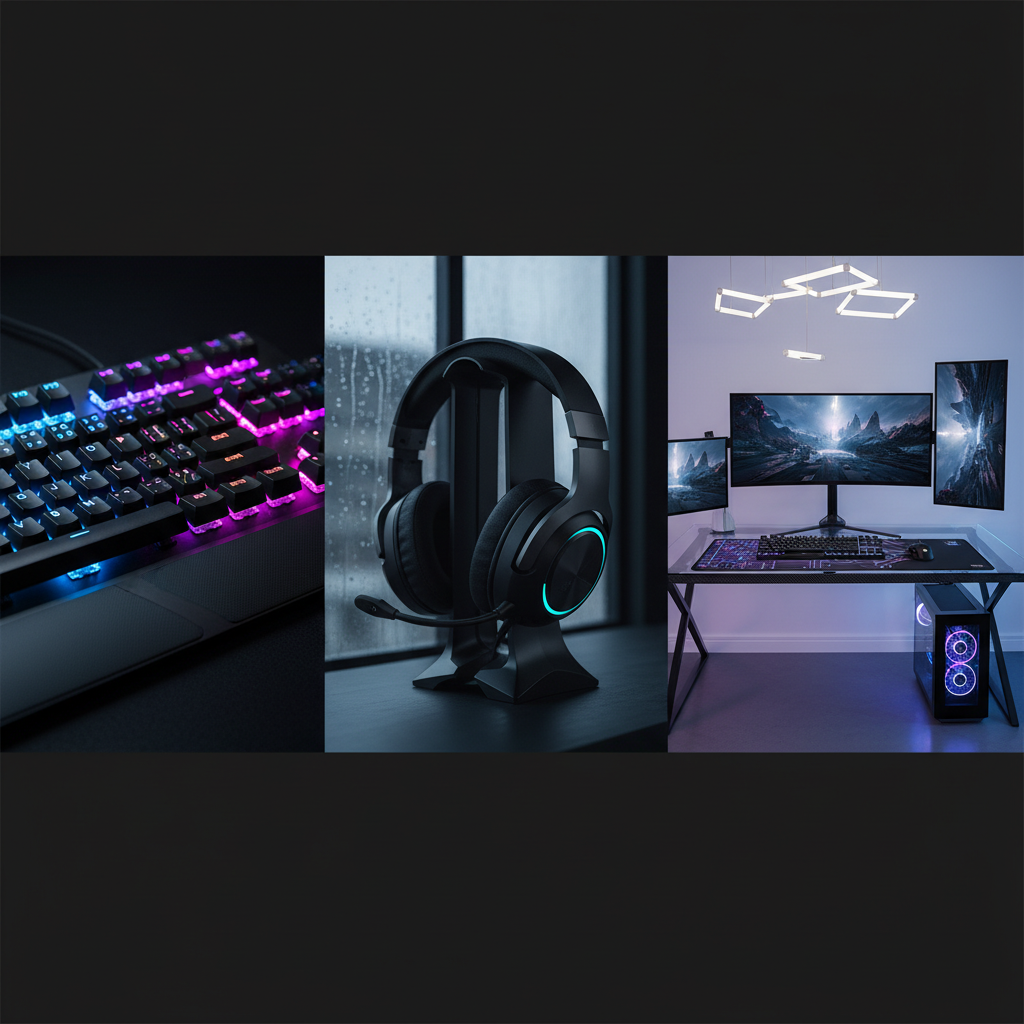
AI Product Photography For Gaming And Esports Accessories 2026
The landscape of product visualization is rapidly evolving, with AI product photography for gaming and esports accessories emerging as a transformative force. This innovative approach leverages artificial intelligence to generate high-quality, visually stunning images of gaming gear without the need for traditional photoshoots. By automating complex processes, AI tools enable brands to create captivating visuals that resonate with the target audience, showcasing intricate details and dynamic aesthetics crucial for the competitive gaming market. This technology promises efficiency, cost-effectiveness, and unparalleled creative control for marketers and designers alike.
How AI Product Photography Enhances Gaming Accessories Visuals?
AI product photography for gaming and esports accessories significantly enhances visuals by offering unparalleled control over lighting, environments, and stylistic elements. It allows brands to produce photorealistic images that highlight the unique features and premium quality of gaming products, engaging potential customers more effectively. This technology streamlines the entire creative process, from concept to final output.
Artificial intelligence in product photography involves algorithms that can generate, manipulate, and enhance images based on textual prompts or existing 3D models. These AI systems learn from vast datasets of images, enabling them to understand and replicate complex visual styles, textures, and lighting conditions. For gaming accessories, this means creating dynamic shots of headsets, keyboards, mice, and controllers in virtual studios. Brands can experiment with countless angles and backgrounds without the logistical challenges of physical photoshoots. This capability ensures a consistent brand image across all marketing channels.
Understanding AI-Powered Image Generation for Gaming Gear
AI-powered image generation for gaming gear utilizes advanced neural networks to create stunning visuals from scratch or enhance existing ones. Users provide descriptions or parameters, and the AI renders the desired product image. This process is particularly beneficial for showcasing intricate designs and customizable features often found in high-end gaming accessories. It allows for rapid iteration and testing of different visual concepts.
The technology can generate variations of a single product, displaying it in various colors, finishes, and configurations. This flexibility is invaluable for product launches and showcasing diverse customization options. Furthermore, AI can automatically remove backgrounds, touch up imperfections, and adjust color grading, saving significant post-production time. The result is a polished, professional image ready for immediate publication.
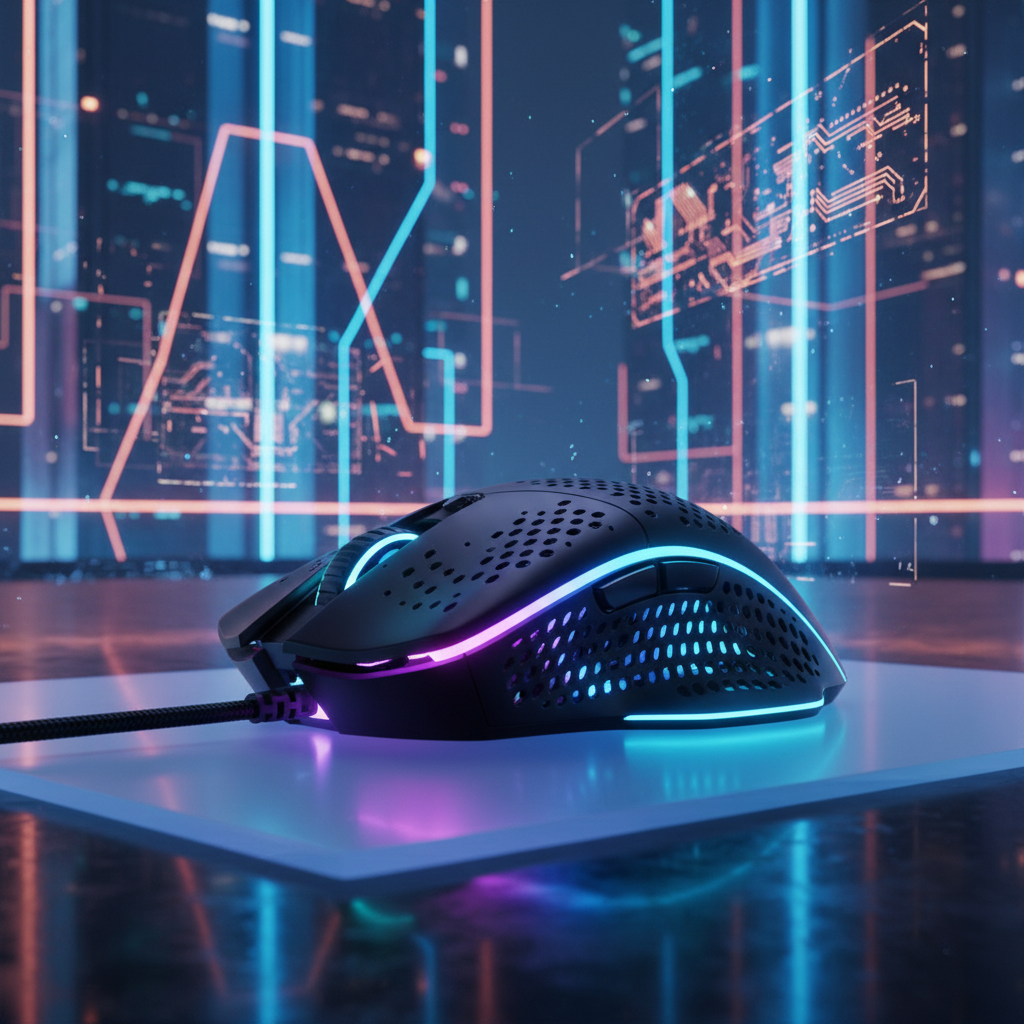
Benefits of AI Product Photography for Marketing Gaming Accessories
The benefits of AI product photography for gaming and esports accessories in marketing are extensive, including cost reduction, speed, and creative freedom. Brands can significantly cut down on expenses associated with studio rentals, equipment, models, and photographers. The rapid generation of images allows for quicker product launches and agile marketing campaigns.
* Cost Efficiency: Eliminates the need for expensive physical photoshoots and post-production.
* Speed to Market: Generate high-quality images in minutes, not days or weeks.
* Creative Versatility: Experiment with unlimited styles, settings, and lighting effects.
* Consistency: Maintain a uniform visual brand identity across all product lines.
* Scalability: Easily produce thousands of unique product images for large inventories.
This efficiency translates directly into a competitive advantage in the fast-paced gaming market. Marketers can quickly adapt to trends and produce fresh content continuously.
Leveraging AI for Creating RGB Lighting Product Photography Effects
AI for creating RGB lighting product photography effects is revolutionizing how gaming accessories are presented, allowing brands to generate vibrant and dynamic visuals that perfectly capture the essence of their products. This capability is crucial for showcasing the customizable and often spectacular lighting features of modern gaming gear. AI can simulate complex light patterns, colors, and reflections with incredible accuracy.
Traditional photography often struggles to perfectly capture the nuanced glow and intricate patterns of RGB lighting without extensive setup and post-processing. AI, however, can render these effects flawlessly, ensuring every LED and gradient is showcased to its full potential. It enables the creation of images where RGB lighting is not just present but is a central, dynamic element of the product’s appeal. This leads to more engaging and realistic product presentations.
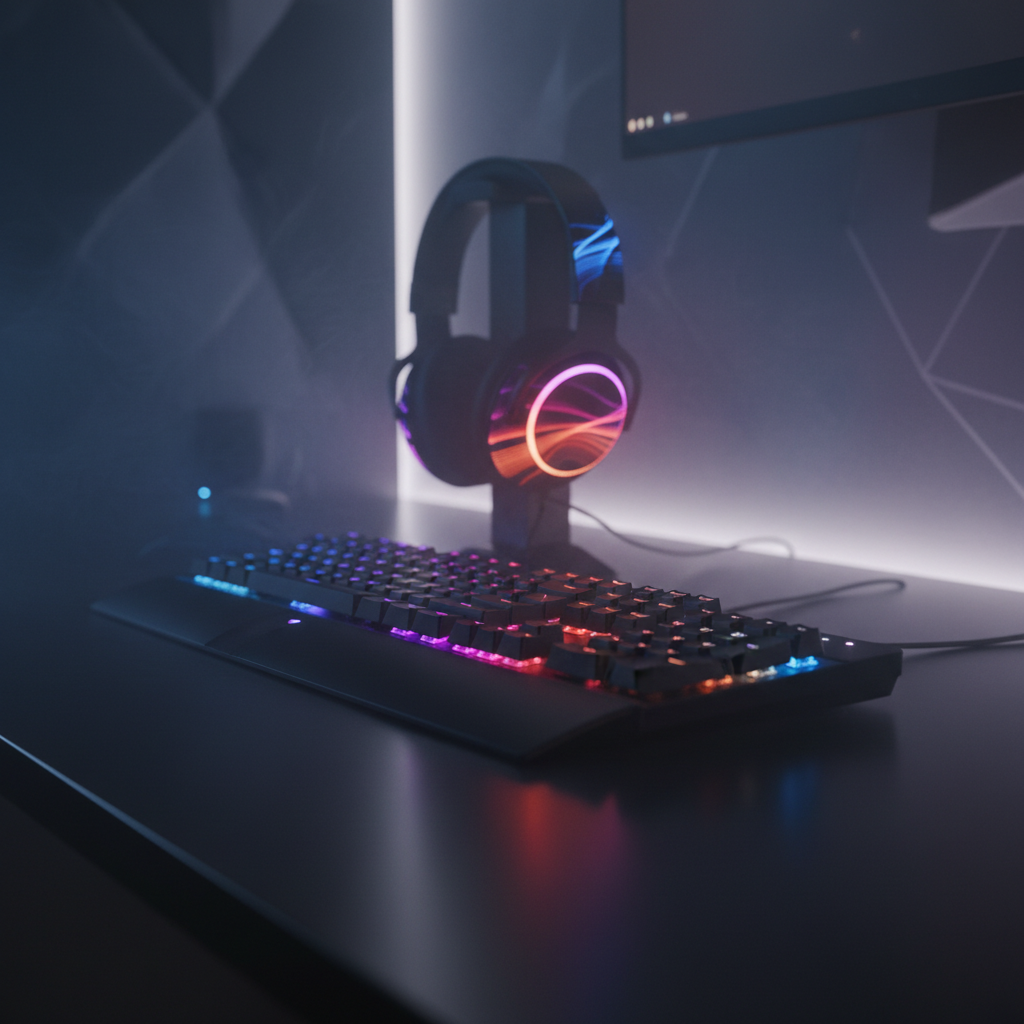
Simulating Dynamic RGB Lighting with AI Tools
Simulating dynamic RGB lighting with AI tools involves using sophisticated algorithms to model light emission, reflection, and refraction. AI can generate intricate light trails, pulsating effects, and seamless color transitions that would be challenging to achieve photographically. This allows for a hyper-realistic representation of the product’s lighting capabilities.
AI platforms offer intuitive interfaces where users can specify desired colors, patterns, and intensity for RGB lighting. The AI then renders the product with these effects applied, showing how the light interacts with the product’s surface and surrounding environment. This level of detail and control is invaluable for marketing products where RGB is a key selling point. It ensures that the visual accurately reflects the product’s in-hand experience.
Achieving Professional RGB Lighting Effects for Gaming Peripherals
Achieving professional RGB lighting effects for gaming peripherals through AI involves leveraging advanced rendering techniques to ensure realism and visual impact. AI can mimic studio lighting setups, allowing for precise control over highlights, shadows, and the overall mood of the image. This ensures the RGB effects look natural and integrated, not simply superimposed.
Consider the following aspects for professional RGB effects:
* Color Accuracy: Ensure the AI reproduces exact color codes for brand consistency.
* Light Spill: Simulate how light spills onto surfaces around the product, adding realism.
* Reflections: Accurately depict reflections on glossy surfaces, enhancing depth.
* Motion Blur (Simulated): Create a sense of dynamism for animated lighting sequences.
* Integration: Ensure the lighting appears to emanate from the product itself, not an external source.
By focusing on these details, AI can produce images that are indistinguishable from high-end studio photography, effectively showcasing the vibrant RGB features of gaming peripherals.
Optimizing AI Product Photography for PC Components and Gaming Peripherals
AI product photography for PC components and gaming peripherals is optimized by focusing on precision, detail, and showcasing technical specifications in an aesthetically pleasing manner. AI tools excel at rendering the intricate circuitry, cooling solutions, and modular designs of internal PC parts, as well as the ergonomic and functional aspects of peripherals. This allows for clear, informative, and attractive product visuals.
For PC components like motherboards, GPUs, and CPUs, AI can generate exploded views or cross-sections to highlight internal architecture without physical disassembly. For gaming peripherals such as mechanical keyboards, high-DPI mice, and surround-sound headsets, AI can emphasize texture, button layout, and connectivity options. The goal is to provide visuals that not only look good but also inform the tech-savvy consumer about the product’s capabilities. AI can also generate comparisons between different models or configurations.
Showcasing Intricate Details of PC Hardware with AI
Showcasing intricate details of PC hardware with AI involves using high-fidelity rendering to bring out the fine points of circuit boards, heat sinks, and connectors. AI can generate macro shots that highlight specific features, such as custom VRM designs or unique fan blades. This level of detail is critical for enthusiasts who scrutinize every aspect of a component before purchase.
AI can also create interactive 3D models from which multiple 2D images can be extracted, offering consumers a comprehensive view of the product. This approach reduces the need for multiple physical prototypes for photography. Furthermore, AI can apply different material finishes and textures to components, allowing brands to visualize various product iterations quickly. It ensures that every screw and port is rendered with perfect clarity.
Creating Compelling Visuals for Gaming Peripherals
Creating compelling visuals for gaming peripherals through AI involves emphasizing their design, ergonomics, and performance features. AI can generate images that place peripherals in dynamic action shots, simulating real-world usage scenarios. This helps potential buyers visualize themselves using the product in their gaming setup.
| Feature to Highlight | AI Photography Approach | Benefit to Consumer |
|---|---|---|
| Ergonomics (Mice, Keyboards) | Hand models interacting with product, various angles | Understanding comfort and grip |
| Tactile Feedback (Keyboards) | Close-ups of keycaps, simulated press animations | Visualizing switch type and feel |
| Audio Quality (Headsets) | Cutaway views, simulated sound waves | Highlighting driver size and sound engineering |
| Connectivity (Wireless) | Clean shots without cables, focus on dongle/Bluetooth | Emphasizing freedom of movement |
By focusing on these aspects, AI ensures that the visuals communicate the product’s value proposition effectively. It helps consumers make informed decisions by providing a clear understanding of what they are buying.
Mastering AI for Creating Dark Aesthetic Gaming Product Photography
AI for creating dark aesthetic gaming product photography is highly effective, allowing brands to generate moody, atmospheric images that perfectly align with the edgy and sophisticated branding often seen in the gaming industry. This style emphasizes contrast, deep shadows, and subtle lighting to create a sense of drama and premium quality. AI tools provide precise control over these elements, making it easier to achieve a consistent dark aesthetic.
Achieving a dark aesthetic traditionally requires careful studio lighting, background choices, and extensive post-processing to ensure details are visible without losing the desired mood. AI simplifies this by allowing designers to define lighting parameters, shadow intensity, and background textures with a few clicks. The result is a striking image that highlights the product’s form and features against a rich, subdued backdrop. This style often appeals to a core gaming audience.
Techniques for Generating Dark and Moody Gaming Product Shots
Techniques for generating dark and moody gaming product shots with AI involve manipulating virtual light sources, ambient occlusion, and material reflections. AI platforms allow users to simulate various lighting conditions, from single-source spotlights to subtle rim lighting that accentuates product edges. The key is to create deep shadows while ensuring crucial details remain visible.
* Low-Key Lighting: Use minimal, focused light sources to create strong contrasts and deep shadows.
* Subtle Reflections: Apply reflective materials strategically to catch light and add visual interest without overpowering the dark tone.
* Textured Backgrounds: Incorporate dark, textured backgrounds (e.g., brushed metal, carbon fiber, concrete) to add depth.
* Color Grading: Apply cool color tones or desaturated hues to enhance the overall moody atmosphere.
* Vignetting: Use subtle vignetting to draw the viewer’s eye towards the product.
These techniques, easily controlled within AI interfaces, help to craft compelling visuals that exude a premium, high-tech feel.
Enhancing Product Appeal with Dark Aesthetic Visuals
Enhancing product appeal with dark aesthetic visuals through AI creates a sophisticated and powerful brand image. This style often conveys a sense of seriousness, performance, and exclusivity, which resonates strongly with the esports and hardcore gaming communities. It helps products stand out in a crowded market by offering a distinct visual identity.
AI’s ability to render complex textures and materials in a dark setting is particularly beneficial. For example, a matte black gaming headset can be rendered with subtle metallic glints or carbon fiber weaves that are only visible under specific lighting, adding to its premium feel. This attention to detail, easily achievable with AI, elevates the perceived value of the product. The dark aesthetic also makes RGB lighting effects pop even more, creating a striking contrast.
Generating Immersive Gaming Setup Lifestyle Product Photos with AI
AI for generating gaming setup lifestyle product photos is transforming how brands present their accessories, creating immersive and aspirational visuals that place products within realistic and stylized gaming environments. These photos help consumers visualize how a product fits into their own setup, fostering a stronger connection and desire. AI can create entire virtual rooms, complete with furniture, decor, and ambient lighting.
Traditional lifestyle photography is expensive and logistically complex, requiring elaborate sets, props, and models. AI bypasses these challenges by digitally constructing entire scenes. Users can specify room styles, lighting conditions, and even the presence of other gaming gear or personal touches. This allows for an endless variety of scenarios, from minimalist esports battlestations to vibrant, personalized gaming nooks. The generated images are highly customizable and scalable.
Creating Realistic Gaming Environments for Product Integration
Creating realistic gaming environments for product integration with AI involves leveraging sophisticated 3D rendering and scene generation algorithms. AI can build virtual rooms with accurate proportions, textures, and lighting, making the integrated product appear as if it belongs naturally within the scene. This realism is key to making lifestyle photos impactful.
AI tools allow for detailed customization of the environment:
* Room Layouts: Choose from various room shapes, sizes, and architectural styles.
* Furniture & Decor: Populate the scene with desks, chairs, shelves, posters, and other gaming-related items.
* Lighting & Mood: Adjust ambient light, window light, and artificial light sources to set the desired mood.
* Clutter & Personalization: Add subtle elements like drink cans, charging cables, or collectibles to enhance realism.
* Brand Integration: Ensure other branded items in the scene complement the main product without overshadowing it.
This level of control ensures that every lifestyle image is tailored to specific marketing goals.
Showcasing Products in Aspirational Gaming Lifestyle Scenarios
Showcasing products in aspirational gaming lifestyle scenarios through AI helps brands connect with their audience on an emotional level. These images don’t just display a product; they tell a story about the gaming experience it enables. AI can depict products being used by diverse avatars or simply placed within highly desirable settings. This helps to build brand loyalty and aspiration.
The ability to generate a wide array of lifestyle scenarios means brands can target different segments of the gaming community. For instance, some images might feature a competitive esports setup, while others could show a cozy, casual gaming space. This versatility ensures that marketing content remains fresh and relevant to various consumer preferences. The goal is to inspire and engage, making the product part of an achievable dream setup.
The Future of AI in Gaming Product Visuals and Marketing
The future of AI in gaming product visuals and marketing is poised for exponential growth, moving beyond static image generation to dynamic, interactive, and personalized content. As AI models become more sophisticated, they will offer even greater realism, creative control, and integration with other marketing technologies. This evolution will further streamline content creation and enhance consumer engagement.
We can anticipate AI tools offering real-time rendering capabilities, allowing marketers to adjust scenes and products on the fly during virtual presentations. The integration of AI with augmented reality (AR) and virtual reality (VR) will also become more prevalent, enabling consumers to “try on” or place gaming accessories in their own physical spaces before purchase. This immersive experience will redefine online shopping for gaming gear. AI will also play a larger role in predictive analytics for visual content, identifying which image styles resonate most with specific demographics.
Emerging AI Technologies for Gaming Accessory Presentation
Emerging AI technologies for gaming accessory presentation include advanced neural radiance fields (NeRFs) and generative adversarial networks (GANs) that produce hyper-realistic 3D models and environments. These technologies allow for unprecedented detail and fidelity, making AI-generated content virtually indistinguishable from real photography. The focus is shifting towards creating entire virtual showrooms.
Another significant development is AI-driven personalization of product visuals. Imagine an AI that dynamically generates product images tailored to an individual user’s browsing history, preferences, and even their current gaming setup. This level of customization will make marketing messages incredibly potent. Furthermore, AI will assist in automating video content creation, generating short product showcases or animated lifestyle clips from static 3D models.
The Impact of AI on Gaming Product Marketing Strategies
The impact of AI on gaming product marketing strategies will be profound, enabling brands to create more targeted, efficient, and engaging campaigns. AI will empower smaller brands to compete with larger ones by democratizing access to high-quality visual content. The speed and scalability of AI-generated visuals mean that marketing teams can iterate rapidly and test various creative approaches with minimal investment.
AI will also facilitate global marketing efforts by easily adapting visuals for different cultural contexts and languages. For example, a gaming setup lifestyle photo could be automatically localized with region-specific decor or text. This agility will allow brands to penetrate new markets more effectively. Ultimately, AI will transform product marketing from a labor-intensive, costly process into a highly automated, data-driven, and creatively boundless endeavor.
What is AI product photography?
AI product photography uses artificial intelligence algorithms to generate or enhance product images without traditional photoshoots. It can create photorealistic visuals, manipulate lighting, and design custom backgrounds based on textual prompts or 3D models. This technology offers efficiency and creative control for brands.
How does AI help with RGB lighting effects in product photos?
AI excels at simulating dynamic RGB lighting effects by accurately rendering light emission, reflections, and color transitions. It allows brands to showcase customizable lighting features of gaming accessories with precision, creating vibrant and engaging visuals that are difficult to achieve with traditional photography.
Can AI create dark aesthetic product photography for gaming gear?
Yes, AI is highly effective for creating dark aesthetic gaming product photography. It provides precise control over low-key lighting, deep shadows, and subtle highlights, allowing brands to generate moody and atmospheric images that convey a premium and sophisticated feel for their gaming products.
Is AI suitable for generating lifestyle product photos of gaming setups?
Absolutely. AI can generate immersive gaming setup lifestyle product photos by creating entire virtual environments. This includes customizable rooms, furniture, and ambient lighting, allowing brands to place their products within aspirational gaming scenarios without the need for expensive physical sets.
What are the main benefits of using AI for gaming product visuals?
The main benefits include significant cost reduction by eliminating traditional photoshoot expenses, increased speed to market for new products, unparalleled creative versatility in styles and settings, consistency in brand visuals, and scalability for large product catalogs. It streamlines the entire visual content creation process.
How realistic are AI-generated product images for gaming accessories?
AI-generated product images for gaming accessories are becoming increasingly photorealistic, often indistinguishable from actual photographs. Advanced AI models can accurately render intricate details, textures, and lighting, ensuring high-fidelity visuals that effectively showcase the product’s features and appeal.
Will AI replace traditional product photographers for gaming brands?
While AI significantly automates and enhances product photography, it is more likely to augment rather than completely replace traditional photographers. AI tools empower photographers and marketers with new capabilities, allowing them to focus on creative direction and strategic visual storytelling, rather than purely technical execution.
The integration of AI into product photography for gaming and esports accessories marks a pivotal shift in how brands visualize and market their offerings. This technology provides an unprecedented level of efficiency, creative freedom, and scalability, allowing companies to produce high-quality, engaging visuals that resonate deeply with the gaming community. From showcasing the dynamic glow of RGB lighting to crafting immersive lifestyle setups and achieving sophisticated dark aesthetics, AI tools are redefining the standards of visual content creation.
Key takeaways for brands embracing AI product photography:
* Boost Efficiency: Drastically reduce time and cost associated with traditional photoshoots.
* Unleash Creativity: Explore limitless visual styles, environments, and lighting scenarios.
* Enhance Realism: Generate hyper-realistic images that highlight intricate product details.
* Streamline Marketing: Produce consistent and compelling visual content at scale.
* Stay Competitive: Leverage cutting-edge technology to stand out in a dynamic market.
As AI continues to evolve, its role in gaming product marketing will only grow, offering even more sophisticated tools for personalized, interactive, and impactful visual storytelling. Brands that embrace this technology will be well-positioned to capture the attention and loyalty of gamers worldwide.