

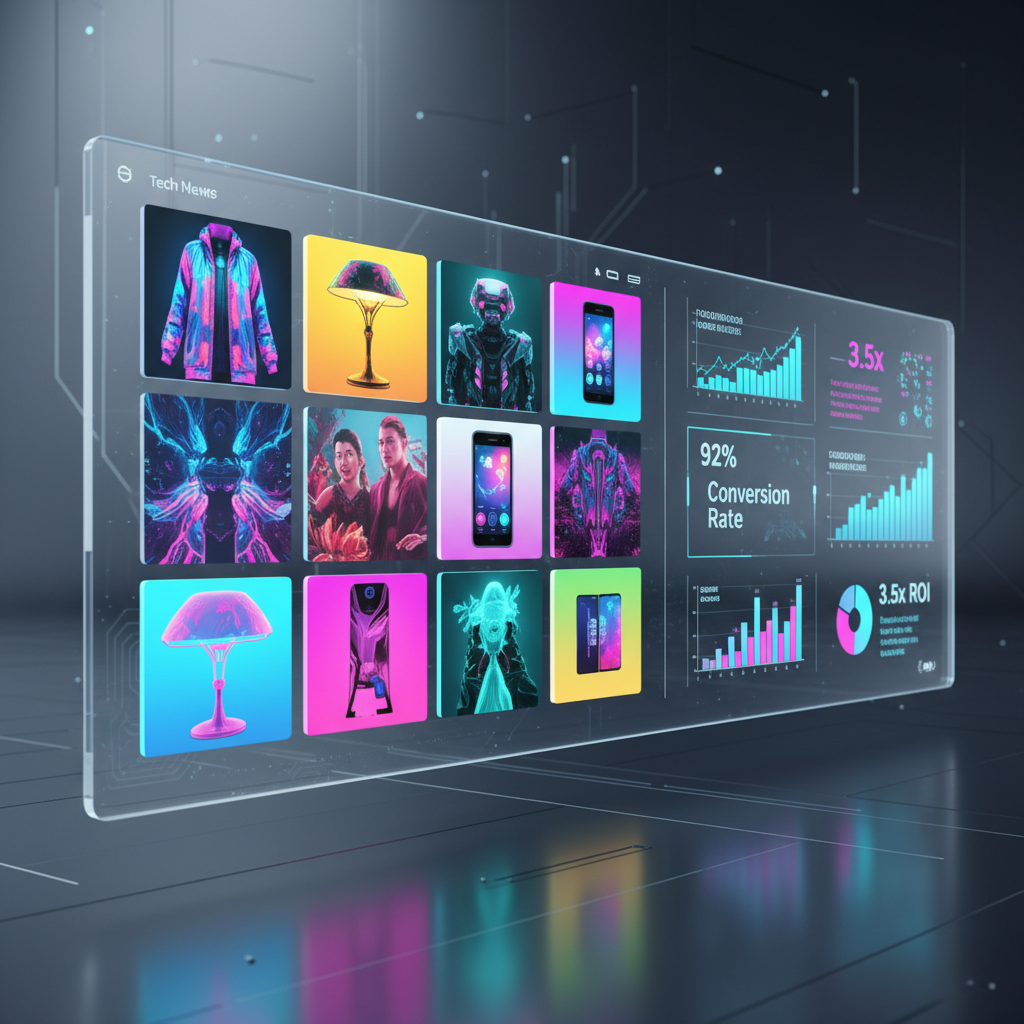
AI Product Image Conversion Optimization 2026 Guide
The landscape of online retail is constantly evolving, and AI product image conversion optimization stands as a pivotal strategy for businesses aiming to thrive. This innovative approach leverages artificial intelligence to enhance product visuals, directly impacting how customers perceive and engage with offerings. By refining images through AI, ecommerce stores can significantly boost their conversion rates, turning casual browsers into loyal buyers.
Unlocking Conversion Potential: How AI Product Photos Improve Ecommerce Sales
AI product photos significantly improve ecommerce conversion rates by providing visually compelling and contextually relevant imagery that resonates deeply with potential customers. This technology allows online stores to present products in their best light, overcoming traditional limitations of photography. Enhanced visuals build trust and reduce uncertainty for shoppers.
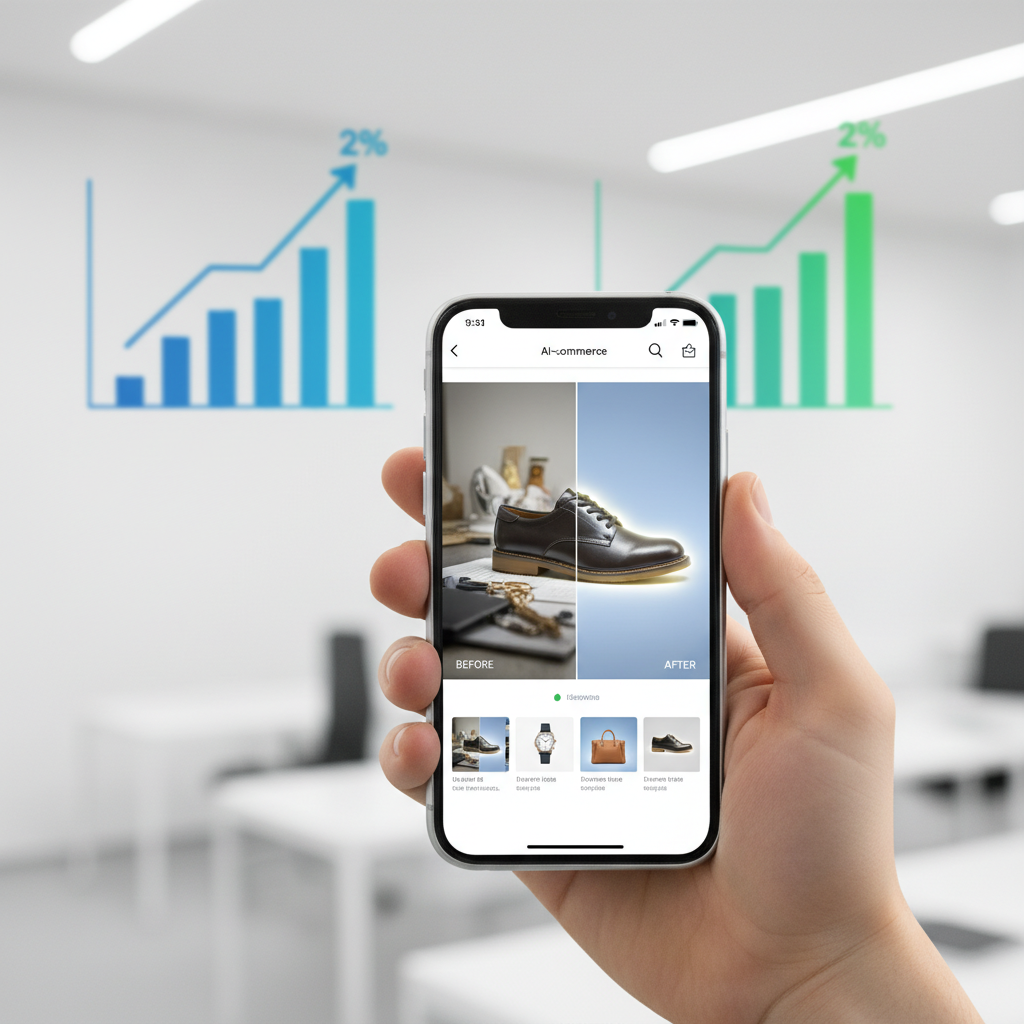
AI tools can automatically adjust lighting, remove imperfections, and even generate entirely new backgrounds. This ensures every product image is polished and professional. The consistent quality across all product listings creates a seamless and trustworthy shopping experience. Businesses can now produce studio-quality images without the expense of physical photoshoots.
The Science Behind Visual Persuasion in Ecommerce
Visuals are the primary driver of engagement in online shopping. High-quality product images capture attention and communicate product value instantly. AI-powered enhancements leverage psychological principles to make images more appealing. These tools can optimize for factors like color balance, contrast, and focal points.
Customers make quick judgments based on visual cues. Crisp, clear, and attractive images convey professionalism and product quality. This directly influences purchasing decisions and reduces bounce rates on product pages. AI helps achieve this consistency at scale.
Streamlining Image Production with Artificial Intelligence
AI revolutionizes the traditional workflow of product photography. Instead of lengthy photoshoots and manual editing, AI can generate or optimize images in minutes. This drastically cuts down on time and cost. Businesses can bring new products to market faster.
* Automated Background Removal: AI precisely isolates products from their backgrounds, allowing for clean, consistent backdrops.
* Virtual Staging: Products can be placed in realistic lifestyle settings without physical props or models.
* Defect Correction: Minor flaws or inconsistencies in products can be automatically corrected, ensuring perfection.
This efficiency allows for more frequent updates and a larger volume of high-quality images. It empowers even small businesses to compete visually with larger enterprises.
Crafting Visual Excellence: High Converting AI-Generated Product Images Examples
High converting AI-generated product images are those that effectively showcase a product’s features, benefits, and lifestyle integration, compelling viewers to make a purchase. These examples often demonstrate realistic textures, appropriate lighting, and contextual relevance. AI’s ability to create diverse scenarios without physical constraints is a major advantage.
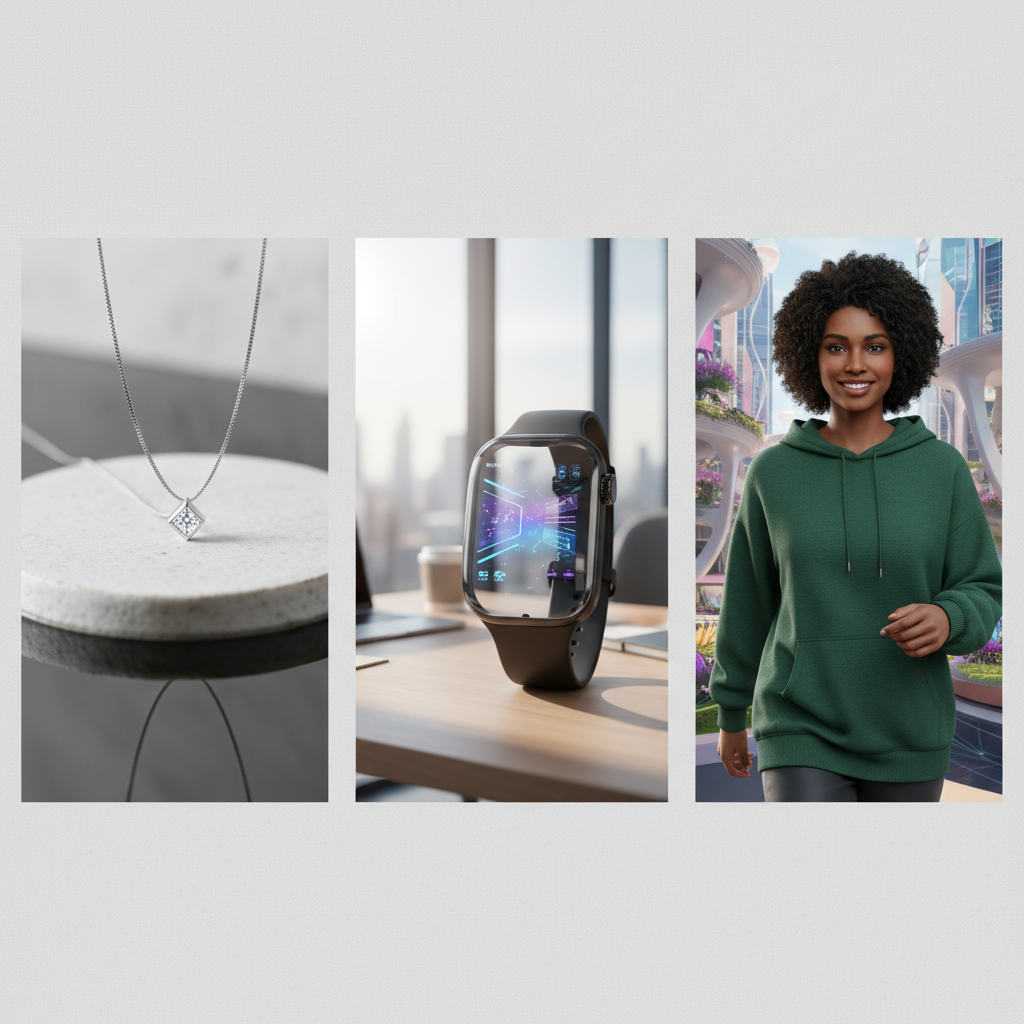
Consider a furniture retailer using AI to display a sofa in ten different living room styles. Each style caters to a specific customer aesthetic, increasing the likelihood of a connection. This personalization at scale is a hallmark of effective AI imagery. Such diverse presentations help customers visualize the product in their own homes.
Showcasing Product Features with AI Precision
AI excels at highlighting intricate product details that might be missed in standard photography. Zoom functionality can be enhanced with AI-generated textures and materials. This allows customers to inspect products virtually with unprecedented clarity.
For example, a clothing brand can use AI to render fabric weaves and stitching patterns in ultra-high definition. This level of detail provides confidence in the product’s quality. It helps overcome the inability to physically touch and feel the item online.
* Detailed Texture Rendering: AI can simulate fabric, wood grain, or metal finishes with photorealistic accuracy.
* Interactive 360-Degree Views: AI can generate seamless 360-degree spins, allowing customers to explore every angle.
* Feature Callouts: AI can subtly highlight specific features with integrated text or animations within the image.
These precise visual aids answer common customer questions proactively. This reduces the need for customer service inquiries and speeds up the buying process.
Creating Lifestyle Scenes Affordably and Effectively
One of the most powerful applications of AI in product imagery is the creation of diverse lifestyle scenes. These scenes place products in relatable contexts, helping customers imagine themselves using the item. Traditional lifestyle photography is expensive and time-consuming.
AI-generated lifestyle images offer a cost-effective alternative. A brand selling kitchenware can show their products in various kitchen aesthetics, from rustic farmhouses to sleek modern apartments. This broad appeal captures a wider audience. It also allows for rapid iteration and testing of different visual narratives.
| Feature | Traditional Photography | AI-Generated Imagery |
|---|---|---|
| Cost per Image | High (studio, models, props) | Low (software, processing) |
| Time to Produce | Days to Weeks | Minutes to Hours |
| Scene Variety | Limited by Budget/Logistics | Virtually Unlimited |
| Consistency | Challenging to maintain | Easy to achieve |
| Scalability | Difficult | High |
This table illustrates the clear advantages of AI for creating varied and engaging lifestyle content. Businesses can test which scenes perform best without significant financial risk. This directly contributes to higher engagement and improved conversion rates.
Strategic Implementation: AI Image Optimization for Ecommerce Sales Pages
Implementing AI image optimization for ecommerce sales pages involves using AI tools to enhance image quality, relevance, and loading speed, ensuring a superior user experience that drives conversions. This strategic approach considers not just the visual appeal but also the technical performance of images. Optimized images load faster and display perfectly across all devices.
AI can automatically compress images without sacrificing visual quality. This is crucial for mobile users and overall site performance. Faster loading times lead to lower bounce rates and improved SEO rankings. Both factors indirectly contribute to higher sales.
Integrating AI into Your Product Image Workflow
Integrating AI into an existing workflow requires selecting the right tools and establishing clear processes. Many AI platforms offer seamless integrations with popular ecommerce platforms. This makes adoption straightforward for most businesses.
1. Select AI Software: Choose a tool that aligns with your specific needs (e.g., background removal, virtual staging, upscaling).
2. Define Image Standards: Establish consistent guidelines for image style, resolution, and file format.
3. Automate Processing: Configure AI tools to automatically process new product images as they are uploaded.
4. Review and Iterate: Regularly review AI-generated images and provide feedback to fine-tune the AI’s output.
This systematic integration ensures that every product image benefits from AI optimization. It maintains a high standard of visual quality across the entire catalog. Consistent quality builds brand credibility and customer trust.
A/B Testing AI-Enhanced Images for Performance
A/B testing is critical for understanding the actual impact of AI-enhanced images on conversion rates. By comparing different versions of AI-generated images against each other, or against traditional photos, businesses can identify the most effective visuals. This data-driven approach removes guesswork.
For example, test a product image with a plain white AI-generated background against one with a realistic AI-generated lifestyle scene. Track metrics like click-through rates, add-to-cart rates, and conversion rates. This provides actionable insights into customer preferences. Continuous testing leads to continuous improvement in visual performance.
Beyond the Basics: Advanced Product Image Conversion Tips for Online Stores
Beyond fundamental AI enhancements, advanced product image conversion tips for online stores involve leveraging AI for personalization, dynamic content, and immersive experiences that deeply engage shoppers. These strategies move beyond static images to create truly interactive and tailored visual journeys. This proactive approach anticipates customer needs.
AI can analyze customer browsing history and preferences to display the most relevant product images. For instance, a customer who frequently buys minimalist decor might see a product in a minimalist setting. This level of personalization significantly increases engagement. It makes the shopping experience feel uniquely tailored.
Personalization at Scale with AI-Driven Visuals
Personalization is a powerful conversion driver, and AI makes it scalable for product imagery. Instead of showing every customer the same generic image, AI can dynamically adjust visuals based on individual data. This creates a highly relevant shopping experience.
Consider a customer who has previously purchased items in a specific color. AI can automatically highlight product variations in that color or display the product in environments that complement it. This subtle yet effective personalization fosters a stronger connection. It increases the likelihood of a purchase.
Dynamic Image Generation for Targeted Campaigns
AI can generate dynamic images on the fly, tailoring visuals for specific marketing campaigns or audience segments. This means a single product can have countless visual representations. Each representation is optimized for a particular purpose.
For a social media ad targeting young professionals, AI can create an image showing a product in a modern office setting. For an email campaign aimed at parents, the same product might appear in a family-friendly home. This targeted approach maximizes the impact of each visual. It ensures the message resonates with the intended audience.
Measuring Success: Analytics and A/B Testing for AI-Optimized Images
Measuring the success of AI-optimized images involves meticulously tracking key performance indicators (KPIs) and conducting rigorous A/B testing to understand their direct impact on user behavior and conversion rates. Data-driven insights are essential for refining strategies and maximizing return on investment. Without proper measurement, the effectiveness of AI initiatives remains speculative.
Analytics platforms provide a wealth of data on how users interact with images. This includes metrics like image view duration, click-through rates on image galleries, and the correlation between image engagement and add-to-cart actions. Understanding these patterns helps optimize future image content.
Key Metrics for Product Image Performance
Several key metrics can help evaluate the performance of AI-optimized product images. Focusing on these indicators provides a clear picture of what’s working and what needs adjustment. Monitoring these metrics allows for continuous improvement.
* Conversion Rate: The ultimate metric, measuring the percentage of visitors who complete a purchase after viewing AI-optimized images.
* Bounce Rate: A lower bounce rate on product pages often indicates more engaging visuals.
* Time on Page: Longer time spent viewing product images suggests higher interest.
* Click-Through Rate (CTR) on Image Carousels: Indicates how compelling subsequent images are.
* Add-to-Cart Rate: Directly links image appeal to purchase intent.
* Return Rate: High-quality, accurate images can reduce returns by setting clear expectations.
Analyzing these metrics in conjunction with AI image implementation provides a holistic view of performance. It helps justify the investment in AI tools.
Iterative Improvement with Data-Driven Insights
The process of optimizing product images with AI is not a one-time task; it’s an iterative cycle. Data gathered from analytics and A/B tests should feed back into the AI image generation and optimization process. This creates a continuous loop of refinement.
For example, if A/B testing reveals that images with darker backgrounds convert better for a specific product category, this insight can be applied across similar products. AI tools can then be configured to prioritize darker, more contrasting backgrounds. This data-driven iteration ensures that visual assets are always performing at their peak. It maximizes their contribution to sales.
The Future of Visuals: Emerging Trends in AI Product Imagery
The future of visuals in ecommerce is rapidly evolving, with emerging trends in AI product imagery focusing on hyper-realistic renderings, interactive 3D models, and augmented reality (AR) integration to create deeply immersive and personalized shopping experiences. These advancements promise to blur the lines between virtual and physical product interaction. They will redefine how customers perceive products online.
AI is making it possible to generate product images that are indistinguishable from real photographs. This level of realism builds immense trust and confidence. It allows customers to scrutinize products as if they were holding them.
Hyper-Realistic Renderings and Material Simulations
Advanced AI is pushing the boundaries of photorealism in product imagery. Sophisticated algorithms can simulate light, shadow, and material properties with incredible accuracy. This results in images that are not just good, but truly stunning.
For instance, a jewelry brand can use AI to render diamonds with perfect sparkle and clarity, reflecting light realistically. A fashion brand can showcase fabric drape and texture with unprecedented fidelity. This hyper-realism minimizes the gap between online viewing and real-world perception. It reduces buyer’s remorse and returns.
Interactive 3D and Augmented Reality Integration
The integration of interactive 3D models and augmented reality (AR) with AI-generated visuals represents the next frontier. AI can facilitate the creation of these immersive assets, making them more accessible and scalable for businesses. These technologies offer unparalleled engagement.
* 3D Product Configurators: AI can power tools that allow customers to customize products in 3D, changing colors, materials, and features in real-time.
* AR “Try-On” Experiences: AI-generated product models can be seamlessly integrated into AR apps, letting customers virtually “try on” clothes or “place” furniture in their homes.
* Virtual Showrooms: AI can create entire virtual showrooms where customers can explore products in a simulated environment.
These immersive experiences provide a level of interaction that static images cannot match. They empower customers with confidence in their purchasing decisions. This leads to significantly higher conversion rates and customer satisfaction.
What is AI product image conversion optimization?
AI product image conversion optimization is the process of using artificial intelligence tools to enhance and refine product images for online stores. The goal is to make these visuals more appealing and effective, directly leading to an increase in sales and customer engagement. This includes improving quality, relevance, and loading speed.
How do AI-generated images impact ecommerce sales?
AI-generated images significantly impact ecommerce sales by providing high-quality, consistent, and visually compelling product representations. They help customers visualize products better, build trust, and reduce uncertainty. This leads to higher click-through rates, increased add-to-cart actions, and ultimately, improved conversion rates for online stores.
Can AI create lifestyle product photos?
Yes, AI can effectively create realistic and diverse lifestyle product photos. AI tools can place products into various virtual settings, eliminating the need for expensive physical photoshoots, models, and props. This allows businesses to showcase products in numerous relevant contexts, appealing to a wider audience and enhancing customer imagination.
What are the benefits of AI image optimization for sales pages?
The benefits of AI image optimization for sales pages include improved visual quality, faster loading times, enhanced personalization capabilities, and greater consistency across product catalogs. These optimizations lead to a better user experience, reduced bounce rates, higher engagement, and ultimately, a significant boost in ecommerce conversion rates.
How can I measure the effectiveness of AI-optimized images?
You can measure the effectiveness of AI-optimized images by tracking key metrics such as conversion rates, bounce rates, time on page, click-through rates on image galleries, and add-to-cart rates. A/B testing different AI-enhanced images against each other or against traditional images is also crucial for data-driven insights.
Is AI product image optimization suitable for small businesses?
Absolutely. AI product image optimization is highly suitable for small businesses. It offers a cost-effective and time-efficient way to produce high-quality, professional product visuals without the need for expensive photography equipment or studio rentals. This levels the playing field, allowing small businesses to compete visually with larger brands.
The strategic application of AI in product image conversion optimization is no longer a luxury but a necessity for online stores. By embracing these advanced visual technologies, businesses can unlock unprecedented levels of customer engagement and sales performance. The ability to generate high-quality, personalized, and contextually relevant images at scale provides a significant competitive edge. As AI continues to evolve, its role in shaping the future of ecommerce visuals will only grow, making now the opportune time to integrate these powerful tools.
* AI significantly boosts ecommerce conversion rates through enhanced visuals.
* High-converting AI images offer detailed features and diverse lifestyle scenes.
* Strategic AI implementation improves sales page performance and user experience.
* Advanced tips include personalization and dynamic image generation.
* Measuring success with analytics and A/B testing is crucial for continuous improvement.
* Future trends like hyper-realism and AR will further revolutionize product imagery.
Start exploring AI-powered image optimization solutions today to transform your online store’s visual appeal and drive remarkable growth.