

AI Agent for Ecommerce Product Content: Transforming Online Sales
The landscape of online retail is rapidly evolving, driven by technological advancements. An AI agent for ecommerce product content is transforming how online businesses operate, offering unprecedented efficiency and creativity in generating compelling product information. These sophisticated AI systems automate the creation of high-quality product descriptions, engaging visuals, and targeted advertising copy, enabling businesses to scale their content efforts while maintaining brand consistency and optimizing for conversions.
How AI Agents Create Product Images, Descriptions, and Ads for Ecommerce
AI agents revolutionize product content creation by automating the generation of diverse marketing assets, from visual elements to persuasive text. These agents utilize advanced machine learning models to understand product attributes, target audience demographics, and brand guidelines, then synthesize this information into optimized content.
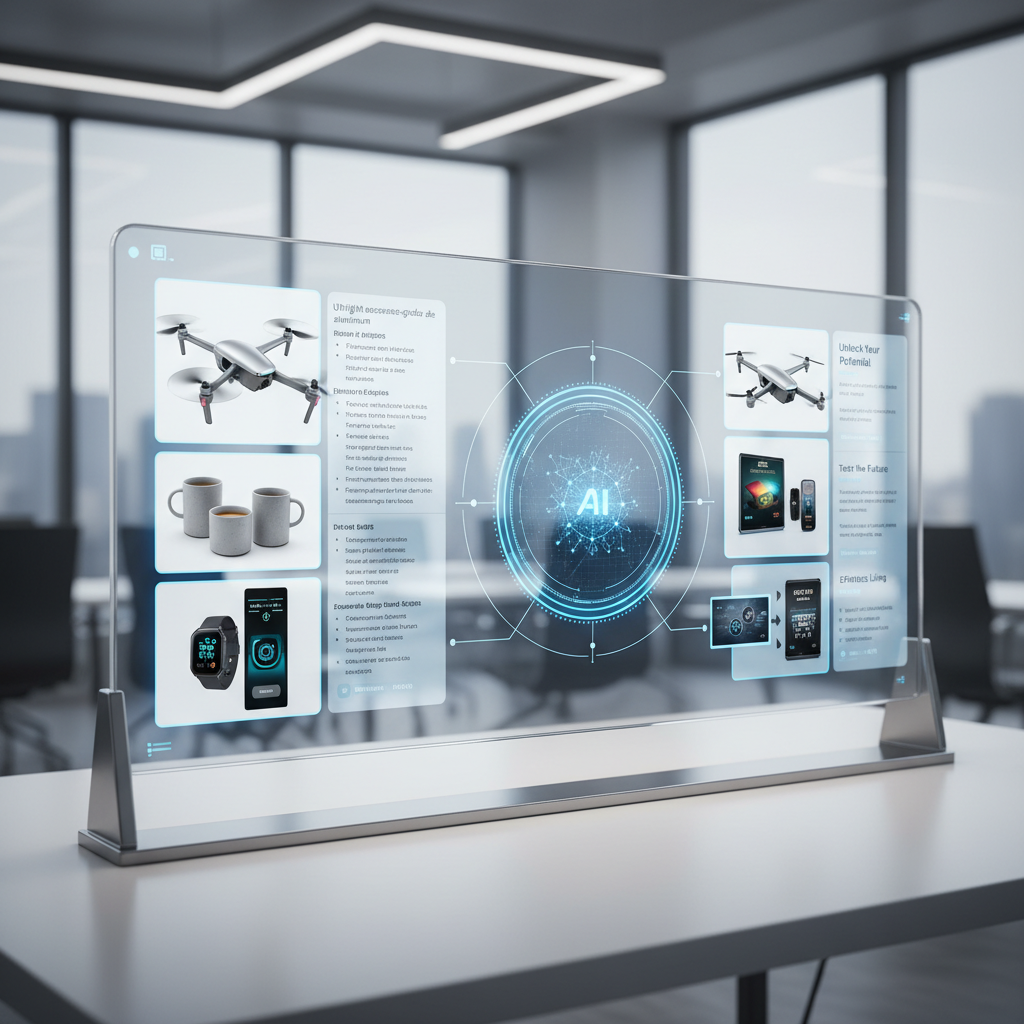
The process begins with data ingestion, where the AI agent analyzes existing product data, competitor content, and market trends. It then employs natural language generation (NLG) for descriptions and sophisticated image generation algorithms for visuals. This comprehensive approach ensures consistency and quality across all content types.
Automated Product Description Generation
AI agents excel at crafting unique and compelling product descriptions at scale. They can ingest raw product data, such as specifications, materials, and features, and transform it into engaging narratives. These descriptions are often optimized for search engines (SEO) and tailored to appeal to specific customer segments. The AI can also adjust tone and style to match the brand’s voice.
AI-Powered Product Image and Visual Asset Creation
Beyond text, AI agents are increasingly capable of generating and enhancing product visuals. This includes creating lifestyle images from basic product shots, generating variations of product designs, or even producing entirely new visual concepts. An AI image generator can dramatically reduce the time and cost associated with traditional photography and graphic design. These tools allow for rapid iteration and personalization of visual content.
Dynamic Ad Copy and Campaign Optimization
How AI agents create product images descriptions and ads extends to crafting highly effective advertising copy. AI agents can generate multiple ad variations, A/B test them in real-time, and optimize for the best-performing headlines, body text, and calls to action. This dynamic optimization ensures that marketing campaigns are continuously refined for maximum impact and ROI. They can also analyze campaign performance data to learn and improve future ad content.
Optimizing Shopify Stores with an AI Product Content Agent
Integrating an AI product content agent for Shopify stores significantly streamlines operations and enhances the customer experience by automating content creation and management. These specialized agents connect directly with Shopify’s API, allowing for seamless data exchange and content deployment. For more insights, check out our guide on AI image.
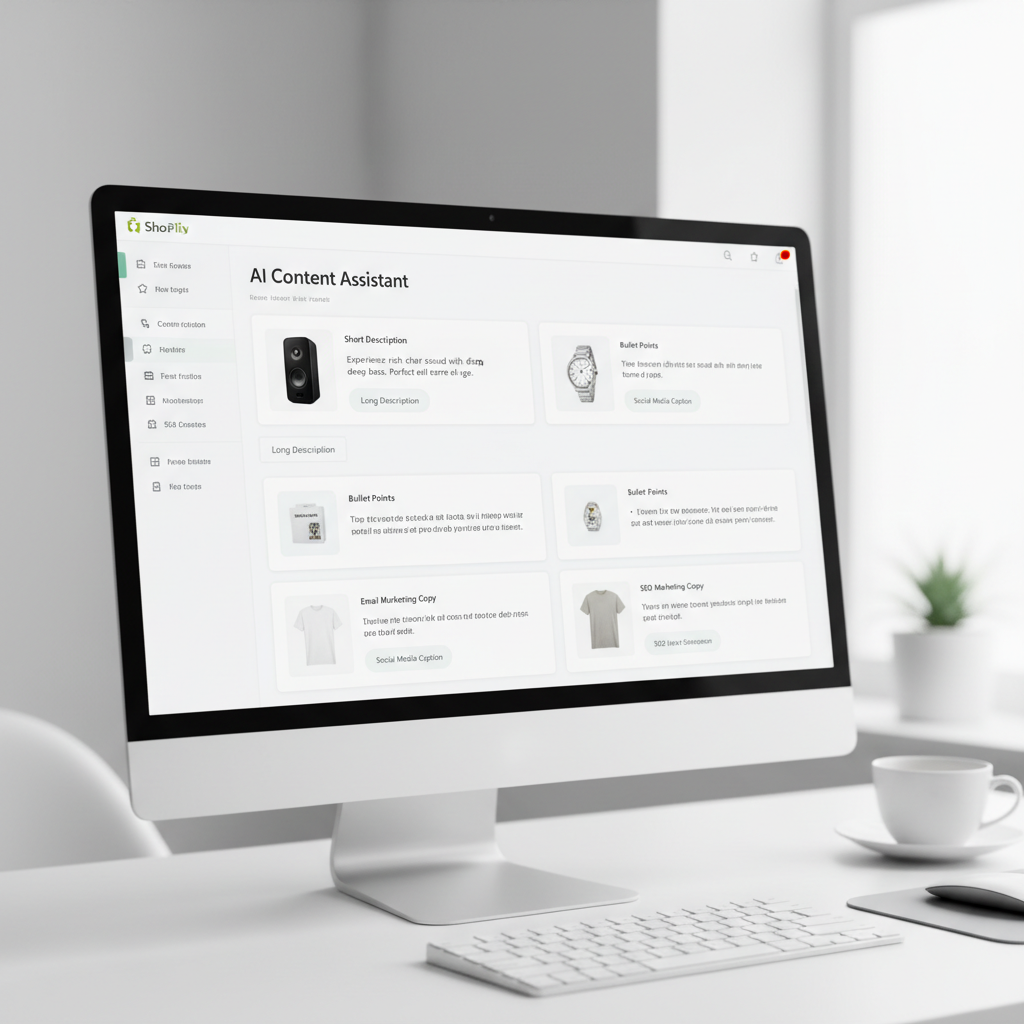
The primary benefit is the ability to rapidly populate product catalogs with high-quality, SEO-friendly content. This is particularly valuable for stores with large inventories or those frequently adding new products. The AI agent ensures that every product has a complete and engaging profile, boosting discoverability and conversion rates.
Seamless Integration and Data Synchronization
An AI product content agent integrates directly into the Shopify ecosystem, pulling existing product data like SKUs, titles, and basic attributes. It then generates enriched content, including detailed descriptions, meta tags, and even visual suggestions, which can be pushed back to the Shopify store automatically. This synchronization minimizes manual effort and reduces errors. The agent can also monitor inventory changes and update content accordingly.
Enhanced SEO and Discoverability for Shopify Products
For Shopify sellers, SEO is crucial for organic traffic. AI agents are designed to incorporate relevant keywords naturally into product descriptions and meta-information. They analyze search trends and competitor strategies to ensure content is optimized for higher rankings. This leads to increased visibility in search engine results pages (SERPs) and drives more qualified traffic to the store.
Personalized Content Experiences on Shopify
Beyond basic content generation, advanced AI agents can personalize product content based on customer behavior and preferences. For example, a returning customer might see product descriptions highlighting features they previously showed interest in. This level of personalization, powered by an AI product content agent, significantly improves engagement and conversion rates within the Shopify environment. It creates a more tailored shopping journey for each individual.
Understanding the Agentic AI Workflow for Ecommerce Visual Marketing
An agentic AI workflow for ecommerce visual marketing involves a series of interconnected AI models and processes that collaboratively generate, optimize, and deploy visual content. This workflow moves beyond simple content generation, enabling AI to make decisions and execute tasks autonomously based on predefined goals and real-time feedback.
This sophisticated approach allows for dynamic adaptation and continuous improvement of visual marketing assets. Instead of a human manually prompting an AI for each image, an agentic system can initiate, refine, and publish visual content across various platforms without constant human intervention. It operates with a degree of autonomy, learning from its outputs and market responses.
Stages of an Agentic Visual Marketing Workflow
The agentic workflow typically involves several stages, each handled by specialized AI components.
1. Goal Definition: The human user sets high-level marketing objectives, such as “increase conversion rate for new product X by 15%.”
2. Content Ideation: An AI agent brainstorms visual concepts and themes relevant to the product and goal.
3. Generation & Iteration: Another AI agent generates initial visual assets (e.g., product images, lifestyle shots, ad creatives).
4. Optimization & Testing: A third agent evaluates the generated visuals against performance metrics (e.g., click-through rates, engagement) and suggests improvements. It might run A/B tests automatically.
5. Deployment & Monitoring: The optimized visuals are deployed across various channels, and their performance is continuously monitored by the AI.
6. Learning & Refinement: The system learns from the performance data, feeding insights back into the ideation and generation stages for future content.
AI Decision-Making in Visual Content Strategy
In an agentic workflow, AI agents are empowered to make strategic decisions regarding visual content. This could include deciding which image style resonates best with a particular audience segment, or which visual elements to emphasize in an ad based on historical performance data. The AI can analyze vast datasets to identify patterns and predict optimal visual strategies. This capability significantly reduces the need for constant human oversight.
Benefits of Autonomous Visual Content Management
The autonomous nature of an agentic workflow offers several key advantages for ecommerce businesses:
* Scalability: Generate a massive volume of diverse visual content without linear increases in human resources.
* Speed: Rapidly respond to market trends and deploy new campaigns in minutes, not days.
* Optimization: Continuously improve visual assets based on real-time performance data.
* Consistency: Maintain brand guidelines and visual identity across all marketing channels automatically.
* Cost Efficiency: Reduce expenses associated with traditional photography, design, and content management.
Selecting the Best AI Agents for Ecommerce Sellers Today
Choosing the best AI agents for ecommerce sellers today requires a careful evaluation of features, integration capabilities, scalability, and cost. The ideal AI agent should align with your specific business needs, product catalog size, and marketing objectives.
The market for AI agents is rapidly expanding, with new solutions emerging regularly. Therefore, sellers should prioritize agents that offer robust content generation, strong integration with existing platforms, and a clear path for future development and support. It’s crucial to look for solutions that can handle both text and visual content creation effectively.
Key Features to Look for in an AI Agent
When evaluating AI agents, consider the following essential features:
* Content Variety: Can it generate descriptions, headlines, ad copy, and image variations?
* Customization: Does it allow for brand voice, tone, and style customization?
* SEO Capabilities: Does it optimize content for search engines with keyword integration?
* Platform Integration: Is it compatible with your ecommerce platform (e.g., Shopify, WooCommerce) and other marketing tools?
* Scalability: Can it handle your current and future content volume requirements?
* Analytics & Reporting: Does it provide insights into content performance?
* User Interface: Is it intuitive and easy for your team to use?
Comparison of Leading AI Agent Solutions
Here’s a simplified comparison of hypothetical AI agent capabilities for ecommerce:
| Feature | Agent A (Basic) | Agent B (Mid-Tier) | Agent C (Advanced) |
|---|---|---|---|
| Product Descriptions | Basic generation | SEO-optimized, tone control | Personalized, multi-language |
| Image Generation | Template-based | Contextual variations | Lifestyle scenes, dynamic ads |
| Shopify Integration | Manual export/import | Direct API sync | Full autonomous workflow |
| Ad Copy Generation | Simple headlines | A/B testing suggestions | Dynamic optimization, multi-platform |
| Pricing Model | Per-item/limited credits | Tiered subscription | Enterprise custom |
Evaluating ROI and Implementation Costs
Before committing to an AI agent, conduct a thorough cost-benefit analysis. Consider not only the subscription fees but also the time saved, potential increase in conversion rates, and improved SEO performance. A pilot program or free trial can help assess the agent’s effectiveness within your specific business context. Ensure the implementation process is straightforward and doesn’t require extensive technical expertise.
The Future of AI in Ecommerce Content Generation and Personalization
The future of AI in ecommerce content generation and personalization points towards even more sophisticated, autonomous, and hyper-personalized customer experiences. As AI models become more advanced, they will not only create content but also anticipate customer needs and proactively tailor entire shopping journeys.
This evolution will move beyond static product pages to dynamic, interactive content that adapts in real-time to individual shopper behavior. AI will become an indispensable partner for ecommerce businesses, driving innovation in how products are presented and perceived online. The emphasis will shift from mass content production to highly individualized engagement.
Hyper-Personalized Shopping Experiences
Future AI agents will leverage vast amounts of customer data, including browsing history, purchase patterns, social media activity, and even emotional responses, to create truly hyper-personalized content. This means product recommendations, descriptions, and visual layouts will be unique to each visitor. Imagine an AI agent generating a product video specifically tailored to a customer’s preferred aesthetic and highlighting features most relevant to them.
Predictive Content and Proactive Marketing
AI’s predictive capabilities will allow ecommerce businesses to anticipate customer needs and create content proactively. For example, an AI might identify a rising trend and automatically generate new product ideas, descriptions, and marketing campaigns to capitalize on it before competitors. This proactive approach will enable brands to stay ahead of the curve and offer highly relevant content at precisely the right moment.
Ethical Considerations and Responsible AI Deployment
As AI agents become more powerful, ethical considerations around data privacy, algorithmic bias, and transparency will become paramount. Businesses must ensure responsible AI deployment, adhering to regulations and maintaining customer trust. This includes clear communication about how AI is used and ensuring that AI-generated content is fair and unbiased. The development of robust governance frameworks for AI in ecommerce will be crucial.
What is an AI agent for ecommerce product content?
An AI agent for ecommerce product content is an advanced software system that uses artificial intelligence to autonomously generate, optimize, and manage various types of product-related content, including descriptions, images, and marketing copy. It aims to streamline content creation and enhance online sales.
How do AI agents improve product descriptions?
AI agents improve product descriptions by quickly generating high-quality, SEO-optimized, and engaging text based on product data. They can tailor the tone, style, and keywords to appeal to specific audiences, ensuring consistency across large product catalogs and boosting search engine visibility.
Can AI agents create unique product images?
Yes, AI agents can create unique product images by generating lifestyle shots, variations of existing product photos, or entirely new visual concepts. They use advanced algorithms to transform basic product inputs into compelling visual assets, reducing the need for traditional photography.
Are AI product content agents compatible with Shopify?
Many AI product content agents are specifically designed for compatibility with Shopify stores. They integrate via API to seamlessly pull product data, generate content, and push updated descriptions, images, and meta-information directly back into the Shopify platform, automating content management.
What is an agentic AI workflow in ecommerce?
An agentic AI workflow in ecommerce refers to an autonomous system where AI models collaborate to achieve a marketing goal, such as increasing conversions. These agents make decisions, generate content, test performance, and refine strategies without constant human intervention, offering dynamic adaptation.
How do AI agents help with ad content?
AI agents help with ad content by generating multiple variations of headlines and body text, performing A/B tests automatically, and optimizing campaigns in real-time. They analyze performance data to identify the most effective ad copy, leading to higher click-through rates and improved ROI for marketing efforts.
The integration of AI agents into ecommerce product content workflows represents a significant leap forward for online businesses. These intelligent systems empower sellers to:
* Scale content creation efficiently, producing high-quality descriptions, images, and ads at speed.
* Optimize content for search engines and personalized customer experiences, driving higher engagement and conversions.
* Automate repetitive tasks, freeing up human resources for strategic initiatives and creative oversight.
* Gain a competitive edge through dynamic content adaptation and continuous performance improvement.
As AI technology continues to advance, its role in shaping the future of ecommerce will only grow. Embracing an AI agent for your product content strategy is not just about efficiency; it’s about unlocking new possibilities for growth, personalization, and customer satisfaction in the digital marketplace. Explore how an AI agent can transform your online store today.