

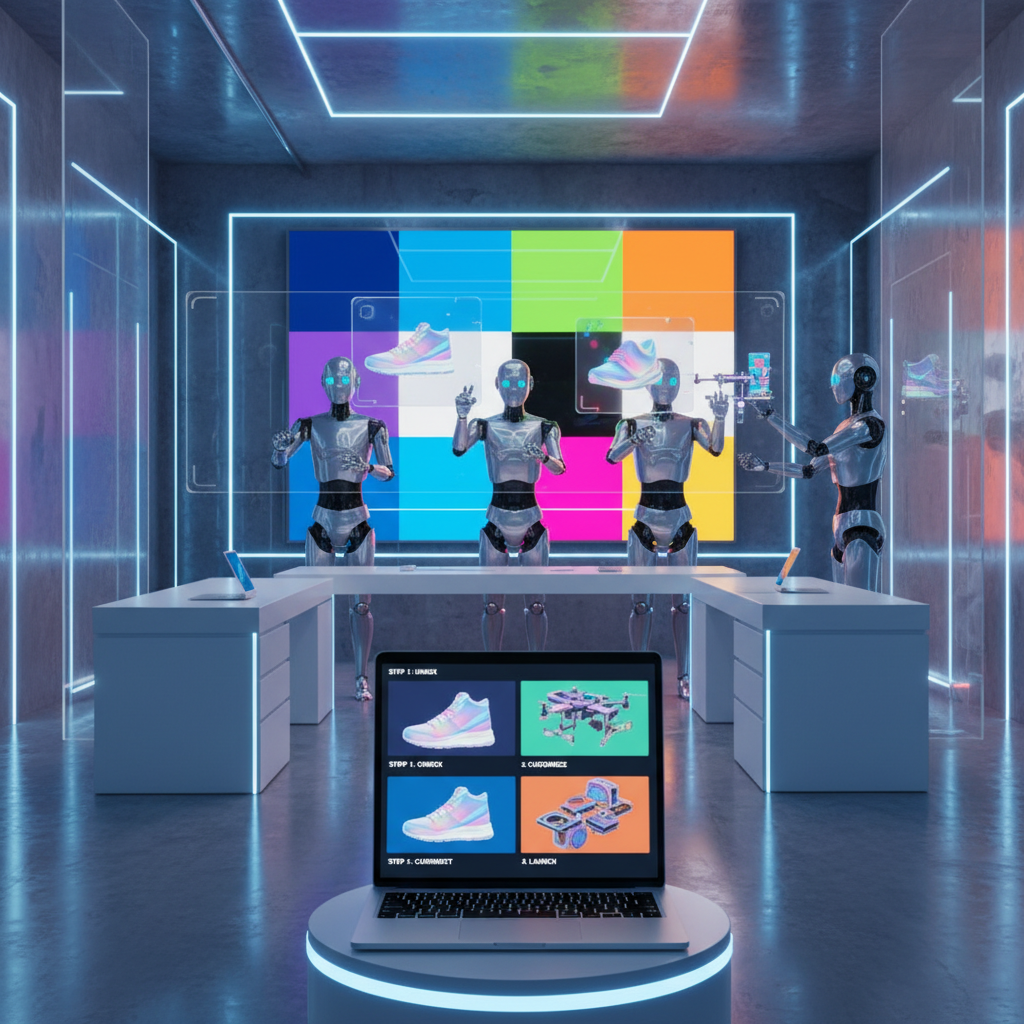
AI for Creating Product Photography How-To Tutorial Image Series
The landscape of e-commerce and digital content is constantly evolving, with visual appeal being paramount. AI for creating product photography how-to tutorial image series represents a revolutionary shift in how businesses can generate engaging, instructional content. This technology leverages artificial intelligence to produce high-quality, step-by-step visual guides, significantly streamlining content creation workflows. AI image generation involves advanced neural networks that interpret text prompts or existing images to create new, unique visuals, often with remarkable realism and consistency. This innovation allows brands to develop comprehensive visual tutorials, showcasing product usage and benefits without the traditional costs and time associated with manual photography and editing.
AI for Generating Step-by-Step Product Use Guide Photography
AI tools are transforming the creation of detailed product use guides by automatically generating step-by-step photography that illustrates complex processes clearly and efficiently. This capability allows businesses to produce comprehensive visual instructions without extensive photo shoots or graphic design expertise. AI-powered platforms can take a basic product image or a text description and render a series of visuals depicting each stage of product assembly, operation, or maintenance. This automation not only saves significant time and resources but also ensures a consistent visual style across all instructional materials.

How AI Generates Step-by-Step Product Use Guide Photography
AI generates these sequential images by interpreting user prompts, which can be text-based instructions or even screen recordings of a process. The AI’s neural networks then analyze the input, identify key actions, and generate corresponding visuals. For example, if a user describes “how to set up a coffee machine,” the AI can produce images showing adding water, inserting a filter, adding coffee grounds, and brewing. This process often involves:
- Input Processing: The AI analyzes the text prompt or source images/videos, identifying the subject, actions, and desired style.
- Feature Extraction: It extracts relevant features and patterns from its training data, understanding how different components interact.
- Image Generation: Using diffusion models, the AI iteratively refines a noisy image into a coherent visual that matches the prompt’s instructions.
- Refinement: The generated images undergo a refinement phase to enhance quality, consistency, and adherence to specific brand guidelines.
These tools can even capture a user’s workflow on screen and automatically generate annotated screenshots and written instructions, making the creation of detailed guides incredibly fast.
Benefits of AI for Generating Step-by-Step Product Use Guide Photography
The advantages of using AI for generating step-by-step product use guide photography are numerous for businesses looking to enhance their customer experience and operational efficiency.
- Time Efficiency: AI drastically reduces the time needed to create complex visual guides, turning hours or days of work into minutes. This allows for quicker product launches and updates.
- Cost Reduction: Eliminating the need for professional photographers, studio setups, and extensive manual editing significantly lowers production costs.
- Consistency: AI ensures a uniform visual style, lighting, and branding across all images in a series, maintaining a professional look and feel.
- Accessibility: Even users without advanced photography or design skills can produce high-quality instructional visuals, democratizing content creation.
- Scalability: Businesses can generate a large volume of tutorial image series for numerous products or variations quickly and efficiently.
This capability is particularly valuable for complex products where clear visual instructions are crucial for customer satisfaction and reducing support inquiries.
Streamlining Visual Content with AI for Product FAQs
AI is revolutionizing how businesses create visual content for product FAQs, offering a dynamic and efficient way to address common customer queries with clear, engaging imagery. By leveraging AI for creating product FAQ visual content for ecommerce pages, companies can move beyond static text, providing immediate visual answers that enhance understanding and reduce customer support load. This visual approach helps clarify product features, troubleshoot minor issues, or demonstrate specific functionalities, making information more accessible and digestible for shoppers.

Utilizing AI for Creating Product FAQ Visual Content for Ecommerce Pages
Integrating AI into FAQ content creation involves using generative AI tools to produce images that directly answer frequently asked questions. For instance, if a common question is “How do I clean this product?”, AI can generate a visual series demonstrating the cleaning process. This process can be broken down into:
- Identifying Visual FAQ Needs: Analyze customer support data and existing text-based FAQs to pinpoint questions that would benefit most from a visual explanation.
- Prompt Engineering: Craft detailed text prompts for the AI, specifying the product, the action or feature to be demonstrated, and the desired visual style. For example, “A close-up image of a waterproof smartphone being submerged in water to demonstrate its water resistance.”
- Batch Generation and Selection: Generate multiple image variations using AI tools and select the most accurate and visually appealing ones for integration into your e-commerce FAQ section.
This approach significantly speeds up the creation of rich, informative content, helping customers find answers quickly.
Impact of Visual FAQs on Customer Experience and Conversions
Visual FAQs powered by AI can profoundly impact customer experience and, consequently, conversion rates. When customers can quickly see the answer to their questions, their confidence in the product and brand increases.
| Aspect | Impact of Visual FAQs | Traditional Text-Only FAQs |
|---|---|---|
| Understanding | Faster, clearer comprehension of product features and usage. | Requires more effort to read and interpret. |
| Engagement | More engaging and interactive content; holds user attention longer. | Can be perceived as dry and less engaging. |
| Trust & Confidence | Builds trust by visibly demonstrating product capabilities. | Relies solely on textual descriptions, less immediate proof. |
| Support Load | Reduces inquiries to customer support teams. | May still lead to follow-up questions for clarification. |
| Conversion Rates | Higher likelihood of purchase due to informed decision-making. | Less direct impact on conversion without visual reinforcement. |
By providing immediate visual clarity, businesses empower customers to make informed purchasing decisions, leading to higher satisfaction and fewer returns. This also helps in optimizing product pages for better search engine visibility, as rich media content is favored.
Automating Product Roundup Article Image Generation
AI for automating product roundup article image generation 2026 is becoming an indispensable tool for content creators and marketers, enabling them to quickly populate product comparison and review articles with high-quality, consistent visuals. This automation eliminates the labor-intensive process of sourcing, editing, and standardizing images for numerous products, allowing content teams to focus on writing compelling reviews and analyses. AI tools can generate diverse imagery that showcases products in various contexts, from clean studio shots to lifestyle settings, ensuring visual appeal and relevance for each item featured in a roundup.
How AI Streamlines Product Roundup Visuals
AI streamlines the creation of visuals for product roundup articles by generating images based on product descriptions, existing photos, or specific stylistic prompts. Instead of traditional photography, which would require individual shoots for each product, AI can:
- Generate Consistent Backgrounds: Apply a uniform background or environment across all products in a roundup, ensuring visual cohesion.
- Create Lifestyle Shots: Place products into various lifestyle scenes, demonstrating their use cases without needing physical props or models.
- Produce Multiple Angles/Variations: Generate images from different perspectives or with various color options for each product, enhancing the visual information available to the reader.
- Ensure Brand Consistency: Adhere to specific brand guidelines for lighting, shadows, and overall aesthetic, even when working with diverse product types.
This capability is crucial for scaling content production, especially for affiliates and e-commerce sites that regularly publish extensive product comparisons.
Impact on Content Production and SEO
The automation of product roundup article image generation has a significant impact on both content production efficiency and search engine optimization (SEO).
- Faster Content Creation: Content teams can produce roundup articles much more quickly, as image generation no longer acts as a bottleneck. This allows for more frequent publishing and staying current with market trends.
- Reduced Costs: Eliminates the expenses associated with professional photography, studio rentals, and extensive post-production editing for each product.
- Enhanced SEO: High-quality, unique images improve user engagement metrics, such as time on page and bounce rate, which are positive signals for search engines. AI can also optimize images for SEO by adding relevant alt text and metadata, increasing visibility in image search results.
- Improved User Experience: Visually rich articles are more appealing and easier for readers to digest, leading to a better user experience and potentially higher click-through rates.
By automating this aspect of content creation, businesses can allocate more resources to content strategy, keyword research, and in-depth product analysis, ultimately driving more organic traffic and conversions.
Integrating AI for Shoppable Blog Content with Product Photo Integration
AI for creating shoppable blog content with product photo integration empowers e-commerce businesses and content creators to transform traditional blog posts into interactive shopping experiences. By seamlessly embedding AI-generated product photography directly into editorial content, brands can guide readers from inspiration to purchase within a single page. This integration not only enhances the user journey but also provides a direct path to conversion, effectively blurring the lines between content and commerce.
Creating Engaging Shoppable Blog Content with AI
AI plays a pivotal role in creating visually rich and shoppable blog content by generating and integrating product images that are contextually relevant and aesthetically pleasing. This process involves:
- Contextual Image Generation: AI tools can analyze blog post text and generate product images that perfectly match the narrative, showcasing products in relevant scenarios or alongside complementary items. For example, a blog post about “winter fashion trends” could feature AI-generated images of models wearing specific apparel items discussed, complete with shoppable tags.
- Dynamic Product Integration: AI can automatically pull product data (pricing, availability, links) and overlay it onto the generated images, creating interactive “hotspots” or tags that users can click to learn more or purchase. This dynamic integration ensures that product information is always up-to-date.
- Personalized Visuals: Some advanced AI systems can even generate personalized shoppable images based on a user’s browsing history or preferences, making the content highly relevant to individual shoppers.
This capability transforms passive reading into an active shopping experience, driving engagement and sales.
Benefits for E-commerce and Content Marketing
The integration of AI-generated product photos into shoppable blog content offers significant benefits for both e-commerce operations and content marketing strategies.
- Increased Conversion Rates: By reducing friction in the buying process, shoppable content directly links product discovery with purchase, leading to higher conversion rates.
- Enhanced User Experience: Readers enjoy a more immersive and interactive experience, making blog content more valuable and engaging. They can explore products without leaving the article.
- Streamlined Content-to-Commerce Workflow: AI automates the visual integration process, freeing up marketing teams from manual image sourcing and linking, allowing them to focus on content strategy.
- Improved SEO and Traffic: Rich, interactive content with embedded product visuals can improve dwell time and reduce bounce rates, signaling to search engines that the content is valuable. This can lead to higher organic rankings and increased traffic.
- Data-Driven Insights: Tracking clicks and conversions on integrated product photos provides valuable data on which visuals and product placements are most effective, allowing for continuous optimization.
Ultimately, AI-powered shoppable blog content creates a powerful synergy between storytelling and sales, driving both brand engagement and revenue.
Best Practices and Tools for AI-Powered Product Visuals
To fully harness the potential of AI for product photography, adopting best practices and selecting the right tools is crucial for achieving high-quality, consistent, and effective visuals. AI-generated imagery can significantly enhance a brand’s visual content strategy, but careful implementation ensures the output aligns with brand identity and marketing goals. Understanding how to effectively prompt AI and integrate its outputs into existing workflows will maximize the return on investment for businesses.
Essential Best Practices for AI Product Photography
Implementing AI in product photography requires a strategic approach to ensure optimal results.
- Define Your Brand Aesthetic: Before generating images, clearly establish your brand’s visual guidelines, including color palettes, lighting styles, and overall mood. This ensures AI-generated content remains consistent with your brand identity.
- Master Prompt Engineering: The quality of AI-generated images heavily depends on the prompts provided. Be specific, descriptive, and iterative. Experiment with keywords related to product features, settings, emotions, and photographic styles (e.g., “studio lighting,” “bokeh effect,” “minimalist background”).
- Start with High-Quality Source Images: If enhancing existing product photos, provide the AI with the best possible starting material. Clear, well-lit images will yield superior AI-enhanced results.
- Iterate and Refine: AI generation is an iterative process. Generate multiple variations and refine your prompts based on the outputs. Don’t settle for the first result.
- Combine AI with Human Oversight: While AI automates much of the process, human creativity and judgment are still essential for final selections, minor touch-ups, and ensuring the images truly resonate with your target audience.
- Optimize for Platform: Consider where the images will be used (e.g., e-commerce, social media, blog) and optimize their resolution, aspect ratio, and file size accordingly.
Top AI Tools for Product Image Generation
The market offers a growing array of AI tools, each with unique strengths for product image generation. Here’s a comparison of some prominent options:
| Tool Name | Primary Use Cases | Key Strengths | Considerations |
|---|---|---|---|
| Blend | All-in-one visual studio for e-commerce, hero shots, lifestyle, infographics, short videos. | End-to-end workflow, templates, virtual model try-on, consistent catalog styling. | Web-based, may need advanced retouching for hyper-customization. |
| Midjourney | Artistic and high-quality image generation from text prompts, conceptual imagery. | Exceptional artistic quality, diverse styles, strong community. | Requires Discord, can be less precise for specific product details without advanced prompting. |
| Adobe Firefly | Generative fill, object removal, image expansion, integration with Adobe Creative Suite. | Seamless integration with professional design workflows, powerful editing features. | Best for users already in the Adobe ecosystem, learning curve for new users. |
| Canva (Magic Design) | Quick graphic design, social media visuals, repurposing content, AI image generation. | User-friendly interface, extensive templates, easy for non-designers. | Generative capabilities may be less advanced than dedicated AI art tools. |
| Scene4 | Brand-cohesive visual campaigns, product material realism, consistent visual series. | No prompting required, preserves material realism, AutoCast™ for brand aesthetic. | Designed for full campaigns, may be more specialized than general generators. |
Choosing the right tool often depends on specific needs, budget, and desired level of control. Many platforms offer free tiers or trials, allowing businesses to experiment before committing.
What is AI image generation for product photography?
AI image generation for product photography uses artificial intelligence algorithms to create, enhance, or modify product images from text descriptions or existing photos. It automates tasks like background removal, lighting adjustments, and scene creation, eliminating the need for traditional photo shoots and extensive manual editing.
How does AI help create step-by-step tutorial images?
AI creates step-by-step tutorial images by analyzing detailed text prompts or screen recordings of a process. It then generates a sequence of visuals, each depicting a distinct stage of product use or assembly, complete with consistent styling and annotations. This streamlines the creation of comprehensive instructional guides.
Can AI generate images for product FAQs on e-commerce sites?
Yes, AI can effectively generate visual content for product FAQs on e-commerce pages. By inputting specific questions, AI tools can create illustrative images that visually answer common queries, such as demonstrating a product feature or troubleshooting a common issue, enhancing clarity for customers.
What are the benefits of using AI for product roundup articles?
Using AI for product roundup articles automates the generation of consistent, high-quality images for multiple products, saving significant time and cost. It allows content creators to quickly produce diverse visuals, improving content production efficiency, enhancing user engagement, and positively impacting SEO.
How does AI contribute to shoppable blog content?
AI contributes to shoppable blog content by generating contextually relevant product photos and integrating them seamlessly into blog posts. These images can be made interactive with direct links to product pages, turning inspirational content into direct conversion opportunities and enriching the user’s shopping journey.
Is AI product photography cost-effective?
Yes, AI product photography is highly cost-effective. It significantly reduces or eliminates expenses associated with hiring photographers, renting studios, purchasing equipment, and extensive post-production editing. Businesses can generate professional-grade visuals at a fraction of the traditional cost.
Will AI replace human product photographers?
While AI automates many aspects of product photography, it is more likely to augment than entirely replace human photographers. AI handles repetitive tasks and generates variations, freeing up human creatives for more strategic, artistic direction, and final refinement, fostering a hybrid approach.
The integration of AI into product photography and visual content creation marks a significant evolution for e-commerce and digital marketing. From generating detailed how-to tutorials to enriching FAQ sections and creating dynamic shoppable blog content, AI offers unparalleled efficiency and creative possibilities. Businesses can now produce high-quality, consistent, and engaging visuals at scale, transforming the way products are presented and understood by consumers.
Key takeaways for leveraging AI in product photography include:
- AI dramatically accelerates the creation of step-by-step visual guides, saving time and resources.
- Visual FAQs powered by AI enhance customer understanding and reduce support inquiries.
- Automated image generation for product roundups streamlines content production and boosts SEO.
- AI enables the creation of interactive, shoppable blog content, directly linking engagement to sales.
- Effective implementation requires mastering prompt engineering, maintaining brand consistency, and combining AI’s power with human oversight.
Embracing these AI-driven solutions allows brands to stay competitive, deliver exceptional visual experiences, and drive stronger customer engagement and conversions. Explore the potential of AI tools today to redefine your visual content strategy.