

Bulk AI Image Generation for Ecommerce Catalogs
Bulk AI image generation for ecommerce catalogs is revolutionizing how online businesses produce visual content, offering unparalleled efficiency and scalability. This innovative approach leverages artificial intelligence to create vast quantities of product images, lifestyle shots, and variations, drastically reducing the time and cost associated with traditional photography. For ecommerce retailers managing extensive SKU catalogs, understanding and implementing AI-powered image creation can unlock significant competitive advantages, streamline operations, and enhance customer engagement through consistent, high-quality visuals.
What are the Benefits of Bulk AI Image Generation for Ecommerce?
Bulk AI image generation for ecommerce offers a multitude of benefits, primarily centered around cost reduction, speed, scalability, and consistency in visual content production. By automating the creation of product images, businesses can bypass expensive photoshohoots, studio rentals, and manual editing, leading to significant savings and faster time-to-market for new products.
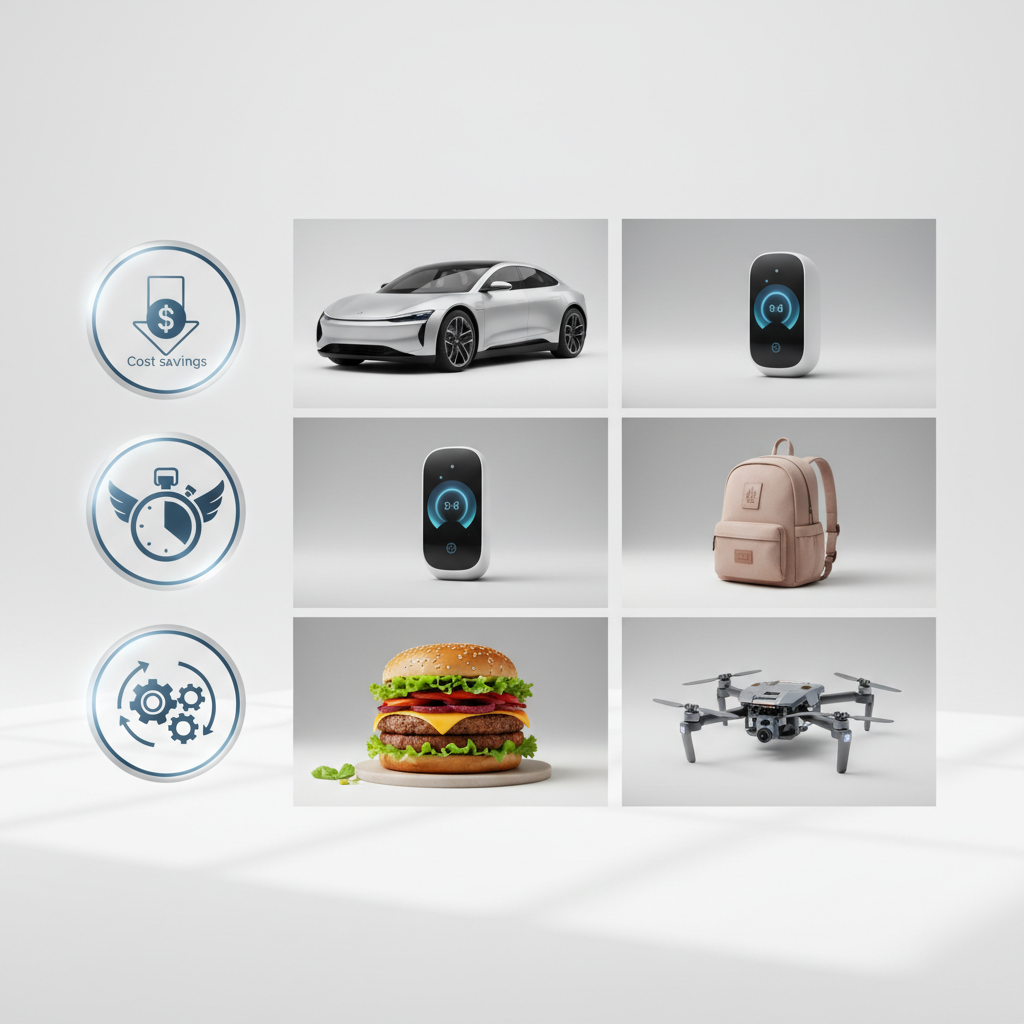
AI-powered systems can produce hundreds or even thousands of images in a fraction of the time it would take human photographers and editors. This rapid output is crucial for businesses with large and frequently updated product catalogs. Furthermore, AI ensures a consistent aesthetic across all product visuals, maintaining brand guidelines and enhancing the professional appearance of an online store. This consistency is difficult to achieve manually, especially across diverse product lines and multiple photographers. AI image generation also allows for greater creative flexibility, enabling businesses to experiment with different backgrounds, lighting, and scenarios without additional costs. This capability is particularly valuable for generating diverse bulk AI lifestyle photos for online store products, showcasing items in various contexts to appeal to a broader audience.
Reducing Costs and Accelerating Time-to-Market with AI
The financial advantages of using AI for image generation are substantial. Traditional product photography involves significant overheads, including equipment, studio time, models, and post-production. AI eliminates many of these expenses. Retailers can launch new products much faster, responding quickly to market trends and consumer demand. This agility provides a significant competitive edge in the fast-paced ecommerce landscape. The ability to generate images on demand means that businesses are no longer constrained by scheduling conflicts or the availability of resources.
Ensuring Visual Consistency and Brand Cohesion
Maintaining a consistent visual identity is paramount for brand recognition and customer trust. AI image generation tools excel at enforcing specific styles, lighting conditions, and compositional rules across an entire catalog. This ensures that every product image adheres to the brand’s aesthetic guidelines, creating a cohesive and professional shopping experience. Inconsistent imagery can detract from a brand’s professionalism, leading to a poorer user experience. AI helps to mitigate this risk by standardizing visual outputs, regardless of the number of images required.
Scaling Content Production for Extensive Catalogs
For ecommerce businesses with thousands of SKUs, manually producing high-quality images for each item is a monumental task. AI offers an unprecedented level of scalability. It can handle the generation of images for entire product lines, including variations in color, size, and material, with minimal human intervention. This capability is essential for businesses looking to expand their product offerings rapidly without compromising on visual quality. The scalability of bulk AI image generation for ecommerce catalogs means that growth is no longer bottlenecked by content creation limitations.
How to Create Thousands of Product Images with AI Efficiently?
Creating thousands of product images with AI efficiently involves a structured approach, beginning with clear input data, leveraging advanced AI image generation platforms, and implementing robust post-processing and integration strategies. The core process relies on providing detailed textual prompts or existing product data to an AI model, which then synthesizes new visual content based on these inputs.
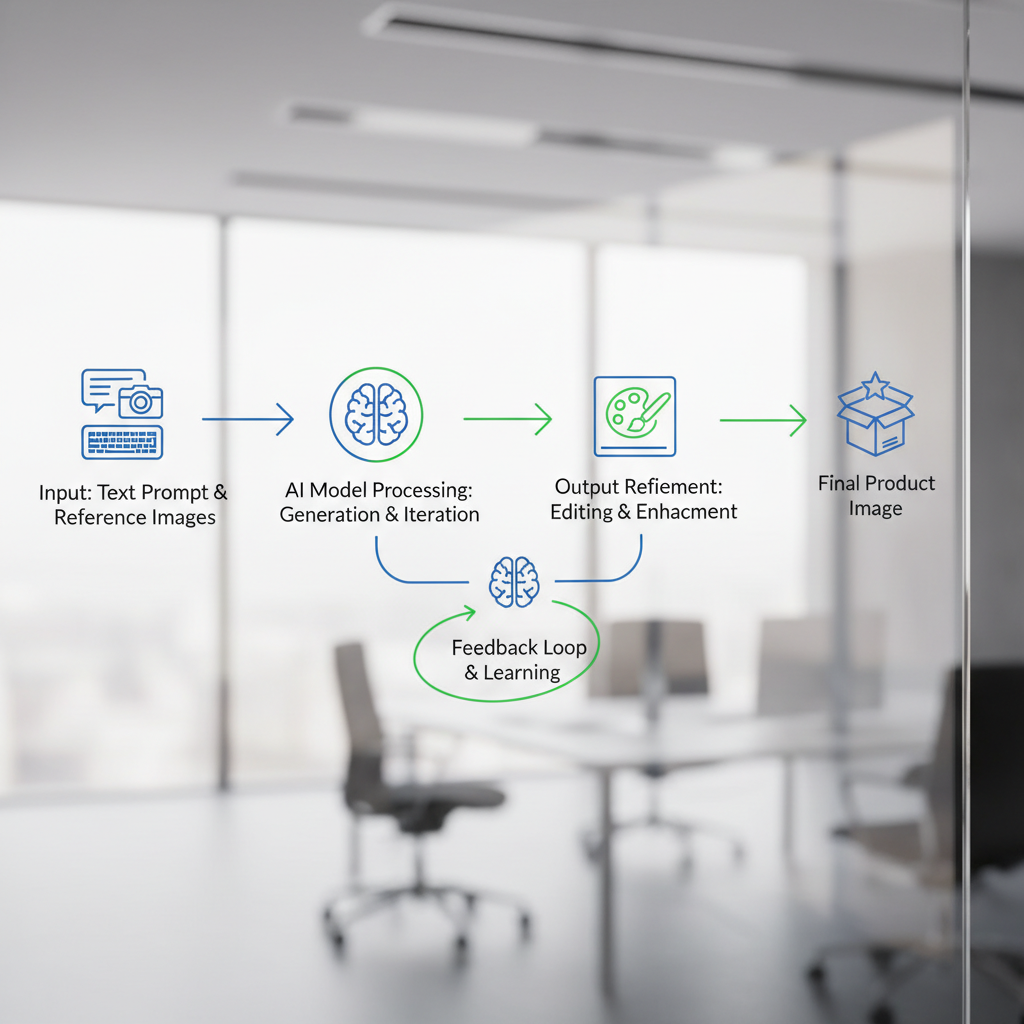
The efficiency comes from the AI’s ability to interpret these instructions and generate variations at scale, significantly reducing manual effort. For instance, an AI image generator can take a single product photo and create hundreds of variations with different backgrounds, lighting, or even models. This capability is critical for achieving high volume output without sacrificing quality. The key is to optimize the input prompts and parameters to guide the AI towards desired outcomes, minimizing the need for extensive revisions. Many platforms also allow for batch processing, where multiple product descriptions or base images can be fed into the system simultaneously, further enhancing efficiency. This is how to create thousands of product images with AI effectively for large-scale operations.
Preparing Your Data for AI Image Generation
Effective AI image generation begins with well-prepared data. This includes high-quality source images (if using existing products as a base), detailed product descriptions, and specific requirements for the generated output. The more precise the input, the better the AI can understand and fulfill the request. For new products, text-based prompts become crucial, describing the item’s appearance, material, color, and desired context.
Consider these data points for optimal results:
* Existing product photos: High-resolution images from various angles.
* Product specifications: Dimensions, materials, color codes (e.g., HEX, RGB).
* Desired settings: Backgrounds, environments (studio, outdoor, lifestyle).
* Lighting conditions: Bright, soft, dramatic, natural.
* Styling cues: Props, models, specific aesthetic themes.
Leveraging AI Image Generation Platforms for Scale
Selecting the right AI image generation platform is crucial for scaling production. These platforms offer various features, including prompt engineering, batch processing, and integration capabilities. Some tools specialize in generating photorealistic images, while others excel at creating stylized or artistic visuals. For ecommerce, photorealism and consistency are often paramount. Many platforms provide APIs that allow for seamless integration with existing product information management (PIM) systems or ecommerce platforms. This integration automates the entire process, from data input to image output and catalog updates, creating a streamlined bulk product image generation workflow for SKU catalogs. For businesses looking to create images efficiently, exploring a robust AI image generator is a strategic step.
Post-Processing and Integration into Ecommerce Systems
While AI-generated images are often high-quality, some level of post-processing may still be required to ensure they meet exact brand standards or specific platform requirements. This could involve minor color corrections, cropping, or adding watermarks. The final step is integrating these images into your ecommerce platform. Many AI tools offer direct export options or API integrations that push the generated images directly to your product pages. This automation minimizes manual uploading and ensures that product catalogs are updated quickly and accurately. A well-defined post-processing and integration strategy is vital for maximizing the efficiency of AI image generation.
Optimizing Bulk Product Image Generation Workflow for SKU Catalogs
Optimizing the bulk product image generation workflow for SKU catalogs involves establishing a systematic process that leverages AI capabilities from initial concept to final deployment, ensuring efficiency, consistency, and scalability. This streamlined workflow typically includes defining clear objectives, standardizing input prompts, utilizing batch processing features, and implementing automated quality control.
A robust workflow ensures that thousands of product images can be generated with minimal manual intervention, significantly reducing the time and resources traditionally required. It focuses on creating a repeatable and predictable process that can handle the complexities of diverse product lines and frequent catalog updates. By optimizing each stage, businesses can maximize the return on investment from their AI image generation tools and maintain a competitive edge. This is how to create thousands of product images with AI in a truly optimized manner.
Defining Clear Objectives and Image Specifications
Before initiating any bulk AI image generation for ecommerce catalogs, it is essential to define clear objectives and detailed image specifications. This includes determining the desired aesthetic, background types, lighting conditions, and any specific props or models required. Establishing a style guide ensures that all generated images align with brand identity and marketing goals. Without clear guidelines, the AI may produce inconsistent results, requiring more revisions and reducing efficiency.
Key elements to define:
* Image resolution and aspect ratios: For various platforms (website, social media, ads).
* Background types: White studio, contextual, lifestyle.
* Lighting style: Soft, dramatic, natural, artificial.
* Product presentation: Angle, zoom, focus.
* Brand elements: Logos, watermarks (if added post-generation).
Implementing Batch Processing and Template Utilization
Batch processing is a cornerstone of an optimized workflow for generating images at scale. This involves feeding multiple product descriptions or base images into the AI system simultaneously. Many AI platforms offer features to apply a consistent set of parameters or templates across a batch, ensuring uniformity. Templates can be pre-defined settings for specific product categories or desired visual styles. For example, a template for apparel might include a ghost mannequin effect and a plain white background, while a template for furniture might feature a styled room setting. This approach significantly reduces manual input for each image, making the process highly efficient.
| Feature | Manual Photography Workflow | AI Image Generation Workflow |
|---|---|---|
| Setup Time per Product | High (studio, lighting, props) | Low (prompt/template selection) |
| Cost per Image | High (photographer, editor, models) | Low (subscription/usage fee) |
| Scalability | Limited by resources and time | Highly scalable, on-demand |
| Consistency | Challenging to maintain across large catalogs | Automated, highly consistent |
| Time-to-Market | Slow (scheduling, shooting, editing) | Fast (rapid generation) |
Automated Quality Control and Iteration Cycles
Even with advanced AI, a degree of quality control is necessary. Implementing automated checks for common issues like incorrect sizing, distorted elements, or adherence to style guides can flag images for review. Some AI platforms include built-in moderation tools. For issues that require human oversight, establishing a rapid iteration cycle is crucial. This involves quickly identifying problems, providing feedback to the AI system (if supported by the platform), and regenerating images. The goal is to minimize manual touch-ups and maximize the proportion of usable images directly from the AI. This iterative process refines the output over time, improving the overall efficiency of the workflow for bulk product image generation workflow for SKU catalogs.
Which AI Tools for Large Ecommerce Catalog Image Production Are Most Effective?
The most effective AI tools for large ecommerce catalog image production are those that combine powerful generative capabilities with user-friendly interfaces, robust batch processing, and seamless integration options. These tools leverage advanced machine learning models to create photorealistic product images, lifestyle shots, and variations from text prompts or existing product data, significantly streamlining the content creation process for extensive SKU catalogs.
When selecting an AI tool, ecommerce businesses should prioritize features like high-fidelity output, customization options for backgrounds and styling, and the ability to manage large volumes of image generation requests efficiently. The effectiveness of a tool is often measured by its ability to consistently produce high-quality images that meet brand standards while minimizing manual intervention and maximizing throughput. This is how to create thousands of product images with AI using the best available technology.
Leading AI Platforms for Product Image Generation
Several AI platforms have emerged as leaders in the space of product image generation. These tools offer varying levels of sophistication and features, catering to different business needs.
Popular choices include:
* Midjourney/Stable Diffusion: Powerful generative AI models that can create highly artistic and photorealistic images from text prompts. While requiring more prompt engineering expertise, they offer immense creative control for generating unique scenes and bulk AI lifestyle photos for online store products.
* Dedicated Ecommerce AI Image Tools: Platforms like Pixelcut, PhotoRoom, or specialized solutions from companies focusing on ecommerce visual content. These often provide more templated approaches, background removal, and specific features tailored for product photography, such as ghost mannequin effects or consistent studio lighting.
* Adobe Firefly: Integrated within the Adobe ecosystem, Firefly offers generative fill and text-to-image capabilities that can be powerful for enhancing existing product images or generating new creative assets.
When evaluating these tools, consider their ease of use, the quality of their output, their pricing models, and their ability to integrate with your existing ecommerce infrastructure.
Features to Look for in AI Image Production Tools
To ensure maximum effectiveness, certain features are paramount when choosing AI tools for large ecommerce catalog image production.
* Batch Processing: Essential for generating thousands of images efficiently. The ability to apply settings across multiple items simultaneously saves countless hours.
* Customization Options: Control over backgrounds, lighting, shadows, reflections, and product placement. This ensures brand consistency and creative flexibility.
* High-Resolution Output: Images must be suitable for various uses, from website display to print advertisements.
* API Integration: For seamless connection with PIM systems, ecommerce platforms, and other digital asset management (DAM) tools. This automates the entire workflow.
* Style Guides and Templates: The ability to save and apply specific styles or templates for different product categories or brand aesthetics.
* Image Editing Capabilities: Basic built-in editing features like background removal, cropping, and color correction can further streamline the process.
* Version Control and Asset Management: To keep track of generated images and iterations.
Comparing AI Tools for Specific Ecommerce Needs
The “best” tool often depends on specific business requirements. A small business might prioritize ease of use and affordability, while a large enterprise will focus on scalability, integration, and advanced customization. For generating bulk AI lifestyle photos for online store products, tools with strong scene generation capabilities might be preferred. If the primary need is to standardize product shots on a plain background, a tool specializing in background removal and consistent lighting would be more effective. Conducting trials and comparing outputs from different platforms based on your specific product types and desired aesthetics is crucial for making an informed decision.
Generating Bulk AI Lifestyle Photos for Online Store Products
Generating bulk AI lifestyle photos for online store products involves using artificial intelligence to create realistic and engaging images that showcase products in natural, contextual settings, rather than isolated studio shots. These images are crucial for helping customers visualize how a product fits into their lives, enhancing emotional connection and driving purchasing decisions.
AI tools achieve this by synthesizing products into generated scenes, or by creating entire scenes from scratch based on detailed prompts, allowing for an endless array of scenarios without the need for physical photoshoots. This capability is a game-changer for ecommerce businesses seeking to enrich their product pages with diverse and appealing visuals at scale. It significantly streamlines the process of how to create thousands of product images with AI, particularly for lifestyle content.
The Impact of Lifestyle Photos on Ecommerce Conversion
Lifestyle photos are incredibly effective at increasing engagement and conversion rates in ecommerce. They go beyond simply showing the product; they tell a story, demonstrate use cases, and evoke emotions. When customers see a product in a relatable setting, they can better imagine themselves using it, which helps overcome purchase hesitations. AI-generated lifestyle images allow businesses to present their products in a multitude of contexts, appealing to different demographics and use cases without the prohibitive costs of traditional photography. This direct impact on customer perception makes bulk AI lifestyle photos for online store products an invaluable asset for any online retailer.
Strategies for Creating Realistic AI Lifestyle Scenes
Creating realistic AI lifestyle scenes requires careful planning and prompt engineering. The AI needs detailed instructions to generate believable environments, lighting, and interactions.
Effective strategies include:
1. Detailed Scene Descriptions: Provide specific details about the setting (e.g., “a cozy living room with natural light,” “a bustling cafe patio,” “a minimalist home office”).
2. Product Integration: Clearly describe how the product should be placed within the scene, its interaction with other elements, and its relationship to any generated models.
3. Lighting and Atmosphere: Specify the time of day, weather conditions, and overall mood (e.g., “warm afternoon glow,” “soft morning light,” “vibrant evening ambiance”).
4. Model Posing and Interaction: If models are included, describe their actions, expressions, and how they interact with the product to convey a specific narrative.
5. Iterative Refinement: Start with broad prompts and gradually refine them based on the AI’s output, adjusting details until the desired realism is achieved.
Integrating Products into AI-Generated Backgrounds
Many AI tools offer advanced features for seamlessly integrating existing product images into newly generated backgrounds. This process typically involves:
* Background Removal: Isolating the product from its original background.
* Scene Generation: Creating a new, contextual background using AI.
* Product Placement and Blending: Carefully placing the product into the generated scene, adjusting its size, perspective, shadows, and lighting to match the environment. This step is crucial for achieving a natural and realistic look.
* Refinement: Minor adjustments to ensure the product appears to be genuinely part of the scene, not just pasted on top.
This capability is particularly useful for businesses that already have a library of high-quality product cutouts but need to generate diverse lifestyle contexts for them. The ability to quickly generate bulk AI lifestyle photos for online store products transforms how retailers approach marketing visuals.
Key Considerations for Implementing AI Image Generation in Ecommerce
Implementing bulk AI image generation for ecommerce catalogs effectively requires careful consideration of several factors, including data privacy, ethical implications, integration challenges, and the need for ongoing human oversight. While AI offers immense benefits in scalability and efficiency, addressing these considerations ensures a responsible and successful adoption within an ecommerce strategy.
A thoughtful implementation plan will mitigate potential risks, maximize the benefits of AI, and maintain brand integrity. It’s not just about the technology itself, but how it fits into the broader business ecosystem and adheres to ethical guidelines. This holistic approach is vital for any business looking at how to create thousands of product images with AI sustainably.
Data Privacy and Ethical Implications of AI Imaging
As AI tools become more sophisticated, questions around data privacy and ethical use become increasingly important. When using existing product data or customer information to train AI models, ensuring compliance with data protection regulations (like GDPR or CCPA) is paramount. Furthermore, the ethical implications of using AI-generated models or environments must be considered. Issues such as representation, bias, and the potential for deepfakes require careful navigation. Businesses should strive for transparency in their use of AI and ensure that generated content aligns with their brand values and societal expectations. Avoiding the perpetuation of stereotypes or the creation of misleading imagery is crucial for maintaining customer trust.
Integration Challenges and Solutions for Existing Systems
Integrating AI image generation tools into existing ecommerce infrastructure can present challenges. Compatibility with current Product Information Management (PIM) systems, Digital Asset Management (DAM) platforms, and ecommerce platforms (e.g., Shopify, Magento) is essential for a seamless workflow.
Common challenges include:
* API compatibility: Ensuring the AI tool’s API can communicate effectively with existing systems.
* Data formatting: Adapting product data into a format digestible by the AI.
* Workflow automation: Designing automated triggers for image generation and catalog updates.
* Scalability of infrastructure: Ensuring existing servers or cloud solutions can handle the influx of new image assets.
Solutions often involve custom API development, middleware solutions, or choosing AI tools that offer robust out-of-the-box integrations with popular ecommerce platforms. Planning for these integrations early in the process can prevent significant roadblocks.
Maintaining Human Oversight and Creative Control
Despite the automation offered by AI, human oversight and creative control remain indispensable. AI is a powerful tool, but it lacks human intuition, nuanced understanding of brand aesthetics, and the ability to adapt to unforeseen creative challenges. Human designers and marketers play a crucial role in:
* Prompt engineering: Crafting effective prompts to guide the AI.
* Quality assurance: Reviewing generated images for accuracy, quality, and brand alignment.
* Refinement and iteration: Providing feedback to the AI to improve future outputs.
* Strategic direction: Guiding the overall visual strategy and ensuring AI outputs align with marketing campaigns.
The goal is not to replace human creativity but to augment it, allowing creative teams to focus on higher-level strategic tasks while AI handles the repetitive, high-volume image production. This collaborative approach ensures that bulk AI image generation for ecommerce catalogs delivers both efficiency and artistic excellence.
What is bulk AI image generation for ecommerce?
Bulk AI image generation for ecommerce refers to the process of using artificial intelligence to automatically create a large volume of product images, lifestyle shots, and visual variations for online store catalogs. It leverages generative AI models to produce images from text descriptions or existing product photos, significantly accelerating content creation. This method helps businesses scale their visual assets efficiently.
How does AI help create thousands of product images?
AI helps create thousands of product images by automating repetitive tasks like background removal, scene generation, and stylistic variations. Users provide prompts or base images, and the AI generates numerous high-quality visual assets based on those inputs. This process drastically reduces manual effort and time, making it feasible to produce large catalogs quickly.
Can AI generate lifestyle photos for products?
Yes, AI can effectively generate lifestyle photos for products. By describing desired scenes, environments, and interactions in prompts, AI tools can create realistic images showing products in contextual settings. This allows ecommerce businesses to showcase items in diverse scenarios without expensive photoshoots, enhancing customer engagement and product visualization.
What are the main benefits of using AI for product images?
The main benefits of using AI for product images include significant cost reduction by eliminating traditional photography expenses, accelerated time-to-market for new products, unparalleled scalability for large catalogs, and consistent visual branding across all assets. AI ensures high-quality, uniform imagery that strengthens brand identity.
Are there ethical concerns with AI-generated images?
Yes, ethical concerns with AI-generated images include data privacy when using existing data, potential biases in generated content, and the responsible use of AI models. Businesses must ensure transparency, avoid misleading imagery, and adhere to data protection regulations. Ongoing human oversight is crucial to address these ethical considerations responsibly.
How do AI image tools integrate with ecommerce platforms?
Many AI image tools integrate with ecommerce platforms through APIs or direct connectors. This allows for automated data exchange, where product information is fed to the AI, and generated images are automatically uploaded to product pages. Such integrations streamline the entire workflow from image creation to catalog updates, enhancing efficiency.
Is human editing still needed for AI-generated product images?
While AI generates high-quality images, some human editing or oversight is often still needed. This can include minor color corrections, cropping, adding watermarks, or ensuring precise adherence to specific brand guidelines. Human review ensures the final images meet exact standards and maintain creative control.
The advent of bulk AI image generation for ecommerce catalogs marks a pivotal shift in how online retailers approach visual content. This technology empowers businesses to overcome traditional limitations of cost, time, and scalability, fundamentally transforming the production of product imagery. By leveraging AI, companies can:
* Drastically reduce expenses associated with traditional photography.
* Accelerate product launches and respond faster to market demands.
* Achieve unprecedented scalability for extensive and growing SKU catalogs.
* Ensure consistent, high-quality visual branding across all products.
* Generate diverse and engaging bulk AI lifestyle photos for online store products to boost conversions.
As AI tools continue to evolve, their integration into ecommerce workflows will become even more seamless, offering greater customization and efficiency. Embracing these innovations is no longer just an advantage but a necessity for staying competitive in the digital marketplace. Explore the potential of AI to revolutionize your ecommerce visuals today.