


AI For Creating Photorealistic Product CGI Without 3D Artists 202
The landscape of product visualization is undergoing a profound transformation, driven by the rapid advancements in artificial intelligence. AI for creating photorealistic product CGI without 3D artists is no longer a futuristic concept but a present-day reality, fundamentally reshaping how businesses generate stunning visual assets. This innovative technology allows companies to produce high-quality, lifelike computer-generated imagery (CGI) of their products with unprecedented speed and cost-efficiency. It democratizes access to premium visuals, enabling brands of all sizes to create compelling marketing content without relying on traditional, resource-intensive 3D rendering processes or specialized artistic talent.
How AI for Creating Photorealistic Product CGI is Revolutionizing Visuals
AI for creating photorealistic product CGI without 3D artists is revolutionizing visual content creation by automating complex rendering tasks and generating high-quality images from minimal input. AI-powered tools leverage machine learning to interpret product details and create lifelike scenes, making professional-grade visuals accessible to a broader range of businesses. This means brands can now produce stunning imagery that once required extensive manual effort and specialized 3D modeling skills.
Artificial intelligence (AI) in this context refers to the use of advanced algorithms and machine learning models to generate visual content. These systems are trained on vast datasets of existing images, allowing them to understand patterns of light, shadow, texture, and composition. When a user provides a basic product photo or a text prompt, the AI can then generate new, photorealistic images in various settings, angles, and styles. This capability significantly accelerates the content production workflow. AI tools can create lifestyle scenes, product variations, and marketing visuals almost instantly, eliminating the need for traditional photoshoots or lengthy 3D rendering processes. This speed is a major advantage for businesses operating in fast-moving markets, allowing them to quickly adapt to trends and launch products with compelling visuals.
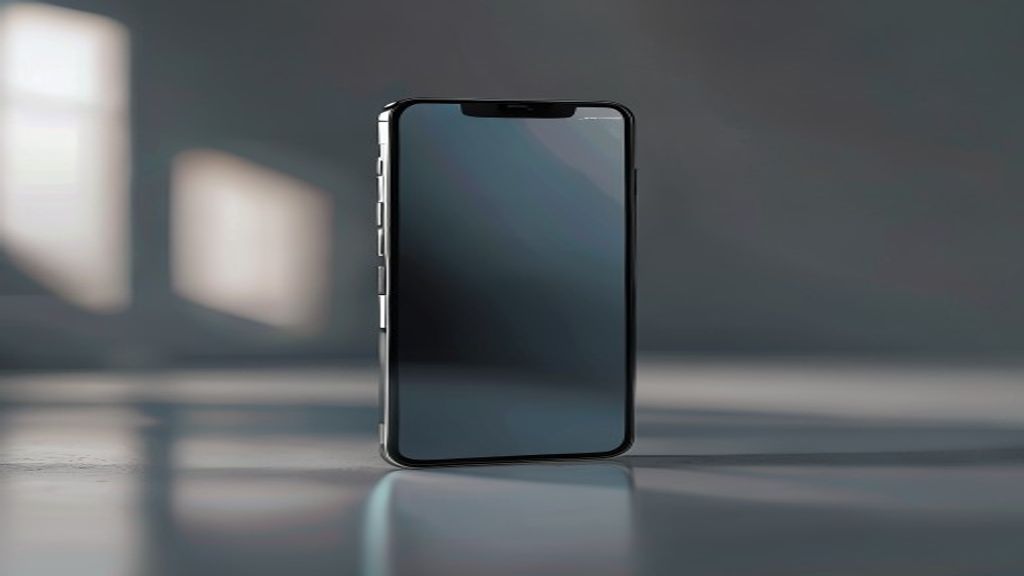
The integration of AI into CGI workflows also enhances flexibility and scalability. Businesses can generate an infinite number of product variations and contextual scenes from a single 2D image or a basic 3D model. This is particularly beneficial for e-commerce, where diverse visuals are crucial for customer engagement and conversion. AI can render these scenes with an incredible degree of realism, accurately accounting for lighting, shadows, and textures. This level of control and consistency is difficult and expensive to achieve with traditional methods. Furthermore, AI tools can automate repetitive tasks like cropping, resizing, and editing, ensuring a cohesive look across all product visuals, whether for websites, social media, or print materials. This consistency builds brand trust and professionalism, which is vital in competitive digital marketplaces.
Streamlining the Creative Process with AI
AI streamlines the creative process by acting as a powerful co-pilot for visual content generation. Instead of starting from scratch, designers can use AI to rapidly ideate and conceptualize various product presentations. This significantly reduces the time spent on initial drafts and revisions. For example, an AI can generate dozens of high-fidelity scenes from a single product image, offering diverse visual content for personalization. This allows creative teams to focus on strategic storytelling and refinement rather than manual execution.
Enhancing Visual Quality and Consistency
AI-powered tools ensure a consistent visual quality across entire product catalogs. They can automatically adjust lighting, color balance, and backgrounds to maintain a uniform aesthetic. This is especially important for e-commerce, where customers expect a cohesive brand experience. AI algorithms can also upscale images, enhancing resolution without compromising quality, making them suitable for detailed product visuals or large-format displays. This capability helps brands present their products with impeccable clarity and detail, fostering greater customer confidence.
Exploring How AI CGI Product Photography is Replacing Traditional Rendering Studios
AI CGI product photography replacing traditional rendering studios is becoming a significant trend, primarily due to AI’s ability to offer unparalleled speed, cost-efficiency, and scalability that traditional studios often struggle to match. While human expertise remains invaluable for complex projects, AI handles repetitive and high-volume tasks with remarkable efficiency.
Traditional rendering studios typically involve a multi-step process: concept design, 3D modeling, texturing, lighting, and multiple rounds of revisions. This workflow is labor-intensive, time-consuming, and often expensive, requiring skilled 3D artists, specialized software, and powerful hardware. AI-powered solutions, however, can generate photorealistic visuals from simple inputs, drastically cutting down on production time and costs. For instance, AI can create an AI render product photo almost instantly by uploading a picture or entering a simple text prompt, eliminating the need for cameras, studios, or complex logistics. This allows teams to move from concept to visual content in minutes rather than days or weeks.
The shift is particularly evident in e-commerce, where the demand for vast quantities of high-quality, diverse product visuals is constant. Traditional studios would find it challenging and costly to produce thousands of unique lifestyle shots or product variations for an extensive catalog. AI-generated imagery, conversely, can scale rapidly, creating numerous ad variations optimized for different channels (e.g., Instagram, Facebook, YouTube) without manual resizing or re-rendering. This scalability allows brands to experiment at a level previously unattainable, leading to higher click-through rates (CTR) and conversions through optimized visuals. While AI tools shine in speed and cost-effectiveness for quick mockups and internal use, professional 3D rendering still offers unmatched control and precision for critical marketing campaigns and product launches where visual accuracy and brand consistency are paramount.
Cost-Effectiveness and Speed Advantages
AI tools are highly cost-effective, especially for startups and businesses with limited resources. They eliminate the need for expensive professional photographers, set designers, or extensive post-production work. Businesses can produce visually appealing content with just a few clicks. A case study demonstrated that AI CGI ads resulted in 70% faster production time and over 50% cost savings compared to traditional CGI ads. This financial efficiency allows brands to reallocate resources to other strategic areas like marketing and innovation.
Maintaining Creative Control and Accuracy
While AI offers incredible speed, maintaining precise creative control and dimensional accuracy can be a challenge. AI models rely on learned patterns and may not always align with exact product measurements or specific brand guidelines. This is where a hybrid approach often proves most effective, combining the speed of AI for ideation and initial drafts with the precision of human 3D artists for final refinements and critical detail work. Human oversight ensures that AI-generated elements meet stringent quality standards and accurately represent the product.
The Impact of AI for Automating Product 3D Rendering Pipeline in Ecommerce
AI for automating product 3D rendering pipeline ecommerce is fundamentally reshaping how online retailers create and manage their visual content, offering significant improvements in efficiency, scalability, and customer engagement. This automation allows e-commerce businesses to generate high-quality, interactive product visuals at an unprecedented pace and volume.
The e-commerce industry operates at a relentless pace, demanding visuals that not only capture attention but also drive purchasing decisions. Traditionally, creating 3D models and rendering photorealistic images required skilled designers and could take hours or even days per product. AI algorithms, particularly those leveraging machine learning and computer vision, can now generate 3D models from simple 2D images or sketches, or even CAD files. This capability means companies can digitize entire product catalogs at a fraction of the time and cost previously required. Platforms like imagine.io are at the forefront, offering cloud-based solutions for photorealistic 3D images, videos, augmented reality (AR) experiences, and product configurators. These tools deliver measurable results, including significant cost savings and increased conversion rates. The market for 3D product visualization platforms is experiencing robust growth, driven by consumer demand for immersive shopping experiences and virtual product interactions.
AI-driven automation extends beyond just model creation and rendering. It streamlines the entire visual content workflow, from initial concept to final deployment. For example, AI can automatically generate various lifestyle scenes, placing a product in different environments to appeal to diverse customer segments. This eliminates the need for expensive and time-consuming physical photoshoots for every product variation or marketing campaign. Moreover, AI tools can ensure consistency across all visual assets, standardizing elements like lighting, angles, and backgrounds, which is crucial for building a professional and trustworthy brand image in e-commerce. By automating these processes, merchandising teams can focus on strategic planning rather than manual image editing.
Accelerating Product Launches and Marketing Campaigns
AI significantly accelerates product launches by enabling brands to generate marketing assets much faster. What once took weeks can now be completed in hours, allowing companies to respond quickly to market trends and launch products ahead of competitors. This agility is a critical competitive advantage in the fast-paced e-commerce landscape. The ability to rapidly produce numerous ad variations also facilitates extensive A/B testing, helping brands quickly identify the most effective visuals for their target audiences.
Enhancing Customer Experience with Interactive Visuals
AI-powered 3D rendering creates immersive and interactive customer experiences. Shoppers can rotate, zoom, and explore products as if they were physically holding them. They can also customize products in real-time, switching colors, materials, or sizes. This interactivity builds customer confidence, reduces hesitation, and bridges the gap between physical and digital shopping. Studies show that interactive 3D and AR features can increase conversion rates by up to 40%, with AI-driven enhancements pushing these numbers even higher.
Understanding How AI CGI Cuts Product Visualization Costs by 70 Percent
How AI CGI cuts product visualization costs by 70 percent is achieved by dramatically reducing the need for expensive physical photoshohoots, manual 3D modeling, and extensive post-production, thereby streamlining the entire visual content creation process. This significant cost reduction makes high-quality product imagery accessible to a wider range of businesses.
Traditional product visualization methods, such as professional photoshoots or manual 3D rendering, involve substantial overheads. These include studio rental fees, equipment, travel expenses, hiring photographers, stylists, models, and extensive post-production editing. For businesses with large product catalogs, these costs can quickly balloon into millions annually. AI CGI eliminates many of these expenses. Instead of physical setups, AI generates virtual environments and product renders from minimal input, such as a single 2D image or CAD data. This removes the need for physical prototypes and expensive on-location shoots. Companies like imagine.io report cost savings of up to 70% by using AI-powered platforms for producing 3D images, videos, and AR experiences.
The automation capabilities of AI are central to these cost savings. AI tools can automate labor-intensive steps in the 3D rendering pipeline, such as generating 3D models from 2D images, creating textures, and denoising renders. This significantly reduces the human hours required for production. For example, AI denoising can filter out noise from a partially rendered image in seconds, a task that traditionally required many minutes or hours of high-quality sampling. Furthermore, AI allows for rapid iteration and scalability. Brands can generate numerous product variations, lifestyle scenes, and marketing assets quickly and cheaply, avoiding the high costs associated with creating multiple versions manually. This means a budget that once delivered one polished video might now deliver 8-12 videos, dozens of variations, and multi-language versions.
| Cost Factor | Traditional Product Photography/CGI | AI-Powered CGI | Cost Reduction |
|---|---|---|---|
| Studio/Location Rental | High | None (virtual environments) | Significant |
| Equipment & Logistics | High (cameras, lighting, transport) | Minimal (software, computing power) | Significant |
| Personnel (Photographers, 3D Artists, Stylists, Models) | High (multiple specialists) | Reduced (AI handles many tasks) | Substantial |
| Physical Prototypes/Samples | Required | Often not required (digital models) | High |
| Post-Production & Editing | Time-consuming, manual | Automated, AI-assisted | Moderate to High |
| Time-to-Market | Weeks to months | Hours to days | Accelerated |
| Scalability for Variations | Limited, expensive | High, cost-effective | Dramatic |
Reducing Rework and Errors
AI tools can detect inconsistencies in geometry, texture alignment, or lighting setup early in the visualization process, reducing costly rework later on. This proactive error detection minimizes the need for manual corrections, which can be expensive and time-consuming in traditional workflows. By ensuring accuracy from the outset, AI contributes to overall project efficiency and cost savings.
Optimizing Resource Allocation
With AI automating much of the visual content creation, businesses can reallocate their human talent to higher-level creative tasks, strategy development, and customer engagement. This optimization of human resources further contributes to cost efficiency by maximizing the impact of skilled professionals. The ability to produce high-quality visuals internally also reduces reliance on external agencies, offering more control over budgets and timelines.
Applying AI CGI for Automotive and Furniture Product Photography
AI CGI for automotive and furniture product photography is transforming how these industries create compelling visuals, offering unparalleled flexibility, speed, and cost-efficiency compared to traditional methods. Both sectors benefit immensely from AI’s ability to generate photorealistic imagery without the logistical complexities and expenses of physical photoshoots.
In the automotive industry, creating marketing visuals for new car models or accessories traditionally involves elaborate photoshoots in various locations, often requiring prototypes or pre-production vehicles. This is incredibly expensive and time-consuming. AI CGI allows automotive brands to generate hundreds of photorealistic car images, tailored to specific creative visions, without ever needing a physical car or location. Tools can experiment with combinations of locations, light moods, camera angles, and vehicle perspectives, producing high-resolution images for concept discussions and client approvals. This rapid ideation saves days or weeks of location scouting, scheduling, and manual mockups. Furthermore, AI can integrate seamlessly with existing 3D car models, allowing for easy placement in AI-generated backplates with matching camera data and HDR domes for realistic lighting and reflections. This means a single 3D model can be used to generate an infinite number of scenarios, showcasing different colors, trims, or features in diverse environments, from urban streets to rugged landscapes.
Similarly, the furniture industry faces challenges with showcasing large and often heavy products in various settings. Hauling furniture to studios, hiring photographers, and weeks of post-production are standard, leading to significant costs and logistical nightmares. AI furniture photography allows brands to generate detailed interior scenes in seconds, placing furniture pieces in believable interiors to help customers visualize them in their own homes. This capability lifts add-to-cart rates and improves marketplace performance. From one clean silo image, AI can instantly generate dozens of high-fidelity scenes, providing context-rich settings that help customers understand scale and reduce costly returns due to mismatched expectations. AI also ensures consistent, high-quality visuals across entire furniture catalogs, which is crucial for brand perception on e-commerce platforms like Amazon and Wayfair.
Customizing Visuals with Ease
AI allows for effortless customization of product visuals. For automotive brands, this means showcasing different car configurations, colors, and features in various settings with just a few clicks. Furniture brands can generate endless staging variations, from minimalist apartments to luxury homes, without moving a single physical chair. This flexibility enables highly personalized marketing campaigns that resonate with diverse customer preferences.
Reducing Logistical Headaches and Environmental Impact
By eliminating the need for physical products, studios, and extensive travel, AI CGI significantly reduces the logistical complexities associated with traditional photography. This not only saves time and money but also contributes to a reduced carbon footprint by minimizing transportation and resource consumption. The ability to create visuals digitally before production even begins also supports pre-marketing efforts and faster time-to-market for new products.
Future Trends: The Evolution of AI in Product Visualization
The evolution of AI in product visualization is moving towards even greater autonomy, realism, and integration, promising a future where the line between real and computer-generated imagery becomes almost indistinguishable. Future trends indicate a shift towards more sophisticated AI models that offer enhanced control, multimodal capabilities, and real-time interaction.
One significant trend is the advancement of AI models to achieve even higher levels of photorealism and dimensional accuracy. While current AI excels at generating compelling visuals, challenges remain in consistently matching precise product details, logos, and material representations with absolute accuracy. Future AI systems will likely incorporate more robust “grounding” mechanisms, allowing them to pull live web data or integrate directly with product CAD files for highly accurate and context-aware generation. This means AI will be able to generate visuals that adhere strictly to brand guidelines and engineering specifications, overcoming current limitations in consistency and detail. The goal is for AI to interpret creative direction and brand guidelines with the nuance of an experienced human collaborator, suggesting solutions that align with a broader creative vision.
Another key trend is the development of multimodal AI models that can seamlessly integrate various types of input and output, such as text, images, video, and even 3D models. This will enable more complex and dynamic content creation workflows. For instance, users could provide a text description, a 2D product image, and a basic 3D model, and the AI could generate a photorealistic video of the product in motion within a specified environment. This integration will extend to augmented reality (AR) and virtual reality (VR) experiences, allowing for more immersive and personalized product visualizations. Predictive AI will also play a larger role, analyzing user behavior to dynamically adjust layouts, featured products, and messaging, thereby creating highly personalized shopping experiences. The future will also see AI becoming more adept at generating character-consistent photography for brands and understanding narrative context, moving beyond simple image generation to more sophisticated visual storytelling.
Enhanced Control and Customization
Future AI tools will offer even finer-grained control over generated images, allowing users to specify intricate details of style, composition, lighting, and layout with greater precision. This will reduce the need for extensive prompt engineering and enable designers to achieve their desired aesthetic more efficiently. The ability to maintain consistent visual aesthetics across a large body of work will be a significant area of development, crucial for brands maintaining a strong identity.
Real-time Interaction and Iteration
The speed of AI generation will continue to improve, moving towards real-time interaction and iteration. This means designers can make adjustments to prompts or settings and see the updated render almost instantaneously, accelerating the feedback loop and creative exploration. This real-time capability will be particularly impactful for prototyping and concept visualization, allowing for rapid experimentation without financial risk.
Can AI truly create photorealistic product CGI that is indistinguishable from real photography?
Yes, modern AI-generated product imagery can achieve hyper-realism, producing visuals that are often indistinguishable from those shot by professional photographers. AI models are trained on vast datasets to capture fine details like textures, shadows, and reflections, delivering precision and realism. However, human oversight is often still employed to review and refine the AI output for critical brand consistency and accuracy.
How much time can AI CGI save compared to traditional rendering methods?
AI CGI can dramatically reduce production time. What once took weeks of manual modeling, rendering, and revisions can now be compressed into hours or even minutes. This speed allows businesses to move from concept to visual content almost instantly, accelerating product launches and marketing campaigns significantly.
Is AI CGI suitable for small businesses and startups?
Absolutely. AI CGI is highly cost-effective and accessible, making it ideal for startups and small businesses with limited budgets. It eliminates the need for expensive photoshoots and specialized 3D artists, allowing smaller brands to produce high-quality visuals on par with larger competitors.
What are the main limitations of using AI for product CGI?
While powerful, AI for product CGI can have limitations regarding dimensional accuracy, consistent product details like logos, and precise material representation. AI images don’t generate accurate 3D models, and structural or technical updates can be difficult to control. A hybrid approach often combines AI’s speed with human refinement for optimal results.
Can AI CGI completely replace human 3D artists?
No, AI CGI is best viewed as a powerful tool that augments and streamlines the work of 3D artists, rather than replacing them entirely. AI handles tedious and time-consuming tasks, freeing artists to focus on higher-level creative decisions, design refinement, and ensuring brand accuracy and storytelling. The most effective strategy often involves a hybrid workflow.
How does AI CGI impact e-commerce conversion rates and returns?
AI-powered visuals significantly boost e-commerce conversion rates by providing accurate, interactive product previews that build customer confidence. By allowing customers to visualize products in realistic contexts, AI also helps set accurate expectations, leading to a reduction in costly returns due to mismatched perceptions.
The emergence of AI for creating photorealistic product CGI without 3D artists marks a pivotal moment in visual content creation. This technology is not merely an incremental improvement; it represents a fundamental shift in how brands approach product visualization.
Key takeaways include:
* Unprecedented Speed and Efficiency: AI generates high-quality visuals in minutes, drastically cutting down production timelines compared to traditional methods.
* Significant Cost Reduction: By eliminating the need for physical photoshoots and extensive manual labor, AI CGI can reduce product visualization costs by up to 70 percent.
* Enhanced Scalability and Versatility: Brands can effortlessly produce an infinite number of product variations, lifestyle scenes, and marketing assets, catering to diverse campaigns and platforms.
* Democratization of High-Quality Visuals: AI empowers businesses of all sizes to access professional-grade imagery, leveling the playing field in competitive markets.
* Transformative Impact Across Industries: Sectors like e-commerce, automotive, and furniture are experiencing revolutionary changes in how they create and deploy visual content.
* Augmentation, Not Replacement: While AI automates many tasks, human creativity and oversight remain crucial for ensuring brand consistency, accuracy, and strategic storytelling.
Embracing AI-powered CGI is no longer an option but a strategic imperative for businesses aiming to stay competitive in a visually-driven world. Explore how these advanced tools can revolutionize your product visualization strategy and unlock new levels of efficiency and creative potential.