

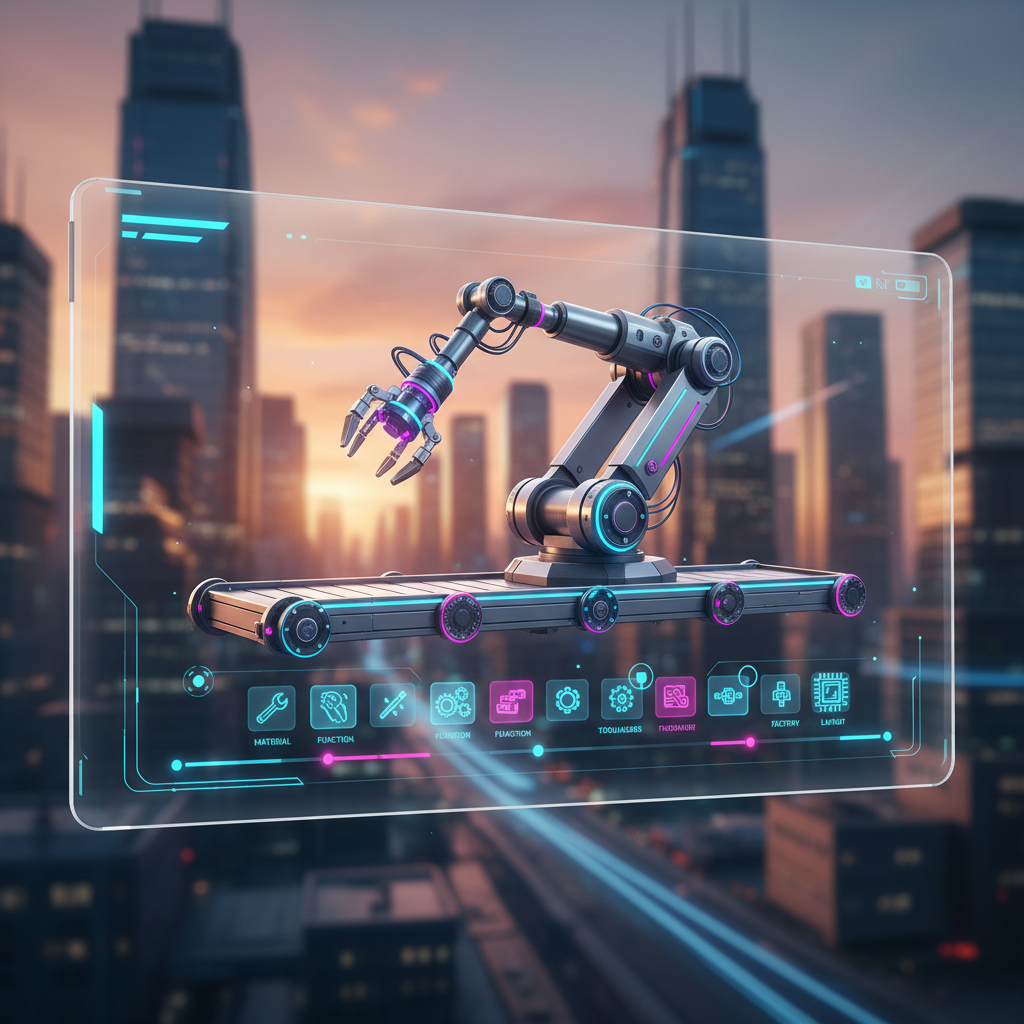
AI Product Photography For Industrial And B2B Equipment 2026
The landscape of B2B marketing and industrial sales is rapidly evolving, driven significantly by advancements in artificial intelligence. AI product photography for industrial and B2B equipment is transforming how companies showcase complex machinery, intricate components, and specialized tools. This innovative approach leverages AI to generate high-quality, realistic images without the need for traditional photoshoots, saving time and resources. It allows manufacturers and suppliers to create compelling visual assets that accurately represent their products, from heavy machinery to delicate safety gear, enhancing online catalogs and marketing materials. This technology is becoming indispensable for businesses aiming to maintain a competitive edge in digital commerce.
How is AI Revolutionizing Industrial Product Visuals and Catalogs?
AI is revolutionizing industrial product visuals and catalogs by enabling the rapid creation of high-quality, photorealistic images from 3D models or even basic sketches, eliminating the need for expensive and time-consuming physical photoshoots. This technology allows B2B companies to generate a vast array of product images with different angles, lighting conditions, and environments, all tailored to specific marketing needs. The efficiency gained transforms how industrial equipment and components are presented online and in print, significantly speeding up content creation workflows.
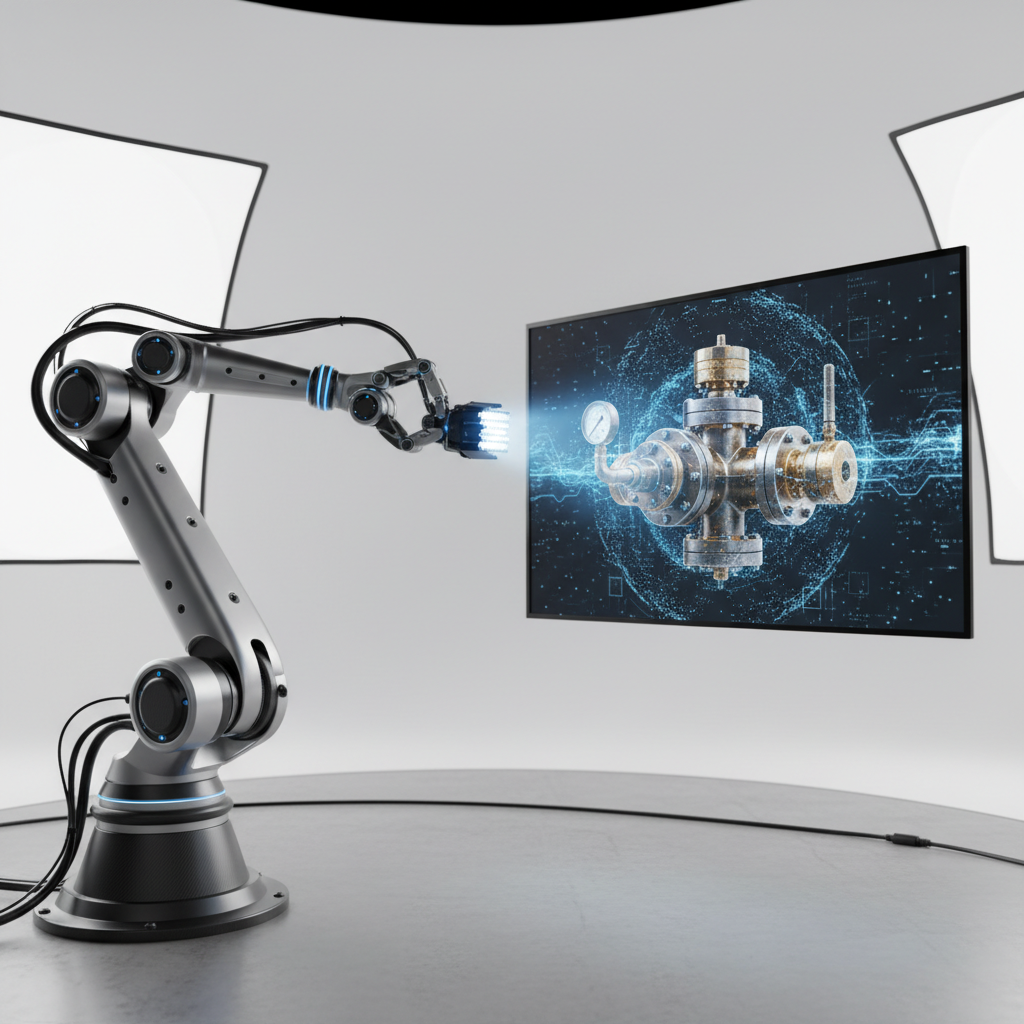
The traditional methods of photographing industrial equipment often involve logistical challenges. Transporting large machinery to a studio or setting up on-site shoots can be costly and disruptive. AI product photography bypasses these hurdles entirely. Companies can upload existing CAD files or 3D models of their products, and AI algorithms can render them into stunning visual assets. This capability is particularly beneficial for products that are not yet manufactured or are too large to move easily. It ensures consistency in branding and visual quality across entire product lines, which is crucial for professional B2B presentations.
Furthermore, AI tools offer unparalleled flexibility in image generation. Marketers can experiment with various backgrounds, textures, and scenarios to best highlight product features. Imagine showcasing a heavy-duty pump in a simulated factory environment or a precision tool on a clean, technical workbench. AI makes these custom visualizations readily accessible, allowing for targeted marketing campaigns that resonate deeply with specific industrial buyers. The ability to quickly iterate on designs and visual presentations provides a significant competitive advantage.
* Cost Efficiency: Reduces expenses associated with studio rentals, equipment transport, and professional photographers.
* Speed and Scalability: Generates numerous images quickly, allowing for rapid catalog updates and expansive product portfolios.
* Design Flexibility: Enables endless customization of backgrounds, lighting, and product configurations without physical constraints.
This technology is not just about creating static images. It extends to interactive 3D models and augmented reality experiences, providing a more immersive view of complex industrial products. For businesses operating in a global market, AI-generated visuals can be easily localized, adapting text and even cultural contexts within the imagery. This ensures that product presentations are relevant and impactful across diverse audiences. The integration of AI into visual content creation workflows marks a pivotal shift towards more dynamic and efficient B2B marketing strategies.
Leveraging AI for Creating Technical Product Cutaway Visualizations
AI for creating technical product cutaway visualization offers an unprecedented ability to reveal the internal workings and intricate mechanisms of industrial and B2B equipment, providing invaluable insights for engineers, technicians, and potential buyers. This advanced application of AI allows for the generation of detailed cross-sectional views that would be extremely difficult, if not impossible, to achieve through traditional photography without damaging the product. It effectively peels back layers to expose internal components and their relationships, enhancing understanding of complex machinery.
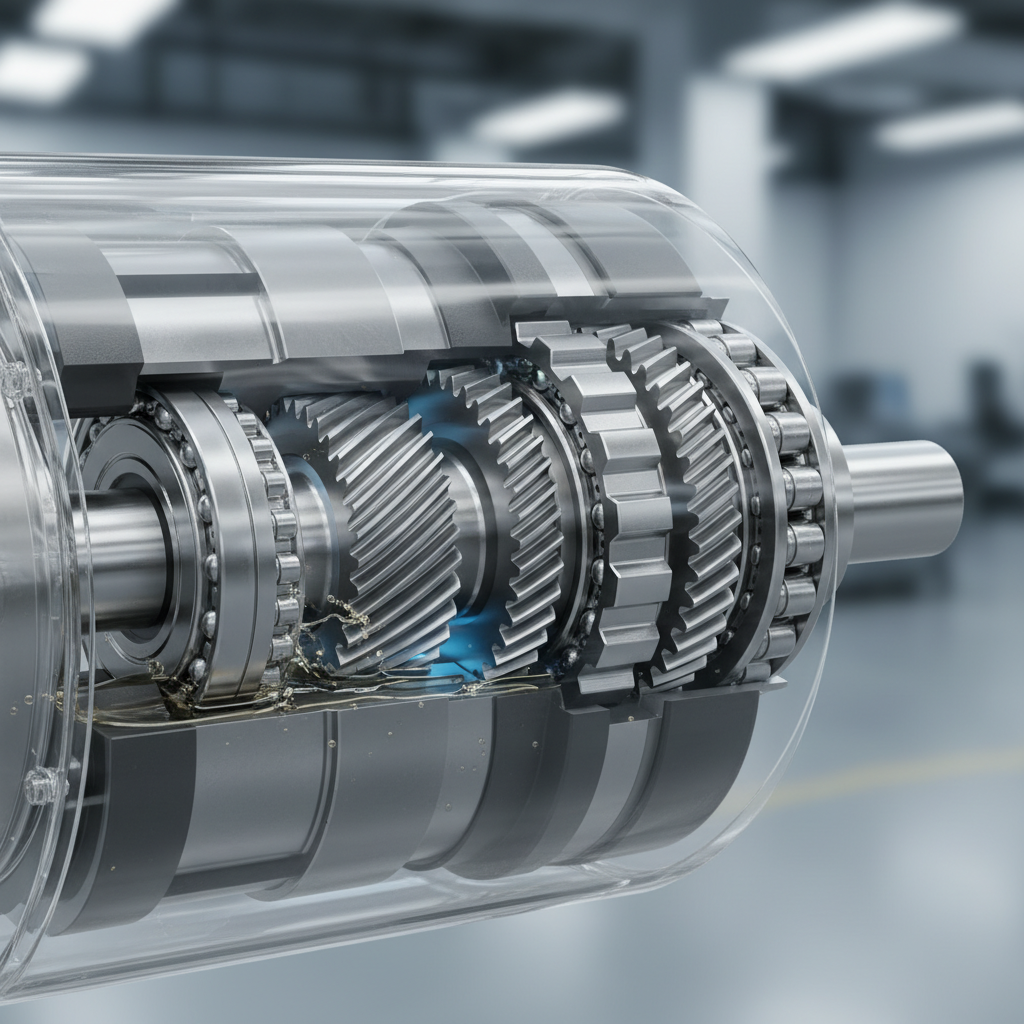
Traditional methods for creating cutaway visualizations often involve physically cutting a product, which is destructive and expensive, or labor-intensive 3D modeling by skilled artists. AI streamlines this process by taking existing 3D models and intelligently generating precise cutaway views. Users can specify the cutting plane and depth, allowing the AI to render the internal structure with accuracy and clarity. This capability is particularly useful for products with numerous internal parts, where understanding their arrangement is critical for maintenance, assembly, or operational comprehension.
The benefits extend beyond mere visualization. These AI-generated cutaways serve as powerful educational tools. They can be integrated into training manuals, repair guides, and sales presentations to explain product functionality and design advantages. For example, a manufacturer of hydraulic systems can use AI to create a cutaway showing the flow paths and valve operations, making complex concepts easy to grasp. This level of detail builds trust and confidence with B2B clients, demonstrating a thorough understanding of product engineering.
* Enhanced Understanding: Clearly illustrates internal components and operational principles.
* Non-Destructive Analysis: Creates internal views without physically altering the product.
* Accelerated Content Creation: Significantly reduces the time and effort compared to manual modeling or physical cuts.
Moreover, these visualizations can be dynamically adjusted to highlight specific features or pathways. An AI system can generate multiple cutaway views from different angles or with varying levels of transparency, allowing for a comprehensive exploration of the product’s interior. This interactive potential is invaluable for technical demonstrations and product development reviews. The precision and speed of AI in generating these complex visuals make it an indispensable tool for any industrial or B2B company looking to communicate technical specifications with unparalleled clarity.
Automating Manufacturing Parts Catalog Photos with AI
AI for manufacturing parts catalog photo automation 2026 is fundamentally transforming how industrial and B2B companies manage and populate their extensive product catalogs. This technology allows for the automated generation of consistent, high-quality images for thousands of individual parts, from fasteners to specialized components, without manual intervention. The efficiency gained is immense, drastically reducing the time and cost associated with catalog creation and updates.
Traditionally, populating a manufacturing parts catalog with images has been a monumental task. Each part required individual photography, often in a studio setting, ensuring proper lighting, background, and perspective. This process was not only time-consuming but also prone to inconsistencies in visual style across different batches of photos. AI automation addresses these challenges head-on. By leveraging existing CAD files or 3D models, AI algorithms can render photorealistic images of each part in a standardized format.
The core benefit lies in scalability and consistency. Imagine a catalog with tens of thousands of unique parts. Manually photographing each one is impractical. With AI, a company can feed its entire library of 3D models into the system, and the AI will generate all necessary images according to predefined parameters. These parameters can include specific angles, lighting setups, backgrounds (e.g., pure white, transparent), and even shadows. This ensures that every image in the catalog adheres to a uniform visual standard, enhancing professionalism and user experience.
Here’s a comparison of traditional vs. AI-automated catalog photography:
| Feature | Traditional Photography | AI-Automated Photography |
|---|---|---|
| Cost per Image | High (equipment, labor, studio) | Low (software, processing power) |
| Time per Image | Minutes to hours (setup, shoot, edit) | Seconds to minutes (rendering) |
| Consistency | Variable (depends on photographer, setup) | High (standardized algorithms) |
| Scalability | Limited (logistical constraints) | Excellent (processes thousands of models) |
| Flexibility | Requires reshoot for changes | Easy to re-render with new parameters |
This automation is particularly valuable for companies with frequently updated product lines or those offering highly customizable components. When a design changes, instead of scheduling a new photoshoot, the updated 3D model can be re-rendered by the AI, generating new images almost instantly. This agility supports faster product launches and more dynamic inventory management. AI for parts catalog automation is not just a convenience; it’s a strategic imperative for modern manufacturing and B2B operations.
Enhancing Safety Equipment and PPE Brands with AI Product Photography
AI product photography for safety equipment and PPE brands offers a powerful solution for showcasing crucial protective gear with clarity, accuracy, and impact. For products where safety and compliance are paramount, high-quality visuals are not just aesthetically pleasing; they are essential for conveying trust and demonstrating product integrity. AI allows brands to create professional, detailed images of helmets, gloves, respirators, and other PPE without the complexities of traditional photoshoots.
The challenge for safety equipment brands often lies in presenting products that might appear utilitarian in a way that highlights their protective features and ergonomic design. Traditional photography can be difficult, especially when showcasing materials that are reflective, transparent, or have intricate textures, like specialized fabrics or clear visors. AI rendering engines excel at accurately depicting these challenging surfaces, ensuring that the visual representation matches the product’s real-world appearance and specifications.
Moreover, AI enables the creation of scenario-based imagery that places PPE in relevant industrial or hazardous environments without putting models or photographers at risk. Imagine a hard hat being showcased in a simulated construction site or safety goggles in a laboratory setting. These contextual images help buyers visualize the product in use, reinforcing its protective purpose. This capability is invaluable for marketing and training materials, making the product’s function immediately apparent.
* Accurate Material Representation: Renders reflective, transparent, and textured materials precisely.
* Contextual Visualization: Places products in relevant simulated environments to demonstrate use cases.
* Compliance and Detail: Ensures every detail, from stitching to certification labels, is clearly visible.
The consistency that AI brings to product photography is also a significant advantage for PPE brands. Maintaining a uniform look across an entire product line, from different sizes of gloves to various types of respirators, reinforces brand professionalism. This consistency is difficult to achieve with multiple photographers or shooting sessions. AI ensures that every product image adheres to the same lighting, angle, and background standards, building a cohesive and trustworthy brand image. This attention to visual detail can significantly influence purchasing decisions in a market where reliability is non-negotiable.
Generating Exploded View Product Diagrams for Ecommerce Using AI
AI for generating exploded view product diagrams ecommerce is revolutionizing how online retailers and manufacturers present complex products, making assembly, maintenance, and component identification far simpler for customers. These diagrams visually separate the components of a product, showing their relative positions and how they fit together, providing a level of detail that standard product photos cannot achieve. AI automates the creation of these intricate visuals directly from 3D models.
For products with multiple parts, such as industrial machinery, electronic assemblies, or DIY kits, an exploded view diagram is an indispensable tool. It helps customers understand the product’s construction, identify individual components for replacement, and follow assembly instructions more easily. Traditionally, creating these diagrams required skilled CAD artists or manual illustration, a process that was both time-consuming and expensive. AI dramatically streamlines this, allowing for rapid generation and iteration.
The power of AI in this context lies in its ability to interpret 3D model data and intelligently “explode” the components along logical axes. Users can specify the degree of separation, the angle of view, and which components to highlight. This flexibility means that a single 3D model can be used to generate multiple exploded views, each tailored to a specific purpose – perhaps one for assembly, another for spare parts identification, and a third for marketing to showcase internal engineering.
Here are key applications for AI-generated exploded views in ecommerce:
1. Assembly Instructions: Clear visual guides reduce customer frustration and support calls.
2. Spare Parts Catalogs: Enables easy identification of individual components for ordering replacements.
3. Product Education: Helps customers understand the complexity and engineering of a product before purchase.
4. Troubleshooting Guides: Provides visual cues for diagnosing and resolving common issues.
By providing such detailed and helpful visuals, businesses can significantly enhance the customer experience on their ecommerce platforms. This leads to higher customer satisfaction, fewer returns due to assembly issues, and increased sales of spare parts. The ability to quickly generate and update these diagrams with AI means that even rapidly evolving product lines can maintain up-to-date and comprehensive visual documentation, a critical advantage in the competitive online marketplace.
Implementing AI Product Photography: Best Practices for B2B
Implementing AI product photography for industrial and B2B equipment effectively requires adherence to several best practices to maximize its benefits and ensure high-quality, impactful visuals. The goal is to leverage AI’s capabilities for efficiency and consistency while maintaining authenticity and technical accuracy, which are paramount in B2B contexts. Strategic implementation ensures that the investment in AI technology yields significant returns in marketing, sales, and customer support.
First and foremost, starting with high-quality 3D models or CAD files is crucial. The output of AI-generated images is directly dependent on the quality of the input data. Clean, accurate, and detailed 3D models will result in superior photorealistic renders and technical diagrams. Investing in robust 3D modeling processes or ensuring existing models are optimized for rendering should be a foundational step. This ensures that the AI has the best possible source material to work with.
Secondly, establishing clear brand guidelines for AI-generated visuals is essential. Define parameters for lighting, camera angles, backgrounds, and stylistic elements. Consistency across all product imagery reinforces brand identity and professionalism. For example, deciding on a standard white background for all catalog images or a specific industrial backdrop for marketing materials helps maintain a cohesive look. These guidelines ensure that AI outputs align with the company’s visual branding strategy.
* Data Quality: Begin with high-resolution, accurate 3D models or CAD files.
* Brand Consistency: Define strict guidelines for lighting, angles, and backgrounds.
* Iterative Refinement: Use AI tools to experiment with different visual styles and scenarios.
* Integration: Seamlessly integrate AI-generated assets into existing marketing and sales platforms.
Finally, consider the integration of AI-generated assets into your existing digital infrastructure. This includes your product information management (PIM) system, ecommerce platform, and marketing automation tools. Automating the upload and categorization of AI-generated images can further streamline workflows. Regularly review and update your AI models and rendering parameters to take advantage of new features and improvements in the technology. This continuous optimization ensures that your AI product photography capabilities remain cutting-edge and continue to deliver value. By following these best practices, B2B companies can fully harness the transformative power of AI in their visual content creation.
What is AI product photography?
AI product photography uses artificial intelligence algorithms to generate photorealistic images of products from 3D models or digital designs. It eliminates the need for physical photoshoots, allowing businesses to create high-quality visuals quickly and cost-effectively for various applications. This technology is particularly beneficial for complex industrial equipment.
How does AI create technical product cutaway visualizations?
AI creates technical product cutaway visualizations by processing 3D models and intelligently rendering cross-sectional views. It can virtually “cut” through a product at specified planes, exposing internal components and their arrangement. This provides clear insights into the product’s engineering without physical destruction.
Can AI automate the creation of manufacturing parts catalog photos?
Yes, AI can significantly automate manufacturing parts catalog photo creation. By inputting 3D models of individual parts, AI systems can generate thousands of consistent, high-quality images with standardized lighting and backgrounds. This drastically reduces the time and cost associated with populating extensive parts catalogs.
What are the benefits of AI product photography for safety equipment brands?
For safety equipment and PPE brands, AI product photography ensures accurate depiction of materials, textures, and critical details like certifications. It also allows for safe, contextual visualization of products in hazardous environments. This builds trust and clearly communicates the protective features of the equipment to buyers.
How does AI help in generating exploded view product diagrams for ecommerce?
AI assists in generating exploded view product diagrams for ecommerce by taking 3D models and automatically separating components to show their assembly. This helps customers understand product construction, identify parts for replacement, and follow assembly instructions. It enhances the online shopping experience for complex products.
Is AI product photography suitable for large industrial machinery?
Absolutely. AI product photography is exceptionally well-suited for large industrial machinery. It eliminates the logistical challenges and high costs of transporting and photographing massive equipment. AI can generate detailed, photorealistic images from CAD files, showcasing machinery in various configurations and environments virtually.
The integration of artificial intelligence into product photography represents a monumental shift for industrial and B2B sectors. This technology offers unparalleled efficiency, precision, and flexibility in creating visual assets for complex equipment and components. Companies can now:
* Generate photorealistic images from 3D models, bypassing traditional photoshoot complexities.
* Create detailed technical cutaway visualizations to reveal internal mechanisms.
* Automate the production of thousands of consistent images for manufacturing parts catalogs.
* Enhance visual communication for safety equipment and PPE brands, building trust and clarity.
* Produce exploded view diagrams that simplify assembly and maintenance for ecommerce customers.
By embracing AI product photography, businesses can streamline their content creation workflows, reduce marketing costs, and provide richer, more informative visual experiences for their clients. The future of B2B visual marketing is here, driven by intelligent automation and sophisticated rendering capabilities. Explore how AI can transform your product showcase and elevate your brand’s digital presence today.