


AI Product Photography For Industrial And B2B Equipment 2026
AI product photography for industrial and B2B equipment is fundamentally changing how businesses present their complex products. This innovative technology leverages artificial intelligence to create high-quality, visually compelling images of machinery, components, and specialized gear. It streamlines the entire product visualization process, from initial concept to final deployment on e-commerce platforms and marketing materials. By automating tedious tasks and generating sophisticated visuals, AI empowers industrial and B2B companies to showcase their offerings with unprecedented clarity and efficiency, driving better engagement and sales in a competitive market.
How AI Transforms Industrial Equipment Visuals for Marketing and Sales
AI significantly transforms industrial equipment visuals by generating photorealistic images and complex technical representations without the need for physical prototypes or expensive studio shoots. This capability allows B2B companies to produce high-quality marketing and sales collateral rapidly and cost-effectively, showcasing intricate details and functionalities.
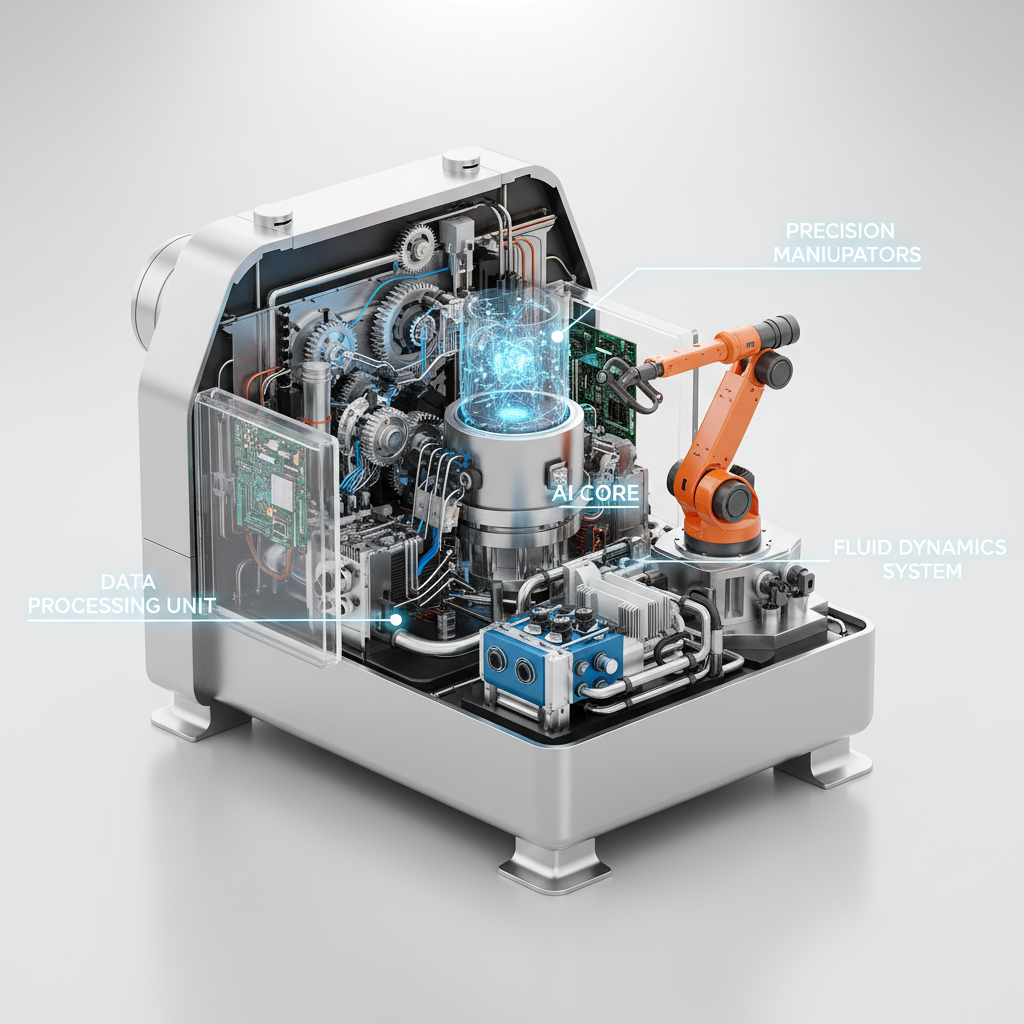
AI for Creating Technical Product Cutaway Visualization
AI for creating technical product cutaway visualization offers an unparalleled ability to reveal internal mechanisms and intricate designs of industrial equipment. This technology allows manufacturers to generate detailed cross-sections and transparent views of machinery, illustrating how components interact and function. Traditional methods for creating these visuals are often time-consuming and expensive, requiring specialized photography or complex CAD rendering. AI streamlines this process, allowing engineers and marketers to produce accurate and visually engaging cutaways quickly. These visualizations are invaluable for explaining complex engineering principles, demonstrating product advantages, and training purposes. They provide a deeper understanding of product functionality, which is crucial for B2B buyers evaluating high-value equipment.
Enhancing Product Demonstrations with AI-Generated Imagery
AI-generated imagery elevates product demonstrations for industrial and B2B equipment by providing dynamic and interactive visual content. Instead of static images or lengthy videos, AI can create 3D models and animated sequences that highlight specific features or operational processes. This is particularly useful for equipment that is too large, heavy, or sensitive to transport for live demonstrations. Sales teams can use these sophisticated visuals in virtual showrooms or during online presentations, offering potential clients a comprehensive and immersive experience. The ability to customize these visuals on the fly, perhaps by changing environments or configurations, further enhances their utility in targeted sales pitches. This leads to more engaging interactions and a clearer understanding of the product’s value proposition.
Streamlining Visual Content Creation for Industrial Marketing
AI product photography for industrial and B2B equipment dramatically streamlines the creation of visual content for marketing departments. Producing a diverse range of images for different platforms and campaigns can be a significant bottleneck for industrial companies. AI tools can generate multiple variations of a single product image, adjusting lighting, backgrounds, angles, and even material textures with ease. This means a single 3D model can yield hundreds of unique marketing assets, from high-resolution hero shots for websites to optimized images for social media and print catalogs. The speed and efficiency of AI-powered content generation allow marketing teams to respond faster to market demands and maintain a consistent, high-quality visual brand identity across all channels. This agility is a key competitive advantage in today’s fast-paced digital landscape.
Automating Manufacturing Parts Catalog Photography with AI
Automating manufacturing parts catalog photography with AI drastically reduces the time and cost associated with producing extensive visual libraries for complex inventories. AI systems can process CAD files or basic 3D models to generate consistent, high-quality images of every part, ensuring uniformity across large catalogs.
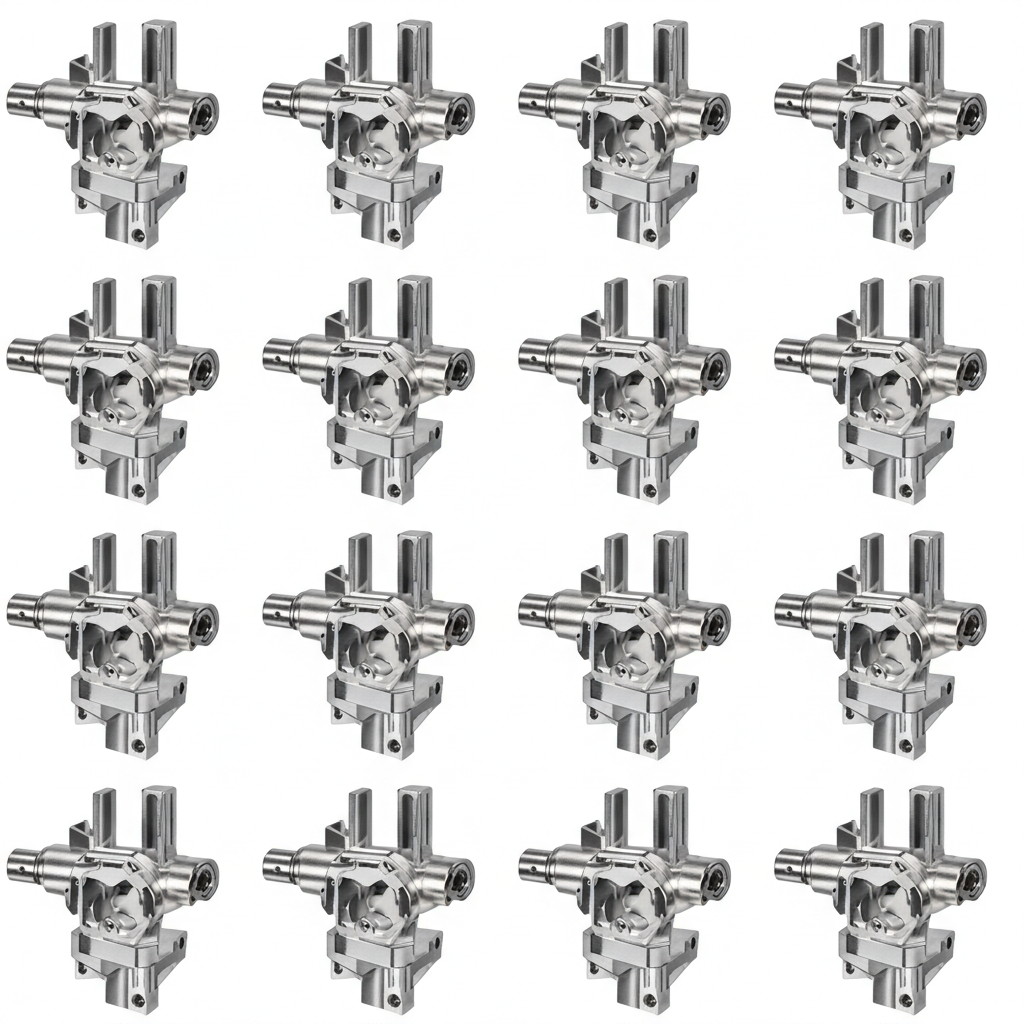
AI for Manufacturing Parts Catalog Photo Automation 2026
AI for manufacturing parts catalog photo automation 2026 represents a significant leap forward in how industrial businesses manage their visual assets. In the past, creating comprehensive catalogs for thousands of individual parts was a monumental task, often involving repetitive studio photography and extensive post-production. Current AI solutions can now take raw CAD data and automatically render photorealistic images of each part, complete with consistent lighting, shadows, and backgrounds. This automation ensures visual uniformity across an entire catalog, which is crucial for professional presentation and ease of identification for customers. The efficiency gained allows companies to update their catalogs more frequently, introduce new parts faster, and significantly cut down on operational expenses related to photography and graphic design. This technological advancement is set to become a standard practice for efficient inventory management.
Ensuring Visual Consistency in Product Listings
Maintaining visual consistency across thousands of product listings is a critical challenge for manufacturing companies, especially in B2B e-commerce. AI product photography addresses this directly by applying predefined styles and parameters to every image generated. Whether it’s a specific angle, a uniform background color, or a particular lighting setup, AI ensures that all product photos adhere to these guidelines without manual intervention. This consistency not only enhances the professional appearance of online catalogs but also improves the user experience. Customers can easily compare products when images are presented in a standardized format, reducing confusion and increasing confidence in their purchasing decisions. Consistent branding through visuals reinforces trust and professionalism.
Reducing Costs and Time in Catalog Production
The traditional process of catalog production, particularly for manufacturing parts, is notoriously expensive and time-consuming. It involves costs for photographers, studio rentals, equipment, and extensive post-processing. AI-driven automation dramatically reduces these overheads. By leveraging existing digital assets like CAD files, companies can generate high volumes of product images at a fraction of the cost and in a fraction of the time. This efficiency allows businesses to allocate resources to other critical areas, such as product development or customer service. The ability to rapidly produce and update catalogs means that businesses can stay agile, responding quickly to market changes or new product introductions without significant delays or budget strain.
Enhancing Safety Equipment and PPE Brand Imagery with AI
AI significantly enhances safety equipment and PPE brand imagery by generating clear, detailed, and compliant visuals that accurately represent the products’ features and benefits. This helps brands effectively communicate the importance of safety and the quality of their gear to industrial buyers.
AI Product Photography for Safety Equipment and PPE Brands
AI product photography for safety equipment and PPE brands is vital for conveying trust and reliability in a sector where product integrity is paramount. These brands need to showcase their equipment with absolute clarity, highlighting critical safety features, materials, and certifications. AI tools can generate images that emphasize these details, often in realistic simulated environments that demonstrate the product in use, without the logistical challenges and risks of actual on-site photography. For example, AI can render a hard hat or safety harness with precise texture and material depiction, ensuring that the visual representation aligns perfectly with the physical product. This attention to detail builds confidence among buyers who depend on these products for worker protection.
Showcasing Compliance and Certification Visually
For safety equipment and PPE, compliance with industry standards and certifications is non-negotiable. AI product photography can be instrumental in visually communicating these critical aspects. While the images themselves don’t confer certification, they can be designed to clearly display relevant markings, labels, or even integrate visual cues that suggest adherence to specific standards (e.g., a pristine, laboratory-like background for sterile equipment). This visual reinforcement helps buyers quickly identify products that meet their regulatory requirements. Furthermore, AI can generate consistent imagery for entire product lines, ensuring that all certified products are presented with a uniform, trustworthy aesthetic that underscores their compliance.
Creating Realistic Contextual Shots for Safety Gear
One of the challenges in marketing safety equipment is showing it in its intended environment without the complexities of location shoots. AI excels at creating realistic contextual shots for safety gear and PPE. Instead of a generic white background, AI can place a safety helmet on a virtual construction site, a pair of protective gloves in a manufacturing facility, or a high-visibility vest on a road crew. These AI-generated environments can be customized to reflect specific industry settings, making the product more relatable and demonstrating its practical application. This capability is particularly powerful for B2B marketers looking to create highly targeted campaigns that resonate with specific industrial audiences, showing how the equipment performs in real-world scenarios.
Leveraging AI for Generating Exploded View Product Diagrams in E-commerce
AI is revolutionizing the creation of exploded view product diagrams for e-commerce by automating the complex process of disassembling a product virtually and presenting its components clearly. This provides customers with an unparalleled understanding of product assembly and individual parts.
AI for Generating Exploded View Product Diagrams Ecommerce
AI for generating exploded view product diagrams ecommerce offers a powerful solution for B2B businesses selling complex machinery and components online. Exploded view diagrams are essential for showcasing how a product’s individual parts fit together, aiding in assembly, maintenance, and replacement part identification. Traditionally, these diagrams required skilled technical illustrators and significant time. AI tools can now take 3D models or CAD files and automatically generate accurate, interactive exploded views. These diagrams can be integrated directly into e-commerce product pages, allowing customers to zoom, rotate, and even click on individual components for more information. This level of detail is invaluable for engineers, technicians, and procurement specialists making purchasing decisions for industrial equipment.
Improving Product Understanding and Assembly Guides
Exploded view diagrams generated by AI significantly improve product understanding and serve as excellent assembly guides. For complex industrial equipment, understanding how each component contributes to the whole is crucial for proper installation and maintenance. AI can produce diagrams that clearly separate each part, often with numbered labels and corresponding parts lists. This visual clarity reduces ambiguity and the potential for errors during assembly. Furthermore, these AI-generated guides can be dynamic, allowing users to interact with the diagram, isolating specific parts or viewing assembly sequences. This interactive capability makes the learning process more engaging and effective, ultimately leading to greater customer satisfaction and reduced support inquiries.
Enhancing the Online Shopping Experience for Technical Products
The online shopping experience for technical B2B products often falls short due to a lack of detailed visual information. AI product photography for industrial and B2B equipment addresses this by providing advanced visualization tools like exploded view diagrams. These diagrams offer a level of transparency and detail that static images cannot match. When customers can virtually “disassemble” a product and understand its internal workings, it builds confidence in their purchase. This is particularly important for high-value industrial equipment where informed decisions are paramount. By offering such sophisticated visual aids, e-commerce platforms can differentiate themselves, reduce return rates due to misunderstanding, and foster a more professional and informative buying environment.
The Future of Technical Product Visualization: AI-Powered Solutions
The future of technical product visualization is intrinsically linked with AI-powered solutions, offering unprecedented levels of detail, customization, and efficiency in generating visual content for industrial and B2B sectors. These advancements will continue to redefine how complex products are designed, marketed, and understood.
Advancements in AI for Visualizing Complex Machinery
AI is making rapid advancements in its ability to visualize complex machinery, moving beyond simple photorealistic renders. Future AI systems will likely be able to simulate material properties with even greater accuracy, predict how equipment will look under various operational stresses, and even generate interactive digital twins. These sophisticated visualizations will allow engineers to test designs virtually and marketers to showcase product performance in dynamic, data-rich environments. The integration of AI with augmented reality (AR) and virtual reality (VR) will also become more seamless, enabling immersive experiences where users can explore and interact with industrial equipment in highly detailed virtual spaces. This will bridge the gap between digital representation and physical reality.
Personalized Visual Content Generation for B2B Buyers
One of the most exciting future applications of AI product photography for industrial and B2B equipment is personalized visual content generation. Imagine a B2B buyer visiting a website and seeing equipment configured precisely to their industry or specific requirements. AI can analyze buyer profiles and preferences to dynamically generate product images that feature relevant accessories, specific color schemes, or even show the equipment integrated into a typical operational environment for that buyer. This level of personalization will make marketing materials far more impactful and relevant, accelerating the sales cycle. It moves beyond generic product shots to highly tailored visual narratives that speak directly to the individual needs of each potential client.
AI-Driven Interactive 3D Models and Digital Twins
The evolution towards AI-driven interactive 3D models and digital twins is set to revolutionize technical product visualization. Digital twins are virtual replicas of physical objects, updated in real-time with data from their physical counterparts. AI enhances these digital twins by enabling advanced visualization features, predictive analytics, and simulation capabilities. For industrial equipment, this means customers could interact with a digital twin of a machine, explore its components, simulate its operation, and even receive predictive maintenance alerts, all through an AI-powered interface. These interactive models will not only serve as powerful sales tools but also as invaluable resources for training, maintenance, and operational planning, creating a truly integrated visual and data experience.
Overcoming B2B Product Photography Challenges with Artificial Intelligence
AI provides robust solutions for overcoming many long-standing challenges in B2B product photography, including the difficulty of photographing large equipment, the need for technical accuracy, and the high costs associated with traditional methods. It offers an efficient and scalable alternative.
Addressing the Challenges of Large and Complex Equipment Photography
Photographing large and complex industrial equipment presents numerous logistical and financial hurdles. Transporting heavy machinery to a studio is often impractical or impossible, and on-site photography can be disruptive and weather-dependent. AI product photography for industrial and B2B equipment eliminates these challenges entirely. By working from CAD files or 3D models, AI can generate stunning, high-resolution images of even the largest and most intricate equipment, regardless of its physical location. This capability allows manufacturers to showcase their entire product line without the constraints of physical space or logistical complexity. The result is a more comprehensive and visually rich product catalog that is both cost-effective and scalable.
Ensuring Technical Accuracy and Detail in Visuals
Technical accuracy and meticulous detail are paramount for B2B buyers who rely on precise specifications. AI-powered rendering engines are designed to maintain this accuracy, translating engineering data directly into visual representations. Unlike traditional photography, where lighting or angles can obscure details, AI ensures that every bolt, weld, and component is rendered with perfect clarity and to scale. This is particularly important for components that require exact measurements or specific material properties to be visible. The ability of AI to consistently produce technically accurate visuals builds trust and reduces the need for extensive text descriptions, allowing the visuals to communicate complex technical information effectively.
| Feature | Traditional Photography | AI Product Photography |
|---|---|---|
| Cost per Image | High (studio, photographer, travel) | Low (software, processing) |
| Time to Produce | Weeks to Months | Hours to Days |
| Consistency | Difficult to maintain | Automated, highly consistent |
| Complexity of Products | Challenging for large/internal views | Excellent for cutaways, exploded views |
| Customization | Limited, expensive reshoots | Easy, on-demand variations |
| Environmental Impact | Travel, equipment, waste | Minimal (digital process) |
Scalability and Efficiency for Extensive Product Lines
For companies with extensive product lines, scalability and efficiency in visual content creation are critical. AI product photography offers an unmatched solution. Once a 3D model is created, it can be used to generate an infinite number of images, angles, and variations without additional physical shoots. This means that a manufacturer can quickly produce visuals for thousands of SKUs, including every variant and configuration. The process is highly automated, significantly reducing the manual labor involved in image production and post-processing. This scalability is essential for rapidly expanding product portfolios and for maintaining up-to-date visual assets across all sales and marketing channels, ensuring that every product is showcased effectively.
Frequently Asked Questions About AI Product Photography
What is AI product photography for industrial equipment?
AI product photography for industrial equipment uses artificial intelligence to generate photorealistic images and technical visualizations of machinery and components from digital models. It eliminates the need for physical prototypes or traditional photography studios, offering speed and cost efficiency.
How does AI create technical product cutaway visualizations?
AI creates technical product cutaway visualizations by processing 3D CAD models to virtually slice or render internal components. This allows for clear, detailed views of a product’s internal structure and functionality, which is crucial for engineering and marketing purposes.
Can AI automate photo generation for manufacturing parts catalogs?
Yes, AI can fully automate photo generation for manufacturing parts catalogs. It takes 3D models of individual parts and renders them with consistent lighting, backgrounds, and angles, significantly speeding up catalog creation and ensuring visual uniformity across thousands of items.
Is AI product photography suitable for safety equipment brands?
AI product photography is highly suitable for safety equipment and PPE brands. It allows for detailed visualization of safety features, materials, and compliance markings, often in realistic simulated environments, which builds trust and effectively communicates product integrity to buyers.
What are the benefits of AI for generating exploded view product diagrams in e-commerce?
AI for generating exploded view product diagrams in e-commerce helps customers understand product assembly and identify individual components. It enhances the online shopping experience for complex technical products, reducing confusion and improving customer satisfaction.
How does AI ensure accuracy in industrial product visuals?
AI ensures accuracy in industrial product visuals by directly translating precise engineering data from CAD files into visual representations. This guarantees that dimensions, material properties, and intricate details are rendered faithfully, providing technically correct imagery.
What is the typical cost saving with AI product photography compared to traditional methods?
While specific savings vary, AI product photography typically offers significant cost reductions compared to traditional methods. It eliminates expenses related to studio rentals, photographers, equipment, and extensive manual post-production, leading to substantial long-term savings.
The landscape of industrial and B2B product visualization is undergoing a profound transformation thanks to artificial intelligence. AI product photography for industrial and B2B equipment is no longer a futuristic concept but a present-day imperative for businesses seeking efficiency, accuracy, and scalability in their marketing efforts.
Key takeaways from this evolution include:
* Unmatched Efficiency: AI dramatically accelerates content creation, turning weeks of work into days.
* Cost Reduction: Significant savings are realized by eliminating traditional photography overheads.
* Superior Detail: AI excels at creating technical product cutaway visualizations and exploded view diagrams, offering clarity for complex machinery.
* Visual Consistency: Automated processes ensure uniform, high-quality imagery across vast product catalogs, crucial for brands like safety equipment and PPE.
* Enhanced Buyer Experience: Detailed, interactive visuals lead to better product understanding and more informed purchasing decisions for B2B clients.
As technology continues to advance, AI will further refine its ability to create hyper-realistic, customizable, and interactive product visuals. Embracing these AI-powered solutions is essential for industrial and B2B companies looking to stay competitive, streamline operations, and effectively showcase their innovative products in the digital age. Explore how AI can revolutionize your product visualization strategy today.