
The Strategic Shift: How AI is Revolutionizing Pet Product Marketing
For decades, pet product marketing was constrained by the unpredictable nature of its most essential element: animals. Coordinating photoshoots with pets and owners is notoriously difficult, expensive, and ethically complex. Today, a transformative solution is reshaping the industry.
Artificial intelligence is enabling brands to generate limitless, customized, and emotionally resonant visual content without a single real photoshoot. This isn’t just about creating cute pictures; it’s a fundamental shift in how pet companies conceptualize, produce, and scale their marketing campaigns. From personalized seasonal promotions to showcasing products in perfect, aspirational settings, AI is unlocking unprecedented creative and operational agility.
TL;DR: AI image generation allows pet brands to create perfect, scalable visual content without the logistical and ethical hurdles of traditional photoshoots. This technology enables hyper-targeted campaigns, rapid seasonal updates, and consistent brand imagery while reducing costs and production time. The key for marketers is to master strategic prompting to guide the AI toward authentic, emotionally compelling results that resonate with pet owners.
Why Traditional Pet Product Photography is a Bottleneck
Scheduling a photoshoot with animals presents a unique set of challenges. Pets are unpredictable, and their comfort and safety must be the absolute priority. This often means short shooting windows, the need for specialized animal handlers, and multiple retakes.
The cost quickly escalates when you factor in location fees, owner models, pet talent, trainers, and post-production editing. For small and medium-sized businesses, producing a diverse library of high-quality images for every product variant and campaign is financially prohibitive.
Furthermore, the ethical considerations are significant. Stressing animals for the sake of content is unacceptable. AI offers a clear alternative, removing animals from the production equation entirely while still celebrating the human-animal bond.
The Core Advantage: AI Generating Lifestyle Pet Product Images with Animals and Owners
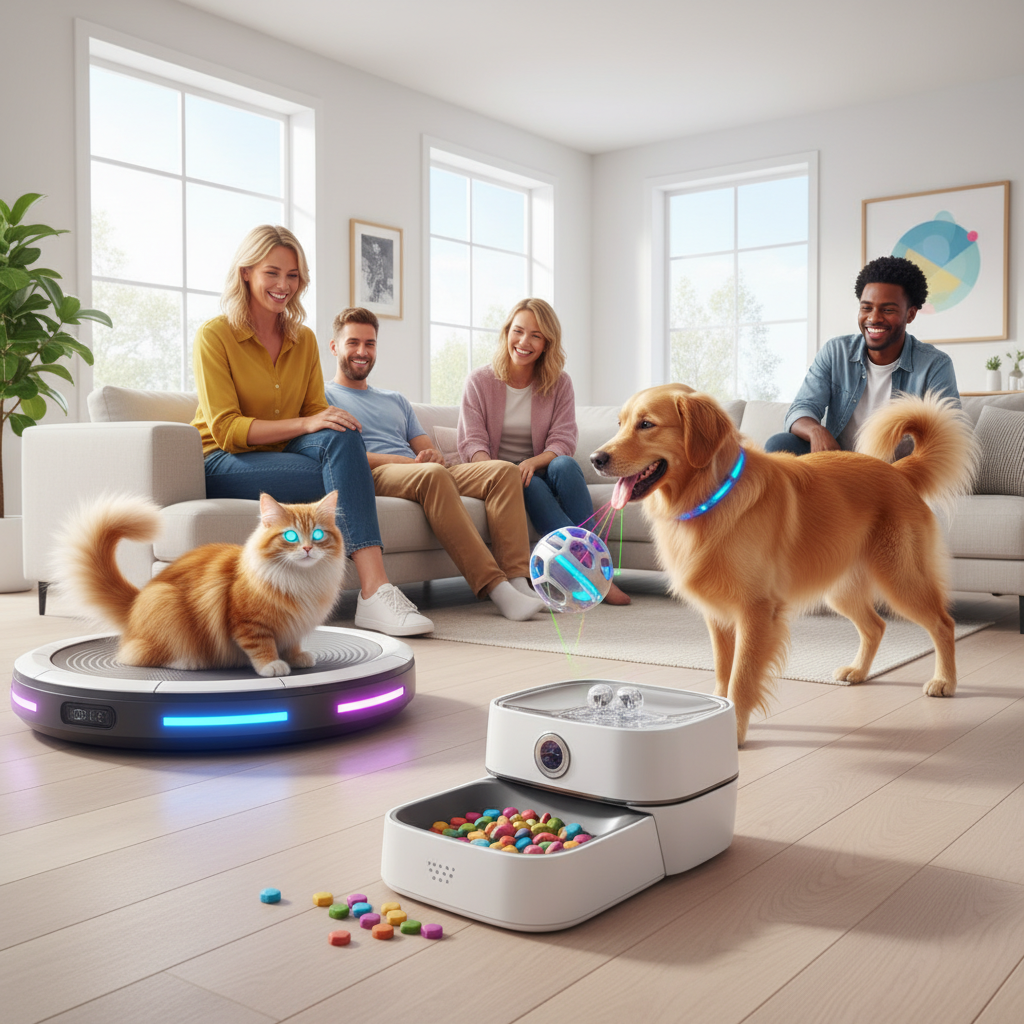
The most powerful application of AI in this space is crafting complete lifestyle narratives. You can generate scenes of a golden retriever playing with a durable toy in a sun-drenched backyard, or a cat cozily napping on a premium bed next to its owner reading a book.
These images sell an emotion and a lifestyle, not just a product. AI allows for perfect composition, ideal lighting, and flawless product presentation every single time. You can specify breeds, settings, actions, and even the emotional tone—from playful and energetic to calm and comforting.
This capability is a game-changer for storytelling. Brands can now depict their products within the exact aspirational contexts their target customers envision, creating a stronger, more immediate desire.
Achieving Authentic Emotion: How AI Creates Emotional Pet Product Content Without Real Animals
A common skepticism is whether AI can replicate the genuine emotion of real human-animal interactions. The answer lies in sophisticated prompting and an understanding of visual storytelling cues. The AI learns from millions of authentic images, allowing it to replicate subtle details: a look of adoration, a posture of relaxed trust, or the playful energy of a game.
The overlooked factor is directing the AI like a photographer. Instead of just “dog with toy,” a strategic prompt would be: “A candid, warm moment of a smiling young woman laughing as her small, fluffy white dog enthusiastically tugs on a colorful, knotted rope toy in a vibrant living room, afternoon sun streaming through a window, photorealistic, emotion-focused.”
This level of detail guides the AI toward authenticity. The result is content that feels real because it’s built from the visual language of real emotion. For a deeper dive into crafting these detailed instructions, exploring a comprehensive guide to AI image generation techniques is invaluable.
Mastering Scale and Consistency for Campaigns
For large e-commerce sites with hundreds of SKUs, achieving visual consistency is a monumental task. Traditional photography results in variations in lighting, background, and style across different shooting days. AI eradicates this problem.
You can generate hundreds of cute compelling pet product photos at scale with a uniform style. Use a master prompt that locks in your brand’s aesthetic—like a specific color palette, lighting style (e.g., “bright and airy,” “warm and cozy”), and composition. Then, simply swap the product description, pet breed, and scene while keeping the core style consistent.
This creates a polished, professional storefront that builds brand trust. It also allows for rapid A/B testing of different images to see which visuals drive the highest conversion rates for specific products or audiences.
Seizing Timely Opportunities: AI for Creating Seasonal and Holiday Pet Product Photo Campaigns
Seasonal campaigns require nimble content creation. The lead time for traditional holiday-themed shoots can be months. AI compresses this timeline to days or even hours.
Imagine launching a “Christmas in July” promotion or capitalizing on a last-minute trend. You can instantly generate images of pets with festive sweaters, Halloween costumes, or Fourth of July bandanas in appropriately decorated settings. This agility allows brands to stay culturally relevant and capitalize on fleeting marketing opportunities without massive upfront investment.
This is where AI’s speed provides a decisive competitive edge. You can create limited-time campaign assets that feel fresh and specifically tailored to the upcoming holiday, driving urgency and engagement.
Traditional vs. AI-Generated Pet Product Imagery: A Comparison
The following table breaks down the key differences between the two approaches, highlighting where each excels.
| Factor | Traditional Photography | AI-Generated Imagery |
|---|---|---|
| Production Time | Weeks to months (planning, shooting, editing) | Minutes to hours (concept to final image) |
| Cost Per Image | High (talent, crew, location, equipment) | Very Low (primarily tool subscription) |
| Scalability | Difficult and costly to scale | Effortlessly generate hundreds of variations |
| Creative Control & Flexibility | Limited by physical and practical constraints | Near-limitless (any breed, setting, season, action) |
| Ethical Considerations | High (animal welfare, model comfort) | Minimal (no live subjects involved) |
| Consistency | Varies between shoots | Pixel-perfect consistency across all assets |
An Action Framework for Implementing AI Pet Imagery
Ready to integrate AI into your visual strategy? Follow this step-by-step framework.
1. Audit and Ideate: Inventory your current visual assets. Identify gaps, such as missing seasonal content or lack of lifestyle scenes for key products.
2. Define Your Visual Brand Bible: Document your required style: color schemes, lighting, composition rules, and emotional tone. This becomes your prompt foundation.
3. Start with a Pilot Project: Choose one product line or a single holiday campaign. This limits variables as you learn.
4. Master Prompt Engineering: Develop detailed, layered prompts. Structure them with: [Subject], [Action], [Detailed Context/Setting], [Art Style], [Technical Specifications].
5. Generate and Refine: Create multiple batches. Use inpainting and outpainting tools to refine details like perfecting a product logo or extending a background.
6. Integrate and Analyze: Implement the images in a real campaign. Use analytics to track performance metrics like click-through rate and conversion compared to older assets.
Data-Backed Insights on Visual Content Performance
Understanding the “why” behind the shift is crucial. The data clearly supports a move toward more dynamic, authentic, and scalable visual content.
94% of first impressions are design-related. (Research by Stanford University) Implication: Your product image is often your first and only chance to make a sale. AI ensures that first impression is polished, professional, and on-brand.*
Articles with relevant images get 94% more views than those without. (Source: Jeff Bullas) Implication: For blog content, social media, and email marketing, custom AI-generated pet imagery can dramatically increase engagement.*
Consistent brand presentation can increase revenue by up to 23%. (Source: Lucidpress) Implication: The uniformity achievable with AI-generated libraries directly strengthens brand identity and can impact the bottom line.*
The Future Outlook for AI in Pet Marketing
We are moving beyond static images. The near future will see the rise of AI-generated short-form video content and interactive media. Imagine a product page where a customer can input their dog’s breed to see a custom-generated video of that specific dog using the product.
Personalization will reach new heights. Furthermore, as the technology evolves, the line between AI-generated and real will blur further, making ethical transparency from brands about their use of AI not just good practice, but a potential point of trust. Staying updated on the latest best AI tools will be essential for marketers who want to maintain this competitive edge.
Frequently Asked Questions (FAQ)
Q1: Is AI-generated pet imagery ethical?
Yes, when used transparently. It eliminates potential stress on animal models and allows for the celebration of pets without exploiting them. Brands should consider disclosing the use of AI-generated imagery to maintain trust with an informed audience.
Q2: Can AI accurately depict specific pet breeds and product details?
With precise prompting, yes. The latest models are highly capable. However, for intricate product details like exact logos or text, you may need to use AI for the scene and then overlay or composite the final product shot using traditional methods—a hybrid approach.
Q3: What are the best tools for generating pet product images?
Tools like Midjourney, DALL-E 3, and Stable Diffusion are industry leaders. The “best” tool depends on your need for photorealism, stylistic control, and ease of use. Many professionals use a combination.
Q4: Will AI replace pet photographers and models entirely?
No, but it will redefine their roles. There will always be a demand for authentic, documentary-style photography and real storytelling. AI will handle scalable commercial work, while photographers may focus on high-concept campaigns, authentic storytelling, and the technical skill of guiding AI tools.
Q5: How can I ensure my AI images don’t look generic or “off”?
The key is hyper-detailed prompting and iterative refinement. Include specific emotional cues, unique environmental details, and imperfections (e.g., “paw prints on a hardwood floor”). Use reference images to guide style. Avoid generic terms and constantly refine based on outputs.
Practical Implementation Checklist
* [ ] Conduct a visual audit of your current marketing asset library.
* [ ] Define a written “Visual Style Guide” for your brand’s imagery.
* [ ] Select and familiarize yourself with one primary AI image generation tool.
* [ ] Develop a library of 5-10 master prompt templates for your core product categories.
* [ ] Run a pilot campaign using AI-generated assets and measure performance against a baseline.
* [ ] Establish a process for reviewing and ethically approving all AI-generated content before publication.
* [ ] Explore creating seasonal content for the next two holidays on your calendar.
* [ ] Investigate hybrid techniques (compositing AI backgrounds with real product shots).