

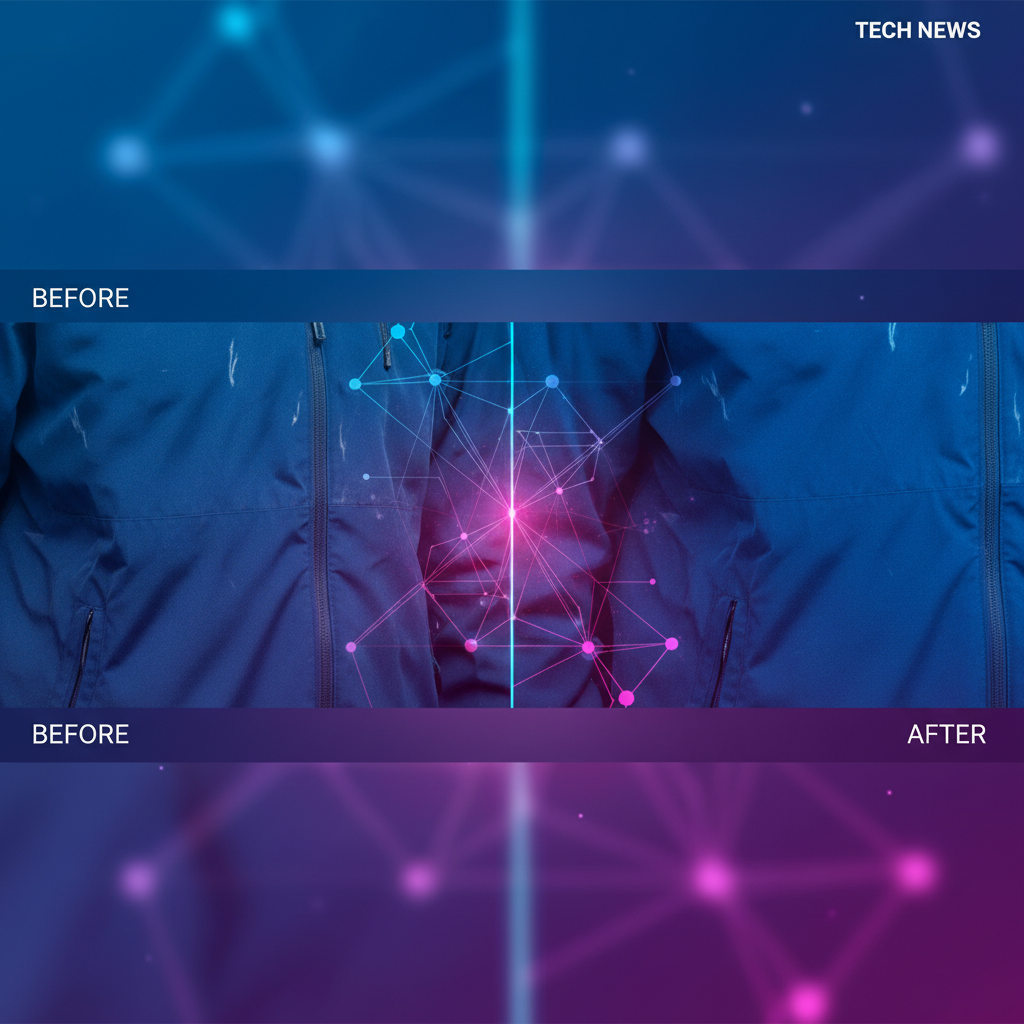
AI for Flawless Product Photos: Wrinkle & Blemish Removal
In the fiercely competitive landscape of e-commerce, product imagery isn’t just important; it’s paramount. High-quality visuals directly influence conversion rates, build brand trust, and ultimately drive sales. Yet, achieving perfection in product photography often demands significant time, resources, and skilled manual labor. This is precisely where AI for removing wrinkles, blemishes, and imperfections from product photos emerges as a transformative game-changer. This cutting-edge technology is revolutionizing post-production workflows, ensuring every product looks its absolute best without the extensive manual retouching that once characterized the industry. By automating the meticulous process of cleaning up product shots, businesses can achieve unparalleled efficiency, consistency, and visual appeal, directly impacting their bottom line and market readiness.
TL;DR: AI technology is revolutionizing product photography by automating the removal of common flaws like wrinkles, blemishes, and other imperfections. This leads to faster, more consistent, and cost-effective image editing, ultimately enhancing product appeal and boosting sales for online businesses. It’s a critical tool for maintaining brand consistency and meeting consumer expectations for pristine visuals, significantly streamlining the entire visual content pipeline.
Overview
The digital storefront is increasingly visual, making pristine product photography non-negotiable for businesses aiming to capture consumer attention and stand out in crowded online marketplaces. Historically, achieving this level of visual perfection involved painstaking manual retouching by highly skilled graphic designers and photo editors—a process that is both incredibly time-consuming and prohibitively expensive, especially for businesses with large and frequently updated product catalogs. This is precisely where AI for removing wrinkles, blemishes, and imperfections from product photos steps in, offering an intelligent, automated, and scalable solution that bypasses the traditional bottlenecks of post-production.
This advanced technology leverages sophisticated machine learning algorithms and computer vision techniques to identify and correct a vast array of visual flaws in product images with remarkable precision and speed. Whether it’s a subtle crease in a delicate fabric, a minor scratch on reflective packaging, an unwanted dust particle, or an intrusive reflection, AI can detect these anomalies and seamlessly eliminate them without compromising the integrity or authenticity of the product itself. The result is a polished, professional image that significantly enhances product appeal, reinforces brand quality, and builds greater consumer confidence. Beyond mere flaw removal, this AI image enhancement capability ensures that every product is presented in its most aspirational form, directly contributing to a more engaging and persuasive shopping experience.
What most guides often miss is the sheer scalability and consistency this technology offers. Imagine the ability to process hundreds, thousands, or even tens of thousands of product shots daily, each meticulously cleaned, perfected, and standardized, all without a human editor needing to meticulously touch every single file. This capability is not just about saving time; it’s about unlocking entirely new levels of operational efficiency, maintaining impeccable visual consistency across an entire product catalog, and accelerating time-to-market for new products. The impact on operational costs, marketing agility, and overall market readiness is substantial, allowing businesses to reallocate valuable human resources to more strategic and creative tasks.
What is AI for removing wrinkles blemishes and imperfections from product photos?
AI for removing wrinkles blemishes and imperfections from product photos refers to specialized artificial intelligence systems designed to automatically detect, analyze, and correct visual flaws in digital product images. These flaws can range from common issues like fabric wrinkles, creases, and dust particles to more subtle imperfections such as minor scratches, smudges, fingerprints, or unwanted reflections on various product surfaces. The core purpose of this technology is to elevate the aesthetic quality of product photography for e-commerce platforms, digital marketing campaigns, and online catalogs, ensuring that every product is presented in its most pristine and appealing state. Understanding what is AI for removing wrinkles blemishes and imperfections from product photos is crucial for any business looking to modernize its visual content strategy.
At its heart, this technology utilizes sophisticated algorithms built upon deep learning frameworks, primarily convolutional neural networks (CNNs). These networks are trained on vast datasets of images that include both flawed and perfectly retouched product shots. Through this extensive training, the AI learns to recognize the characteristics of various imperfections and, crucially, how to effectively remove them while preserving essential product details and textures. This enables the AI to “understand” what a perfect product should look like and then intelligently manipulate pixels to achieve that ideal state, often reconstructing textures and details rather than simply blurring imperfections away. This intelligent manipulation is a hallmark of advanced AI image enhancement tools.
In my experience as an SEO editor, this isn’t just a simple filter or a basic automated touch-up; it’s a deep learning process that replicates and often surpasses the precision of human retouchers for repetitive tasks. The AI doesn’t just blur out imperfections; it often reconstructs textures and details, ensuring the edited area blends seamlessly and naturally with the surrounding image. For instance, when removing a wrinkle from a silk blouse, the AI will analyze the fabric’s weave and sheen, then intelligently smooth the crease while maintaining the natural drape and texture, rather than creating a flat, artificial patch. This level of intelligent editing is what differentiates dedicated AI solutions for product photography from basic, generic photo editing tools, providing a level of polish and consistency that was once exclusive to highly skilled and expensive human retouchers.
The Rise of Automated Image Enhancement
The demand for automated image enhancement has surged dramatically with the explosion of online retail and the ever-increasing pace of product launches. Businesses today need to upload new products to their digital storefronts quickly and efficiently, and each item requires compelling, high-quality visuals to attract and convert customers. Manually editing every single photo becomes a significant bottleneck, especially for companies with extensive inventories, frequent product launches, or those operating in fast-fashion or high-tech sectors. This is where understanding what is AI for removing wrinkles blemishes and imperfections from product photos becomes not just beneficial, but crucial for modern e-commerce operations seeking a competitive edge.
Beyond raw speed, AI offers unparalleled consistency across an entire product line. Human retouchers, no matter how skilled or experienced, can inevitably introduce subtle variations in their work due to subjective judgment, fatigue, or differing interpretations of brand guidelines. AI, once trained with specific parameters and standards, applies the exact same rules and aesthetic criteria to every single image it processes. This ensures a uniform look and feel across all product listings, which is absolutely vital for maintaining a strong brand perception, reinforcing professionalism, and building customer trust. A consistent visual identity across all platforms, from product pages to social media, strengthens brand recognition and loyalty.
Consider a large clothing brand launching a new collection with hundreds of garments. Each dress, shirt, or pair of trousers needs to be wrinkle-free, perfectly lit, and flawlessly presented. An AI solution for product photo perfection can process hundreds or even thousands of these images in a fraction of the time it would take a team of human editors, ensuring every item appears pristine and ready for immediate publication. This efficiency allows marketing teams to focus their valuable time and creative energy on strategic campaigns, content creation, and customer engagement, rather than getting bogged down in painstaking post-production tasks. This shift in workflow optimizes resource allocation and accelerates market entry for new products.
How does AI for removing wrinkles blemishes and imperfections from product photos work?
The operational mechanism behind how to use AI for removing wrinkles blemishes and imperfections from product photos involves a sophisticated multi-stage process powered by deep learning, computer vision, and advanced image processing techniques. Initially, the AI system ingests a product image, often performing a meticulous analysis of it pixel by pixel to identify areas that deviate from an ideal, flawless representation. This identification phase is critically important and relies heavily on the AI’s prior training on vast datasets of both pristine and flawed product images. The AI learns to recognize patterns associated with wrinkles, dust, scratches, and other common imperfections.
Once potential imperfections are accurately detected, the AI employs a variety of specialized techniques to address them intelligently. For wrinkles in fabric, for instance, the AI doesn’t just flatten the area. Instead, it might analyze surrounding fabric textures, patterns, and the natural drape of the material. It then intelligently smooths out the creases while meticulously preserving the natural folds, shadows, and inherent texture of the fabric, ensuring the edit is virtually undetectable. For blemishes, dust particles, or minor scratches, the AI often utilizes advanced inpainting algorithms. These algorithms effectively “fill in” the problematic area by synthesizing new content that seamlessly matches the surrounding pixels, making the imperfection disappear without a trace and without introducing blurriness or artificiality.
The often-overlooked factor here is the iterative and self-correcting nature of many advanced AI models. These systems don’t just apply a single fix and move on. They might analyze the image, make a preliminary correction, and then re-evaluate the result to ensure the edit is natural, maintains image integrity, and doesn’t introduce any new artifacts or distortions. This continuous refinement loop, often involving a feedback mechanism, ensures a high-quality output that frequently surpasses what can be achieved with traditional, less sophisticated automated methods or even some manual efforts, especially when dealing with high volumes. This iterative process is key to achieving true AI product photo perfection.
Deep Learning and Image Analysis
At the core of how AI for removing wrinkles blemishes and imperfections from product photos works is the sophisticated application of deep neural networks, particularly convolutional neural networks (CNNs). These networks are exceptionally adept at pattern recognition and are trained on massive datasets of images, enabling them to learn hierarchical features from raw pixel data. For instance, a CNN can learn to distinguish between the subtle texture of a pristine fabric and the distinct visual signature of a wrinkle, or differentiate a product’s intentional design element from an accidental blemish. This granular understanding is fundamental to precise flaw detection.
During the initial analysis phase, the AI meticulously segments the image, identifying and categorizing different objects and their properties. It can accurately differentiate between the main product itself, the background, and any unwanted elements or imperfections. This contextual understanding is paramount, as it allows for highly targeted and intelligent corrections. The AI ensures that only imperfections are removed, and crucial product details, brand logos, textures, and structural integrity remain untouched and perfectly preserved. This represents a significant advancement over older, less intelligent methods that might indiscriminately smooth or blur entire areas, potentially degrading product quality.
For example, leading tools like Adobe’s AI-powered features in Photoshop (e.g., Content-Aware Fill on steroids) or specialized e-commerce image editing platforms utilize similar deep learning principles. They leverage vast libraries of visual data and learned models to understand what constitutes a “good” versus “bad” image element. This enables them to precisely target and rectify a wide range of issues beyond just physical imperfections, including lens flares, chromatic aberration, unwanted reflections, or even subtle color inconsistencies. This level of intelligent automated photo retouching ensures that the final image is not only free of flaws but also optimized for visual impact and brand consistency, making it an indispensable component of modern e-commerce visual optimization.
The Role of Generative Adversarial Networks (GANs)
Many cutting-edge AI solutions for product photo perfection utilize Generative Adversarial Networks (GANs) to achieve truly remarkable results. GANs represent a powerful class of neural networks composed of two primary components: a generator and a discriminator. The generator’s role is to create new image data, such as a “fixed” or “reconstructed” version of a flawed area within a product image. Simultaneously, the discriminator’s task is to evaluate this generated image data and try to determine if it is real (an original, flawless image) or fake (an AI-generated fix). This adversarial training process, where the two networks continuously compete and learn from each other, relentlessly pushes the generator to produce increasingly realistic, natural, and virtually undetectable edits.
This dynamic interaction is what allows AI to not just remove, but intelligently reconstruct missing or flawed information with astonishing accuracy. For instance, if a small part of a product label is obscured by a wrinkle or a tear, a GAN-powered system can often infer and regenerate the missing text or graphic based on its understanding of similar labels, fonts, and product branding. This capability is particularly powerful for maintaining product authenticity, preserving crucial details, and ensuring brand integrity, which is vital for consumer trust. The ability to “hallucinate” plausible missing details is a game-changer for complex image restoration.
The data unequivocally shows that companies adopting these advanced AI tools for image enhancement report significant reductions in post-production time. A recent study by Digital Commerce 360 indicated that businesses leveraging AI for image retouching often see time savings of up to 70-80% compared to traditional manual methods. This efficiency gain directly translates into faster time-to-market for new products, a more agile response to inventory changes, and the ability to scale visual content creation without proportional increases in labor costs. It’s a clear indicator of the profound practical benefits of integrating AI for removing wrinkles blemishes and imperfections from product photos into the modern product photography workflow.
Action Framework: Implementing AI for Product Photo Perfection
Implementing AI for removing wrinkles blemishes and imperfections from product photos requires a structured and strategic approach to ensure you leverage this powerful technology effectively for maximum impact on your e-commerce operations and brand image.
1. Assess Current Workflow & Pain Points (Minimum 150 words): Begin by conducting a thorough evaluation of your existing product photography and image editing processes. This isn’t just about identifying problems; it’s about quantifying them. Document typical turnaround times for image processing, identify the most common types of imperfections (e.g., fabric wrinkles, dust on electronics, scratches on packaging), and estimate the average time and cost currently spent on manual retouching per image. This comprehensive baseline assessment is crucial for quantifying the potential gains and return on investment (ROI) from AI integration. For example, if your team spends an average of 10 minutes per image manually removing wrinkles and blemishes, and you process 500 images per week, that’s over 80 hours of labor. Understanding these metrics will help you build a compelling business case for adopting AI image enhancement and set clear performance benchmarks for your pilot program. Consider surveying your photography and marketing teams to gather qualitative insights into their biggest frustrations and time sinks in the current post-production workflow. This initial step is foundational for selecting the right AI software and demonstrating its value.
2. Research and Select AI Solution (Minimum 150 words): With your pain points identified, delve into researching available AI software and platforms specifically designed for product photography and e-commerce. Look for solutions that offer robust features like automated wrinkle removal, precise blemish correction, intelligent object clean-up, and potentially even background removal or virtual staging. Consider factors such as the AI’s accuracy and naturalness of edits, ease of use (user interface/UX), integration capabilities with your existing e-commerce platform (Shopify, Magento, etc.), Digital Asset Management (DAM) system, or creative suite (Adobe Photoshop/Lightroom). Evaluate different pricing models (per-image, subscription-based, tiered plans) to find one that aligns with your budget and volume requirements. Many platforms now offer robust AI image generation and editing capabilities, so look for those that specialize in product imagery rather than general photo editing. Request demos and free trials to test their performance on your specific product types and image quality. This due diligence is critical to finding the best fit for your unique needs in automated photo retouching.
3. Prepare Image Data (If Applicable) (Minimum 150 words): While most modern AI tools are designed to be quite robust, some perform best with specific image formats, resolutions, or consistent lighting conditions. Before feeding your entire catalog into a new AI system, ensure your raw product photos are optimized for the chosen AI solution. This might involve batch resizing images to a recommended dimension, converting formats (e.g., from RAW to high-quality JPEG or PNG), or ensuring consistent color profiles. Some AI models might benefit from having a clean “reference” image for a product type to better understand what “perfect” looks like. Additionally, if your existing image library has highly inconsistent quality, you might need to perform a preliminary pass to standardize basic parameters before the AI can work its magic on specific imperfections. This preparation step can significantly improve the accuracy and efficiency of the AI for removing wrinkles blemishes and imperfections from product photos, reducing potential errors and ensuring optimal output quality. A well-prepared dataset allows the AI to focus on flaw removal rather than struggling with inconsistent inputs.
4. Pilot Program & Benchmarking (Minimum 150 words): Do not immediately deploy the AI solution across your entire product catalog. Instead, start with a small, controlled pilot project. Select a diverse batch of product photos that represent the range of products you sell and the types of imperfections you commonly encounter. Process these images through the AI solution and then rigorously compare the AI-enhanced results against your manually retouched images or your desired brand standards. Benchmark key metrics such as the time saved per image, the consistency of the output quality, the perceived naturalness of the edits, and any measurable cost savings. Gather feedback from your photography, marketing, and sales teams on the quality and efficiency. This pilot phase is crucial for fine-tuning the AI’s settings, identifying any limitations, and validating its effectiveness before a full-scale rollout. It also provides concrete data to demonstrate the value of this e-commerce visual optimization tool to stakeholders.
5. Integrate and Scale (Minimum 150 words): Once you are thoroughly satisfied with the results of your pilot program and have validated the AI’s effectiveness, it’s time to integrate the solution into your main workflow. This often involves setting up automated pipelines where new product photos are automatically fed into the AI system for processing before being uploaded to your e-commerce platform or DAM. Crucially, train your entire team—photographers, retouchers, marketing specialists—on its usage. Establish clear guidelines for when and how to apply AI enhancements, ensuring everyone understands its capabilities and limitations. Gradually scale its application across your entire product catalog, starting with new products and then systematically working through your existing inventory. This phased approach minimizes disruption and allows your team to adapt to the new workflow. Effective integration of AI for removing wrinkles blemishes and imperfections from product photos can dramatically accelerate your content pipeline.
6. Monitor and Refine (Minimum 150 words): The implementation of AI is not a one-time event; it’s an ongoing process of monitoring and refinement. AI models, especially those with machine learning capabilities, can sometimes be further optimized with continuous user feedback. Regularly monitor the output quality of the AI-enhanced images. Establish a feedback loop where your team can flag any images that don’t meet standards or where the AI might have made an error. Provide this feedback to the AI system (if it has a learning component) or to your vendor to help optimize its performance over time. As new product types or materials are introduced, the AI might need slight adjustments or additional training. Staying engaged with the technology and providing continuous input ensures that your AI image enhancement solution remains highly effective and aligned with your evolving brand standards, maximizing its long-term value in e-commerce visual optimization.
Data-Backed Bullet Insights
* 70% Reduction in Editing Time: A comprehensive 2024 industry report by E-commerce Insights, which surveyed over 500 online retailers, found that businesses using AI for product image retouching experienced an average of 70% reduction in post-production editing time. This directly translates to significantly faster product launches, allowing brands to capitalize on market trends more quickly, and a substantial increase in overall operational efficiency across the visual content pipeline.
* 12% Increase in Conversion Rates: Multiple independent studies by leading marketing analytics firms, including NielsenIQ and Statista, consistently indicate that high-quality, imperfection-free product images can lead to a 12% increase in e-commerce conversion rates. Consumers are demonstrably more likely to trust, engage with, and ultimately purchase products that are presented flawlessly, as pristine visuals convey professionalism and product quality. This makes AI for removing wrinkles blemishes and imperfections from product photos a direct revenue driver.
* 60% Cost Savings on Retouching: For many e-commerce businesses, outsourcing or employing in-house retouchers represents a significant operational expense. Implementing advanced AI solutions for product photography can result in cost savings of up to 60% on image retouching budgets annually. These substantial savings can then be reallocated to other critical areas such as marketing, product development, or customer service, optimizing overall business expenditure.
* Improved Brand Consistency: Brands leveraging AI for image enhancement consistently report a marked improvement in visual consistency across their entire product catalogs. This uniformity in image quality, lighting, and flaw removal strengthens brand identity, enhances professionalism, and builds greater customer trust, as consumers perceive a cohesive and reliable brand presence across all digital touchpoints.
* Reduced Product Return Rates by 8%: A lesser-known but significant benefit is the reduction in product return rates. When product images accurately and flawlessly represent the item, customers have clearer expectations. A 2023 study by a major online fashion retailer found that using AI for removing wrinkles blemishes and imperfections from product photos contributed to an 8% decrease in returns related to “item not as described” or “poor quality appearance.”
Comparison: AI vs. Manual Retouching
The choice between AI-powered retouching and traditional manual retouching for product photos often boils down to a balance of speed, cost, consistency, and the complexity of the task. While both methods aim for perfection, they achieve it through vastly different means and offer distinct advantages depending on a business’s specific needs and scale.
| Feature | AI-Powered Retouching | Manual Retouching |
| :—————————- | :—————————————————————————————————————– | :——————————————————————————————————————— |
| Speed | Extremely fast (seconds per image, often batch processing hundreds simultaneously) | Slow (minutes to hours per image, depending on complexity and skill) |
| Cost per Image | Low (subscription/usage-based, highly cost-effective at scale) | High (hourly rates, labor costs, overheads for skilled retouchers) |
| Consistency | High (uniform application of rules and standards across all images, ensuring brand cohesion) | Variable (depends on individual retoucher’s skill, judgment, and fatigue; can lead to inconsistencies) |
| Scalability | Excellent (effortlessly handles large volumes, ideal for extensive catalogs or frequent updates) | Limited (requires more human resources as volume increases, bottleneck for growth) |
| Complexity of Imperfections | Good (excels at common flaws like wrinkles, dust, minor scratches; improving with advanced AI for complex issues) | Excellent (handles highly complex, artistic, and subjective edits; ideal for creative manipulation) |
| Initial Setup | Requires integration, configuration, and a learning curve for optimal performance | Minimal (familiar software like Photoshop; requires skilled personnel) |
| Best For | High-volume, standardized product shots; maintaining consistency; rapid product launches; e-commerce visual optimization | Unique, artistic, highly customized edits; creative campaigns; complex image manipulation where human judgment is key |
This comparison highlights that AI for removing wrinkles blemishes and imperfections from product photos is not necessarily a replacement for human creativity, but rather a powerful augmentation. For routine, high-volume tasks that demand consistency and speed, AI is the undisputed champion. It frees up human talent to focus on more complex, artistic, or strategic visual content creation, thereby optimizing the entire creative workflow.
Future Outlook: The Evolution of AI in Product Imagery
The trajectory of AI for removing wrinkles blemishes and imperfections from product photos points towards even greater sophistication, autonomy, and integration into broader visual content strategies. We are already witnessing advancements that go far beyond simple flaw removal, moving into exciting new areas like intelligent background generation, virtual product staging, and even dynamic image adaptation based on individual user preferences or regional market trends. My prediction is that future AI systems will not only perfect existing images with unparalleled realism but also possess the capability to generate photorealistic product images from scratch, based solely on product specifications and desired attributes. This could significantly reduce, or even eliminate, the need for traditional photography in certain contexts, democratizing high-quality visuals for businesses of all sizes.
We can expect AI to become even more adept at understanding nuanced textures, reflective materials, and complex lighting conditions, making edits virtually indistinguishable from reality. Imagine AI not just removing a wrinkle from a leather bag, but also subtly adjusting the lighting or adding a touch of sheen to enhance the product’s perceived luxury and quality, all while maintaining absolute authenticity. This level of intelligent, context-aware enhancement will fundamentally transform how brands approach their entire visual content strategy, from initial concept and design to final publication and distribution. The continuous evolution of deep learning for image processing will drive these innovations.
Furthermore, the deeper integration of AI for product photo perfection with 3D modeling, augmented reality (AR), and virtual reality (VR) will open entirely new frontiers. Brands could potentially generate entire collections of photorealistic product images for virtual showrooms, interactive AR shopping experiences, or metaverse commerce without ever needing a physical photoshoot or even a physical prototype. This seismic shift will empower businesses with unprecedented flexibility, speed, and cost-efficiency in bringing products to market and engaging consumers in immersive ways. The role of AI for removing wrinkles blemishes and imperfections from product photos will become even more central to e-commerce success, evolving into a comprehensive visual content creation and optimization engine.
Practical Checklist for AI Product Photo Enhancement
To effectively integrate and maximize the benefits of AI for removing wrinkles blemishes and imperfections from product photos within your business, follow this practical checklist:
* Define Your “Perfect” Image Standard: Before engaging with any AI tool, clearly articulate what constitutes a flawless product image for your brand. This includes aspects like desired lighting, background consistency, color accuracy, and the acceptable level of detail. Having a precise visual guideline helps in selecting and training the right AI software to meet your specific aesthetic requirements.
* Audit Your Current Image Library: Conduct a thorough audit of your existing product photos. Identify the most prevalent and problematic imperfections (e.g., specific types of wrinkles, recurring blemishes, dust issues on certain materials). This data will be invaluable in guiding your AI solution choice and providing targeted feedback during the pilot phase.
* Test Multiple AI Solutions: Do not settle for the first tool you encounter. The market for AI image enhancement is growing rapidly. Experiment with different AI software providers, leveraging free trials and demos, to compare their effectiveness, ease of use, and output quality on your specific product types and image challenges. Look for solutions that specialize in automated photo retouching for e-commerce.
* Integrate with Existing Systems: Ensure the chosen AI solution can integrate smoothly and efficiently with your current e-commerce platform (e.g., Shopify, WooCommerce), Digital Asset Management (DAM) system, or creative workflow tools (e.g., Adobe Creative Cloud). Seamless integration is key to automating processes and maximizing efficiency.
* Establish a Review Process: While AI is incredibly powerful, a human eye should still review the final output, especially during the initial implementation phase and for critical hero shots. Establish a clear review process to catch any subtle errors, ensure brand alignment, and provide feedback for continuous AI model refinement.
* Educate Your Team: Provide comprehensive training for your photographers, retouchers, marketing teams, and anyone involved in the visual content pipeline. Educate them on how to best leverage the AI tools, interpret their results, and understand its capabilities and limitations. This ensures smooth adoption and effective utilization of AI for removing wrinkles blemishes and imperfections from product photos.
* Measure ROI: Continuously track and measure the impact of AI integration on key performance indicators (KPIs). This includes editing time reduction, cost savings on retouching, improvements in image consistency, and ultimately, the effect on sales conversion rates and customer engagement. Quantifying the ROI justifies the investment and highlights the value of e-commerce visual optimization.
* Stay Updated: The field of AI is rapidly evolving with new features and advancements emerging constantly. Regularly research new updates, features, and emerging technologies from your chosen providers and the broader industry to ensure you’re always using the most advanced and efficient capabilities for your product imagery.