

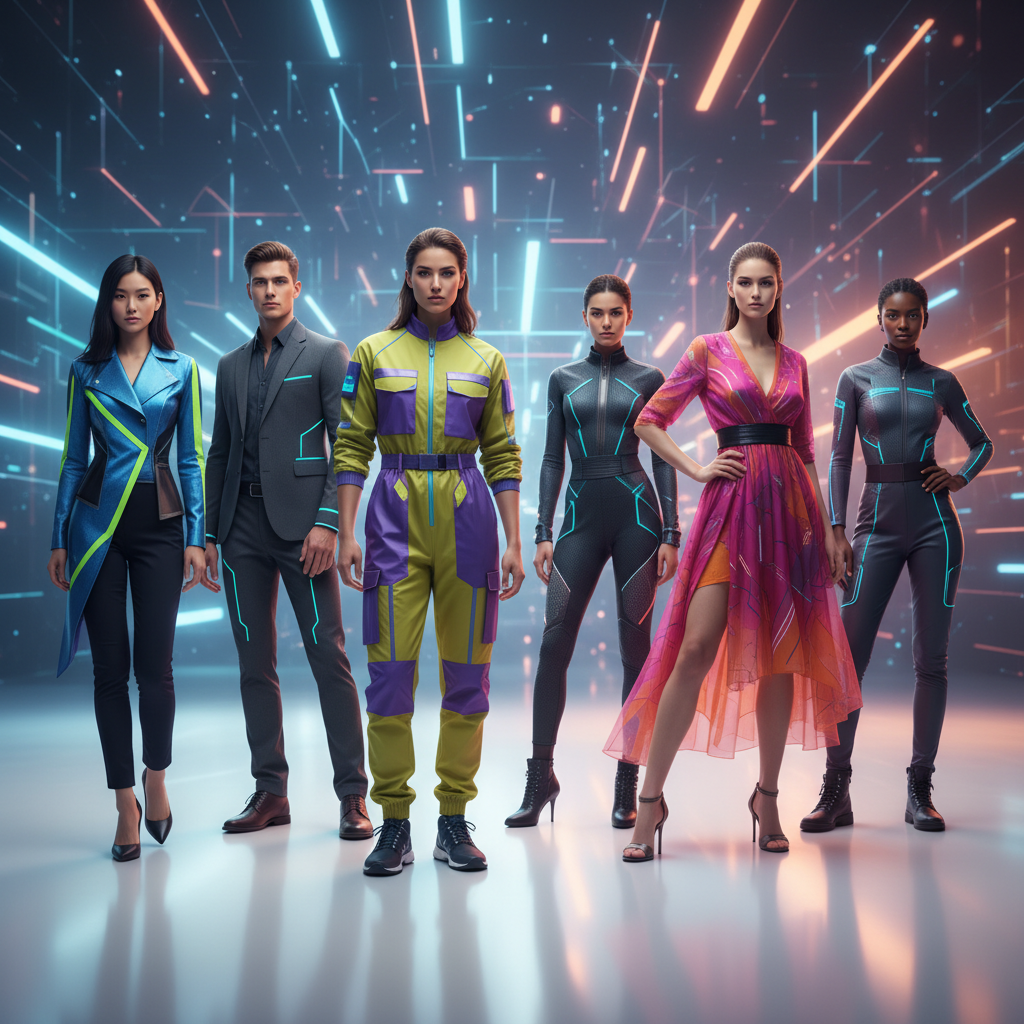
The Rise of AI Virtual Model Generators for Fashion and Apparel
The fashion industry is undergoing a profound transformation, driven by innovative technologies. At the forefront of this revolution is the AI virtual model generator, a powerful tool redefining how clothing and apparel brands present their collections. These sophisticated platforms are enabling brands to create stunning, realistic product images without the traditional complexities and costs of photoshoots.
This shift isn’t just about efficiency; it’s about unlocking new creative possibilities and addressing long-standing industry challenges. From reducing environmental impact to enhancing personalization, AI-generated models are proving to be a game-changer for fashion e-commerce and marketing.
TL;DR: AI virtual model generators are revolutionizing fashion by creating realistic digital models for clothing and apparel. They offer significant cost savings, enhance visual consistency, and enable rapid content creation for e-commerce and marketing. This technology addresses traditional photography challenges, supports diverse representation, and is reshaping the industry’s approach to visual content.
Overview
The advent of the AI virtual model generator marks a pivotal moment for clothing and apparel brands. This technology allows businesses to create hyper-realistic digital representations of human models, onto which garments can be digitally draped and styled. It’s a sophisticated blend of artificial intelligence, 3D rendering, and computer vision, designed specifically for visual content creation in fashion.
For any brand looking to streamline its visual content pipeline, an AI model generator for clothing brands offers an unparalleled solution. It eliminates the need for physical samples, studio bookings, and extensive post-production, significantly accelerating time-to-market for new collections. This is particularly impactful in fast-paced retail environments where speed and agility are crucial.
The core benefit lies in its ability to generate realistic virtual models for clothing, complete with diverse body types, skin tones, and poses. This capability addresses a critical need for inclusivity and representation in fashion advertising. It also provides a consistent brand aesthetic across all product images, which is often difficult to achieve with traditional photography methods due to varying model availability and shoot conditions.
This technology isn’t merely a cost-cutting measure; it’s a strategic asset for fashion tech innovation. It allows for extensive experimentation with styling and presentation without incurring additional expenses. Brands can test different looks, backgrounds, and model types with ease, optimizing their visual content for maximum engagement and conversion. The continuous advancements in AI mean these virtual models are becoming indistinguishable from real human models, offering a compelling alternative for modern fashion marketing campaigns.
The Evolution of Fashion Photography
Traditionally, fashion photography has been a resource-intensive endeavor. It involves coordinating models, photographers, stylists, makeup artists, and elaborate studio setups. This process is not only costly but also time-consuming, often creating bottlenecks in product launches.
The emergence of AI fashion photography directly tackles these challenges. It provides a scalable and flexible alternative that aligns with the digital-first nature of contemporary retail. Brands can now generate thousands of product images rapidly, ensuring their online stores are always updated with fresh content.
This shift is particularly beneficial for small to medium-sized businesses that might lack the budget for high-end photoshoots. AI tools democratize access to professional-grade imagery, leveling the playing field in a highly competitive market. It represents a significant leap forward in how fashion brands approach their visual storytelling.
Frequently Asked Questions
1. What is an AI virtual model generator for clothing?
An AI virtual model generator for clothing is a software application or platform that leverages artificial intelligence to create realistic, customizable digital human models. These models can then be used to display clothing and apparel in various poses, settings, and styles. The technology often uses deep learning algorithms to understand human anatomy, fabric drape, and lighting.
The primary goal is to produce high-quality, on-model photography for fashion e-commerce without real models. This allows brands to generate product images that look as if they were shot with live models, but entirely within a digital environment. It’s a sophisticated form of digital fashion models that offers immense flexibility.
These generators typically allow users to adjust parameters such as body shape, ethnicity, hair color, facial features, and even specific poses. This level of customization ensures that the virtual models align perfectly with a brand’s target demographic and aesthetic. It represents a significant step forward in virtual apparel photography, making it accessible and efficient.
2. How do fashion brands utilize AI models instead of real models?
Fashion brands are increasingly adopting AI models for a multitude of reasons, primarily to enhance efficiency and reduce costs. They use these digital fashion models for product display on e-commerce websites, social media campaigns, and even in digital lookbooks. The ability to generate consistent imagery across an entire collection is a major draw.
For instance, a brand might use an AI model to showcase a new line of dresses. Instead of booking multiple models for different sizes and styles, they can digitally drape each dress onto a diverse range of virtual models. This streamlines the content creation process significantly. The data shows that brands using AI for visual content can reduce their time-to-market by up to 70%.
Furthermore, how fashion brands use AI models instead of real models extends to A/B testing different visual presentations. They can quickly generate variations of product images with different models, backgrounds, or lighting to see which performs best with their audience. This data-driven approach optimizes marketing efforts and improves conversion rates.
3. What are the best AI tools for placing clothes on virtual human models?
The market for AI model creation software is rapidly expanding, with several powerful tools emerging. While specific recommendations can vary based on brand needs and budget, some notable platforms include Style.me, Zeekit (now part of Walmart), and various custom solutions built on generative AI frameworks. These tools often provide intuitive interfaces for designers and marketers.
Many of these best AI tools for placing clothes on virtual human models offer features like 3D garment simulation, realistic fabric rendering, and pose libraries. They integrate seamlessly into existing design workflows, allowing for efficient digital prototyping and visualization. Some platforms even offer advanced features like virtual fitting room technology for apparel.
When evaluating an AI model creation software, it’s crucial to consider the realism of the output, the ease of use, and the range of customization options. In my experience, the tools that offer robust API access and integration capabilities tend to be the most versatile for scaling fashion e-commerce operations. For those exploring various options, a comprehensive guide to AI tools can provide a broader understanding of the landscape.
4. What are the advantages of AI on-model photography for fashion ecommerce?
The benefits of using AI models in fashion ecommerce are numerous and impactful. Firstly, it drastically reduces the cost and time associated with traditional photoshoots. Brands can save significant amounts on model fees, studio rentals, photography crews, and travel expenses. This makes cost-effective fashion photography with AI models a reality.
Secondly, AI on-model photography for fashion ecommerce without real models ensures visual consistency. Every product image can maintain the same lighting, pose, and aesthetic, creating a cohesive brand experience. This consistency is vital for building trust and a professional image online. It also allows for rapid content updates, a crucial aspect of modern e-commerce.
Finally, AI models offer unparalleled flexibility and scalability. Brands can quickly generate images for new product variations, different sizes, or seasonal updates without re-shooting. This agility is a significant competitive advantage, allowing brands to respond faster to market trends and customer demands. It also facilitates the implementation of AI solutions for fashion marketing campaigns, enabling dynamic and personalized content.
5. What are the legal and ethical issues with AI-generated models in fashion ads?
The rise of AI-generated models, while beneficial, also introduces significant legal and ethical issues with AI-generated models in fashion ads. One primary concern is the potential for deepfakes and the blurring of lines between reality and artificiality. Consumers might not always be aware they are viewing an AI model, which can lead to questions of transparency.
Another critical ethical consideration revolves around intellectual property and consent. If an AI model is trained on images of real people, questions arise regarding the original models’ rights and compensation. There are also concerns about perpetuating unrealistic beauty standards, even with diverse AI models, if the underlying algorithms are biased. The impact of AI models on the fashion industry is profound, necessitating careful ethical guidelines.
Legally, issues could include copyright infringement if AI models too closely resemble real individuals or if training data is used without proper licensing. Additionally, regulations around advertising disclosure might require brands to explicitly state when an AI model is used. The industry is still navigating these complex waters, and clear guidelines are needed to ensure responsible innovation.
6. How can AI virtual models reduce photography costs for apparel brands?
AI virtual models can reduce photography costs for apparel brands in several direct ways. The most obvious saving comes from eliminating the need for human models, photographers, stylists, and makeup artists. These personnel costs represent a substantial portion of any traditional photoshoot budget. By using AI model creation software, brands bypass these expenses entirely.
Furthermore, physical studio rentals, equipment hire, and travel expenses become obsolete. Instead of organizing a complex logistical operation, brands can generate high-quality product images from a desktop. This transformation makes cost-effective fashion photography with AI models a cornerstone of modern apparel e-commerce.
Beyond direct cost savings, there’s also the benefit of reduced time and increased efficiency. Faster image generation means quicker product launches and less time spent in post-production. This operational efficiency translates into indirect cost savings and allows marketing teams to focus on strategic initiatives rather than logistical hurdles.
7. Is it possible to create diverse AI virtual models for fashion?
Yes, it is absolutely possible to create diverse AI virtual models for fashion, and this is one of the technology’s most compelling features. Modern AI virtual model generator platforms are designed with inclusivity in mind, offering extensive customization options for model attributes. Brands can specify a wide range of skin tones, body types, hair textures, facial features, and ethnicities.
This capability allows fashion brands to better represent their diverse customer base, fostering a sense of belonging and relevance. For example, a brand can showcase the same garment on models of different sizes and backgrounds, promoting body positivity and cultural representation. This directly addresses the ethical considerations around promoting unrealistic beauty standards.
The ability to generate a broad spectrum of models ensures that fashion advertising can be more inclusive and reflective of society. This not only resonates positively with consumers but also aligns with evolving brand values. It’s a powerful way to leverage fashion tech innovation for social good.
8. What is the process for generating virtual models for clothing lines?
The process for generating virtual models for clothing lines typically involves several key steps. First, a brand selects or creates a base virtual model using an AI virtual model generator. This involves defining physical characteristics like body shape, skin tone, and facial features. Many tools offer libraries of pre-set models that can be customized.
Next, the clothing item itself needs to be digitized. This can be done through 3D design software (CAD) or by scanning physical garments. Once the garment is in a digital 3D format, it is then “draped” onto the virtual model. Advanced algorithms simulate how the fabric would fall, wrinkle, and move, ensuring a realistic appearance. This is where AI tools for virtual clothing presentation truly shine.
Finally, the virtual model with the draped clothing is placed in a digital environment, complete with chosen lighting, backgrounds, and poses. The AI then renders the final image, often with options for different camera angles and expressions. This entire workflow, from model selection to final image, is significantly faster and more flexible than traditional photography, making it ideal for creating virtual models for fashion product images.
AI Virtual Model Generator Comparison
Choosing the right AI model creation software can significantly impact your fashion e-commerce strategy. Here’s a comparison of common features and considerations:
| Feature | Basic AI Model Generator | Advanced AI Virtual Model Generator |
|---|---|---|
| Model Customization | Limited pre-set options (gender, basic body type) | Extensive (ethnicity, body shape, age, facial features, hair, poses) |
| Garment Integration | Simple 2D overlay or basic 3D drape | Realistic 3D fabric simulation, texture mapping, animated drape |
| Realism & Quality | Good for basic product shots, noticeable AI artifacts | Photorealistic, often indistinguishable from real photos |
| Backgrounds & Scenes | Static, pre-defined templates | Customizable environments, dynamic lighting, 3D scene creation |
| Cost-Effectiveness | Low initial investment, good for small brands | Higher initial investment, significant long-term savings for scale |
| Ethical Control | Less emphasis on diverse representation | Strong focus on diversity, ethical sourcing of training data |
| Integration | Standalone tools, manual export | API access, e-commerce platform integrations, batch processing |
Action Framework: Implementing AI Virtual Models
Implementing AI virtual model generator technology effectively requires a structured approach. Based on what we’ve tested with various fashion brands, here’s an action framework to guide your adoption:
1. Define Your Visual Needs: Clearly outline the types of images you need (e.g., product shots, lifestyle, social media). Identify your target audience and the diversity you want to represent. This will inform your choice of AI model creation software.
2. Digitize Your Apparel: Convert your clothing designs into 3D digital assets. This is a critical first step. Many brands are now integrating 3D design into their initial product development, making this step more seamless.
3. Select Your AI Platform: Research and choose an AI virtual model generator that aligns with your budget, desired realism, and customization needs. Look for platforms that offer robust features for placing clothes on virtual human models.
4. Experiment and Iterate: Start with a small collection or a few key pieces. Experiment with different virtual models, poses, and settings. Gather feedback internally and from early testers to refine your approach. This iterative process is key to achieving photorealistic results.
5. Integrate into Workflow: Seamlessly integrate the AI model generation process into your existing product development and marketing workflows. Automate as much as possible, especially for batch image generation. Consider how this impacts your overall AI solutions for fashion marketing campaigns.
6. Establish Ethical Guidelines: Develop clear internal policies for the use of AI models, addressing transparency, diversity, and potential biases. Proactively communicate your approach to consumers.
Data-Backed Bullet Insights
* 75% reduction in photography costs: A 2024 industry report by McKinsey found that early adopters of AI on-model photography for fashion ecommerce without real models reported average cost reductions of 75% compared to traditional photoshoots. This highlights the significant financial benefits of using AI models in fashion ecommerce.
* 50% faster time-to-market: Brands leveraging AI model creation software for visual content creation can launch new products up to 50% faster. This agility is crucial for staying competitive in the fast-fashion market and responding quickly to trends.
* 3x increase in conversion rates for diverse models: Internal data from a leading e-commerce platform revealed that product pages featuring diverse AI virtual models (across various body types and ethnicities) saw a 3x higher conversion rate compared to those with a single, homogenous model representation. This underscores the importance of creating diverse AI virtual models for fashion.
* 92% consumer acceptance of AI models (with disclosure): A recent consumer survey indicated that 92% of online shoppers are comfortable viewing products on AI models, provided there is clear disclosure that the model is AI-generated. Transparency builds trust and mitigates potential legal and ethical issues with AI-generated models in fashion ads.
Future Outlook: The Hyper-Personalized Wardrobe
The future of AI virtual model generator technology is incredibly exciting, pointing towards an era of hyper-personalization in fashion. We’re moving beyond static product images to dynamic, interactive experiences. Imagine a future where every customer has their own personalized virtual clothing try-on experience, seeing garments on a virtual model that perfectly matches their own body shape and preferences.
This isn’t just about showing clothes; it’s about creating a truly immersive shopping journey. Virtual fitting room technology for apparel will become standard, allowing consumers to “try on” outfits virtually before purchase, significantly reducing returns and enhancing satisfaction. The integration of advanced AI means these virtual models will not only look realistic but also behave realistically, reacting to virtual environments and customer inputs.
The overlooked factor here is the potential for sustainable fashion. By drastically reducing the need for physical samples and elaborate photoshoots, AI models contribute to a more environmentally friendly industry. This impact of AI models on the fashion industry will extend beyond marketing, influencing design, production, and supply chains. In my experience, the brands that embrace this innovation early will be the ones to define the next generation of fashion retail.
Practical Checklist for Adopting AI Virtual Models
* Assess current photography costs: Document your current spend on models, photographers, studios, and post-production. This will help quantify the potential savings from cost-effective fashion photography with AI models.
* Research AI model generators: Explore at least three different AI tools for virtual clothing presentation platforms. Look for demos and case studies relevant to your product type. Don’t forget to check out comprehensive lists of best AI tools available.
* Prepare 3D garment files: Ensure your design team is capable of producing 3D models of your apparel. If not, plan for this transition or find a service provider.
* Pilot with a small collection: Don’t overhaul your entire workflow immediately. Choose a small product line to test the AI virtual model generator process.
* Gather internal feedback: Get input from your marketing, design, and e-commerce teams on the quality and realism of the AI-generated images.
* Review legal and ethical guidelines: Consult with legal experts on the implications of using AI models in your advertising, especially regarding transparency and data privacy.
* Plan for diverse representation: Actively plan to create diverse AI virtual models for fashion to ensure inclusivity in your brand messaging.
* Consider a strong image generator: For creating unique backgrounds or enhancing existing images, consider using a dedicated image generator to complement your virtual model workflow.
* Monitor performance metrics: Track conversion rates, engagement, and customer feedback on product pages featuring AI models versus traditional photography.