

Image to Video AI for Product Ads: Boost Your Campaigns
The landscape of digital advertising is constantly evolving, and image to video AI for product ads is emerging as a game-changer for businesses seeking to create dynamic and engaging content with unprecedented efficiency. This innovative technology allows marketers to transform static product images into compelling video advertisements, significantly enhancing their ability to capture audience attention and drive conversions. By leveraging artificial intelligence, companies can streamline their content creation process, produce high-quality video ads at scale, and maintain a competitive edge in a visually-driven market.
Transforming Static Images into Dynamic Product Videos with AI
You can easily turn product photos into videos with AI by utilizing specialized software that analyzes image elements and applies intelligent animation, transitions, and effects to create engaging video content. This process leverages advanced algorithms to understand the composition of your product photos, identifying key features and areas of interest that can be highlighted through movement and visual storytelling. The result is a professional-looking video ad generated from a single or multiple static images, saving significant time and resources compared to traditional video production methods.
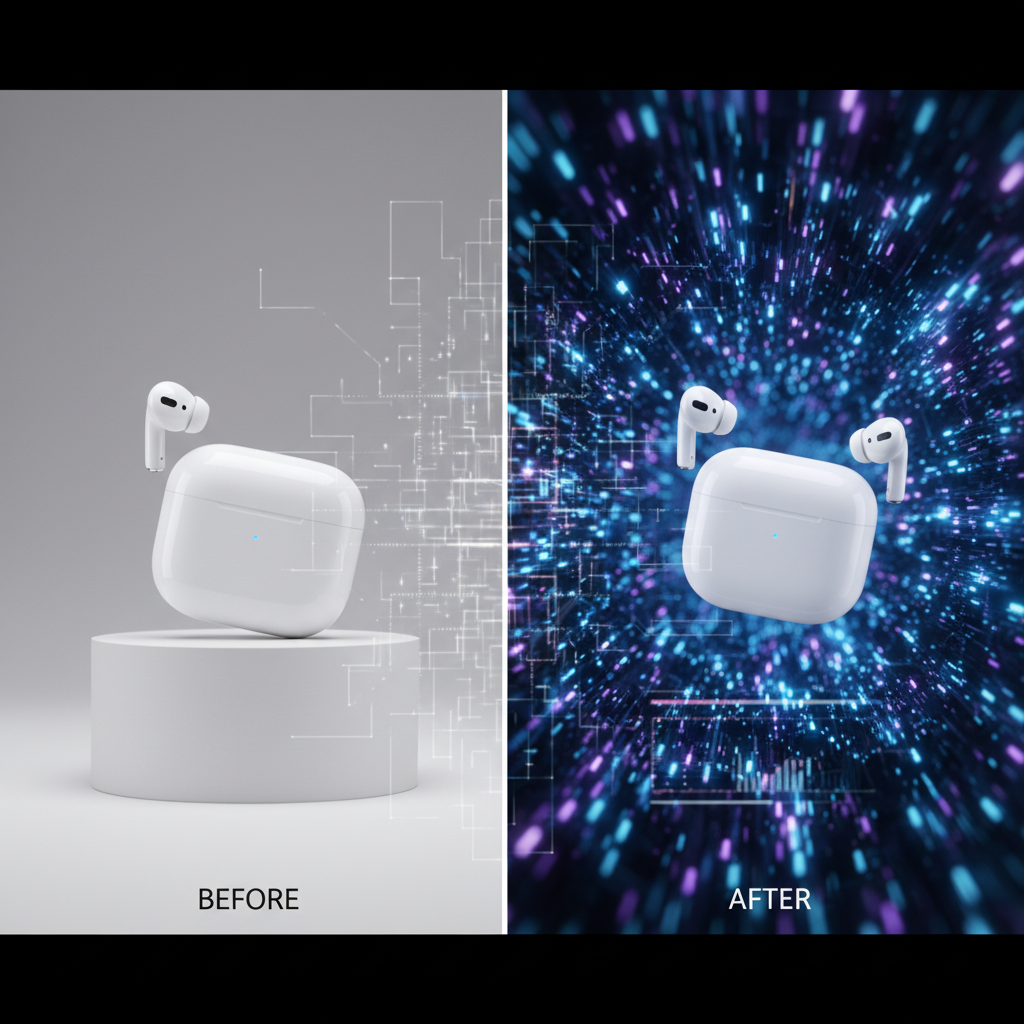
The core concept behind this technology is to automate the creative process of video editing. Instead of manually adding motion graphics, camera movements, and text overlays, AI tools can intelligently suggest and apply these elements based on best practices for product advertising. This allows businesses, especially those in e-commerce, to rapidly scale their video content production without needing extensive video editing expertise or expensive equipment. The AI can generate various video styles, from simple zooms and pans to more complex animations that showcase product features in detail.
How AI Turns Product Photos into Engaging Video Stories
AI-powered platforms analyze various aspects of a product photo, including object recognition, depth perception, and color schemes, to intelligently animate elements. For instance, the AI might detect a product’s packaging and animate it to open, or highlight a specific feature with a subtle glow or zoom. These tools often come with libraries of pre-set templates and styles, allowing users to select a desired aesthetic and let the AI do the heavy lifting. This means that even a single product shot can be brought to life, demonstrating its use or highlighting its benefits in a short, impactful video format.
Benefits of AI-Powered Video Creation for Product Marketing
The advantages of using AI to create product videos are numerous. Firstly, it drastically reduces the time and cost associated with video production. Traditional video shoots require models, photographers, videographers, and editors, all of which incur significant expenses. AI allows for rapid iteration and A/B testing of different video ads, enabling marketers to quickly identify what resonates best with their target audience. Furthermore, the consistency in branding and quality across numerous product videos can be easily maintained, strengthening brand identity. This efficiency is crucial for businesses with large product catalogs or those requiring frequent content updates.
Selecting the Best Image to Video AI Tools for Ecommerce Marketing
Choosing the best image to video AI tools for ecommerce involves evaluating features such as ease of use, customization options, output quality, and integration capabilities with existing marketing platforms. The ideal tool will empower e-commerce businesses to efficiently transform their product photos into high-quality video ads that drive engagement and sales. These tools vary widely in their sophistication and pricing models, catering to different business sizes and technical proficiencies.

When assessing potential platforms, consider how intuitive the user interface is. A tool that is easy to learn and navigate will allow your team to produce content quickly without a steep learning curve. Look for features like drag-and-drop functionality, pre-built templates specifically designed for product ads, and a wide range of customization options for text, music, and branding. The ability to upload custom fonts and brand colors is particularly important for maintaining brand consistency across all marketing materials.
Key Features to Look for in AI Video Creation Platforms
The most effective AI video tools offer a robust set of features tailored for e-commerce. These often include:
* Template Library: A diverse collection of video templates optimized for various product categories and ad formats.
* Asset Management: Easy uploading and organization of product images, logos, and brand assets.
* AI Animation Engine: Intelligent algorithms that automatically apply motion, transitions, and effects to static images.
* Text-to-Speech: Options to add voiceovers using AI-generated voices, saving time and cost on professional voice actors.
* Music Library: Royalty-free music tracks to enhance the video’s emotional appeal.
* Output Formats: Support for various video resolutions and aspect ratios suitable for different social media platforms and ad networks.
* Analytics Integration: Some advanced tools offer insights into video performance, helping optimize future campaigns.
Comparing Top Image to Video AI Solutions for Product Ads
Several platforms stand out in the market for their capabilities in transforming images into videos for product advertising. Here’s a comparative look at some popular options:
| Tool Name | Key Strengths | Ideal For | Typical Features |
|---|---|---|---|
| Synthesys AI Studio | Advanced AI avatars, realistic voiceovers, robust video editing. | Businesses needing high-quality, professional-grade videos with virtual presenters. | AI avatars, custom branding, extensive media library, multi-language support. |
| Pictory AI | Quick video generation from text, articles, or images, focus on content repurposing. | Content marketers and small businesses needing fast, automated video creation. | Article to video, script to video, automatic captioning, royalty-free assets. |
| InVideo AI | User-friendly interface, extensive template library, good for beginners. | Small to medium-sized businesses, social media marketers. | Thousands of templates, stock media library, team collaboration, brand kit. |
| RunwayML | Cutting-edge generative AI, advanced video editing, experimental features. | Creative professionals, agencies, and users looking for advanced AI capabilities. | Text to video, image to video, inpainting, green screen, motion tracking. |
Each tool offers a unique set of advantages, so the best choice depends on specific needs, budget, and desired level of creative control. Many platforms offer free trials, allowing businesses to test their capabilities before committing to a subscription.
Mastering the Product Photo to Video Ad Workflow with AI
A streamlined product photo to video ad workflow in 2026 leverages AI to automate and accelerate every stage, from initial asset selection to final video deployment. This modern workflow prioritizes efficiency and scalability, enabling marketers to produce a high volume of diverse video ads quickly. By integrating AI tools, businesses can significantly reduce manual effort, allowing creative teams to focus on strategy and optimization rather than repetitive tasks.
The typical workflow begins with organizing your high-quality product photography. Clean, well-lit images with clear backgrounds are essential for the AI to perform optimally. Once images are ready, they are fed into the chosen AI image-to-video platform. The AI then takes over, applying animations, transitions, and effects based on user-defined parameters or pre-selected templates. This iterative process allows for quick adjustments and refinements, ensuring the final video aligns perfectly with campaign goals.
Steps for an Efficient AI-Driven Product Video Creation Process
Implementing an effective workflow involves several key steps:
1. Asset Preparation: Ensure all product photos are high-resolution, consistent in style, and free of distractions. Organize them logically by product, collection, or campaign.
2. Platform Selection & Template Choice: Choose an AI image-to-video tool that best fits your needs and select a suitable template that aligns with your brand’s aesthetic and the ad’s objective.
3. Image Upload & AI Processing: Upload your selected product photos to the AI platform. The AI will then analyze the images and begin generating an initial video draft.
4. Customization & Refinement: Utilize the tool’s editing features to customize text overlays, add background music, adjust transition speeds, and fine-tune animations. Incorporate branding elements like logos and specific color palettes.
5. Review & Approval: Share the draft video with your team for feedback and make any necessary revisions.
6. Export & Deployment: Export the final video in the required format and aspect ratio for your chosen advertising platforms (e.g., Instagram Reels, TikTok, YouTube, Facebook Ads).
Integrating AI Video Creation into Your Marketing Funnel
Integrating AI video creation into your marketing funnel can significantly enhance performance at various stages. For top-of-funnel awareness campaigns, short, eye-catching AI-generated videos can quickly grab attention on social media. Mid-funnel, more detailed videos showcasing product features or benefits can educate potential customers. At the bottom of the funnel, testimonial-style videos or those highlighting limited-time offers can drive conversions. The speed of AI video creation allows for rapid testing of different video creatives, enabling marketers to quickly identify and scale high-performing ads. This agility is a significant competitive advantage in today’s fast-paced digital advertising environment.
Achieving AI Product Animation from One Product Photo for Impact
Generating AI product animation from one product photo is a powerful capability that allows businesses to create dynamic visual content even with limited assets. This technology uses sophisticated AI algorithms to infer depth, texture, and potential movement from a single static image, transforming it into a short, engaging animation. This is particularly beneficial for small businesses or those with extensive product catalogs where creating unique video content for every item might be impractical.
The AI essentially “understands” the product within the image and can simulate various actions or camera movements. For example, it might add a subtle 3D parallax effect, make the product appear to rotate, or animate elements within the image like a liquid pouring or a button being pressed. This ability to extract motion from a still image is a testament to the advancements in generative AI and computer vision, offering a cost-effective way to produce eye-catching advertisements that stand out in crowded feeds.
Techniques for Animating Single Product Images with AI
Several AI techniques are employed to bring a single product photo to life:
* Depth Estimation: AI models can estimate the depth of objects within an image, allowing for 3D-like camera movements such as pans, zooms, and rotations that give the illusion of depth.
* Object Segmentation: The AI identifies and separates the product from its background, enabling independent animation of the product or its surrounding elements.
* Generative Inpainting/Outpainting: For more complex animations, AI can intelligently fill in missing parts of an image as it moves or rotates, creating a seamless visual experience.
* Style Transfer & Motion Graphics: AI can apply various motion graphic styles and effects directly onto the product or its background, enhancing visual appeal without manual design.
These techniques allow for a wide range of animations, from simple, elegant movements to more complex, storytelling sequences, all originating from a single source image.
Case Studies: Successful Single-Image Product Animations
Many brands have successfully utilized single-image AI product animations to boost their ad performance. A common application involves showcasing clothing items with a subtle “floating” effect or a gentle rotation, making the garment appear more dynamic than a static picture. Similarly, tech gadgets can be animated to highlight specific features, such as a screen turning on or buttons illuminating. Food products can be made to steam or have ingredients subtly move, making them appear fresher and more appetizing. These short, impactful animations are ideal for social media platforms where quick, attention-grabbing content is key. The ability to quickly generate multiple variations of these animations also allows for robust A/B testing, optimizing for the highest engagement and conversion rates.
Optimizing Your Product Ads with AI-Driven Video Creation
Optimizing your product ads with AI-driven video creation involves leveraging the speed and scalability of AI tools to produce diverse video creatives, test their performance, and iterate rapidly based on data. This approach moves beyond simply creating videos; it focuses on using AI to enhance the entire ad campaign lifecycle, from ideation to performance analysis. By automating the video production process, marketers can dedicate more time to strategic planning and data-driven decision-making, leading to more effective and efficient advertising spend.
AI-generated videos offer a unique advantage in optimization due to their rapid production cycle. Marketers can create numerous video variations featuring different product angles, text overlays, music, and calls to action in a fraction of the time it would take with traditional methods. This allows for extensive A/B testing to determine which creative elements resonate most strongly with specific audience segments. The insights gained from these tests can then be immediately applied to generate new, optimized video ads, creating a continuous feedback loop that improves campaign performance over time.
A/B Testing Strategies for AI-Generated Product Videos
Effective A/B testing is crucial for optimizing AI-generated product videos. Consider testing the following elements:
* Video Length: Experiment with very short (5-10 seconds) versus slightly longer (15-30 seconds) videos to see what captures attention best.
* Call to Action (CTA): Test different CTA phrases, placements, and visual emphasis within the video.
* Opening Hook: The first few seconds are critical. Test different animations or visual elements at the beginning of the video.
* Music/Sound Effects: Different audio tracks can evoke various emotions. Test upbeat, calming, or dramatic music.
* Text Overlays: Experiment with font styles, colors, sizes, and the messaging itself.
* Product Focus: Create videos highlighting different features or benefits of the same product.
By systematically testing these variables, marketers can pinpoint the most impactful elements for their target audience, leading to higher click-through rates and conversions.
Measuring Success and Iterating on AI Product Video Campaigns
Measuring the success of your AI product video campaigns goes beyond basic metrics like views. Focus on key performance indicators (KPIs) such as click-through rate (CTR), conversion rate, cost per acquisition (CPA), and return on ad spend (ROAS). Most advertising platforms provide detailed analytics that can be integrated with your AI video creation workflow. Use these insights to inform your next round of video iterations. For example, if a video with a particular animation style performs exceptionally well, you can instruct the AI tool to generate more videos using similar animation techniques. This data-driven iteration ensures that your ad creatives are continuously improving, maximizing the effectiveness of your marketing budget.
Future Trends in Image to Video AI for Product Advertising
The future of image to video AI for product ads is poised for even greater sophistication, offering hyper-personalization, interactive video experiences, and seamless integration with augmented reality (AR) and virtual reality (VR) technologies. As AI models become more advanced, they will be able to generate increasingly realistic and contextually relevant video content, further blurring the lines between static imagery and dynamic video. These advancements promise to revolutionize how brands connect with consumers, making product advertising more engaging and effective than ever before.
One significant trend is the move towards AI that can generate entire product narratives from minimal inputs. Imagine simply providing a product description and a few images, and the AI constructs a complete video ad with a storyline, background music, and a professional voiceover. This level of automation will free up creative teams to focus on overarching campaign strategies and brand storytelling, knowing that the AI can handle the granular details of video production at scale.
Hyper-Personalization and Dynamic Video Generation
Future AI tools will excel at hyper-personalization, creating unique video ads tailored to individual consumer preferences in real-time. This means an AI could dynamically generate a product video that features elements most likely to appeal to a specific viewer based on their browsing history, demographic data, and past interactions. For example, a video for a running shoe might emphasize speed for one user and comfort for another, all generated on the fly. This dynamic content delivery will significantly increase ad relevance and engagement, moving beyond broad audience segmentation to true one-to-one marketing.
Integration with Augmented Reality and Interactive Experiences
The convergence of image to video AI with AR and VR is another exciting frontier. Imagine an AI-generated product video that allows viewers to interact directly with the product within the ad itself. For instance, a viewer could virtually “try on” a piece of clothing animated by AI from a single photo, or rotate a furniture item in their living room via an AR overlay. This level of interactivity will transform passive viewing into active engagement, providing consumers with a more immersive and informative shopping experience. AI will play a crucial role in creating the realistic 3D models and animations required for these AR/VR applications, further enhancing the power of product advertising.
What is image to video AI for product ads?
Image to video AI for product ads is a technology that uses artificial intelligence to transform static product photographs into dynamic, animated video advertisements. It automates the process of adding motion, transitions, text, and music to create engaging video content efficiently.
How can I turn product photos into videos with AI?
You can turn product photos into videos with AI by using specialized platforms like Synthesys AI Studio, Pictory AI, InVideo AI, or RunwayML. These tools allow you to upload images, select templates, customize elements, and then generate a video with AI-powered animation and effects.
What are the best image to video AI tools for ecommerce?
Some of the best image to video AI tools for ecommerce include Synthesys AI Studio for advanced features, Pictory AI for content repurposing, InVideo AI for user-friendliness, and RunwayML for cutting-edge generative AI capabilities. The best choice depends on specific business needs and budget.
Can AI create product animation from just one product photo?
Yes, AI can create product animation from one product photo. Advanced AI algorithms can infer depth and potential movement from a single image, applying effects like 3D parallax, rotations, or subtle object animations to bring the static photo to life in a short video clip.
What is the typical product photo to video ad workflow with AI?
The typical product photo to video ad workflow with AI involves preparing high-quality product photos, selecting an AI platform and template, uploading images for AI processing, customizing the generated video with text and music, reviewing, and finally exporting and deploying the ad.
What are the benefits of using AI for product video ads?
The benefits of using AI for product video ads include significant time and cost savings in video production, increased scalability for creating numerous ad variations, consistent brand messaging, and the ability to rapidly A/B test different creatives for optimized campaign performance.
Is AI video generation expensive for product advertising?
The cost of AI video generation for product advertising varies. Many tools offer tiered pricing, from free trials or basic plans for small businesses to more comprehensive enterprise solutions. Compared to traditional video production, AI tools generally offer a more cost-effective solution for creating high volumes of video ads.
The advent of image to video AI for product ads marks a pivotal moment in digital marketing, offering unprecedented opportunities for businesses to elevate their advertising strategies. This technology empowers brands to transform static product images into captivating video content with remarkable ease and efficiency. By embracing AI-driven video creation, companies can:
* Boost Engagement: Capture audience attention more effectively with dynamic visuals.
* Increase Efficiency: Drastically reduce the time and resources needed for video production.
* Scale Content Creation: Produce a high volume of diverse video ads for various platforms.
* Optimize Performance: Leverage rapid A/B testing and data-driven iteration for better campaign results.
* Stay Competitive: Adopt cutting-edge technology to stand out in a crowded marketplace.
As AI continues to evolve, its capabilities in generating hyper-personalized and interactive video experiences will only grow, making it an indispensable tool for any forward-thinking marketer. Explore the best AI image to video tools available and integrate them into your workflow to unlock the full potential of your product advertising.