

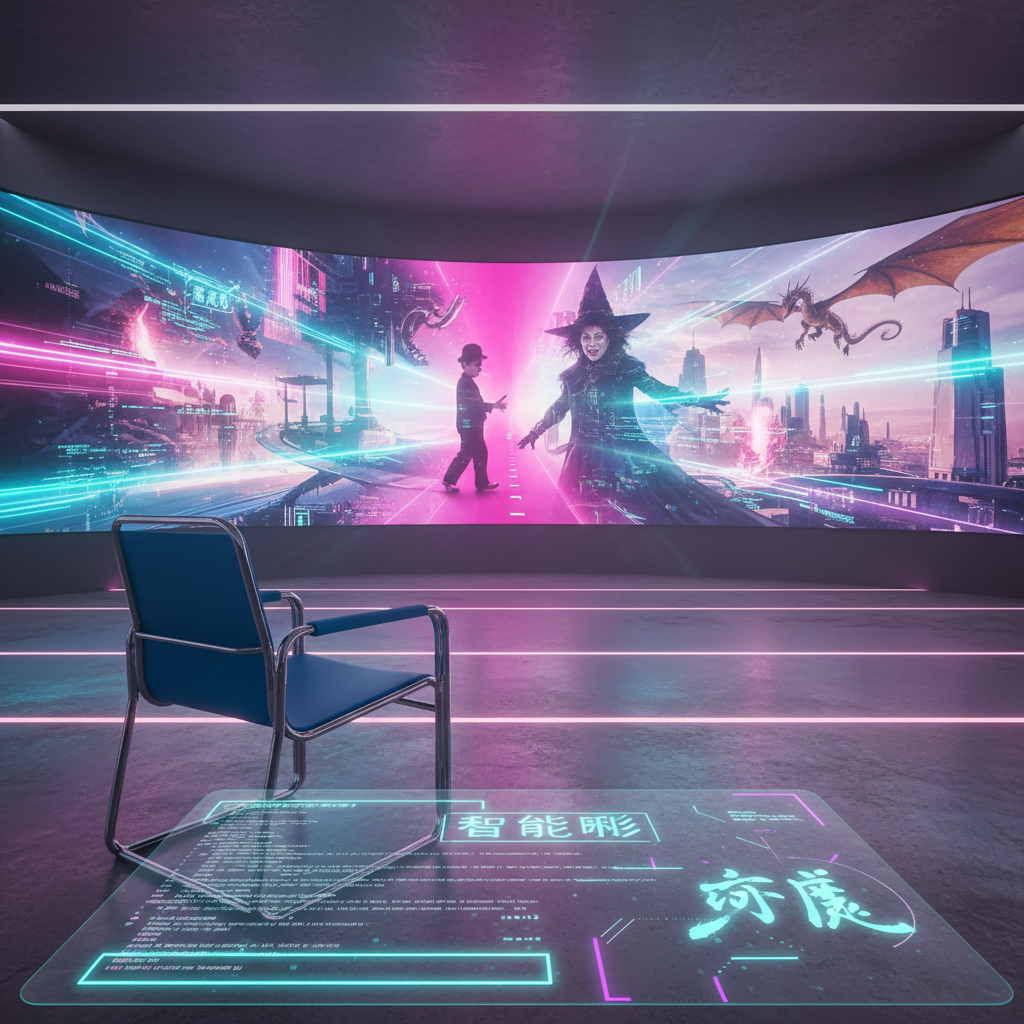
Seedance 2.0: China’s latest AI is so good it’s spooked Hollywood. Will its tech sector pump the brakes?
TL;DR: ByteDance’s Seedance 2.0 AI is a powerful new video generation tool from China, capable of creating highly realistic, cinematic footage from various inputs. Its rapid emergence has triggered significant concerns in Hollywood regarding intellectual property infringement, deepfakes, and potential job displacement. While Chinese AI development is accelerating, the nation is also actively establishing regulatory frameworks to guide ethical AI use and address societal risks.
Overview
The landscape of artificial intelligence is evolving at an unprecedented pace, with China emerging as a significant force in the global AI tech sector. A prime example of this rapid advancement is Seedance 2.0 AI, a groundbreaking video generation model developed by ByteDance, the parent company of TikTok. This advanced artificial intelligence tool has demonstrated capabilities so sophisticated that it has sent ripples of concern through Hollywood, prompting questions about the future of creative industries.
Seedance 2.0 represents a leap forward in AI video technology, offering users the ability to create remarkably realistic and cinematic video content from a combination of text, images, audio, and even existing video inputs. The quality and versatility of its output have highlighted the immense potential of generative AI, particularly in video creation AI, to transform how digital content is produced. However, this innovation also brings into sharp focus the ethical implications of AI generated content and the broader impact of AI on creative industries.
The immediate reaction from Hollywood studios and creative guilds underscores a growing tension between technological innovation and established creative rights. Concerns about the unauthorized use of intellectual property and the creation of convincing deepfakes have led to strong calls for action and heightened discussions around ethical AI development. This situation raises a critical question: as Chinese AI development continues its rapid ascent, will its tech sector, alongside global partners, prioritize responsible innovation and pump the brakes on potentially disruptive applications? Understanding the nuances of Seedance 2.0 AI features and the evolving regulatory environment is crucial for navigating this new era.
What is Seedance 2.0 AI?
Seedance 2.0 AI is ByteDance’s advanced artificial intelligence model specifically designed for video generation. Launched recently, it distinguishes itself through its multimodal input capabilities, allowing users to combine text prompts, reference images, audio clips, and existing video segments to direct the output. This makes it a highly versatile video creation AI tool.
The platform boasts features such as advanced AI scene generation, improved lip-sync, and realistic character animation. It can produce cinematic-quality videos with native audio, real-world physics, and director-level camera control, generating clips up to 15 seconds long at 2K resolution and 24 frames per second. This level of sophistication positions Seedance 2.0 as a formidable player in the AI video technology space.
The primary goal of Seedance 2.0 is to streamline the video production workflow, making professional-grade content creation more accessible and efficient for both casual creators and industry professionals. Its ability to translate complex creative visions into dynamic visual content with minimal effort showcases the cutting-edge of AI innovation China is achieving.
How does Seedance 2.0 generate videos?
Seedance 2.0 generates videos using a sophisticated unified multimodal audio-video architecture. This means it doesn’t just rely on a single type of input but processes information from various sources simultaneously. Users can provide a combination of up to nine images, three video clips (totaling 15 seconds), three audio files (totaling 15 seconds), and detailed text prompts.
The AI model then interprets these diverse inputs to construct a coherent and visually compelling video. For instance, a user might specify a visual style with an image, define motion and camera work with a reference video, dictate rhythm with an audio track, and guide the narrative with text. This comprehensive approach allows for an unprecedented level of creative control over the AI-generated output.
What most guides miss is that Seedance 2.0’s strength lies in its ability to understand complex interactions and physics within a scene, enabling it to render realistic fight scenes, vehicle chases, and natural object movements. The AI also generates audio natively alongside the video, ensuring cinematic-grade sound that is synchronized with the visuals. This integration of multiple elements in a single generation is a hallmark of its advanced capabilities.
Why is Hollywood concerned about Seedance 2.0?
Hollywood’s concerns about Seedance 2.0 AI stem primarily from its potential for intellectual property infringement and the creation of highly convincing deepfakes. The ability of the tool to generate realistic footage of famous actors, such as Tom Cruise and Brad Pitt, in fabricated scenarios, often from simple text prompts, has raised alarm bells across the entertainment industry.
Major studios like Disney, Netflix, Warner Bros. Discovery, and Paramount have reportedly sent cease and desist letters to ByteDance, alleging the unauthorized use of their copyrighted characters and intellectual property in Seedance 2.0’s training data and generated content. Examples cited include characters from Marvel, DC, Star Wars, Harry Potter, and even specific sets and costumes from popular shows. This direct challenge highlights the significant legal and financial risks perceived by content owners.
Beyond copyright, there are profound Hollywood AI concerns about job displacement for actors, writers, and visual effects artists. Screenwriters and union representatives have voiced fears that such advanced AI tools could drastically reshape opportunities for creative professionals, leading to the elimination of many traditional roles. The ethical implications of AI generated content, particularly regarding the control over one’s likeness and creative output, are at the forefront of this debate.
What are the capabilities of Chinese AI video technology?
Chinese AI video technology, exemplified by platforms like Seedance 2.0, Kling AI, and Shengshu Tech’s Vidu Agent, has demonstrated remarkable advancements, rivaling and in some areas, even surpassing, Western counterparts. These tools are increasingly capable of generating high-quality, realistic video clips from text and image prompts, often with impressive speed and efficiency.
Key capabilities include advanced 3D face and body reconstruction, allowing for full expression and limb movements from a single photo, leading to lifelike and consistent character rendering. Many Chinese models support high resolutions (up to 2K) and offer features like accurate lip-syncing, temporal consistency over longer videos, and various aspect ratios. Some tools, like Shengshu’s Vidu Agent, even integrate multiple steps of the video production process—from creative planning to voice-over generation—into a single workflow, making video creation more intuitive and accessible.
In my experience, what sets China’s advanced AI video technology apart is not just the output quality, but the rapid pace of development and adoption. China leads the global generative AI adoption, with 515 million users in the first half of 2025, and its open-source AI models accounted for nearly 30% of global usage by late 2025. This strong domestic ecosystem, fueled by policy support and public enthusiasm, is driving significant AI innovation China-wide.
How will AI impact the entertainment industry?
AI is poised to fundamentally reshape the entertainment industry, introducing both unprecedented efficiencies and significant challenges. On one hand, generative AI impact promises to automate repetitive tasks such such as script analysis, scene creation, visual effects rendering, and video editing, dramatically accelerating production timelines and reducing costs. This allows filmmakers to focus more on storytelling and artistic quality.
On the other hand, the impact of AI on creative industries raises serious concerns about job displacement. Projections indicate that over 204,000 entertainment industry positions in the US alone could be impacted by generative AI by 2026, with 75% of film industry respondents admitting AI will lead to the elimination of some job roles. This includes roles in scriptwriting, concept art, animation, and even acting, as AI can create virtual actors and mimic likenesses.
The future of AI in entertainment industry will likely see a shift towards “creative orchestration,” where human professionals direct multiple AI agents to achieve cohesive outputs. While AI may become an invisible yet powerful utility, augmenting human capabilities, the ethical considerations around intellectual property, authenticity, and the very essence of human creativity will remain paramount. The global market for AI in media and entertainment is expected to reach $99.48 billion by 2030, indicating a massive transformation is underway.
What are the ethical issues with AI-generated content?
The ethical issues with AI-generated content are complex and far-reaching, touching upon fundamental questions of authorship, ownership, and authenticity. A primary concern is copyright infringement and plagiarism, as AI models are trained on vast datasets often scraped from the internet without explicit consent or compensation to original creators. This raises legal challenges regarding who owns AI-generated content and whether its creation constitutes fair use of copyrighted material.
Another critical issue is bias in AI-generated content. Since AI models learn from existing data, any biases present in that training data—whether related to gender, race, or other demographics—can be perpetuated and even amplified in the AI’s output, leading to discriminatory or inaccurate results. This can have serious ramifications, particularly when AI is used for sensitive content.
Furthermore, the rise of deepfakes and misinformation presents a significant threat. Advanced AI video technology like Seedance 2.0 can generate hyperrealistic footage that is difficult to distinguish from reality, posing risks for spreading false information, harming reputations, or even inciting violence. Transparency and disclosure of AI-generated content are becoming increasingly important to combat these dangers.
Will AI development be regulated in China?
Yes, AI development is already being regulated in China, and the country is actively strengthening its legal and ethical frameworks. China has adopted a proactive, top-down approach to governing AI, recognizing the need to balance rapid innovation with societal stability and national security. While there isn’t a single, comprehensive AI statute yet, a multi-level regulatory framework is in place.
Key regulations include the 2023 Interim Measures for the Management of Generative Artificial Intelligence Services, which set forth obligations for companies offering AI tools, covering aspects like service registration, model filing, and content governance. The 2022 Administrative Provisions on Deep Synthesis in Internet-based Information Services also elaborates on obligations for deepfake technologies. These measures emphasize transparency, requiring AI services to display model names and filing numbers, and mandating that tools influencing public opinion register with the Cyberspace Administration of China (CAC).
China’s approach to Chinese tech sector AI regulation also involves ethical oversight. The government has established committees focused on ethical considerations, encouraging the alignment of AI advancements with moral standards. Draft rules propose requiring universities, companies, and research institutions to set up ethics committees to review AI projects, focusing on risks such as discrimination, data misuse, and safety concerns. This commitment to ethical AI development is a core component of China’s strategy to become a global AI leader by 2030.
What are examples of AI video generation?
AI video generation has rapidly advanced, offering a diverse array of tools and capabilities. Beyond Seedance 2.0 AI, prominent examples include OpenAI’s Sora, which is known for generating high-definition video clips from text prompts, and Runway, a popular platform offering text-to-video, image-to-video, and AI-powered editing features. Google Veo is another tool recognized for producing reliable, consistent results with cinematic motion realism.
Chinese AI development has also yielded impressive examples. Kling AI by Kuaishou Technology generates high-quality videos from text and image prompts, with accurate lip-syncing and temporal consistency. Shengshu Tech’s Vidu Agent is noted as a “one-click professional video creation tool” that can turn images into high-quality, expressive videos within minutes, integrating multiple production steps. Other notable tools include Luma Dream Machine, Adobe Firefly, and Haiper AI, each offering unique strengths for various video creation needs.
These artificial intelligence tools are being used to create a wide range of content, from product videos and social media clips to explainer videos and B-roll footage. The ability to animate still images, generate entire scenes, or even create detailed animations from simple prompts showcases the transformative power of AI content generation in the video space.
How does generative AI work?
Generative AI operates by learning patterns and structures from vast amounts of existing data to create new, original content that resembles the training data. At its core, generative AI impact relies on complex neural networks, often including transformer architectures and variational autoencoders (VAEs), which are trained on massive datasets of text, images, audio, or video.
During the training phase, the AI model analyzes millions or billions of data points, identifying subtle relationships and characteristics within the content. For example, a text-to-video model learns how specific words and phrases correlate with visual elements, movements, and stylistic choices. This deep learning allows the AI to develop an internal representation of the data’s underlying distribution.
Once trained, when given a prompt—whether it’s text, an image, or a combination of inputs—the generative AI uses this learned knowledge to synthesize new content. It doesn’t simply copy existing data; instead, it generates novel outputs by applying the patterns it has identified. This process can involve translating rich textual prompts into vivid scenes, animating still images with realistic motion, or even generating dialogue and sound effects that are synchronized with the visuals. The result is artificial intelligence tools capable of producing human-like text, images, audio, or video.
What is the future of AI in creative fields?
The future of AI in creative fields is one of profound transformation, moving beyond simple automation to a more collaborative paradigm. Experts predict that AI will increasingly act as a “co-pilot” or “teammate” for artists, assisting in various stages of the creative process rather than fully replacing human ingenuity. This includes generating initial concepts, refining ideas, and automating mundane tasks, allowing creatives to focus on higher-order skills like taste, judgment, and creative direction.
We can anticipate AI tools becoming more integrated into existing software, operating as an invisible utility that enhances productivity without requiring users to switch between separate applications. This will lead to the emergence of “creative orchestration” as a fundamental skill, where professionals learn to direct multiple AI agents towards cohesive and innovative outputs. The impact of AI on creative industries will also drive new business models, with creative agencies potentially transforming into AI orchestration consultancies.
However, this future also brings challenges. The creative industry may polarize, amplifying the gap between top-tier AI orchestrators and those performing commoditized creative execution. Ethical implications of AI generated content, particularly around intellectual property and the authenticity of art, will continue to be central discussions. Ultimately, the future will be defined by a synergistic relationship, where the best AI tools empower human creativity, pushing boundaries in fields like video creation AI and AI content generation.
—
Action Framework: Navigating the Generative AI Landscape
As advanced AI video technology like Seedance 2.0 reshapes creative industries, a proactive approach is essential. Here’s an action framework for individuals and organizations to navigate this evolving landscape effectively.
1. Educate and Experiment: Stay informed about the latest AI video generation capabilities and artificial intelligence tools. Experiment with accessible platforms to understand their strengths and limitations. This hands-on experience is invaluable for understanding the practical applications and ethical implications of AI generated content.
2. Develop AI Literacy: Foster a deep understanding of how generative AI works, including its training data, potential biases, and output mechanisms. This literacy is crucial for critical evaluation and responsible deployment of AI content generation.
3. Prioritize Ethical Guidelines: Establish clear internal ethical guidelines for AI use, particularly concerning copyright, intellectual property rights, and the use of likenesses. Advocate for robust ethical AI development within your organization and the broader industry.
4. Upskill and Reskill Talent: Invest in training programs to help creative professionals adapt to AI-augmented workflows. Focus on skills like “creative orchestration,” prompt engineering, and critical evaluation of AI outputs to prepare for the future of AI in entertainment industry.
5. Advocate for Fair Regulation: Engage with industry bodies and policymakers to advocate for balanced AI regulation that protects creators’ rights while fostering innovation. Chinese tech sector AI regulation efforts offer a glimpse into how governments are approaching this.
6. Implement Human Oversight: Regardless of AI sophistication, maintain human oversight in all creative processes. Human judgment remains critical for ensuring accuracy, originality, and ethical adherence in AI-assisted projects.
What the Data Shows
* Job Impact: A staggering 204,000 entertainment industry positions are projected to be impacted by generative AI by 2026, with 75% of film industry respondents expecting AI to eliminate some job roles. This underscores the urgent need for reskilling and adaptation within creative fields.
* Market Growth: The global market for AI in media and entertainment is forecast to reach $99.48 billion by 2030, growing at a compound annual growth rate (CAGR) of 26.9% from 2023 to 2030. This rapid expansion highlights the significant investment and adoption of AI tech sector solutions.
* Chinese AI Dominance: China leads global generative AI adoption with 515 million users in the first half of 2025, and its open-source AI models accounted for nearly 30% of total global usage by late 2025. This demonstrates China’s strategic position in AI innovation and its growing influence on the global AI landscape.
Comparison: Traditional Video Production vs. Advanced AI Video Generation
| Feature | Traditional Video Production | Advanced AI Video Generation (e.g., Seedance 2.0 AI) |
|---|---|---|
| Time to Production | Weeks to months (pre-production, shooting, post-production) | Minutes to hours (prompt to initial draft) |
| Cost | High (equipment, crew, locations, talent, editing software) | Significantly lower (subscription fees, computational resources) |
| Creative Control | Full human control over every aspect | High control via multimodal inputs (text, image, audio, video), director-level camera control |
| Scalability | Limited by resources and human labor | Highly scalable, rapid generation of multiple variations |
| Realism/Fidelity | Can achieve photo-realism with skilled professionals | Approaching photo-realism, cinematic quality, real-world physics |
| Ethical Concerns | Traditional copyright, labor disputes | Copyright infringement, deepfakes, bias, job displacement, data sourcing |
Future Outlook: The Blurring Lines of Creativity
The trajectory of AI in creative fields suggests a future where the lines between human and machine creativity become increasingly blurred. In my opinion, the overlooked factor here is not whether AI can create, but how it will integrate into the existing human creative ecosystem. We’re moving towards a symbiosis, where AI acts as a powerful amplifier for human imagination.
The emphasis will shift from manual execution to visionary direction. Artists and filmmakers will become more akin to conductors, orchestrating sophisticated AI tools to realize their artistic visions with unprecedented speed and scope. This will unlock new forms of storytelling and visual expression that were previously unfeasible due to time or budget constraints.
However, this future demands proactive engagement with ethical AI development. Without robust frameworks for intellectual property, transparency, and accountability, the very foundation of creative industries could be undermined. The ongoing discussions around Seedance 2.0 and Hollywood AI concerns are not just about a single tool; they are a preview of the critical dialogues that will shape the next decade of creativity.
Practical Checklist for Creative Professionals
To thrive in an era of advanced AI video technology, creative professionals should consider these actionable steps:
* Master Prompt Engineering: Develop skills in crafting precise and effective prompts for generative AI tools to achieve desired creative outputs.
* Understand AI Ethics: Familiarize yourself with the ethical implications of AI generated content, including bias, copyright, and deepfakes.
* Learn New AI Tools: Actively explore and integrate leading AI tools for video creation, image generation, and other creative tasks into your workflow. Many teams now use AI tools to automate this process.
* Focus on Unique Human Skills: Cultivate skills that AI currently struggles with, such as nuanced emotional storytelling, critical judgment, and truly novel conceptualization.
* Network and Collaborate: Connect with other professionals and AI developers to share insights and best practices for navigating the evolving landscape.
* Protect Your IP: Understand your rights regarding intellectual property in the age of generative AI and advocate for stronger protections. When you want to create images, be mindful of the source material.
* Stay Agile: The AI tech sector is moving rapidly. Be prepared to continuously learn, adapt, and pivot your skills and strategies.