

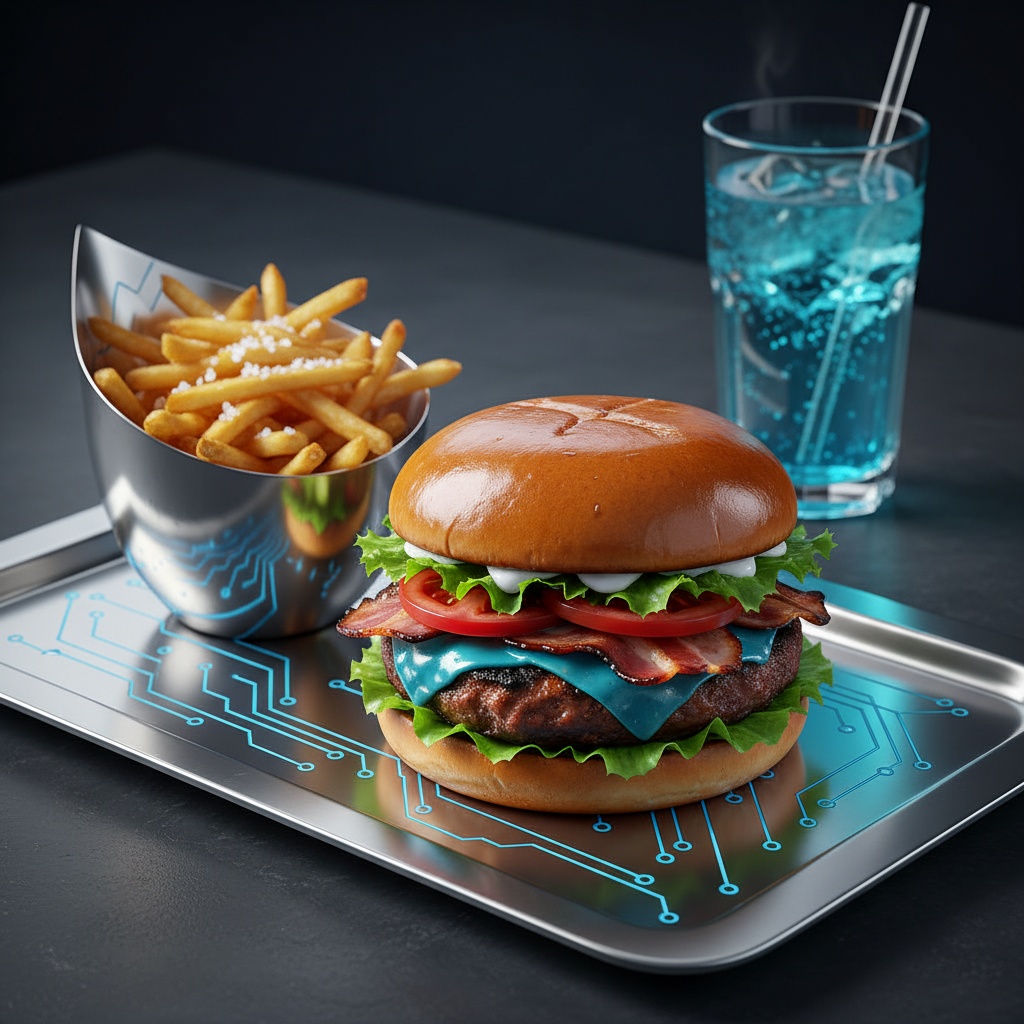
Best AI Food Photography Tools for Restaurants and Food Brands
Captivating food visuals are no longer a luxury; they are a necessity in today’s competitive culinary landscape. From bustling restaurants to burgeoning food brands, the power of a perfectly plated dish, beautifully lit and expertly composed, can significantly impact customer perception and sales. This is where AI food photography tools are revolutionizing the game.
TL;DR
AI food photography tools offer an efficient, cost-effective solution for creating stunning food visuals. These platforms either enhance existing photos or generate new images, providing professional-grade results without the need for expensive photoshoots. Restaurants and food brands can leverage AI for everything from delivery app menus to viral social media campaigns, ensuring consistent, high-quality imagery that drives engagement and sales.
Overview
The digital age has fundamentally transformed how consumers discover and engage with food. A scroll through any social media feed or a glance at a delivery app menu quickly reveals the paramount importance of high-quality food imagery. In this visually-driven market, AI food photography has emerged as a game-changer, offering unprecedented efficiency and creative control.
Traditional food photography can be a significant investment, often costing hundreds or even thousands of dollars per session and taking weeks for turnaround. AI tools, however, provide a powerful alternative, dramatically reducing both cost and time. For instance, some AI solutions can deliver professional results in as little as 30 seconds, costing a fraction of traditional methods. This accessibility empowers businesses of all sizes to elevate their visual content.
These advanced platforms are not just about basic edits; they encompass a spectrum of capabilities, from food image generation AI to sophisticated AI photo editing for food. They enable restaurants and food brands to consistently present their offerings in the most appealing light, directly influencing customer decisions and enhancing their overall market presence. The shift towards AI-powered food visuals is undeniable, marking a new era for culinary marketing.
The Rise of AI in Food Visuals
The demand for visually appealing food content has never been higher, fueled by online ordering platforms and social media. This intense visual competition has pushed businesses to seek innovative solutions, leading to the widespread adoption of AI in food photography. The technology addresses critical pain points like cost, speed, and consistency.
What most guides miss is the nuanced difference between AI-generated images and AI-enhanced images. While AI-generated images create synthetic food photos from text prompts, AI-enhanced images take your actual food photos and improve them professionally. For restaurants, especially those on delivery apps, enhancing real food photos is generally preferred to maintain authenticity and avoid customer disappointment when the physical dish doesn’t match the picture.
In my experience, the ability of AI to create realistic food photo styling without a stylist is one of its most compelling features. Imagine transforming a simple smartphone snapshot into a magazine-worthy image, complete with ideal lighting, composition, and background. This capability is crucial for businesses looking to make a strong visual impact without the logistical complexities and expense of a traditional photoshoot.
#### Beyond Basic Editing: AI Food Visual Enhancement
AI goes far beyond simple filters. Modern AI photo editing for food tools can analyze an image and automatically adjust exposure, contrast, color balance, and sharpness to significantly enhance its quality. This automated process ensures a consistent, professional look across all your visual assets.
These tools are particularly vital for AI food visual enhancement for delivery apps menus and packaging. Platforms like DoorDash, Uber Eats, and Grubhub have specific image requirements, and AI can quickly optimize photos for these platforms, ensuring they look great and meet technical specifications. For instance, a 2026 guide highlights that AI can generate images in the exact format required by each delivery service with one-click presets.
Furthermore, AI can rescue subpar photos, transforming dark, blurry, or poorly lit images into professional-quality visuals by enhancing lighting, sharpening focus, and fixing backgrounds. This capability allows businesses to leverage existing photos, saving time and resources while still achieving a high-end aesthetic.
Key AI Food Photography Tools and Their Capabilities
The market for AI food photography tools is rapidly evolving, offering a range of solutions for various needs. From comprehensive platforms to specialized editors, understanding their core functionalities is key to making an informed choice. These tools are designed to streamline the process of creating high-quality food images with AI tools.
Some tools focus on enhancing existing photographs, ensuring the authenticity of the dish remains intact. Others excel at food image generation AI, creating entirely new visuals from text descriptions. The choice often depends on the specific marketing goals and the need for realistic representation versus creative conceptualization.
| Tool Category | Key Features | Best For | Considerations |
|---|---|---|---|
| AI-Enhanced (Real Photos) | Transforms actual food photos; improves lighting, backgrounds, composition; maintains authenticity; optimizes for delivery apps. | Restaurants, delivery services, small businesses needing authentic, high-quality menu photos. | Requires existing photos; focus on enhancement rather than generation. |
| AI-Generated (Synthetic Images) | Creates food images from text prompts; offers creative flexibility; ideal for conceptual visuals. | Marketing campaigns, recipe blogs, conceptual design, social media content where authenticity to a specific dish isn’t paramount. | Images may not perfectly represent real dishes; potential for unrealistic textures; delivery platforms may require accurate representation. |
| Hybrid/Specialized AI | Combines enhancement with creative editing; adds elements, garnishes, background changes; social media templates. | Food brands, marketing agencies, professional stylists seeking creative control and batch processing. | May require more user input; can sometimes lean towards synthetic if not carefully managed. |
#### Virtual Food Styling and Imaging
The concept of a virtual food stylist is no longer science fiction. AI-powered platforms can simulate professional food styling techniques, adjusting elements like plating, garnishes, and even the “mood” of a dish to create an irresistible visual. This allows for rapid experimentation with different styles and presentations.
Virtual food photography studio AI enables businesses to achieve studio-quality results without the physical setup. Users can upload a photo and select a desired style—be it for delivery, fine dining, or Instagram—and the AI will adjust lighting, composition, and background to match. This capability is instrumental for creating high-quality food images with AI tools quickly and efficiently.
The way AI food photography tools work often involves advanced algorithms that analyze millions of images to understand what makes food visually appealing. They can then apply these learned principles to enhance or generate new images, ensuring that the final output is not only aesthetically pleasing but also optimized for engagement. This significantly reduces the need for expensive physical props or elaborate setups.
Strategic Applications for Food Businesses
AI food photography isn’t just about pretty pictures; it’s a powerful strategic asset for businesses. From attracting customers on delivery platforms to crafting viral social media content, AI for food marketing provides a competitive edge. It allows for rapid content creation and consistent branding across all channels.
For restaurants, AI solutions for restaurant menu photos can drastically improve online presence. Data shows that menus with photos can lead to 30-70% more orders on platforms like GrubHub, and a 24% increase on Deliveroo. AI makes it feasible to have professional-grade photos for every menu item, even for daily specials.
Food brands can leverage AI to create viral social media food photos, captivating audiences with stunning visuals that stand out in a crowded feed. Using AI to enhance food product photos ensures that packaging and online listings consistently showcase products in their best light, driving consumer interest and purchasing decisions.
#### AI for Food Marketing and Brand Imaging
The role of AI in food brand visuals is expanding rapidly. AI-powered tools help maintain brand consistency across diverse marketing materials, from digital ads to physical menus and packaging. This ensures that every visual touchpoint reinforces the brand’s identity and quality.
Businesses are increasingly using AI to create promotional graphics, menus, signage, and even social media posts. This dynamic content creation, tailored to user preferences, is a core component of effective AI-powered food visuals. By integrating AI, brands can produce a high volume of engaging content efficiently.
To truly scale content creation and maintain a competitive edge, businesses need access to the right AI tools. These platforms streamline workflows and unlock creative possibilities that were once out of reach for many. According to a 2025 report, companies using AI in food and beverage marketing are seeing better campaign performance and stronger brand loyalty.
Action Framework: Implementing AI in Your Food Photography Workflow
Integrating AI into your food photography workflow doesn’t have to be complex. A structured approach ensures you maximize the benefits and achieve consistent, high-quality results. This framework guides you through the essential steps.
1. Assess Your Current Needs: Identify your biggest pain points. Are you struggling with inconsistent menu photos, high photography costs, or slow turnaround times? Understanding your challenges will help you choose the right AI solution.
2. Choose the Right Tool: Research and select AI food photography tools that align with your specific goals. Prioritize tools that enhance real photos for authenticity if you’re a restaurant, or generative AI for conceptual marketing if your focus is broader.
3. Start with Existing Assets: Begin by uploading your current food photos. Many AI enhancement tools excel at transforming even smartphone pictures into professional-grade visuals. This is a low-risk way to test the waters.
4. Experiment with Styles and Presets: Explore the various styles, backgrounds, and presets offered by your chosen AI software. This allows you to quickly iterate and find the aesthetic that best represents your brand and appeals to your target audience.
5. Optimize for Platforms: Utilize AI features that automatically resize and format images for specific platforms like Instagram, Facebook, DoorDash, or Uber Eats. This ensures your visuals always look their best, regardless of where they are displayed.
6. Integrate into Marketing: Once you’re generating high-quality images, integrate them into your broader marketing strategy. Use them for social media campaigns, menu updates, packaging design, and online advertisements. The ability to quickly create images with AI can significantly boost your content output.
Data-Backed Insights on AI in Food Photography
The impact of AI in food photography is not merely anecdotal; it’s supported by compelling data that underscores its effectiveness and growing adoption. Businesses are increasingly recognizing the tangible benefits.
* Increased Orders (30-70%): Restaurants using photos on GrubHub can see 30-70% more orders, while Deliveroo reports a 24% increase and DoorDash a 15% higher delivery volume. This highlights the direct correlation between high-quality visuals and customer conversion. AI tools make achieving this quality much more accessible.
* Significant Cost Savings (95%): AI food photography typically costs 95% less than traditional photography, with tools starting around $39 compared to $600+ for a professional photoshoot. This demonstrates a massive return on investment for businesses looking to optimize their marketing budget.
* Rapid Turnaround (30-90 seconds): Most AI tools deliver results in 30 seconds to 2 minutes per image. This speed enables agility in marketing, allowing for quick updates to menus and promotional materials without delay.
* Widespread Adoption (47%): Nearly half of Food & Beverage businesses (47%) are already using AI in their marketing, with 94% planning to expand their AI use. This indicates a strong industry trend and a competitive imperative for businesses to adopt AI solutions.
* Improved Marketing Effectiveness (40%): Brands deploying AI-driven analytics and personalization platforms have seen their marketing effectiveness improve by around 40%. AI-generated visuals contribute to this by enhancing engagement and targeting.
FAQ Section
1. What are the best AI tools for food photography?
The “best” AI tools for food photography often depend on specific needs, but several stand out for their capabilities. For enhancing actual food photos, MenuPhotoAI is highly regarded, especially for restaurants needing authentic images for delivery apps. It specializes in improving lighting, focus, and backgrounds of real dishes.
FoodShot AI is another excellent option for AI-powered transformation, offering various style presets and quick professional results from uploaded photos. It focuses on creative styling and social media optimization.
For generating synthetic food images from text, tools like Lunchbox AI (which uses DALL-E) are popular free options, though they create imagined food rather than enhancing real dishes. Recraft also offers high-quality, lifelike food image generation with good control over texture and lighting. Adobe Firefly is another strong contender for AI image generation, referencing Adobe’s extensive stock photo library to avoid copyright issues.
2. How does AI improve food image quality?
AI improves food image quality through sophisticated algorithms that analyze and optimize various visual elements. It can automatically correct common photography issues such as poor lighting, inconsistent exposure, and incorrect color balance. This leads to brighter, more vibrant, and accurately colored food photos.
Beyond basic corrections, AI can enhance sharpness and focus, making dishes look crisp and appetizing. It can also intelligently adjust composition and framing, ensuring the food is the star of the image.
Furthermore, AI tools can remove distracting backgrounds or replace them with aesthetically pleasing alternatives, placing the dish in a more professional or thematic setting. This comprehensive enhancement process results in visually stunning images that are far superior to unedited smartphone photos.
3. Why should restaurants use AI for food photos?
Restaurants should embrace AI for food photos due to the significant advantages it offers in efficiency, cost-effectiveness, and consistency. Professional-grade food photos are crucial for attracting customers on delivery platforms, with studies showing a substantial increase in orders when photos are present. AI makes this quality accessible without the high cost and time commitment of traditional photography.
AI tools enable restaurants to update their menus quickly with new, appealing visuals for seasonal specials or new dishes, maintaining a fresh and engaging online presence. This speed allows for rapid experimentation and iteration of menu items.
Moreover, AI ensures visual consistency across all menu items and even multiple restaurant locations, which builds trust and a professional brand image. This unified look helps customers recognize and trust the brand, leading to higher conversion rates.
4. What are the benefits of AI in food styling?
The benefits of AI in food styling are transformative, allowing businesses to achieve professional aesthetics with unprecedented ease. AI acts as a virtual food stylist, capable of simulating expert plating, garnishing, and overall presentation techniques. This means dishes can be styled perfectly for various contexts, from a casual cafe menu to a fine dining advertisement.
AI can quickly experiment with different styling elements, such as background textures, props, and lighting, to find the most appealing combination. This iterative process saves immense time and resources compared to physical styling sessions.
Ultimately, AI in food styling ensures that every food image is optimized to be as appetizing and appealing as possible, directly contributing to increased customer interest and desire for the dish. It democratizes access to high-end visual presentation.
5. How can AI create realistic food images?
AI creates realistic food images through sophisticated algorithms trained on vast datasets of real photographs. For AI-generated images, these models learn the intricate details of food textures, colors, lighting, and plating styles, allowing them to synthesize new images that mimic reality. They can translate text prompts into highly detailed visual representations.
For AI-enhanced images, the realism comes from improving existing authentic photos. Tools analyze elements like shadows, reflections, and natural imperfections, then apply enhancements that look natural rather than artificial. This ensures that the improved image still accurately represents the actual dish.
The key to realism lies in the AI’s ability to understand and replicate the nuances of light interaction, material properties, and gastronomic appeal. Advanced AI can even mimic specific camera angles and lens effects, further contributing to a photorealistic outcome.
6. Can AI generate food photos for marketing campaigns?
Absolutely, AI can generate highly effective food photos for marketing campaigns, offering immense creative flexibility and speed. Generative AI tools allow marketers to create bespoke images from text descriptions, conceptualizing dishes, settings, and moods that perfectly align with campaign themes. This is invaluable for creating unique and eye-catching visuals that stand out.
These AI-generated images are ideal for social media posts, digital ads, website banners, and even mock-ups for new product launches. They enable rapid iteration of creative concepts, allowing marketing teams to test various visuals without the need for costly and time-consuming photoshoots.
However, it’s crucial to consider the context. While excellent for conceptual or aspirational marketing, for direct sales on delivery apps, using AI-enhanced photos of actual food is often preferred to manage customer expectations and comply with platform requirements.
7. What is the role of AI in food brand visuals?
The role of AI in food brand visuals is multifaceted and increasingly central to modern marketing strategies. AI helps maintain brand consistency across all visual assets, ensuring that every image, from product packaging to social media posts, adheres to a unified aesthetic and brand identity. This consistency builds recognition and trust with consumers.
AI tools facilitate the rapid creation of diverse visual content, enabling brands to run more dynamic and engaging marketing campaigns. They can generate visuals for specific promotions, seasonal offerings, or new product lines quickly and cost-effectively.
Furthermore, AI assists in tailoring visuals to target specific audience segments, by analyzing consumer data and trends to create images that resonate most effectively with different demographics. This precision in visual communication enhances brand loyalty and overall marketing effectiveness.
8. How do AI food photography tools work?
AI food photography tools primarily work in two ways: image enhancement or image generation. For image enhancement, users upload existing photos, often taken with a smartphone. The AI then analyzes the image, identifying areas for improvement such as lighting, color, sharpness, and background clutter.
Using algorithms trained on vast datasets of professional food photography, the AI applies corrections and enhancements to transform the original photo into a high-quality, professional-looking image. This process often takes mere seconds.
For image generation, users provide text prompts describing the desired food item, setting, style, and mood. The AI then uses complex generative models, like diffusion models, to synthesize an entirely new image from scratch, attempting to match the textual description as closely as possible. Both methods leverage machine learning to deliver visually compelling results.
Future Outlook: The Evolution of AI in Food Visuals
The trajectory of AI in food visuals points towards even more sophisticated, personalized, and integrated solutions. We can expect AI tools to become even more intuitive, requiring less technical expertise to produce stunning results. This will further democratize high-quality food photography.
One overlooked factor here is the increasing demand for hyper-realistic and interactive food visuals, possibly incorporating augmented reality (AR) elements. Imagine customers being able to “see” a dish in 3D before ordering, or brands creating fully immersive virtual dining experiences through AI-generated content. The fusion of AI with AR/VR technologies will redefine consumer engagement.
Furthermore, AI’s ability to analyze consumer preferences will lead to highly personalized visual content. Brands will be able to generate images tailored not just to broad demographics, but to individual tastes and dietary preferences, creating an unprecedented level of connection with their audience. The ethical considerations around synthetic imagery and transparency will also continue to evolve, shaping best practices in the industry.
Your AI Food Photography Checklist
Ready to elevate your food visuals with AI? Use this checklist to ensure you’re leveraging the technology effectively.
* Define Your Goal: Clearly articulate whether you need to enhance existing photos for authenticity (e.g., delivery menus) or generate new, conceptual images for marketing campaigns.
* Select the Right Tool: Research and choose an AI platform that aligns with your specific needs and budget, considering features like enhancement capabilities, generative power, and ease of use.
* Prioritize Authenticity: For customer-facing menus, especially on delivery apps, opt for AI tools that enhance your actual food photos to prevent customer dissatisfaction.
* Optimize for Platforms: Ensure your chosen AI solution can format and optimize images for various digital channels, including social media, websites, and specific delivery platforms.
* Test and Iterate: Experiment with different styles, backgrounds, and prompts within your AI tool to discover what resonates best with your audience.
* Maintain Brand Consistency: Use AI to apply a consistent visual style across all your food imagery, reinforcing your brand identity.
* Educate Your Team: Provide basic training for staff on how to take good initial photos if using enhancement tools, or how to craft effective prompts for generative AI.
* Monitor Performance: Track the engagement and conversion rates of your AI-generated or enhanced food photos to continuously refine your strategy.
* Stay Informed: Keep abreast of new AI tools and features as the technology rapidly evolves, ensuring your business remains at the forefront of visual marketing.