
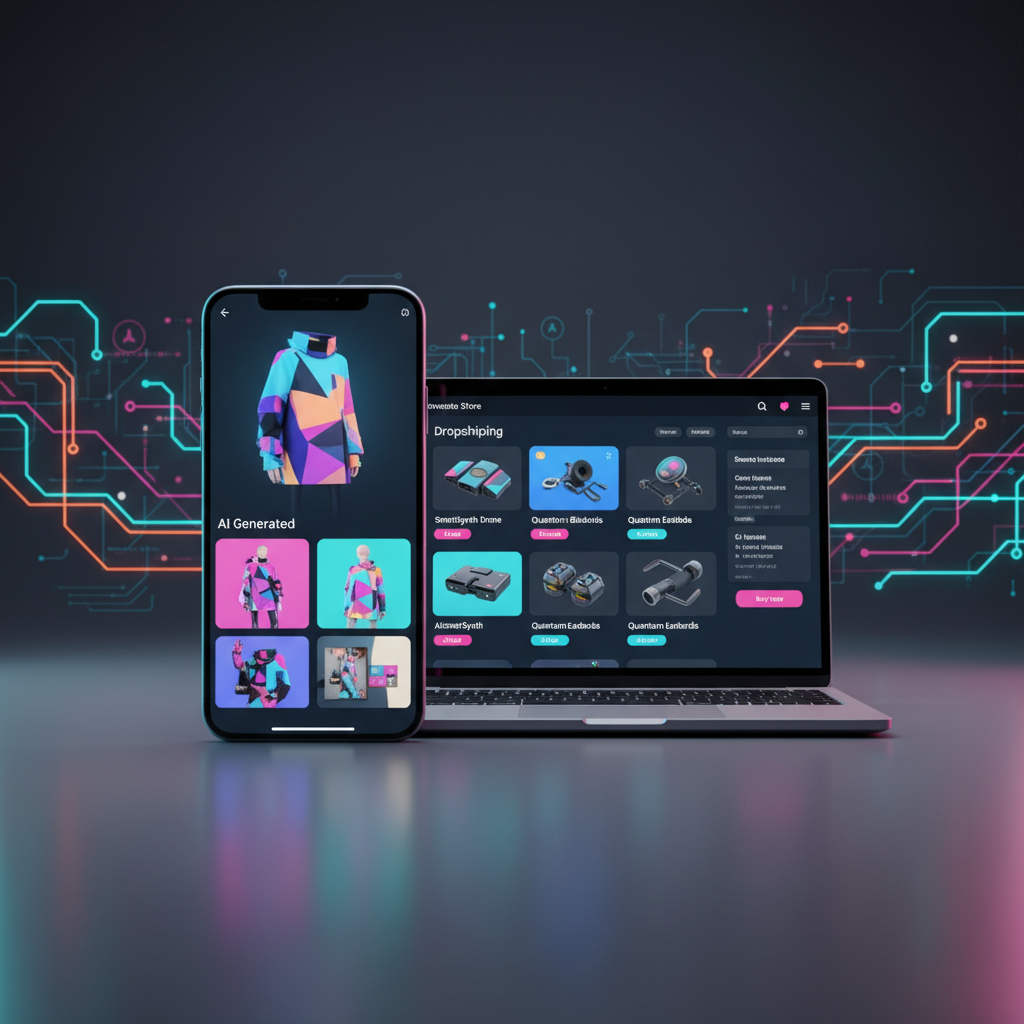
AI Product Photography Dropshipping: The Secret Weapon for Skyrocketing Sales
I remember the early days of dropshipping, scrolling through endless AliExpress listings, dreading the moment I had to “borrow” those same tired, low-res supplier images. It was a constant uphill battle to make my products stand out. For months, I tried every trick in the book – basic editing, fancy filters, even attempting my own DIY photoshoots (which were, let’s just say, less than professional). The struggle was real, and it was costing me conversions.
In this post, you’ll discover how AI product photography dropshipping can transform your e-commerce game, learn why leveraging AI for product visuals is no longer optional, and get actionable strategies to create stunning, high-converting product listings — backed by real-world examples.
Why Your Product Visuals Matter More Than Ever

The e-commerce landscape is more crowded than a Black Friday sale, and let’s be honest, attention spans are shorter than ever. In this visual-first world, your product images aren’t just a nice-to-have; they’re the silent salespeople working 24/7. Generic, uninspired photos from your suppliers simply won’t cut it anymore. They blend in, they scream “dropshipper,” and they erode trust.
This isn’t just about aesthetics; it’s about conversion rates. Customers make snap judgments, and a professional, appealing product image can be the difference between a scroll past and an “add to cart.” With the rise of AI solutions for product visuals, dropshippers who embrace this technology are gaining a significant, unfair advantage.
Unlocking the Power of AI for Dropshipping Product Photography
AI product photography for dropshipping businesses is a game-changer, allowing you to create unique, high-quality product images without ever touching a physical product or hiring an expensive photographer. It leverages advanced algorithms to generate, enhance, and transform product visuals from existing photos, making them perfectly suited for your brand and target audience. This means you can finally break free from generic supplier images and present your products in a way that truly converts.
How Does AI Create Product Images for Dropshippers?
AI creates product images for dropshippers by taking existing photos – often low-quality supplier images – and using sophisticated algorithms to enhance them, change backgrounds, add virtual props, or even generate entirely new scenes. This process, often called virtual product photography AI, allows you to quickly produce professional-grade visuals. It’s like having a team of graphic designers and photographers at your fingertips, but at a fraction of the cost and time.
The Undeniable Benefits of AI Product Photos for Dropshipping Conversion Rates
The benefits of AI product photos for dropshipping conversion rates are substantial and multifaceted. First, they allow for automated product photography, drastically reducing the time and cost associated with traditional photoshoots. More importantly, high-quality, branded images build trust and perceived value, leading to higher click-through rates and significantly improved sales. You can create lifestyle product photos for dropshipping stores that resonate with your audience, making your products more desirable.
| Feature | Traditional Photography | AI Product Photography |
|---|---|---|
| Cost per image | High (equipment, models, studio) | Low (subscription/per-image fee) |
| Time to create | Days to weeks | Minutes to hours |
| Customization | Limited by physical setup | Infinite (backgrounds, props, styles) |
| Scalability | Difficult, expensive | Highly scalable for many products |
| Consistency | Challenging to maintain | Easy to achieve brand consistency |
Transforming Supplier Images into Branded Product Photos
One of the most powerful applications of AI for dropshipping marketing is its ability to transform generic supplier images into unique branded product photos. No more relying on the same old pictures everyone else uses. With AI photo editing dropshipping tools, you can upload a basic image from an AliExpress supplier, and the AI will clean it up, remove unwanted elements, and even place it in a beautiful, relevant scene. This is how dropshippers use AI to create unique product images from supplier photos, giving their store a professional, bespoke feel.
Generating Lifestyle Product Photos for Dropshipping Stores
Creating compelling lifestyle product photos for dropshipping stores used to be a major hurdle. Now, AI image generation for dropshipping platforms makes it incredibly easy. These tools can take a simple cutout of your product and place it into a realistic, aspirational setting – think a sleek water bottle on a mountain trail or a cozy blanket draped over a stylish sofa. This virtual staging for dropshipping products using AI technology helps customers visualize themselves using the product, significantly boosting engagement.
Best AI Tools for High-Converting Product Listings
When it comes to the best AI tools for dropshippers creating high-converting product listings, you’re looking for platforms that offer a blend of ease of use, powerful features, and cost-effectiveness. Many AI image generation platforms for dropshippers provide features like background removal, scene generation, and even minor product alterations. If you’re looking for comprehensive guides on various AI tools, there are excellent resources available to help you navigate the options.
Enhancing Dropshipping Product Photos with Artificial Intelligence
Beyond generating entirely new images, product image enhancement AI is crucial for refining existing photos. This can involve improving lighting, sharpening details, correcting colors, and even upscaling low-resolution images. The goal is to make every pixel count, ensuring your product looks its absolute best. These AI software for dropshipping product photography solutions are designed to give your visuals that polished, professional look that attracts buyers.
Case Study: From Generic to Gorgeous with AI
Situation: Sarah ran a dropshipping store selling minimalist home decor. Her biggest challenge was that all her competitors used the exact same, bland white-background product photos provided by suppliers. Her conversion rate was stagnant, and her brand felt indistinguishable.
Action: Sarah decided to experiment with an AI image generator tool. She took 20 of her best-selling products, uploaded their basic supplier images, and used the AI to create five unique lifestyle shots for each. She focused on virtual staging for dropshipping products, placing items in modern, inviting home settings. She also used the tool for product image enhancement AI, ensuring every detail was crisp. For more advanced options, she even explored how to create images that truly stood out.
Result: Within a month of updating her product listings with the new AI-generated photos, Sarah saw a remarkable change. Her click-through rate on product pages increased by 45%, and her overall conversion rate jumped from 1.8% to 3.1%. The average order value also saw a slight bump, as customers perceived higher quality. The cost was minimal compared to hiring a photographer, and the time saved was immense.
Common Mistakes That Are Costing You Results

Relying Solely on Default AI Settings
Many dropshippers assume AI will do all the work perfectly right out of the box. While AI is powerful, simply accepting the default output often leads to generic results that still lack a unique brand voice. You need to guide the AI, experiment with prompts, and refine the generated images.
Neglecting Brand Consistency
It’s easy to get carried away generating a multitude of creative AI product photos, but without a consistent aesthetic, your store can look disjointed. Ensure your AI-generated images align with your brand’s color palette, style, and overall messaging. A cohesive visual identity builds trust.
Forgetting Mobile Optimization
Beautiful images are useless if they slow down your site or don’t display correctly on mobile devices. Always optimize your AI-generated product photos for web and mobile, ensuring fast loading times and responsiveness. High-quality doesn’t mean huge file sizes.
Frequently Asked Questions
1. What is AI product photography for dropshipping?
AI product photography for dropshipping uses artificial intelligence tools to create, enhance, or transform product images for e-commerce stores, often starting from basic supplier photos. It allows dropshippers to generate unique, high-quality visuals without needing physical products or traditional photography equipment.
2. How does AI create product images for dropshippers?
AI creates product images by utilizing algorithms to analyze existing photos, remove backgrounds, generate new scenes and props, or even create entirely new images from text prompts. This virtual product photography AI can place products in various environments, making them more appealing to customers.
3. Why is AI important for dropshipping product photography?
AI is important for dropshipping product photography because it offers speed, scalability, and cost-effectiveness that traditional methods cannot match. It enables dropshippers to overcome the challenge of generic supplier images and create professional, branded visuals that stand out in a competitive market.
4. What are the benefits of using AI for dropshipping product photos?
The benefits include significantly reduced costs and time, the ability to create unique and branded visuals, enhanced product appeal, and improved conversion rates. AI solutions for product visuals allow for creative AI product photos that better engage potential customers.
5. How to choose the best AI tool for dropshipping product photography?
To choose the best AI tool, look for features like background removal, scene generation, image enhancement, ease of use, and integration capabilities with your e-commerce platform. Consider your budget and the specific type of creative AI product photos you want to generate.
6. Can AI transform supplier images into unique branded photos?
Yes, AI is excellent at transforming supplier images into unique branded photos. AI photo editing dropshipping tools can clean up existing images, remove watermarks, change backgrounds, and add elements that align with your brand’s aesthetic, making your products appear custom and professional.
7. How can AI create lifestyle product photos for dropshipping stores?
AI can create lifestyle product photos for dropshipping stores by taking a cutout of your product and virtually placing it into realistic or aspirational settings. This virtual staging for dropshipping products using AI technology helps customers visualize the product in use, making it more relatable and desirable.
8. What are the advantages of AI-generated product images for conversion rates?
The advantages of AI-generated product images for conversion rates include increased trust and credibility, better customer engagement due to appealing visuals, reduced bounce rates, and a clearer understanding of the product in context. High-quality visuals directly correlate with higher sales.
9. Is AI product photography cost-effective for dropshipping businesses?
Absolutely. AI product photography is highly cost-effective for dropshipping businesses compared to traditional photography. It eliminates the need for expensive equipment, studio rentals, models, and photographers, offering a much lower cost per image and greater scalability.
10. What features should I look for in AI product image generators for dropshipping?
Look for features like high-resolution output, background removal, diverse scene templates, custom prompt generation, batch processing, and integration with other e-commerce tools. The best AI tools for e-commerce photos also offer intuitive interfaces and good customer support.
Why “Perfect” Product Photos Aren’t Always the Goal
Most people say you need “perfect” product photos to succeed. I think that’s wrong because often, what’s truly effective isn’t perfection, but authenticity and relevance. Sometimes, a slightly less polished, but highly contextual and relatable AI-generated lifestyle shot will outperform a technically flawless studio image. The goal isn’t just pretty pictures; it’s pictures that resonate with your specific audience and solve their problem or fulfill their desire.
Pick one thing from this list and try it this week. That’s it. You’ll see the difference.