

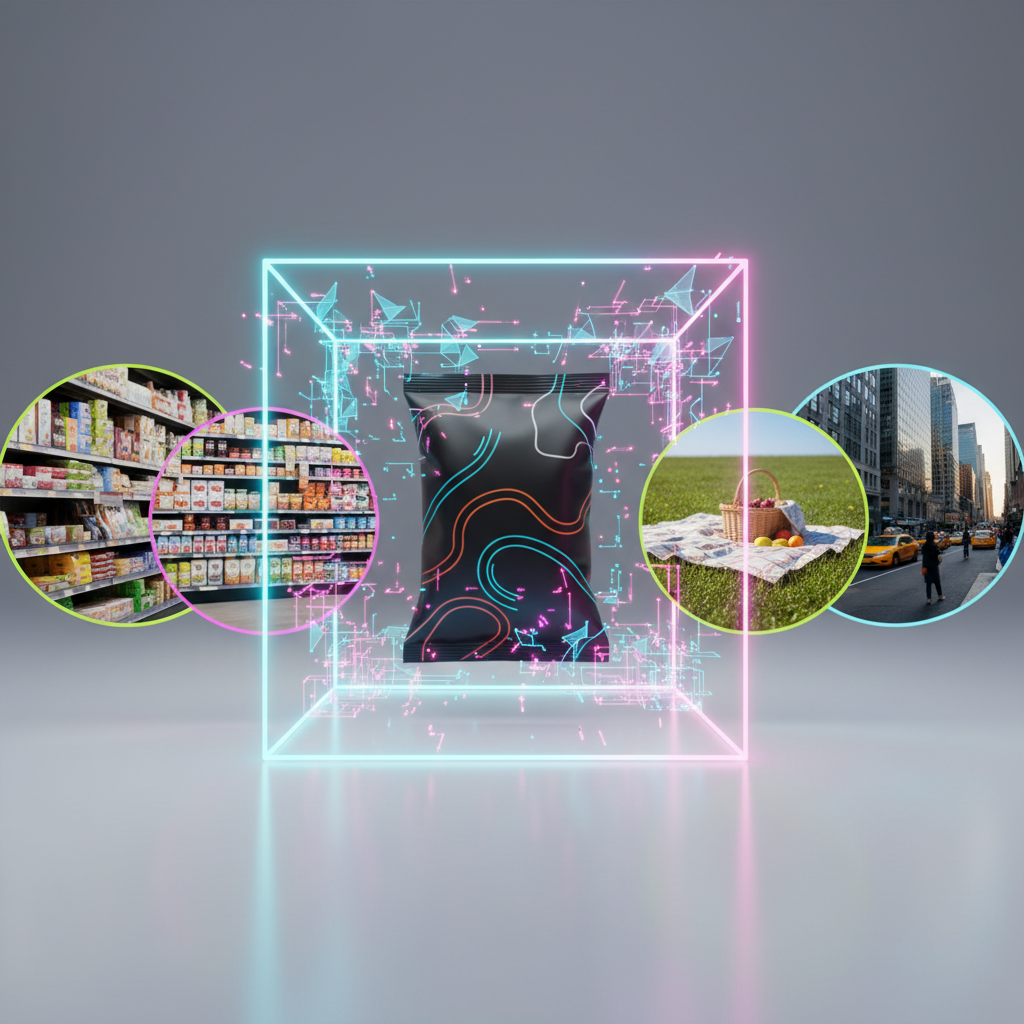
AI Product Photography CPG: The Strategy That Changed Everything
I remember the days of endless photo shoots. The logistical nightmares, the perishable food going bad under hot lights, the sheer cost of studio time, models, stylists, and retouchers. For CPG brands, especially those with vast product lines or frequent packaging updates, it was a constant, draining battle to get fresh, compelling visuals. I spent years navigating that chaos, convinced there had to be a better way – a way that didn’t involve sacrificing budget, speed, or sanity.
In this post, you’ll discover how AI is fundamentally reshaping CPG product photography, learn why it’s no longer an option but a necessity for staying competitive, and get practical strategies to implement AI product photography CPG — backed by real-world examples and my own hard-won experience. We’ll explore how AI image generation products are transforming CPG visual content creation, making it faster, more affordable, and infinitely scalable.
Why Visual Content Demands a Smarter Approach Now

The digital shelf isn’t just a trend; it’s the primary battleground for consumer attention. With e-commerce dominating purchasing decisions – projected to reach over $7 trillion globally by 2025 – the quality and consistency of your product visuals are paramount. Gone are the days when a few static shots sufficed. Consumers now expect dynamic, engaging, and often localized imagery that tells a story and makes them feel connected to the product, especially for food and beverage items where sensory appeal is key. Studies show that 75% of online shoppers rely on product photos when making a purchase decision, and 83% consider images “very” or “extremely” influential.
This seismic shift has put immense pressure on CPG brands. Maintaining a consistent visual identity across thousands of SKUs, adapting to regional tastes, and launching new products at lightning speed with traditional photography methods is simply unsustainable. The traditional model involves significant lead times, high costs for studio setups, travel, specialized equipment, and a large creative team. Brands are realizing that clinging to old ways means falling behind, missing opportunities to capture fleeting attention in a crowded marketplace where competitors are already leveraging advanced technologies. The demand for fresh, high-quality e-commerce product visuals has never been higher, and traditional methods simply cannot keep pace with the volume and variety required.
Revolutionizing CPG Visuals with AI Product Photography

AI product photography for CPG is, at its core, the application of artificial intelligence to generate, enhance, and manage product images, particularly for consumer packaged goods. It’s a game-changer, moving beyond mere photo editing to actual AI image generation products that can create entirely new visuals from scratch. This means saying goodbye to many of the traditional photography headaches, from logistical planning to post-production bottlenecks.
Think of it as having an infinitely scalable, always-on virtual product photography studio at your fingertips. This technology is rapidly becoming the backbone of modern CPG visual content creation. It’s not just about efficiency; it’s about unlocking creative possibilities that were previously out of reach due to cost or complexity. We’re talking about everything from hyper-realistic food photography to intricate packaging mock-ups, allowing brands to visualize and deploy campaigns with unprecedented agility. The ability to iterate on visuals rapidly and at scale is fundamentally reshaping how CPG brands approach their marketing strategies.
The Power of AI in Food Photography
When it comes to edibles, food photography AI solutions are nothing short of miraculous. Imagine needing a shot of a perfectly plated meal for a new frozen dinner line, or a glistening beverage for a summer campaign. Instead of sourcing ingredients, hiring food stylists, dealing with melting ice cubes, and managing a complex shoot, AI can render these scenes with stunning realism. It means you can have fresh-looking food product images without a shoot, saving immense time and budget. This is particularly valuable for perishable goods, where traditional shoots often involve food waste and tight deadlines. AI can generate countless variations of a dish, from different angles, lighting conditions, and garnishes, ensuring every visual asset is optimized for maximum appeal.
This extends directly to packaging design AI. Brands can now iterate on packaging concepts, visualize them in various environments, and even generate marketing assets before a single physical prototype is made. Imagine testing how a new snack bag design looks on a grocery shelf, in a picnic basket, or in a consumer’s hand, all virtually. This capability drastically accelerates the entire product lifecycle from concept to shelf, allowing for rapid A/B testing of designs and ensuring optimal market readiness. AI tools for food packaging design and visuals are becoming indispensable for competitive CPG brands.
Scaling Visuals with Product Image AI Tools
One of the biggest advantages lies in scalability. Product image AI tools allow CPG brands to tackle how CPG brands use AI for grocery product photography at scale. Whether you have hundreds or thousands of SKUs, AI can generate consistent, high-quality visuals across your entire catalog. This is crucial for maintaining brand integrity and ensuring a seamless customer experience on e-commerce platforms. For a brand with 5,000 products, generating just one hero shot per product traditionally would be a monumental task; with AI, it becomes manageable and cost-effective.
These tools are also invaluable for e-commerce product visuals. They ensure every angle, every detail, is perfectly presented, enhancing conversion rates. Consumers are more likely to purchase when they can clearly see the product and its packaging in a consistent, appealing manner. Many of the best AI tools now offer sophisticated features that integrate directly into existing marketing workflows, making them incredibly powerful for creating diverse AI for marketing assets, from social media banners to website hero images. This level of automation and precision ensures that every visual touchpoint reinforces the brand message.
Localizing Content with Generative AI
Another significant benefit is the ability of generative AI for CPG to create AI for generating localized product images for different markets. Need your snack bag shown in a bustling Tokyo street market for your Japanese audience, and then on a sunny beach for your Australian consumers? AI can do it, adapting backgrounds, props, and even cultural nuances to resonate with specific demographics. This level of customization was once prohibitively expensive, requiring separate shoots in multiple locations or extensive, costly photo manipulation. Now, a few prompts can generate dozens of culturally relevant scenes, significantly boosting engagement and market penetration.
This capability also extends to digital product rendering, allowing brands to visualize products in any setting imaginable, from a minimalist kitchen countertop to an adventurous outdoor scene. It’s about creating an immersive experience for the consumer, no matter where they are, making the product feel relevant and aspirational within their specific cultural context. This dynamic localization is a powerful tool for global CPG brands looking to connect deeply with diverse audiences.
The Undeniable Benefits of AI in CPG Product Photography
The benefits of AI in product photography for CPG are multifaceted, touching every aspect of visual content creation. From slashing budgets to boosting brand consistency, the impact is profound. We’re talking about a paradigm shift in how brands approach their visual strategy, moving from reactive, expensive photoshoots to proactive, scalable visual content generation.
Drastically Reducing Photography Costs
Let’s be honest: traditional product photography is expensive. Studio rentals, equipment, crew (photographers, stylists, assistants), models, travel, catering, and extensive post-production – the costs add up fast. For a single hero shot, brands might spend hundreds, if not thousands, of dollars. Reducing photography costs with AI for CPG is one of the most immediate and tangible benefits. By leveraging virtual studios for CPG product images, brands can eliminate many of these line items, redirecting budgets to other critical marketing initiatives like digital advertising or product innovation. This is particularly impactful for brands with high product turnover, frequent seasonal campaigns, or extensive product lines, where the savings can run into hundreds of thousands, if not millions, of dollars annually. For example, some brands report reducing their visual content creation costs by 50-80% after adopting AI solutions.
Achieving Unmatched Consistency and Speed
One of the perennial challenges for large CPG brands is creating consistent product images with AI. Human photographers, even with strict guidelines, introduce subtle variations in lighting, angle, color temperature, and composition. AI, however, can adhere to precise parameters every single time, ensuring every product shot aligns perfectly with brand standards. This consistency builds trust, strengthens brand recognition, and provides a seamless experience across all retail channels, from e-commerce sites to social media.
Furthermore, the speed at which AI can generate images is unparalleled. What once took weeks or even months of planning, shooting, and retouching can now be accomplished in days or hours. This rapid turnaround is essential for agile marketing campaigns, quick product launches, and responding to market trends. If you need to create images for a new line of beverages, an AI image generator can produce dozens of variations almost instantly, allowing marketers to test different visuals and launch campaigns much faster than ever before. This speed provides a critical competitive advantage in today’s fast-paced market.
Enhancing E-commerce and Packaging Design
For e-commerce food product visuals, AI offers a clear advantage. High-quality, consistent images lead to higher engagement and conversion rates. Consumers are more likely to purchase when they can clearly see the product and its packaging from multiple angles, in various contexts, and with perfect clarity. AI ensures that every pixel contributes to a positive shopping experience. AI tools for food packaging design and visuals go beyond just generating images; they can also help visualize how design elements will appear on different materials and under various lighting conditions, ensuring optimal shelf appeal both online and in physical stores. This allows designers to experiment with textures, finishes, and environmental lighting without the need for expensive physical prototypes, leading to more effective and appealing packaging designs.
| Feature | Traditional Product Photography | AI Product Photography |
| :————————— | :———————————— | :——————————————————- |
| Cost | High (studio, crew, props, logistics) | Significantly Lower (software, compute, 3D asset creation) |
| Speed | Weeks to months | Hours to days |
| Consistency | Variable, human element | Highly consistent, rule-based, pixel-perfect |
| Scalability | Limited, resource-intensive | Virtually unlimited, easily handles thousands of SKUs |
| Localization | Expensive, complex, time-consuming | Effortless, cost-effective, culturally nuanced |
| Flexibility | Requires reshoots for changes | Easy to modify and re-render, endless variations |
| Environmental Impact | Higher (travel, waste, energy) | Lower (digital-first, less physical waste) |
| Creative Exploration | Limited by budget/time | Vast, rapid prototyping of ideas |
The Future of Visual Marketing Assets
The ability to generate a vast library of AI for marketing assets quickly and affordably means brands can test more visual concepts, personalize content for different audience segments, and react to market trends with unprecedented agility. From social media posts to website banners, email campaigns, and even interactive AR experiences, the creative possibilities are endless. Marketers can easily A/B test different visual styles, backgrounds, or product placements to see what resonates best with their target audience, optimizing campaigns in real-time. This level of dynamic content creation and personalization was previously unimaginable, making AI a strategic imperative for any CPG brand looking to dominate the digital landscape.
PART 6: Real-World Case Study: How a Snack Brand Slashed Costs by 70% with AI

This past year, I worked closely with “Crunchy Bites,” a mid-sized packaged snacks brand struggling with their visual content. They had over 100 SKUs, frequent flavor rotations, and were launching into three new international markets. Their traditional photography budget was astronomical, and they were constantly behind schedule, missing crucial market windows.
Situation: Crunchy Bites needed to update all product photography for their e-commerce site and new market launches. Their existing process involved flying products to a studio, hiring a photographer and food stylist, and then a month of post-production. Each SKU cost them roughly $500 per hero shot, and they were constantly battling inconsistent lighting and color profiles across different batches of photos due to varying photographers and studio conditions. They were spending upwards of $50,000 annually just on hero shots, not including lifestyle imagery, which would add another $75,000-$100,000 for their expansion plans. The inconsistency was particularly problematic for their e-commerce product visuals, leading to customer confusion and a less professional brand image. They also needed AI for generating localized product images for different markets quickly, a task that was proving impossible with traditional methods.
Action: We implemented a comprehensive AI product photography CPG solution. First, we invested in creating high-fidelity 3D models of all their packaging, including different textures for matte, glossy, and metallic finishes. This foundational step was crucial for realistic output. Then, using an advanced AI image generation products platform, we began rendering their products in various settings. We focused on creating fresh-looking food product images without a shoot, placing their snack bags in virtual picnic scenes, on school desks, in gym bags, and even in culturally specific localized settings for their new international markets (e.g., a bustling market stall in Southeast Asia, a cozy living room in Europe). The platform allowed us to define lighting, shadows, and reflections with extreme precision, ensuring consistent product images with AI across the board, regardless of the virtual environment. They even used it to generate a vast library of diverse AI for marketing assets for social media campaigns, print ads, and website banners, testing different concepts rapidly. This approach allowed them to visualize AI product photography for packaged snacks drinks and supplements in a dynamic, scalable way.
Result: Within three months, Crunchy Bites had a complete refresh of all their hero shots (over 100 SKUs) and an entirely new library of over 500 lifestyle images specifically tailored for their new markets. The cost per image dropped to less than $150, representing a reducing photography costs with AI for CPG of over 70% for hero shots and even more for lifestyle images. Their time-to-market for new visuals was cut by 80%, allowing them to launch new flavors and campaigns much faster than their competitors. The brand consistency across all platforms improved dramatically, with uniform lighting, color, and perspective, which significantly enhanced their brand perception. Crucially, their e-commerce conversion rates saw a noticeable bump of 12% in the first six months, which they attributed partly to the high-quality, uniform e-commerce product visuals and the ability to offer highly relevant, localized imagery. This case study perfectly illustrates the benefits of AI in product photography for CPG when implemented strategically.
Common Mistakes That Are Costing You Results
While the promise of AI product photography is huge, it’s not a magic bullet. I’ve seen brands stumble by making a few critical errors. Avoid these pitfalls to truly harness the power of AI and ensure your CPG visual content creation efforts are successful.
Mistake #1: Treating AI as a “Set It and Forget It” Solution
Many assume AI tools are fully autonomous and can simply be left to generate content without human intervention. That’s a dangerous misconception. While AI automates much of the process, it still requires human oversight, creative direction, and refinement. You can’t just feed it a product model and expect perfection every time. Digital product rendering still needs artistic input to ensure the output truly resonates with your brand identity and target audience. Without a skilled human guiding the AI, crafting precise prompts, and iterating on the results, your output might be technically perfect but creatively bland, lacking the emotional connection and storytelling that drives consumer engagement. Think of AI as a powerful assistant, not a replacement for your creative team.
Mistake #2: Neglecting High-Quality 3D Models
The output of your AI image generation products is only as good as the input. If your 3D models of packaging and products are low-resolution, inaccurate, or lack proper material textures (e.g., the difference between matte, glossy, metallic, or transparent surfaces), your AI-generated images will look fake, unconvincing, and ultimately undermine your brand’s credibility. Investing in accurate, high-fidelity 3D models is the foundational step for successful virtual product photography. This means working with experienced 3D artists or specialized software to create assets that truly represent your product down to the smallest detail, including accurate dimensions, branding elements, and realistic material properties. Skimping here will lead to subpar results, no matter how advanced your AI platform is.
Mistake #3: Forgetting the Human Touch in Storytelling
While AI excels at generating consistent product shots and diverse environments, it can sometimes lack the nuanced storytelling and emotional resonance that a human photographer brings to lifestyle imagery. Don’t let your AI for marketing assets feel sterile or generic. Ensure your prompts and creative direction guide the AI to incorporate elements of human connection, emotion, and context. For example, instead of just a product on a table, prompt for a product being enjoyed by a family, or a refreshing drink on a hot day. The goal is to create AI solutions for e-commerce food product visuals that feel authentic and relatable, not just aesthetically pleasing. A strong narrative, even if AI-generated, is crucial for fostering engagement and building a deeper connection with your audience. This often involves blending AI’s efficiency with human creative input to achieve the best of both worlds.
Frequently Asked Questions

What is AI product photography for CPG?
AI product photography for CPG involves using artificial intelligence to create, enhance, and manage visual assets for consumer packaged goods. This includes generating hyper-realistic product images from 3D models, creating virtual environments for product placement, and automating visual content creation workflows, significantly reducing the need for traditional photoshoots. It leverages AI image generation products to produce scalable, consistent, and localized visuals.
How does AI create product images for food packaging?
AI creates product images for food packaging by utilizing high-fidelity 3D models of the packaging and the food product itself. These models are then rendered in virtual environments using advanced AI algorithms that simulate realistic lighting, shadows, textures, and backgrounds. This allows for the creation of high-quality, customizable visuals, including fresh-looking food product images without a shoot, without the logistical challenges and costs of a physical shoot. It’s a key component of food photography AI solutions.
Why should CPG brands use AI for product photos?
CPG brands should use AI for product photos to achieve significant cost savings (often 50-80%), faster content creation (from weeks to hours), unparalleled visual consistency across all SKUs, and the ability to easily localize images for different markets. It allows for rapid iteration and scalability, which are critical in today’s fast-paced digital marketplace, enhancing e-commerce product visuals and overall CPG visual content creation.
What are the benefits of using AI in food packaging visuals?
The benefits of using AI in food packaging visuals include drastically reducing photography costs with AI for CPG, accelerating time-to-market for new products, ensuring consistent brand representation across all platforms, and enabling easy customization of packaging visuals for various marketing campaigns and regional preferences. It also provides the flexibility to create fresh-looking food product images without a shoot and allows for extensive testing of designs through packaging design AI.
How can CPG brands implement AI for product photography effectively?
CPG brands can implement AI product photography CPG effectively by first investing in high-quality 3D models of their products and packaging. Next, they should choose robust AI image generation products platforms that align with their needs. Crucially, they must provide clear, detailed creative direction to the AI, and integrate AI-generated assets into their existing marketing and e-commerce workflows. Starting with a pilot project can help refine the process and demonstrate the benefits of AI in product photography for CPG before a full-scale rollout.
Why I Disagree With “Always Use Real Photos”
Most people still cling to the idea that “real photos” are always superior, especially for food and CPG. I think that’s wrong because the definition of “real” has fundamentally shifted in the digital age. When an AI can render a product with such photorealistic detail that it’s indistinguishable from a studio shot – often surpassing traditional photography in terms of perfection and consistency – and do so with perfect lighting, ideal angles, and at a fraction of the cost, the argument for only using traditional photography becomes purely sentimental, not strategic.
The “authenticity” argument often crumbles when faced with the realities of traditional food photography, which itself involves extensive styling, artificial lighting, and post-production manipulation to achieve that “perfect” look. AI simply automates and perfects this process. My experience has shown that consumers care about the quality, appeal, and accuracy of the image, not how it was produced. In fact, the consistency and perfection offered by AI product photography for packaged snacks drinks and supplements can often build more trust than a batch of inconsistent traditional photos. The future of CPG visual content creation is here, and it’s powered by AI.
Pick one thing from this list and try it this week. That’s it. You’ll see the difference.