

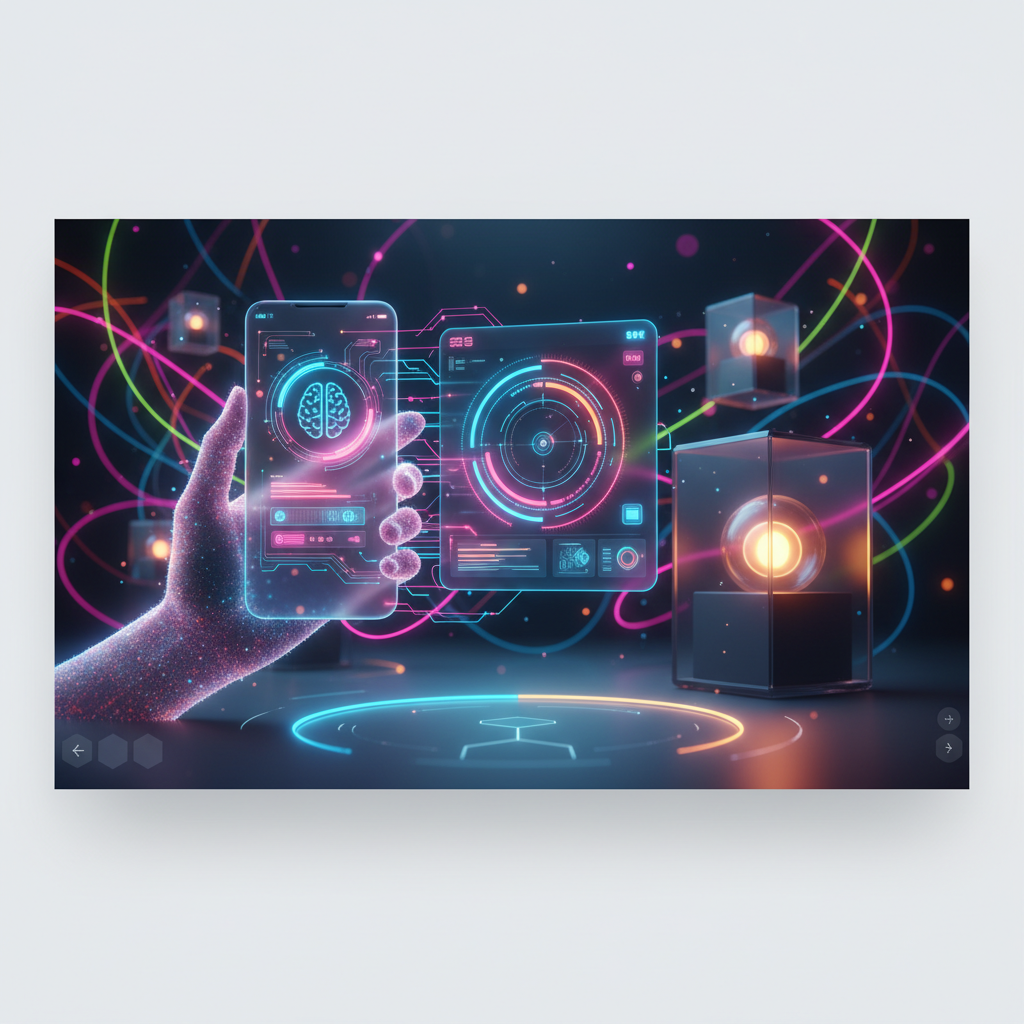
AI Product Hero Images: The Game-Changing Strategy for Landing Page Conversions
I remember the days of endless product photography shoots, wrestling with lighting, models, and backgrounds, only to end up with a dozen “good enough” shots. Then came the agonizing A/B testing, hoping one of them would finally click with our audience. It was a slow, expensive, and often frustrating process that felt like throwing darts in the dark, constantly guessing what might resonate.
In this post, you’ll discover how AI is revolutionizing AI product hero images, learn why this technology is crucial for modern marketing, and get actionable insights to create high-converting above-the-fold product hero shots — backed by real-world examples. We’ll explore the benefits of AI for product image creation and how it’s becoming indispensable for any business serious about online conversions.
Why Your Hero Images Need an AI Upgrade Now
The digital landscape is more competitive than ever, and attention spans are shorter than a TikTok video. Your product landing page has mere seconds to grab a visitor, convey value, and compel them to act. A bland, generic, or poorly optimized hero image is a conversion killer, often leading to high bounce rates and missed opportunities. We’re past the point where a decent photo is enough; today, you need visuals that speak directly to your audience’s desires and solve their problems at a glance. The rise of AI-powered visual content isn’t just a trend; it’s a fundamental shift in how we approach landing page visual AI and conversion focused imagery AI. Businesses that embrace this now are seeing tangible gains in their conversion rates, often reporting uplifts of 20-30% or more, leaving those stuck in traditional methods scrambling to catch up.
The imperative to upgrade stems from several critical factors. Firstly, the sheer volume of content online means your product needs to stand out instantly. Secondly, consumer expectations for personalized and engaging experiences are higher than ever. Generic stock photos or uninspired product shots simply won’t cut it. AI product hero images offer a dynamic solution, allowing marketers to quickly generate diverse, tailored, and highly optimized visuals that capture attention and communicate value with unprecedented efficiency. This isn’t just about aesthetics; it’s about leveraging data and advanced algorithms to create visuals that are engineered for conversion, making every pixel work harder for your business.
Understanding AI for Generating Product Hero Images
AI for generating product hero images refers to using artificial intelligence algorithms to create, optimize, and personalize the primary visual assets displayed prominently on product landing pages. This technology leverages machine learning to understand design principles, user preferences, and conversion drivers, allowing marketers to produce compelling visuals at scale. It’s not just about creating images; it’s about optimizing product hero images with AI for conversions by analyzing what resonates most with target audiences and then generating visuals that align with those insights. This capability fundamentally transforms the visual content creation pipeline, moving from a labor-intensive, often subjective process to a data-driven, highly efficient one.
What is AI for Generating Product Hero Images?
At its core, AI product hero images involve sophisticated systems that can interpret text prompts, existing images, or data sets to generate entirely new, high-quality visual content. These AI tools go beyond simple photo editing, enabling the creation of diverse scenes, product placements, and stylistic variations that would be costly and time-consuming with traditional photography. Imagine needing a product shot in a bustling city, a serene natural landscape, or a futuristic office – all generated within minutes without ever leaving your desk. Think of it as having an infinitely patient, incredibly fast design team at your fingertips, ready to produce generative AI for product visuals on demand. These systems are trained on vast datasets of images, allowing them to understand context, lighting, composition, and even emotional cues, making them capable of producing visuals that are not only aesthetically pleasing but also strategically effective. This capability is a game-changer for AI image generation for marketing, allowing for unprecedented creative freedom and speed.
How AI Creates High-Converting Above-the-Fold Product Hero Shots
AI creates high-converting above-the-fold product hero shots by analyzing vast amounts of data on successful visuals, understanding elements like composition, color psychology, emotional triggers, and calls to action. It can then generate images that incorporate these proven conversion principles, often tailoring them to specific product features or target demographics. For instance, an AI might learn that images featuring people interacting with a product in a positive, aspirational way tend to perform better for certain demographics, or that specific color palettes evoke trust or excitement. This process allows for rapid iteration and refinement, producing AI-powered product image generation for websites that are designed to capture immediate attention and encourage engagement. The goal is to ensure the visual impact is immediate and persuasive, making the most of that crucial first impression and guiding the visitor towards the desired action. By continuously learning from performance data, AI refines its output, ensuring that each generated image is not just visually appealing but strategically optimized for maximum impact. This capability is central to how AI improves product hero shot effectiveness.
The Best AI Tools for Creating Product Launch Landing Page Imagery
Choosing the best AI tools for creating product launch landing page imagery depends on your specific needs, budget, and desired level of control. The market is rapidly evolving, with many platforms offering robust features for AI image generation for marketing, ranging from simple background removal and object placement to complex scene creation and photorealistic rendering. Some tools specialize in product photography AI, offering virtual studios where you can place 3D models of your products in various environments, adjusting lighting, textures, and camera angles with precision. Examples include tools like Midjourney, DALL-E 3, Stable Diffusion, and specialized platforms like Flair.ai or Visual Electric, which are often geared towards e-commerce and marketing visuals.
Other tools focus on broader AI-powered visual content creation, allowing for more conceptual or abstract imagery that can convey brand values or emotional benefits. When looking for the right fit, consider the ease of use (e.g., intuitive interfaces vs. complex prompt engineering), the quality of output (realism, artistic style), the integration capabilities with your existing marketing stack (e.g., CMS, A/B testing platforms), and the pricing structure (subscription, pay-per-image, credit-based). Many platforms offer free trials or freemium models, allowing you to experiment and find the AI tools for generating product hero images that best suit your workflow. For a comprehensive guide on various options, exploring different AI tools can provide a great starting point, comparing features like prompt-to-image capabilities, image editing, and style transfer options.
| Feature / Tool Aspect | Traditional Photography | AI Product Hero Image Generation |
| :——————– | :———————- | :——————————- |
| Cost | High (equipment, studio, models, photographers, post-production) | Low to moderate (subscription, pay-per-image, often significantly cheaper per asset) |
| Speed | Weeks to months (scheduling, shooting, editing, revisions) | Minutes to hours (generation, minor edits, rapid iteration) |
| Flexibility | Limited (reshoots needed for changes, costly) | High (easy to modify, generate countless variations, adapt to trends) |
| Personalization | Very difficult, expensive (requires separate shoots for segments) | Easy (dynamic imagery for segments, A/B tests, or even individual users) |
| A/B Testing | Slow, resource-intensive (limited variations due to cost/time) | Fast, efficient (generate many styles, test simultaneously, data-driven) |
| Scalability | Low (manual effort, limited by human resources) | High (generate thousands of images for different products, campaigns, locales) |
| Consistency | Relies on photographer skill, brand guidelines can be hard to enforce across projects | Easy to maintain brand guidelines via prompts and style presets, ensuring visual cohesion |
| Innovation | Limited by physical constraints and budget | Endless creative possibilities, ability to visualize abstract concepts or future products |
AI for A/B Testing Different Product Hero Image Styles
One of the most powerful applications of AI in visual marketing is its ability to facilitate rapid A/B testing of different product hero image styles. Instead of manually creating a handful of variations, AI for A/B testing different product hero image styles can generate dozens, even hundreds, of distinct images with varied backgrounds, product angles, lighting, emotional cues, and calls to action. This allows marketers to quickly identify which visuals resonate most effectively with different audience segments, leading to significant improvements in AI product landing page visual optimization for conversion rate. For example, you could test an image featuring a product in a minimalist setting against one showing it in a vibrant, lifestyle context, or an image with a smiling user versus one highlighting a problem being solved. By continuously testing and refining, you can discover precisely how AI improves product hero shot effectiveness by letting data drive your visual choices, rather than relying on intuition alone. This iterative process ensures that your landing page visuals are always performing at their peak, adapting to changing audience preferences and market trends.
Streamlining Product Image Creation with AI
The process of streamlining product image creation with AI drastically reduces the time and resources traditionally required. From initial concept to final deployment, AI handles repetitive tasks, generates variations, and even suggests optimal compositions based on conversion data. This means marketing teams can shift their focus from the laborious production logistics to higher-level strategy and creative direction. For instance, instead of waiting weeks for a photoshoot and post-production, a marketer can generate a dozen high-quality product hero images for a new campaign in a single afternoon. This efficiency is invaluable for businesses with large product catalogs, frequent product launches, or those needing to localize content for diverse markets. Whether you need to quickly create images for a new campaign, refresh existing content across hundreds of product pages, or generate unique visuals for personalized ad creatives, AI offers unparalleled efficiency. You can explore a powerful AI image generator to see this capability in action, transforming what used to be a bottleneck into a swift, scalable operation. This allows for greater agility and responsiveness in marketing efforts, ensuring that visual content is always fresh, relevant, and optimized.
Case Study: “GrowthHackers Inc.” Boosts Sign-ups by 35%
Situation: GrowthHackers Inc., a SaaS company specializing in marketing analytics, was struggling with stagnant conversion rates on their main product landing page. Their existing hero image, a standard screenshot of their dashboard, wasn’t effectively communicating the value proposition or engaging new visitors. It lacked emotional resonance and failed to highlight the transformative benefits of their platform for their target audience of busy marketers. They needed a visual that immediately conveyed innovation, problem-solving, and tangible success.
Action: The marketing team decided to leverage AI tools for generating product hero images. They fed their AI platform (a combination of a leading generative AI model and an integrated A/B testing tool) data about their ideal customer profiles, key pain points (e.g., data overload, missed insights), and desired outcomes (e.g., clear reporting, strategic decision-making). The AI then generated over 50 variations of their hero image, featuring diverse scenarios. These included a marketer confidently presenting data to a team, a user experiencing a “eureka!” moment while reviewing analytics, and a team collaborating seamlessly with their product subtly integrated into a dynamic, modern office environment. They specifically focused on using AI to create compelling landing page visuals that highlighted benefits (e.g., “clarity,” “growth,” “efficiency”) rather than just features. These images were then put through a rapid A/B testing cycle using the same AI platform’s optimization features, allowing them to test multiple variations simultaneously across different user segments.
Result: Within two weeks, the AI-optimized hero image that depicted a marketer celebrating a successful campaign, with vibrant data visualizations subtly in the background, generated a remarkable 35% increase in free trial sign-ups. This specific image resonated deeply with their target audience, tapping into their aspirations for professional success and recognition. The success proved that creating high-impact product visuals using AI could directly translate into measurable business growth, far beyond what traditional photography had achieved. The company also noted a 15% reduction in bounce rate on the landing page, indicating better initial engagement and a clearer understanding of the product’s value proposition. This case study underscored the power of AI-powered product image generation for websites in driving tangible business outcomes.
Common Mistakes That Are Costing You Results

Even with the power of AI, it’s easy to fall into traps that undermine your efforts. Avoiding these common mistakes will ensure your AI product hero images are truly conversion-focused and deliver the best possible ROI. Understanding these pitfalls is crucial for maximizing the benefits of AI for product image creation.
Over-reliance on Generic Prompts
Many users make the mistake of using overly generic prompts like “product on a desk” or “happy customer.” While AI is powerful, it needs direction and context. This often leads to bland, uninspired images that lack personality, fail to differentiate your brand, and ultimately don’t connect with your audience on an emotional level. The AI can only be as creative and specific as the prompt it receives. Instead, be hyper-specific and descriptive. Describe the mood you want to evoke, the target demographic’s lifestyle, the desired action, and even specific lighting, background elements, or emotional expressions. For example, instead of “laptop on desk,” try: “A smiling young professional, diverse ethnicity, using a sleek silver laptop in a bright, minimalist co-working space, a steaming artisanal coffee cup visible, conveying productivity, modern success, and effortless workflow. Soft, natural light from a large window.” This level of detail guides the AI to generate truly unique and impactful AI product hero images.
Neglecting Brand Consistency
Just because AI can generate anything doesn’t mean it should be allowed to run wild. A common pitfall is creating hero images that deviate wildly from your established brand guidelines in terms of color palette, typography (if text is included), overall aesthetic, or brand voice. This can confuse your audience, dilute brand recognition, and erode trust. Your AI product hero images should feel like a natural extension of your brand, not a random visual experiment. Always integrate your brand’s visual identity into your AI prompts (e.g., “using brand’s primary color palette,” “minimalist aesthetic consistent with [Brand Name]”). Furthermore, use post-generation editing tools to ensure alignment with specific brand elements, such as logos or specific color hex codes. AI in e-commerce visual content strategy must always prioritize consistency to build a strong, recognizable brand identity across all touchpoints.
Skipping A/B Testing and Iteration
The biggest mistake is treating AI image generation as a one-and-done solution. While AI can produce excellent initial concepts, the real magic and conversion uplift happen in the optimization phase. Failing to A/B test different AI-generated variations means you’re leaving significant conversions on the table. What you think will work might not be what actually resonates with your audience. Leverage AI for A/B testing different product hero image styles by generating multiple distinct images (e.g., one focusing on emotion, one on functionality, one on lifestyle) and testing them against each other. Analyze the data – click-through rates, bounce rates, conversion rates – to understand which visuals truly resonate with your audience. Remember, AI solutions for dynamic product imagery are most effective when coupled with continuous performance analysis and iterative refinement. This data-driven approach is key to how AI improves product hero shot effectiveness over time, ensuring your visuals are always optimized for peak performance.
Frequently Asked Questions
1. What is AI for generating product hero images?
AI for generating product hero images involves using artificial intelligence algorithms to create, enhance, and optimize the main visual content displayed prominently on product landing pages. The goal is to capture immediate attention, convey product value, and ultimately drive conversions by producing highly relevant and engaging visuals at scale.
2. How does AI create compelling product visuals for landing pages?
AI creates compelling product visuals by analyzing vast datasets of high-performing images, identifying key elements like optimal composition, effective color psychology, emotional cues, and user engagement patterns. It then leverages these insights to generate new images that incorporate these conversion-driving principles, often tailoring them to specific product features or target demographics. This process is central to creating high-impact product visuals using AI.
3. Why is AI important for product hero image optimization?
AI is important for product hero image optimization because it allows for the rapid creation of diverse image variations, facilitates efficient A/B testing, and enables data-driven insights into which visuals perform best. This leads to continuous improvement and significantly higher conversion rates, making optimizing product hero images with AI for conversions a strategic advantage.
4. What are the benefits of using AI for product imagery?
The benefits of AI for product image creation include significant cost and time savings compared to traditional photography, enhanced creative flexibility, the ability to personalize visuals for different audience segments, improved scalability for large product catalogs, and ultimately, higher conversion rates through data-backed optimization. It also enables streamlining product image creation with AI.
5. How to choose the best AI tool for product hero image generation?
To choose the best AI tools for creating product launch landing page imagery, consider factors such as the quality of image output (realism, style), ease of use (prompting interface), available customization options, integration capabilities with your existing marketing tools (e.g., CMS, A/B testing platforms), and the pricing structure. Evaluating your specific needs and budget is crucial.
6. Can AI personalize product hero images for different audiences?
Yes, AI can personalize product hero images for different audiences by generating specific visual variations based on demographic data, behavioral patterns, or individual user preferences. This capability allows for AI solutions for dynamic product imagery, increasing relevance and engagement for diverse segments, thereby boosting conversion potential.
7. What impact does AI have on conversion rates for landing pages?
AI can have a significant positive impact on conversion rates for landing pages by enabling the creation and optimization of highly effective AI product hero images that are tailored to resonate with specific user segments. This leads to increased initial engagement, clearer value communication, and ultimately, a higher likelihood of visitors taking the desired action.
8. Is AI-generated product imagery cost-effective?
Yes, AI-generated product imagery is generally very cost-effective compared to traditional photography. It eliminates the need for expensive equipment, studio rentals, models, photographers, and extensive manual editing, allowing businesses to produce high-quality visuals at a fraction of the cost and in a fraction of the time, making AI-powered product image generation for websites highly efficient.
9. How does AI ensure brand consistency in product visuals?
AI ensures brand consistency by allowing users to input specific brand guidelines, color palettes, stylistic preferences, and even reference images into their prompts. The AI then incorporates these elements into its generated images, and post-generation editing tools can further refine visuals to maintain a cohesive visual identity across all AI-powered visual content. This is a key aspect of AI in e-commerce visual content strategy.
10. What are the ethical considerations of using AI for product images?
Ethical considerations include ensuring transparency about AI usage (e.g., disclosing AI generation when appropriate), avoiding the creation of misleading or deceptive imagery, respecting intellectual property rights (especially concerning training data), and being mindful of potential biases in the AI’s training data that could lead to unrepresentative or stereotypical visuals. Responsible AI usage is paramount.
Why “Perfect” Product Photography is Overrated
Most people, including many seasoned marketers, still believe that the only way to get truly impactful AI product hero images is through expensive, meticulously planned professional photography. They chase “magazine perfect” shots, investing heavily in studios, models, and high-end equipment. I think that’s a fundamentally flawed approach in today’s fast-paced, data-driven digital landscape. While traditional photography certainly has its place for certain high-end branding, it often prioritizes aesthetic perfection over conversion effectiveness. The pursuit of a single, flawless image can be a costly, time-consuming endeavor that yields diminishing returns, especially when you consider the dynamic nature of online consumer behavior.
AI for A/B testing different product hero image styles, on the other hand, allows you to rapidly test and iterate, focusing relentlessly on what actually drives action, even if the image isn’t “magazine perfect” in a traditional sense. The data-driven insights from AI-powered testing often reveal that a slightly less polished, but more emotionally resonant, problem-solving, or contextually relevant image, will outperform a technically flawless one every single time. For instance, an AI-generated image showing a diverse user happily solving a specific pain point with your product might convert far better than a sterile, perfectly lit product shot on a white background. The goal isn’t just to look good; it’s to persuade, to connect, and to convert. AI empowers marketers to move beyond subjective aesthetic judgments and embrace a scientific approach to visual content, where performance data dictates what constitutes “perfect.” This shift from artistic intuition to data-backed optimization is the true game-changer, making traditional notions of photographic perfection largely overrated for conversion-focused marketing.
The future of high-converting landing pages isn’t just about having a good product; it’s about visually communicating its value instantly and powerfully. Pick one strategy from this post – maybe try generating five new hero image variations with an AI tool this week, focusing on different emotional appeals or use cases. That’s it. You’ll start seeing the difference in how your audience responds and how AI improves product hero shot effectiveness.