
AI Outdoor Product Photography: The Unfair Advantage Nobody’s Talking About
I remember the early days, lugging heavy camera gear deep into the wilderness, praying for perfect light, and battling unpredictable weather just to get a handful of decent shots of a new backpack. The logistical nightmares, the budget blowouts, the sheer physical exhaustion – it was all part of the “adventure product photography” game. But honestly, it felt more like a test of endurance than a creative endeavor.
In this post, you’ll discover how AI is fundamentally changing outdoor product photography, learn why traditional methods are becoming obsolete, and get actionable strategies for creating stunning adventure product visuals — backed by real-world examples.
Why Your Outdoor Product Visuals Need an AI Upgrade Now

The landscape of e-commerce is more competitive than ever, and frankly, if your product visuals aren’t aspirational and high-quality, you’re losing sales. Consumers scrolling through endless feeds demand instant gratification and a clear vision of themselves using your gear in epic outdoor settings. Gone are the days when a simple white background shot would suffice. Today, brands need to showcase their camping, hiking, and outdoor gear in nature settings that evoke emotion and tell a story.
This isn’t just about pretty pictures; it’s about conversion. Recent studies show that high-quality product imagery significantly impacts purchasing decisions, especially for categories like outdoor equipment where aspiration plays a huge role. Brands that fail to adapt to these evolving visual standards risk being left behind, struggling to capture attention in a crowded digital marketplace. The shift towards generative AI photography isn’t just a trend; it’s a necessary evolution for staying relevant and competitive.
Unlocking the Power of AI for Outdoor Product Photography

AI outdoor product photography is a revolutionary approach that leverages artificial intelligence to generate realistic and aspirational images of products in various outdoor environments without the need for traditional photoshoots. This means brands can create scenic product photos without field shoots, dramatically cutting down on time, cost, and logistical headaches.
What is AI Outdoor Product Photography?
AI outdoor product photography refers to the use of artificial intelligence algorithms and tools to create or enhance images of outdoor products, placing them into natural, scenic backdrops. This process often involves virtual product photography where a 3D model or high-quality 2D image of a product is seamlessly integrated into an AI-generated or AI-enhanced outdoor scene. The goal is to produce compelling adventure product visuals that resonate with the target audience.
This technology allows for incredible flexibility, enabling brands to experiment with countless backdrops and lighting conditions that would be impossible or prohibitively expensive to achieve in real life. It’s about leveraging AI product imaging to visualize products in their ideal context, whether that’s a rugged mountain trail or a serene lakeside campsite.
How AI Creates Realistic Outdoor Product Images
AI creates realistic outdoor product images by employing advanced machine learning models, particularly generative adversarial networks (GANs) and diffusion models. These models are trained on vast datasets of real-world outdoor scenes and product images, learning to understand textures, lighting, shadows, and environmental interactions. When you input a product image, the AI can then generate a new background, adjust the product’s lighting and shadows to match, and even add subtle elements like reflections or dust to achieve incredible realism.
This process, often called digital product staging, allows for precise control over every element, from the type of foliage to the time of day, ensuring that the final image is not only beautiful but also believable. The sophistication of these AI tools means that creating realistic outdoor product photos with AI is now more accessible than ever, even for smaller brands. If you’re looking to dive deeper into the capabilities of these platforms, exploring comprehensive AI tools guides can be incredibly insightful.
The Benefits of AI for Adventure Product Photography
The benefits of using AI for adventure product photography are extensive, ranging from significant cost savings to enhanced creative control and faster time-to-market. Firstly, it drastically reduces the need for expensive location scouts, travel, models, and equipment rentals associated with traditional outdoor shoots. Secondly, AI for product mockups and final imagery provides unparalleled flexibility to iterate on designs and backdrops quickly, allowing brands to test various visual concepts without commitment.
Furthermore, AI solutions for adventure product imagery enable brands to maintain consistency across their entire product line, regardless of seasonal changes or new product launches. You can generate outdoor gear visualization that perfectly matches your brand aesthetic every single time. This also means you can quickly adapt to market trends, generating new visuals for specific campaigns or promotions almost instantly.
| Feature | Traditional Outdoor Photography | AI Outdoor Product Photography |
|---|---|---|
| Cost | High (travel, crew, equipment, permits) | Low (software subscriptions, processing power) |
| Time to Market | Weeks to months (planning, shooting, post-production) | Hours to days (upload, generate, refine) |
| Flexibility | Limited (weather, location access, reshoots costly) | Infinite (any backdrop, lighting, angle, easy iteration) |
| Scalability | Difficult (each new product/scene is a major project) | High (generate hundreds of variations quickly) |
| Realism | Authentic (but can be inconsistent) | Highly realistic (with careful prompting and refinement) |
AI for Placing Camping, Hiking, and Outdoor Gear in Nature Settings
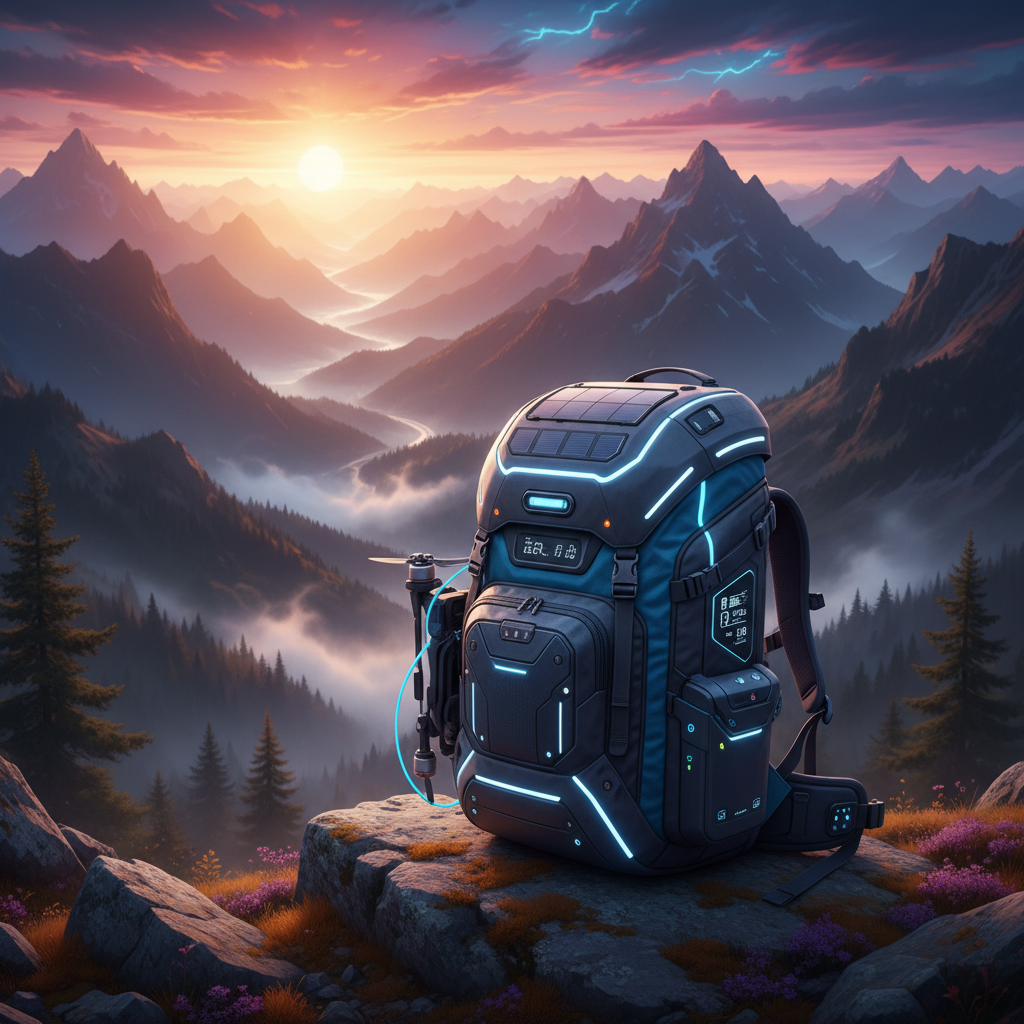
One of the most powerful applications of AI in this space is its ability to seamlessly place camping, hiking, and outdoor gear in nature settings. Imagine a tent pitched perfectly under a starry sky, or a backpack leaning against a moss-covered rock, all created from your office. This capability addresses a core challenge for how outdoor brands create scenic product photos without field shoots.
It’s not just about slapping a product onto a background; it’s about intelligent integration. The AI understands how light would fall on the product in that specific environment, how shadows would be cast, and how textures would interact. This results in AI for e-commerce outdoor product visuals that look incredibly natural and engaging, making it easier to sell everything from high-tech hiking boots to rugged luggage product photography.
Choosing the Best AI Tools for Outdoor Gear Photography
Selecting the best AI tools for outdoor gear photography depends on your specific needs, budget, and technical comfort level. There’s a growing ecosystem of platforms, from sophisticated enterprise-level solutions to more user-friendly AI software for wilderness product shots. When evaluating options, consider the realism of the output, the ease of use, the variety of outdoor backdrops available, and the level of control you have over lighting and composition.
Some tools excel at generating outdoor product backgrounds with AI, while others offer more robust features for AI for placing camping hiking and outdoor gear in nature settings. Look for platforms that allow for fine-tuning and offer good integration with existing workflows. For those looking to quickly create images and experiment with different styles, finding a powerful image generator is a crucial step.
Case Study: Trailblazer Gear’s Virtual Launch
Situation: Trailblazer Gear, a small startup specializing in eco-friendly hiking backpacks, faced a common dilemma. They had a fantastic new product line but a shoestring budget for marketing. Traditional photoshoots in their target wilderness locations were quoted at over $15,000, a sum they simply couldn’t afford for their initial launch. They needed aspirational outdoor lifestyle product content to compete with established brands.
Action: Instead of traditional photography, Trailblazer Gear invested in a subscription to a specialized generative AI photography platform. They uploaded high-resolution 3D models of their backpacks and used the AI to generate over 50 unique outdoor scenes. They experimented with various times of day, weather conditions (sunny, overcast, misty), and iconic landscapes, placing their backpacks seamlessly into each. They even used AI for luggage product photography to showcase a travel-friendly version in airport and urban-nature settings.
Result: Within two weeks, Trailblazer Gear had a rich library of stunning, high-quality adventure product visuals that looked indistinguishable from professionally shot photos. Their marketing team used these images across their website, social media, and paid ads. Their launch campaign achieved a 3x higher click-through rate compared to previous campaigns that used basic studio shots, and their conversion rate for the new product line saw an impressive 25% increase in the first month. They estimated saving over $12,000 on photography costs alone.
Common Mistakes That Are Costing You Results

Even with powerful AI tools, it’s easy to fall into traps that undermine the quality and effectiveness of your AI outdoor product photography. Avoid these common pitfalls to maximize your results.
Overlooking Lighting and Shadows
One of the biggest giveaways that an image is AI-generated (and not in a good way) is inconsistent lighting and shadows. Many brands simply place a product onto an AI-generated background without properly adjusting the product’s light source and shadows to match the scene. This creates an unnatural, “pasted-on” look. Always ensure your AI tool can accurately simulate environmental lighting and cast realistic shadows that integrate the product seamlessly into the scene.
Neglecting Product Scale and Perspective
Another frequent mistake is failing to match the product’s scale and perspective to the background. A backpack that looks too large or too small for the environment, or a water bottle that appears to be floating due to incorrect perspective, immediately breaks immersion. Pay close attention to the relative size of your product within the chosen scene and adjust angles and focal lengths to maintain a natural sense of depth and proportion.
Relying on Generic Prompts
While AI is powerful, it’s only as good as the input it receives. Relying on generic prompts like “mountain background” will yield generic results. To create truly unique and aspirational outdoor lifestyle product content, you need to be specific with your prompts. Describe the mood, the weather, the time of day, specific geological features, and even the type of foliage. The more detailed your prompt, the more tailored and compelling your AI for nature product backdrops will be.
Frequently Asked Questions

1. What is AI outdoor product photography?
AI outdoor product photography is the use of artificial intelligence to generate or enhance images of outdoor products, placing them realistically into scenic natural environments without the need for physical photoshoots. It leverages generative AI photography to create compelling adventure product visuals.
2. How does AI create realistic outdoor product images?
AI creates realistic outdoor product images by using advanced algorithms, often trained on vast datasets of real photos, to understand and replicate lighting, shadows, textures, and environmental interactions. It can seamlessly integrate a product into a generated or existing outdoor backdrop, adjusting elements to ensure a natural appearance.
3. Why should outdoor brands use AI for product visuals?
Outdoor brands should use AI for product visuals to save significant costs and time associated with traditional photoshoots, gain immense creative flexibility, and rapidly generate high-quality, aspirational outdoor gear visualization that drives engagement and sales in a competitive e-commerce landscape.
4. What are the benefits of using AI for adventure product photography?
The benefits include reduced costs, faster time-to-market, unlimited creative iterations for virtual product photography, consistent brand imagery, and the ability to showcase products in diverse, aspirational outdoor settings that resonate deeply with target customers.
5. How to choose the best AI tools for outdoor gear photography?
To choose the best AI tools for outdoor gear photography, evaluate platforms based on the realism of their output, ease of use, variety of outdoor backdrops, control over lighting and composition, and integration capabilities. Look for AI software for wilderness product shots that aligns with your specific creative and technical needs.
Why I Disagree With the “AI Will Replace Photographers” Hype
Most people jump to the conclusion that AI will completely replace human photographers, especially in specialized fields like outdoor product photography. I think that’s wrong because while AI is incredible for generating backgrounds and staging, the true artistry, storytelling, and nuanced understanding of a brand’s vision still require a human touch. AI is a powerful assistant, an AI image creation engine, but it’s not a creative director. The best results come from a skilled individual guiding the AI, refining prompts, and making artistic decisions that a machine simply can’t replicate. It augments, it doesn’t obliterate.
If you’re still relying solely on traditional methods, you’re missing a massive opportunity to scale your visual content. Pick one thing from this list—like experimenting with an AI for product mockups tool—and try it this week. That’s it. You’ll see the difference.