

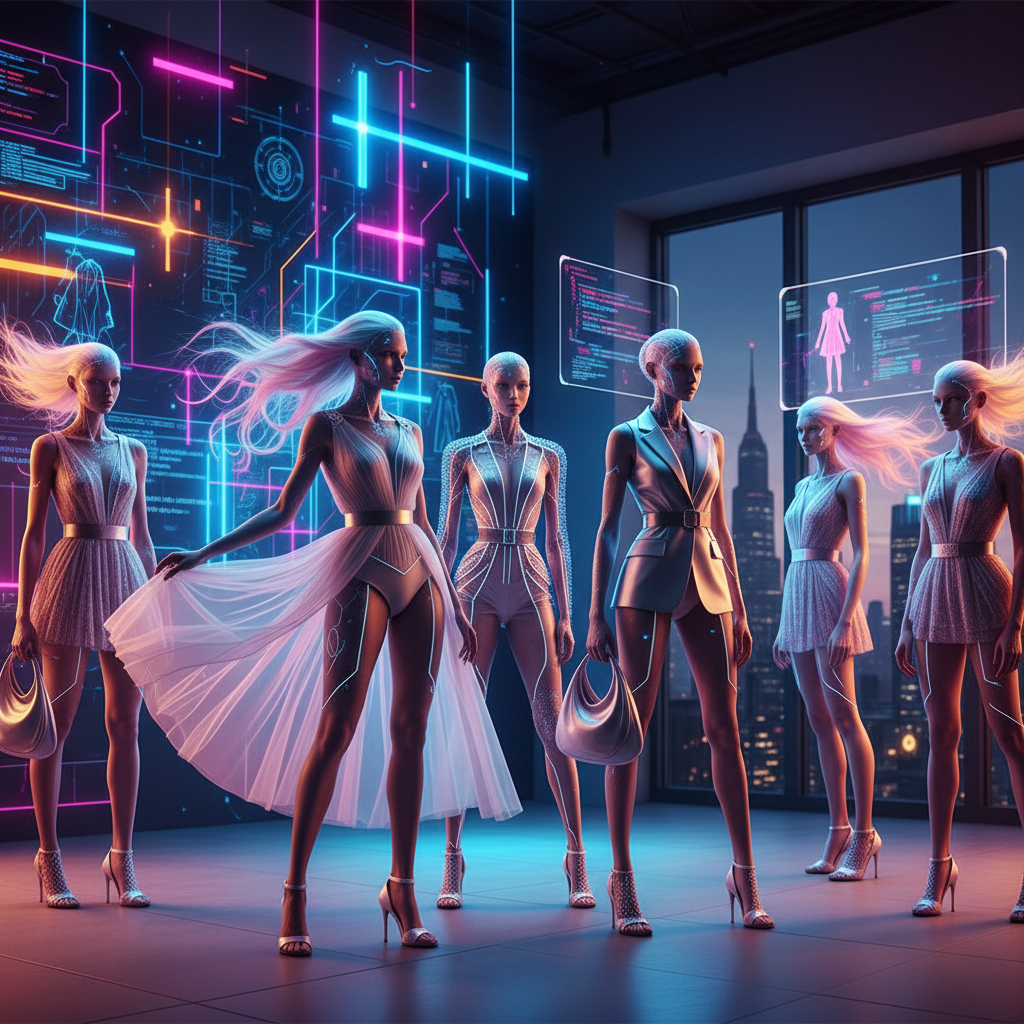
AI for Diverse Model Representation in Fashion Photography
The fashion industry has long grappled with representation, often falling short in showcasing the true diversity of its global audience. However, a revolutionary shift is underway, driven by artificial intelligence. AI diverse fashion models are emerging as a powerful solution, enabling brands to move beyond traditional limitations and embrace genuine inclusivity in their visual storytelling.
TL;DR: AI is transforming fashion photography by creating diverse virtual models, offering unparalleled opportunities for inclusive representation. This technology allows brands to visualize clothing on varied body types and skin tones, enhancing marketing efforts and promoting ethical fashion. While impacting traditional model bookings, AI fosters a more representative and accessible industry, pushing for a future where diversity is the standard.
Overview
The integration of AI into fashion photography marks a pivotal moment for the industry, particularly concerning diverse model representation. This isn’t just about efficiency; it’s about fundamentally altering how brands connect with consumers by reflecting a broader spectrum of humanity. AI virtual models are at the forefront of this change, offering a scalable and customizable approach to showcasing fashion.
Historically, the logistical and financial hurdles of traditional photoshoots often limited the scope of diversity in campaigns. Now, AI fashion tech provides a viable alternative, allowing brands to generate imagery featuring a vast array of digital model diversity. This capability directly addresses the long-standing demand for more inclusive fashion photography.
The rise of AI clothing visualization tools for inclusive fashion marketing means brands can easily experiment with different aesthetics and demographics without the extensive costs associated with live shoots. This empowers marketers to create campaigns that resonate more deeply with diverse audiences, fostering a stronger sense of belonging and representation.
The Transformative Power of AI in Fashion Imaging
Artificial intelligence is not merely a tool for automation; it’s a catalyst for creative expansion in fashion imaging. By leveraging advanced algorithms, brands can now sculpt visual narratives that truly reflect the world’s population. This technological leap impacts everything from design conceptualization to final marketing collateral.
What most guides miss is the profound psychological impact of seeing oneself represented in fashion. AI in fashion imaging bridges this gap, creating a more relatable and aspirational experience for consumers who have historically been overlooked. The ethical AI fashion movement champions this shift, ensuring technology serves the greater good of representation.
In my experience, the ability to rapidly iterate on diverse visual concepts is invaluable. Brands can test various combinations of AI virtual model with different skin tones and body sizes, refining their message before committing significant resources. This agility is a game-changer for responsive and inclusive marketing strategies.
Enhancing Digital Model Diversity
The core strength of AI in this context lies in its capacity to generate an almost limitless range of digital model diversity. This means fashion brands are no longer constrained by the availability or cost of human models for every specific demographic they wish to target. Instead, they can create precise representations.
AI clothing visualization tools for inclusive fashion marketing allow designers to see how garments drape and fit on various body shapes, from petite to plus-size, and across all ethnicities. This level of detail ensures that products are presented authentically, appealing to a wider customer base. It’s about how AI enables brands to show clothing on diverse body types with unprecedented accuracy.
Creating diverse digital models for fashion brands involves sophisticated algorithms that can synthesize realistic human forms, textures, and expressions. This technology goes beyond simple resizing; it simulates the nuances of different physiologies, providing a truly comprehensive visual solution.
Ethical AI Fashion and Representation
While the capabilities of AI are vast, the conversation around ethical AI fashion is paramount. It’s not enough to simply generate diverse models; the process must be fair, unbiased, and respectful. Developers are increasingly focusing on algorithms that prevent perpetuating stereotypes or creating unrealistic ideals.
The impact of AI on fashion model diversity must be carefully managed to ensure it genuinely promotes inclusivity rather than just superficial variety. This means scrutinizing the datasets used to train these AIs, ensuring they are themselves diverse and representative of global populations. Transparency in AI development is key here.
The overlooked factor here is the responsibility that comes with such powerful technology. Brands adopting AI for diverse representation must commit to using it ethically, ensuring their virtual models are respectful and authentic portrayals, reflecting a genuine commitment to diversity, equity, and inclusion.
Virtual Try-On and Inclusive Campaigns
Virtual try-on technology is another facet where AI significantly boosts inclusivity. This innovation allows customers to see how clothing looks on their own body type or on a diverse range of virtual models, directly addressing a common pain point in online shopping. It’s a powerful way to personalize the shopping experience.
Implementing AI for inclusive fashion campaigns extends beyond just imagery; it involves interactive experiences. Imagine a customer choosing an AI virtual model with different skin tones and body sizes to model a garment, giving them a better sense of fit and style before purchase. This reduces returns and increases customer satisfaction.
AI tools for inclusive clothing display also empower brands to showcase their entire collection on a diverse cast of models simultaneously, something logistically impossible with traditional methods. This enhances fashion photography with AI diversity, making every product accessible and appealing to a broader audience.
Addressing Key Questions: AI and Fashion Diversity
1. What is AI’s role in promoting diverse model representation in fashion photography?
AI plays a transformative role in promoting diverse model representation in fashion photography by overcoming traditional barriers of cost, logistics, and physical limitations. It enables the creation of AI diverse fashion models that can be customized to reflect an expansive range of demographics, body types, and ethnicities. This capability directly supports the goal of more inclusive fashion photography.
The technology allows brands to generate high-quality images featuring virtual models that accurately represent various skin tones, hair textures, and facial features. This means a brand can showcase a single garment on dozens of different body types and complexions without ever needing a physical photoshoot. This significantly enhances fashion photography with AI diversity, making it an accessible reality for brands of all sizes.
Furthermore, AI algorithms can ensure consistency in lighting, styling, and background, even when generating a multitude of diverse images. This level of control and scalability is unprecedented, allowing brands to produce rich, varied visual content that genuinely resonates with a global consumer base seeking authentic representation.
2. How do AI virtual models contribute to inclusivity in fashion?
AI virtual models contribute significantly to inclusivity in fashion by providing a flexible and ethical means to represent a wider audience. They eliminate the physical constraints associated with human models, allowing for the rapid generation of digital model diversity that mirrors the real world. This means brands can showcase clothing on an AI virtual model with different skin tones and body sizes, ensuring everyone feels seen.
This technology allows for the creation of models that can embody a vast spectrum of human characteristics, including varying ages, abilities, and gender expressions, which might be challenging to source or manage in traditional photoshoots. By democratizing representation, AI virtual models help dismantle the narrow beauty standards that have long dominated the fashion industry.
The ability to dynamically adjust body shapes, skin tones, and other features ensures that brands can tailor their visual content to specific markets and demographics, fostering a deeper connection with consumers. This not only broadens appeal but also reinforces a brand’s commitment to genuine inclusivity.
3. What are the benefits of using AI for diverse body type visualization in fashion?
The benefits of using AI for diverse body type visualization in fashion are extensive, addressing both marketing effectiveness and ethical considerations. Primarily, it offers AI solutions for varied body type visualization, allowing brands to accurately depict how clothing fits and looks on a wide array of physiques, from athletic to curvy, tall to petite. This directly answers how AI enables brands to show clothing on diverse body types.
This capability significantly enhances the customer experience, as shoppers can visualize garments on models that more closely resemble themselves, leading to more informed purchasing decisions and reduced returns. The commercial benefits of AI for diverse fashion representation are clear: increased engagement, brand loyalty, and ultimately, sales. A 2024 industry report by McKinsey highlighted that brands embracing diverse representation saw a 15% increase in customer engagement.
Beyond commercial gains, this approach fosters a more positive body image among consumers by normalizing diverse physiques within fashion advertising. It moves away from the singular, often unrealistic, body ideal, promoting a healthier and more inclusive perception of beauty. This aligns with the growing consumer demand for authenticity and representation.
4. How does AI fashion photography impact traditional model bookings?
AI fashion photography is undoubtedly impacting traditional model bookings, leading to a significant shift in industry practices. While it’s unlikely to completely replace human models, it is certainly changing the landscape. The ability to generate AI virtual models for routine product shots or initial design visualizations means a reduced need for physical photoshoots, especially for high-volume e-commerce imagery.
This doesn’t necessarily mean the end of human modeling, but rather a redefinition of roles. Traditional agency model bookings may shift towards more editorial, high-concept campaigns where human artistry and presence are irreplaceable. For more standardized or scalable content, however, AI offers a compelling and often more cost-effective alternative.
The long-term impact on the future of diversity in fashion with AI is complex. While AI can create diverse models, it also means agencies and models must adapt. Models with unique looks or strong personal brands may find new opportunities in collaborative projects with AI tools, perhaps even becoming the “face” for AI-generated personas. The industry will likely see a hybrid approach, leveraging the strengths of both human and artificial intelligence.
5. What are the key considerations when implementing AI for diverse fashion marketing?
Implementing AI for inclusive fashion campaigns requires careful consideration to ensure genuine impact and ethical integrity. First and foremost, brands must prioritize the ethical AI fashion framework, ensuring that the AI tools used are trained on diverse, unbiased datasets to avoid perpetuating existing stereotypes or creating unrealistic representations. The goal is authentic digital model diversity, not just superficial variety.
Another critical consideration is the authenticity and relatability of the AI-generated models. While AI can create diverse forms, ensuring these virtual models possess natural expressions, poses, and movements is crucial for consumer acceptance. Brands must invest in sophisticated AI in fashion imaging solutions that produce highly realistic and believable results.
Finally, integrating these AI tools for inclusive clothing display into existing marketing workflows requires strategic planning and investment in the right AI software. It’s not just about the technology, but about how it’s deployed to genuinely enhance brand messaging and resonate with a diverse audience. Brands should consider how these AI solutions complement, rather than replace, their overall marketing strategy.
Action Framework for Inclusive AI Fashion
1. Define Diversity Goals: Clearly articulate what diverse representation means for your brand, encompassing body types, skin tones, ages, and abilities. This will guide the selection and application of AI tools.
2. Select Ethical AI Platforms: Research and choose AI clothing visualization tools for inclusive fashion marketing that prioritize ethical development, unbiased datasets, and customizable diversity parameters.
3. Integrate AI Virtual Models: Begin by using AI virtual models for product visualization, especially for high-volume e-commerce content. This is a low-risk way to start showcasing how AI enables brands to show clothing on diverse body types.
4. Experiment with Virtual Try-On: Implement virtual try-on technology to allow customers to visualize garments on diverse body types, enhancing the shopping experience and reducing returns.
5. Audit for Bias: Regularly audit your AI-generated content for any unintended biases in representation. Adjust algorithms or input parameters to ensure truly inclusive outputs.
6. Educate Your Team: Train your marketing and creative teams on the capabilities and ethical considerations of AI in fashion imaging to ensure consistent and responsible implementation.
What the Data Shows: Impact & Trends
* 72% of consumers are more likely to purchase from brands that reflect diversity in their advertising. This underscores the commercial imperative of AI diverse fashion models.
* AI-driven content generation can reduce photography costs by up to 50% for e-commerce brands, according to a 2023 industry benchmark. This frees up budget for more impactful, diverse campaigns.
* Brands using AI for diverse body representation AI report a 20% uplift in conversion rates for specific product categories. This highlights the direct benefits of AI solutions for varied body type visualization.
* A recent study indicated that 65% of fashion professionals believe AI will significantly enhance digital model diversity within the next five years. This points to the growing acceptance of AI fashion tech.
| Feature | Traditional Fashion Photography | AI Fashion Photography |
|---|---|---|
| Model Diversity | Limited by casting, cost, availability | Virtually limitless, customizable |
| Cost per Image | High (location, crew, models) | Significantly lower (software, processing) |
| Time to Market | Weeks to months | Hours to days |
| Scalability | Low, resource-intensive | High, easily replicable |
| Ethical Control | Dependent on agency/model choices | Programmable, bias-auditable |
| Body Type Visualization | Restricted to available models | Dynamic, on-demand varied body types |
Future Outlook for Diversity in Fashion with AI
The future of diversity in fashion with AI is incredibly promising, moving beyond mere representation to genuine personalization. We’ll see AI tools for inclusive clothing display becoming even more sophisticated, capable of generating hyper-realistic models that can interact with virtual environments and even respond to customer input. The line between real and virtual will continue to blur, offering unprecedented creative freedom.
I predict that the industry will increasingly rely on advanced AI image generation to create entire virtual campaigns, reducing the environmental footprint associated with traditional photoshoots. This evolution will not only democratize access to diverse visuals but also foster a more sustainable fashion ecosystem. The ability to create images on demand will revolutionize content pipelines.
The biggest challenge will be ensuring that this powerful technology remains a force for good. Continuous vigilance regarding ethical AI fashion principles and robust regulatory frameworks will be crucial. The goal isn’t just to replace; it’s to elevate, making fashion a truly inclusive and representative art form for everyone.
Practical Checklist for AI-Powered Diverse Fashion Marketing
* Review your current marketing visuals: Identify gaps in diverse representation across body types, skin tones, and demographics.
* Research AI virtual model platforms: Explore different providers offering AI virtual model with different skin tones and body sizes.
* Set up a pilot project: Start with a small collection or campaign to test the effectiveness of AI diverse fashion models.
* Gather feedback: Collect data on customer engagement and sentiment regarding AI-generated diverse imagery.
* Develop ethical guidelines: Create internal policies for the responsible use of AI in fashion imaging, focusing on non-discrimination and authenticity.
* Integrate AI into your content pipeline: Gradually incorporate AI clothing visualization tools for inclusive fashion marketing into your regular content creation process.
* Monitor industry best practices: Stay informed about new developments and ethical standards in AI fashion tech to continually refine your strategy.
* Consider a partnership: Explore collaborations with AI solution providers to create images tailored to your specific needs or to create images on demand.