

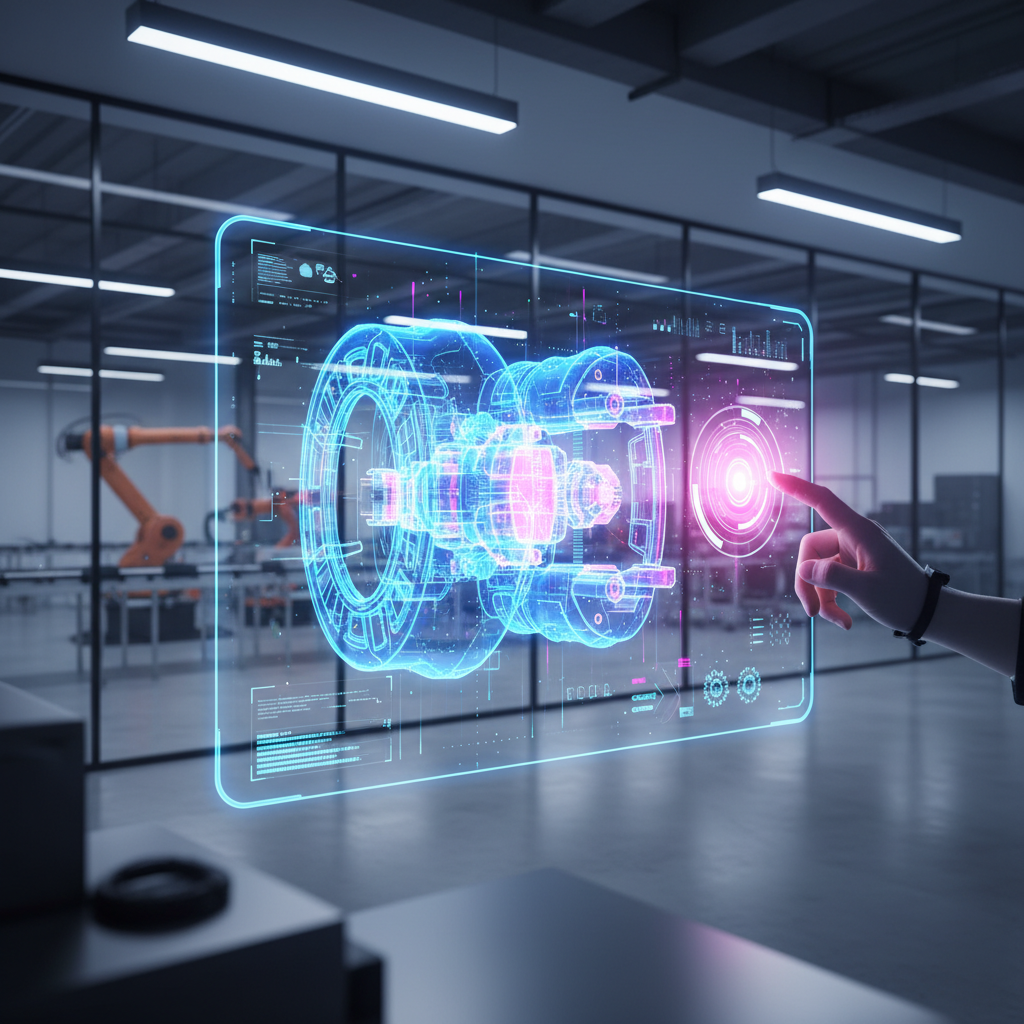
AI Digital Twin Visualization: The Strategy That Changed Everything
I remember the days of lugging heavy product samples to trade shows, setting up elaborate booths, and hoping a few key decision-makers would stop by. It was exhausting, expensive, and frankly, often ineffective. We’d spend weeks preparing, only to find our physical prototypes couldn’t convey the full complexity or customizability of our industrial offerings. It felt like we were always playing catch-up, trying to explain innovation with outdated methods. The sheer scale and intricate workings of our machinery were impossible to fully grasp from a static display or a glossy brochure. This often led to prolonged sales cycles, multiple follow-up meetings, and a significant drain on resources.
In this post, you’ll discover how AI digital twin visualization is revolutionizing B2B and industrial product showcases, learn why this technology is no longer a luxury but a necessity, and get actionable strategies for implementing immersive product experiences — all backed by real-world examples from my own journey. We’ll explore how this advanced form of digital twin technology can transform everything from product design and prototyping to sales and customer engagement, offering a competitive edge in an increasingly visual and data-driven market.
Why Your B2B Product Demos Need a Digital Overhaul Now

The landscape of B2B sales and industrial marketing has fundamentally shifted. The days of static images and lengthy technical specifications alone are over. Buyers, especially in complex B2B environments, expect more. They want to interact, customize, and truly experience a product before committing. We’re seeing a clear trend: companies that offer dynamic, engaging product experiences are closing deals faster and with higher confidence. This isn’t just about looking good; it’s about solving real problems for your customers before they even make a purchase, addressing their specific needs and concerns through direct interaction.
The urgency stems from a heightened demand for clarity and customization. With global supply chains, increasingly intricate product lines, and a remote-first sales environment, demonstrating value effectively is paramount. Many businesses are still making the mistake of relying on traditional brochures or basic 3D renders, which simply don’t cut it when you’re trying to showcase a multi-million-dollar industrial machine or a highly configurable B2B solution. A recent industry report indicated that B2B buyers are 3x more likely to engage with interactive content than static content. Embracing AI digital twin visualization isn’t just a competitive edge; it’s becoming the baseline expectation for serious players in the market, allowing for unparalleled B2B product rendering that truly captures the essence and functionality of complex offerings. This shift is crucial for enhancing B2B sales with AI product visualization, moving beyond passive viewing to active, personalized engagement.
What Exactly is AI Digital Twin Visualization for B2B?
AI digital twin visualization refers to the creation of highly accurate, interactive virtual replicas of physical products, systems, or processes, enhanced by artificial intelligence to provide dynamic, real-time insights and unparalleled visual fidelity. It’s more than just a 3D model; it’s a living, breathing digital counterpart that can simulate performance, respond to user input, and even predict outcomes, making it ideal for complex industrial and B2B product rendering. Unlike traditional static models, an AI digital twin is continuously updated with data from its physical counterpart, allowing it to accurately reflect current conditions, performance metrics, and even potential future states. This sophisticated digital twin technology bridges the gap between the physical and digital worlds, offering a comprehensive and dynamic view of your products.
This advanced form of digital twin technology allows B2B brands to move beyond static representations, offering a dynamic and engaging way to present intricate products. Think of it as bringing your product to life in a virtual space, where potential clients can explore every angle, component, and operational scenario. For industrial sectors, this means being able to visualize everything from a new factory layout to the internal workings of a bespoke machine, all without the need for costly physical prototypes. It provides a level of detail and interactivity that was previously unimaginable, enabling AI product visualization that truly resonates with technical buyers.
The Power of AI in Product Visualization
The “AI” in AI digital twin visualization is the game-changer. Artificial intelligence algorithms enable these digital twins to be incredibly smart. They can analyze vast datasets from sensors on the physical product, learn from real-world performance, and even generate variations or configurations on the fly based on user specifications or predictive models. This capability is crucial for AI product visualization, especially when dealing with highly customizable industrial products or complex systems that require real-time adjustments and scenario planning. For example, an AI-powered digital twin could simulate how a change in material affects a machine’s stress tolerance or predict maintenance needs based on operational data. AI can also power intelligent search and interaction within these virtual environments, making navigation intuitive and allowing users to ask natural language questions about the product, receiving immediate visual and data-driven answers. This transforms how B2B brands use AI 3D visualization for product catalogs, making them truly dynamic and intelligent.
Beyond Basic 3D: Immersive Product Experiences
Traditional 3D modeling has its place, but it often lacks the interactivity and intelligence that modern buyers demand. AI 3D modeling takes this to the next level by allowing for dynamic adjustments, material changes, and even functional simulations within the virtual environment. This creates truly immersive product experiences, where users can manipulate components, test different configurations, and understand the product’s value proposition in a hands-on, engaging way. Imagine a prospect not just seeing a pump, but being able to virtually adjust its flow rate, observe the internal fluid dynamics, and see the immediate impact on energy consumption. For B2B product visualization solutions with AI, this means moving from passive viewing to active engagement, significantly impacting sales cycles by building deeper understanding and confidence. This level of interaction is vital for demonstrating complex industrial machinery, allowing potential clients to virtually “kick the tires” and ensure the product meets their exact specifications.
Why Industrial Sectors Are Embracing AI Product Visualization
Industrial sectors, with their inherently complex machinery, vast facilities, and highly specialized components, stand to gain immensely from AI digital twin applications for industrial products. The ability to virtually represent and interact with large-scale assets or intricate systems without physical constraints is a monumental leap forward. This technology minimizes the need for costly physical prototypes, which can run into millions of dollars for heavy machinery, and allows for rapid iteration in design and engineering. It also enables industrial visualization AI to provide unprecedented insights into operational efficiency and predictive maintenance, extending beyond just sales and marketing.
Consider the challenges of showcasing a new line of heavy machinery or a sophisticated manufacturing plant. Traditional methods involve significant logistical hurdles and expenses, often requiring potential clients to travel to a physical site or for the manufacturer to transport bulky equipment. Industrial visualization AI provides a powerful solution, enabling detailed exploration and demonstration of these products remotely, from any corner of the globe. This is particularly beneficial for global sales teams who need to present complex solutions to clients across different continents, offering a consistent, high-quality, and deeply interactive experience every time. It also allows for the visualization of products that are too large, too dangerous, or not yet built, providing a critical advantage in a competitive market.
Streamlining Virtual Product Prototyping
One of the most significant benefits of AI digital twins in industrial design is the acceleration of virtual product prototyping. Before AI, creating a digital prototype was a painstaking process, often requiring manual adjustments and extensive rendering times, followed by expensive physical builds for testing. With AI, designers can rapidly iterate on designs, test performance parameters under various simulated conditions, and even identify potential flaws or inefficiencies in a virtual environment before any physical material is committed. This drastically reduces development costs, shortens design cycles, and speeds up time-to-market for new industrial products. For instance, an automotive manufacturer can use an AI digital twin to simulate crash tests or aerodynamic performance, making design adjustments in real-time based on the AI’s analysis, saving millions in physical testing.
| Feature | Traditional Prototyping | AI Digital Twin Prototyping |
|---|---|---|
| Cost | High (materials, labor, shipping, specialized testing equipment). Can easily reach millions for complex industrial machinery. | Low (software licenses, computing power, specialized AI tools). Significant savings on physical resources. |
| Speed | Slow (physical construction, manual testing, iterative rebuilds). Each iteration can take weeks or months. | Fast (rapid iteration, real-time simulation, AI-driven design adjustments). Iterations can occur in hours or days. |
| Flexibility | Limited (physical changes are costly and time-consuming, often requiring new builds). | High (instant design modifications, material changes, and performance parameter adjustments with AI assistance). |
| Accuracy | Dependent on physical build quality and controlled testing environments. | High (data-driven, real-time feedback from AI models, capable of simulating complex physics and real-world conditions). |
| Collaboration | Challenging (physical presence often required, limited real-time interaction for remote teams). | Seamless (shared virtual environment allows global teams to collaborate on designs and simulations simultaneously). |
AI for Manufacturing Visualization and Interactive Demos
AI for manufacturing visualization extends beyond just product design. It allows companies to simulate entire production lines, optimize workflows, predict equipment failures, and even train personnel in a safe, virtual environment before any physical changes are made. This predictive capability, powered by AI, can lead to significant reductions in downtime and increases in efficiency. When combined with interactive product demos, this creates a powerful tool for both internal optimization and external sales. Imagine a potential client being able to virtually walk through a factory floor, seeing how a new machine integrates and performs, how it interacts with other equipment, and how it impacts the overall production flow, all before a single bolt is turned. This level of detail and engagement is invaluable for AI tools for showing product assembly and usage with 3D visuals, offering a comprehensive understanding that static presentations simply cannot match. It also allows for the creation of AI for creating technical product documentation visual aids that are dynamic and interactive, making complex operational manuals much easier to digest.
Enhancing B2B Sales with Immersive Product Experiences
The sales cycle in B2B is often long and complex, requiring multiple touchpoints and comprehensive product understanding. Enhancing B2B sales with AI product visualization can dramatically shorten this cycle by providing unparalleled clarity and engagement from the outset. Instead of relying on static images or lengthy presentations, sales teams can leverage interactive product demos that allow prospects to virtually explore, customize, and even operate a product. This fosters a deeper understanding, builds trust, and accelerates the decision-making process. A study by Accenture found that companies using immersive technologies for sales saw a 20-30% increase in customer engagement.
For instance, imagine a salesperson demonstrating a complex piece of medical equipment, a specialized industrial robot, or a bespoke energy solution. With an AI digital twin visualization, they can highlight specific features, show internal mechanisms, simulate various operational scenarios under different loads, and even demonstrate maintenance procedures, all in real-time. This is far more impactful than describing features from a brochure. It’s about letting the product speak for itself, virtually, and allowing the client to see their specific problem being solved by your specific solution. This personalized, hands-on approach is a game-changer for immersive product experiences in B2B sales.
Visual Product Configurators for Custom Orders
Many B2B products, especially in industrial settings, are highly customizable, with hundreds or even thousands of possible configurations. This is where visual product configurators shine, particularly when powered by AI. These tools allow customers to select options, change specifications (e.g., dimensions, materials, power output), and see the immediate visual and functional impact of their choices in real-time. For AI product configuration visualization for custom order ecommerce, this means a seamless and accurate ordering process, significantly reducing errors, miscommunications, and improving customer satisfaction. This capability is a huge selling point for brands that offer bespoke solutions, allowing clients to virtually “build their own” product and see it come to life before their eyes, validating their choices instantly.
When it comes to building your own powerful tools for these kinds of visualizations, exploring various AI tools can be incredibly beneficial for speeding up development and enhancing capabilities. These tools can automate the generation of complex 3D models from design specifications, integrate with existing CAD systems, and even suggest optimal configurations based on user input and historical data, making the entire process more efficient and intelligent.
How B2B Brands Use AI 3D Visualization for Product Catalogs
Gone are the days of printing thousands of expensive catalogs that quickly become outdated. How B2B brands use AI 3D visualization for product catalogs involves creating dynamic, digital catalogs that are always current and highly interactive. These aren’t just collections of images; they’re living showcases where each product can be explored in 3D, rotated, zoomed, configured, and even animated to show its functionality. This approach also allows for AI for creating technical product documentation visual aids, making complex manuals easier to understand through interactive diagrams, exploded views, and step-by-step assembly animations. Imagine a maintenance technician being able to access an interactive 3D model of a machine part, complete with real-time data overlays and animated repair instructions, directly from their tablet. This significantly reduces training time and improves operational efficiency. These digital catalogs can be easily updated, personalized for specific clients, and accessed globally, providing a consistent and superior product experience.
Implementing AI for Virtual Product Showcases

Implementing AI for virtual product showcases might seem daunting, but the strategic benefits far outweigh the initial effort. The key is to start with a clear understanding of your most critical visualization needs and gradually scale your efforts. Begin by identifying products that would benefit most from an AI digital twin visualization, perhaps those with high complexity, frequent customization, or significant sales challenges. A phased approach allows you to learn, refine, and demonstrate ROI before a full-scale rollout. It’s crucial to align this implementation with your overall digital transformation strategy, ensuring that the technology serves clear business objectives.
The process often involves leveraging specialized AI tools for showing product assembly and usage with 3D visuals. These tools can take existing CAD data, engineering schematics, and performance data, then transform them into interactive, AI-powered models. This might involve using AI to optimize mesh geometry for real-time rendering, automate texture mapping, or even generate animations of product functions. Training your sales and marketing teams on how to effectively utilize these new virtual assets is also crucial for successful adoption. It’s not just about the technology; it’s about integrating it into your existing workflows, sales scripts, and customer engagement strategies to maximize its impact. This includes developing clear guidelines for demonstrations, creating compelling narratives around the digital twins, and collecting feedback for continuous improvement.
The Future of AI in Industrial Product Marketing
The future of AI in industrial product marketing is bright and rapidly evolving. We’re moving towards even more sophisticated immersive product experiences where virtual reality (VR) and augmented reality (AR) seamlessly integrate with AI digital twins. Imagine a client wearing a VR headset and walking around a new industrial facility that hasn’t even been built yet, interacting with machines, testing workflows, and even collaborating with engineers in a fully simulated environment. This level of engagement will become the norm, not the exception, offering unprecedented opportunities for pre-sales engagement, facility planning, and remote training. Furthermore, AI will enable digital twins to become even more autonomous, predicting market trends, suggesting product improvements based on simulated customer feedback, and even optimizing marketing campaigns by identifying the most effective visual narratives.
The ability to easily create images and other visual assets with AI will also continue to democratize access to high-quality visualization, even for smaller B2B players. This means that sophisticated AI digital twin visualization will no longer be the exclusive domain of large enterprises, but an accessible tool for businesses of all sizes to innovate their product marketing and sales strategies.
How a Global Manufacturer Revolutionized Their Sales with Digital Twins
Situation: A leading global manufacturer of highly specialized industrial pumps faced significant challenges in demonstrating the unique benefits and customizability of their products. Their product line included pumps with hundreds of configurable options for materials, sizes, flow rates, and operational environments, making physical demonstrations impractical and costly. Their sales cycle was long, requiring costly on-site visits, shipping of physical demo units (which often weighed several tons), and extensive technical consultations. Prospects struggled to visualize how the pumps would integrate into their existing infrastructure and perform under specific conditions, leading to hesitation and extended decision-making. The company needed a way to provide detailed, interactive product experiences without the logistical nightmare and high costs associated with traditional methods.
Action: The manufacturer invested in an AI digital twin visualization platform. They started by creating high-fidelity digital twins of their most popular and complex pump models, leveraging existing CAD data and integrating real-world performance metrics. These digital twins were not just static 3D models; they incorporated real-time performance data from existing installations, allowed for dynamic configuration of components (material, size, flow rates, motor types), and even simulated operational scenarios under various environmental conditions (e.g., corrosive fluids, extreme temperatures, varying pressures). Their global sales team was equipped with rugged tablets and VR headsets to conduct interactive product demos remotely and at client sites. They also integrated these digital twins into their website, allowing potential customers to explore products independently through a sophisticated visual product configurator, which allowed them to generate custom quotes and specifications instantly. Furthermore, they used these digital twins for AI for creating technical product documentation visual aids, making complex operational manuals interactive and easier for clients to understand.
Result: Within the first year, the company saw a 30% reduction in their average sales cycle length, accelerating deal closures. Customer engagement during initial consultations increased by 50%, as prospects could immediately see and interact with customized solutions tailored to their specific needs. The need for shipping physical demo units was almost entirely eliminated, saving the company an estimated $1.2 million annually in logistics and travel costs. Furthermore, their sales conversion rate for custom orders improved by 15%, directly attributable to the clarity, confidence, and personalized experience provided by the AI-powered digital twins. The digital twins also became invaluable for internal training and design validation, further streamlining their operations. This success story clearly demonstrates the transformative power of AI digital twin applications for industrial products in a competitive B2B landscape.
Common Mistakes That Are Costing You Visualization Results

Mistake 1: Treating Digital Twins as Just Fancy 3D Models
Most people say a digital twin is just a more detailed 3D model. I think that’s wrong because it fundamentally misunderstands the “twin” aspect. A true AI digital twin visualization isn’t merely a visual representation; it’s a dynamic, data-connected replica that mirrors its physical counterpart’s behavior and performance. Treating it as just a visual asset misses the opportunity for real-time data integration, predictive analytics, and simulation capabilities that drive actual business value. For example, a static 3D model can show what a machine looks like, but an AI digital twin can show how it’s performing right now, predict when it might need maintenance, or simulate the impact of a new operational parameter. Instead, focus on connecting your digital twin to operational data, integrating it with IoT sensors, and making it a tool for analysis, decision-making, and proactive problem-solving, not just display. This unlocks the true potential of digital twin technology.
Mistate 2: Overlooking User Experience in Interactive Demos
Many companies get caught up in the technology of AI product visualization and forget the human element. They create complex interactive product demos that are difficult for prospects to navigate or understand, overwhelming them with too many options or a clunky interface. This is a critical error. The goal of an immersive experience is to simplify, not complicate, the understanding of a complex product. If a prospect struggles to use your configurator or navigate your virtual showcase, the technology becomes a barrier rather than an enabler. Instead, prioritize intuitive interfaces, clear calls to action within the visualization, and guided tours that highlight key features and benefits. Test your demos with real users, gather feedback, and iterate to ensure they are engaging, easy to use, and effectively communicate the product’s value proposition, focusing on the customer’s journey through the product and their specific pain points.
Mistake 3: Not Integrating Visualization with Your Sales Workflow
Implementing a new B2B product visualization solution with AI is only half the battle. A common mistake is failing to fully integrate it into your existing sales and marketing workflows. It becomes a standalone “cool tool” rather than a core part of your strategy. For instance, if your sales team isn’t trained on how to leverage the digital twin in their presentations, or if the data generated from customer interactions (e.g., specific configurations explored, features zoomed into) isn’t captured and fed back into your CRM, you’re missing out on crucial insights. Instead, train your sales team extensively, provide clear guidelines on when and how to use the digital twins in presentations, and ensure the data generated from interactions (e.g., configurations, areas of interest) feeds back into your CRM. This ensures the visualization actively supports and enhances your sales efforts, providing valuable intelligence for follow-up and personalization, truly enhancing B2B sales with AI product visualization.
Frequently Asked Questions
1. What is AI digital twin product visualization?
AI digital twin product visualization is the creation of intelligent, interactive virtual replicas of physical products, systems, or processes, enhanced by artificial intelligence. These digital twins can simulate real-world performance, respond to user interactions, and offer dynamic insights, going far beyond static 3D models to provide truly immersive product experiences and real-time data integration.
2. How does AI enhance product visualization for B2B companies?
AI enhances B2B product visualization by enabling real-time configuration, predictive analytics, and automated content generation for complex products. It allows for highly customizable and interactive product demos, making it easier for B2B buyers to understand intricate solutions and visualize how products will integrate into their specific operations, ultimately enhancing B2B sales with AI product visualization.
3. Why is AI digital twin technology crucial for industrial sectors?
AI digital twin technology is crucial for industrial sectors because it facilitates virtual product prototyping, reduces the need for expensive physical models, and allows for detailed industrial visualization AI of large-scale machinery and complex systems. It streamlines design, manufacturing, and maintenance processes by providing a dynamic, data-rich virtual environment, offering significant benefits of AI digital twins in industrial design.
4. What are the primary benefits of using AI for 3D product visualization?
The primary benefits of using AI for 3D product visualization include accelerated design cycles, reduced prototyping costs, enhanced customer engagement through immersive product experiences, improved sales conversion rates, and the ability to create dynamic, personalized product catalogs and configurations. It transforms how products are presented and understood, offering superior B2B product visualization solutions with AI.
5. How can businesses effectively implement AI product visualization solutions?
Businesses can effectively implementing AI for virtual product showcases by starting with clear objectives, identifying key products for digital twinning, leveraging specialized AI tools for showing product assembly and usage with 3D visuals, and thoroughly training sales and marketing teams. Integration with existing sales workflows and continuous user feedback are also vital for success, ensuring a strategic and impactful rollout.
Why I Disagree With the “One-Size-Fits-All” Approach to AI Visualization
Most people say that when you implement AI digital twin visualization, you should aim for the most advanced, feature-rich solution right out of the gate. I think that’s wrong because it often leads to analysis paralysis, budget overruns, and ultimately, a solution that’s too complex or overwhelming for your immediate needs. My experience has shown that a phased, iterative approach yields far better results. Start with a focused application, perhaps for a single product line or a specific sales challenge, and then gradually expand its capabilities and scope as you learn and gain confidence. Trying to build the ultimate digital twin on day one, complete with every conceivable feature from real-time IoT integration to full VR immersion, is a recipe for frustration and potential failure. Instead, identify your most pressing pain point – perhaps it’s the cost of physical prototypes, or the difficulty of demonstrating complex configurations – and build a solution that addresses that specific need first.
This technology isn’t just a shiny new toy; it’s a strategic asset that can redefine how your business operates, from design and manufacturing to sales and customer service. It’s about smart, incremental innovation. Pick one thing from this post that resonated with you and try to implement it this week. That’s it. You’ll start to see the difference in how your products are perceived and how your sales conversations evolve, paving the way for a more comprehensive adoption of AI digital twin visualization across your enterprise.