

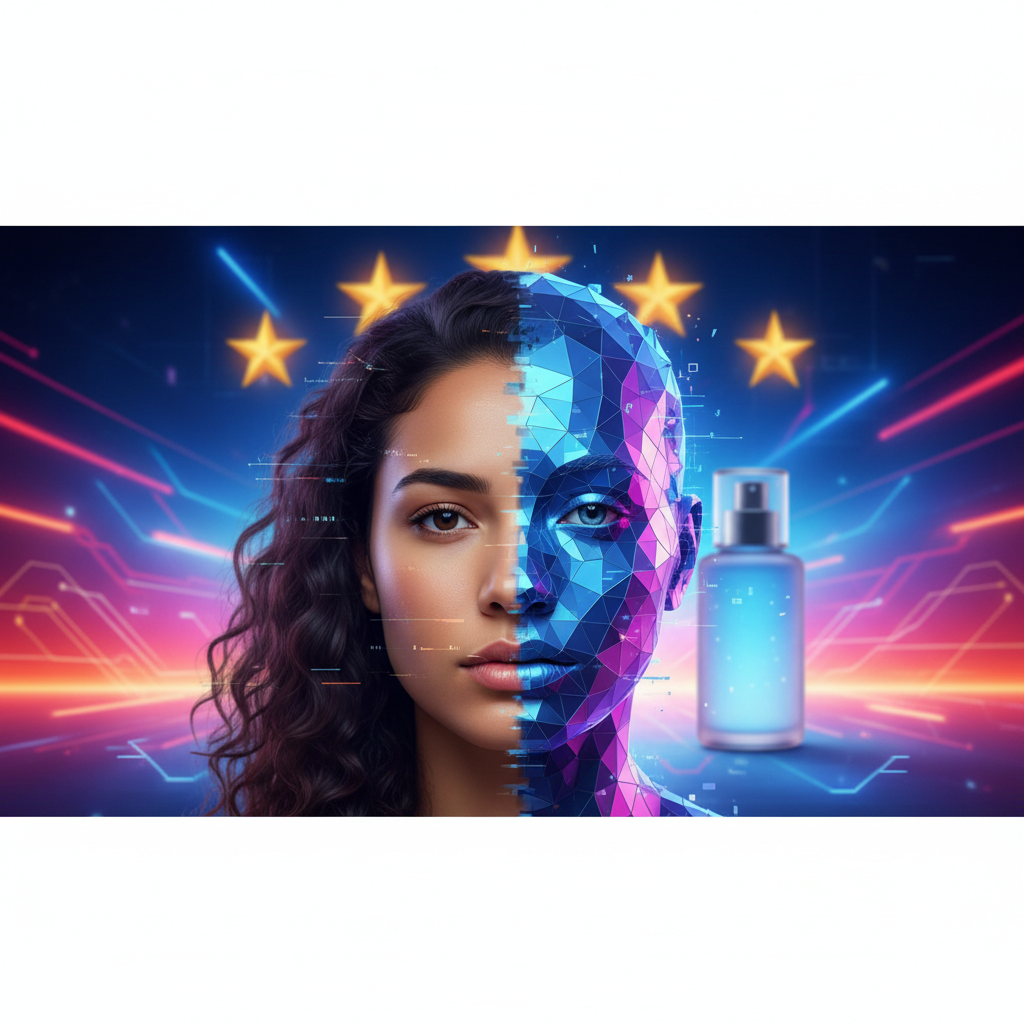
AI Deepfakes Product Testimonials: The Deception That’s Changing Everything
I remember the first time I saw a truly convincing deepfake. It wasn’t some Hollywood blockbuster; it was a seemingly innocuous product review on a social media feed. The person looked real, sounded real, and passionately vouched for a supplement that, frankly, seemed too good to be true. My gut screamed “fake,” but my eyes and ears were telling a different story. It was a jarring experience, a stark encounter with digital deception marketing, and it made me realize just how quickly the landscape of online trust is shifting. This wasn’t just a clever edit; it was sophisticated AI deepfake technology at play, creating fake endorsements AI-powered that could easily fool millions.
In this post, you’ll discover precisely how AI deepfakes create fake product testimonials, learn why this form of synthetic media fraud is a rapidly growing and insidious threat, and get actionable strategies to protect both your brand and your customers from the pervasive impact of misleading product reviews — all backed by real-world experience and a deep understanding of the evolving digital landscape. We’ll delve into the mechanics, the dangers, and most importantly, the solutions to safeguard your reputation and consumer confidence against this new wave of deception.
Why This Matters Now: The Erosion of Digital Trust

The digital world thrives on trust, especially when it comes to purchasing decisions. Consumers worldwide rely heavily on reviews, endorsements, and compelling before-and-after photos to guide their choices, often viewing them as unbiased proof of a product’s efficacy. But what happens when that trust is systematically undermined by advanced AI deepfake technology? We’re no longer talking about poorly Photoshopped images or easily detectable fake reviews written by bots; we’re talking about highly sophisticated synthetic media fraud that can generate entirely convincing video and audio content, fooling even a discerning eye. This isn’t a futuristic problem confined to sci-fi movies; it’s happening right now, eroding consumer trust AI-wide and forcing brands to reconsider their entire marketing integrity. The stakes are incredibly high, as misleading product reviews, particularly those powered by deepfakes, can damage a brand’s reputation beyond repair, leading to significant financial losses and a long-term struggle to regain credibility.
A recent study by Statista indicated that over 90% of consumers check online reviews before making a purchase. Imagine the catastrophic impact if a significant portion of these reviews were revealed to be fake, generated by AI. The rise of accessible AI tools has democratized content creation, but it has also opened the floodgates for bad actors. Companies and individuals with nefarious intentions are now leveraging these powerful capabilities to generate entirely fake endorsements AI-powered, creating a crisis of authenticity that demands immediate and decisive attention. If we don’t address this head-on, the very foundation of online commerce could crumble under the weight of widespread digital deception marketing, leaving consumers wary and legitimate businesses struggling to prove their authenticity. The impact of AI deepfakes on consumer trust is profound and far-reaching, necessitating a proactive approach from both industry and regulators.
How AI Deepfakes Are Being Used to Create Fake Product Testimonials

AI deepfakes product testimonials are being created by leveraging advanced artificial intelligence algorithms to generate highly realistic, yet entirely fabricated, video and audio content of individuals appearing to endorse products. This sophisticated process involves either manipulating existing media of real individuals or creating entirely new synthetic media fraud from scratch using AI-generated personas, making it incredibly difficult for the average consumer to distinguish between genuine and fraudulent reviews. The core technology behind this allows for the creation of convincing visuals and audio that mimic real people, complete with appropriate facial expressions, voice inflections, and body language, all tailored to deliver a specific, often deceptive, message. This isn’t just about altering a few pixels; it’s about crafting a complete, believable illusion of a person and their experience.
The Mechanics of Digital Deception
At its heart, AI deepfake technology relies on deep learning, specifically generative adversarial networks (GANs). Think of GANs as two competing AI models: a “generator” and a “discriminator.” The generator’s job is to create fake content (e.g., a video of someone speaking), while the discriminator’s job is to detect if that content is fake. This constant, iterative battle refines the generator, making its output increasingly indistinguishable from reality. For AI deepfakes product testimonials, this means generating a person’s face and voice, then animating them to deliver a script praising a product. These AI deepfakes can be used to create compelling, yet utterly false, narratives around a product’s efficacy, desirability, or even its safety. The algorithms learn from vast datasets of real human faces, voices, and movements, enabling them to produce highly nuanced and convincing fakes that can mimic everything from a subtle smile to a heartfelt declaration, effectively demonstrating how AI deepfakes create fake product testimonials with alarming accuracy.
Crafting Misleading Product Reviews
The process often starts with a meticulously crafted script designed to highlight specific product benefits, often exaggerating or fabricating results. Then, using publicly available images or videos of a chosen individual (or, increasingly, a completely AI-generated persona that has no real-world counterpart), the AI creates a video of them speaking that script. This is precisely how AI deepfakes create fake product testimonials that appear authentic and persuasive. Imagine an AI-generated influencer enthusiastically describing how a weight-loss supplement changed their life, complete with incredibly convincing AI-generated before and after photos misleading consumers. The visual evidence seems undeniable – a dramatic transformation from an “unhappy” to a “radiant” self – but it’s all a sophisticated illusion, a product of algorithms designed to deceive. These fabricated reviews can include testimonials for health supplements, beauty products, financial schemes, or even technical gadgets, all designed to manipulate consumer perception and drive sales through falsehoods. The goal is to bypass critical thinking by presenting seemingly irrefutable “proof.”
The Rise of Synthetic Media Fraud
The ease with which individuals can now create images and video using AI image generators and other sophisticated AI tools has accelerated the problem of synthetic media fraud. It’s not just about manipulating famous faces or voices anymore; it’s about creating entirely new, believable individuals who can then be used to push products. This makes detecting AI-generated fake product reviews significantly harder, as there’s no “real” person to verify, no genuine digital footprint to cross-reference. The impact of AI deepfakes on consumer trust is profound and pervasive, as every glowing review or dramatic transformation now comes with an implicit question mark. Consumers are becoming increasingly wary, leading to a general skepticism that can harm even legitimate businesses. This widespread doubt makes consumer protection against AI fake testimonials an urgent priority, requiring advanced tools and informed vigilance from both brands and individuals. The sheer volume and quality of AI-generated content mean that the digital landscape is becoming increasingly difficult to navigate without specialized knowledge or tools.
Examples of AI Deepfakes in Advertising
While thankfully not yet widespread in legitimate advertising (due to stringent ethical guidelines and growing concerns around ethical AI marketing), examples of AI deepfakes in advertising are emerging in less scrupulous corners of the internet, particularly on platforms with lax content moderation. We’ve seen instances where a seemingly ordinary person shares a “personal story” about a miracle cure for a chronic illness, only for it to be revealed as an AI deepfake. These fake endorsements AI-powered often target vulnerable consumers, promoting everything from dubious health products and unproven medical treatments to get-rich-quick schemes and speculative investments. The deceptive nature of these deepfakes allows scammers to operate with a high degree of anonymity, making it challenging to trace and prosecute them. The current lack of comprehensive and swift regulatory action against AI-generated misleading product imagery makes this a particularly tricky landscape to navigate, leaving consumers exposed and legitimate brands struggling to differentiate themselves from fraudulent competitors. This grey area highlights the urgent need for clearer legal frameworks and more robust platform enforcement to curb the proliferation of such deceptive practices.
Protecting Your Brand and Consumers
Preventing AI deepfake product endorsements requires a multi-pronged, proactive approach. For brands, it’s about unwavering vigilance and implementing robust preventative measures. For consumers, it’s about developing a healthy, informed skepticism and knowing what red flags to look for. Strategies to combat AI-generated misleading product imagery include a combination of technological solutions, educational initiatives, and active monitoring. This means educating your audience about the existence and dangers of deepfakes, empowering them to identify fake content, and actively monitoring online mentions for brand reputation deepfakes that might target your products or key personnel. Furthermore, implementing AI photo watermarking for product image intellectual property can deter bad actors from using your genuine marketing assets in deceptive ways, making it harder for them to create AI-generated before and after photos misleading consumers by falsely associating them with your brand. Brands must also establish clear protocols for reporting synthetic media fraud to platforms and legal authorities, ensuring swift action against perpetrators. A strong commitment to ethical AI marketing principles is paramount, not just as a defensive measure, but as a core value that builds long-term trust.
| Feature | Genuine Testimonial | AI Deepfake Testimonial |
| :—————— | :————————————————– | :—————————————————- |
| Source | Real customer, verifiable identity, often with social proof | AI-generated persona or manipulated real person, often anonymous |
| Authenticity | Authentic experience, genuine emotion, spontaneous reactions | Fabricated narrative, uncanny valley effect possible, overly polished |
| Visual Cues | Natural movements, subtle imperfections, varied lighting | Sometimes too perfect, slight inconsistencies (e.g., blinking patterns, shadows), glitches, unnatural eye contact |
| Audio Cues | Natural speech patterns, varied tone, background noise | Monotonous, unnatural cadence, robotic sound, perfect audio isolation, lip-syncing issues |
| Verification | Can be cross-referenced, social media presence, public record | Difficult to verify, no real digital footprint, often disappears quickly |
| Ethical Stance | Ethical and transparent, builds trust | Unethical, deceptive, clear case of synthetic media fraud |
How “PureClean” Fought Back Against Deepfake Attacks (PART 6: Real-world Case Study)
Situation: In late 2025, PureClean, a small but reputable organic skincare brand known for its natural ingredients and transparent marketing, noticed a sudden and alarming surge of highly convincing, yet clearly fake, video testimonials appearing on competitor social media pages, obscure review sites, and even some niche beauty forums. These videos featured seemingly real people, with impeccably flawless skin and glowing complexions, praising a rival’s new “miracle” product while subtly, yet effectively, disparaging PureClean’s offerings. The AI deepfakes product testimonials were so sophisticated, leveraging advanced AI deepfake technology to create realistic facial expressions and voice modulation, that many loyal customers started questioning PureClean’s authenticity and the efficacy of their own products. This led to a significant 15% drop in sales enquiries over just two weeks, accompanied by an increase in customer service calls from confused and concerned consumers. This was a direct, targeted attack on their brand reputation deepfakes were designed to cause maximum damage and erode trust. The deceptive content included AI-generated before and after photos misleading consumers by showing dramatic, unrealistic transformations attributed to the competitor’s product, further exacerbating the problem.
Action: PureClean acted swiftly and decisively, recognizing the existential threat posed by this synthetic media fraud. First, they immediately partnered with a leading cybersecurity firm specializing in advanced AI deepfake detection and digital forensics. This firm utilized cutting-edge forensic AI tools to analyze the suspicious videos, confirming their synthetic nature by identifying subtle digital artifacts, inconsistent lighting, and unusual blinking patterns that are hallmarks of AI generation. Simultaneously, PureClean launched an extensive educational campaign across all their social media channels, email lists, and their blog. This campaign openly explained how AI deepfakes create fake product testimonials, advised their customers on detecting AI-generated fake product reviews, and provided clear examples of the deceptive tactics being used. They also started implementing robust AI photo watermarking for product image intellectual property on all their official imagery and video content. This embedded invisible digital signatures, making it significantly harder for bad actors to use their genuine content in misleading ways or claim it as their own. Furthermore, PureClean began actively reporting the fraudulent content to every platform it appeared on, providing the forensic evidence of synthetic media fraud collected by their cybersecurity partners. They also consulted legal counsel to understand the legal implications of AI deepfake testimonials and prepare for potential litigation against the perpetrators. Their proactive stance demonstrated a commitment to consumer protection against AI fake testimonials.
Result: Within a month, PureClean had successfully identified and reported dozens of deepfake videos, leading to their removal from several major platforms due to violations of terms of service regarding deceptive content. Their transparency with their customer base, coupled with their proactive educational efforts, helped to not only rebuild trust but also strengthen brand loyalty. Customers appreciated PureClean’s honesty and commitment to ethical practices, becoming more informed and vigilant consumers themselves. While the initial sales dip was concerning, they saw a remarkable 10% recovery within six weeks, and a stronger, more informed customer base that appreciated their honesty and dedication to fighting digital deception marketing. This incident served as a stark reminder of the urgent need for strategies to combat AI-generated misleading product imagery and the critical importance of constant vigilance and proactive brand protection in the age of AI. PureClean not only defended its reputation but also emerged as a leader in ethical AI marketing, setting an example for other brands facing similar threats.
Mistakes That Are Costing You Results

Relying Solely on Visual Verification
Most people, including many brand managers, assume they can “just tell” if something is fake. I’ve been there, making that mistake myself, believing my intuition was enough. The reality is, AI deepfake technology has advanced far beyond simple visual cues that were once easy to spot, like blurry edges or unnatural movements. Modern deepfakes can mimic human expressions, voice inflections, and even subtle mannerisms with astonishing accuracy. Relying solely on your eyes or ears is a recipe for disaster, as these sophisticated fake endorsements AI-powered are designed to bypass human perception. What to do instead: Implement multi-layered verification processes. This includes utilizing specialized forensic analysis tools that can detect digital artifacts invisible to the human eye, cross-referencing information with verifiable sources, and employing AI-powered detection software. For high-stakes endorsements or critical product reviews, consider third-party verification services that specialize in authenticating digital content. This proactive approach is crucial for detecting AI-generated fake product reviews effectively.
Ignoring the Long-Tail Impact on Consumer Trust
Many brands view a single fake review or a minor deepfake incident as an isolated problem, a “one-off” that won’t significantly impact their overall business. This is a critical error. Each instance of misleading product reviews, especially those powered by AI deepfake technology, chips away at overall consumer trust AI-wide. It creates a pervasive climate of skepticism and doubt that affects not just the targeted brand, but the entire industry and the broader digital marketplace. When consumers can no longer trust what they see or hear online, they become hesitant to engage with any brand, legitimate or otherwise. The impact of AI deepfakes on consumer trust is cumulative and insidious, leading to a general erosion of confidence that is incredibly difficult to rebuild. What to do instead: Understand that preventing AI deepfake product endorsements is not just about protecting your immediate sales, but about contributing to a healthier, more trustworthy digital ecosystem. Proactively educate your audience about the dangers of synthetic media fraud and advocate for stronger regulatory action against AI-generated misleading product imagery. By taking a leadership role in this fight, you not only protect your brand but also position yourself as a responsible industry player committed to consumer protection against AI fake testimonials.
Neglecting Proactive Brand Protection
Waiting for a deepfake attack to happen before reacting is like closing the barn door after the horses have bolted. Many brands are still not taking proactive steps to protect their image and intellectual property, operating under the false assumption that “it won’t happen to us.” This reactive stance leaves them vulnerable and unprepared when an attack inevitably occurs. The speed at which brand reputation deepfakes can spread online means that a delayed response can lead to irreversible damage. What to do instead: Implement robust strategies to combat AI-generated misleading product imagery before you become a target. This includes regularly monitoring online mentions and social media for any signs of digital deception marketing targeting your brand, products, or key personnel. Utilize AI photo watermarking for product image intellectual property on all your official marketing materials to deter unauthorized use and prove ownership. Develop a comprehensive crisis communication plan specifically tailored for deepfake attacks, outlining who will respond, what message will be conveyed, and which platforms will be prioritized. Proactive measures, such as investing in ethical AI marketing practices and transparent communication, are your strongest defense against the pervasive threat of AI deepfakes product testimonials.
Frequently Asked Questions

1. What are AI deepfakes in the context of product testimonials?
AI deepfakes product testimonials are synthetic media, typically video or audio, created using advanced artificial intelligence algorithms to make it appear as though a real or fabricated individual is genuinely endorsing a product. These are meticulously designed to mimic authentic reviews and personal experiences but are entirely false and intended to deceive. They leverage AI deepfake technology to generate convincing visuals and audio that can manipulate consumer perception.
2. How do AI deepfakes create fake product reviews and endorsements?
AI deepfakes create fake product reviews by employing sophisticated deep learning algorithms, primarily generative adversarial networks (GANs). These networks generate realistic images, audio, and video of individuals speaking a pre-written script, often based on existing footage or entirely new AI-generated personas. This technology can manipulate existing footage to alter speech or create entirely new, convincing synthetic media fraud from scratch, making it extremely difficult to discern from genuine content.
3. Why are AI deepfakes being used for misleading product testimonials?
AI deepfakes are used for misleading product testimonials primarily to deceive consumers, boost sales of questionable or ineffective products, and unfairly damage competitors’ brand reputation deepfakes. They offer a powerful, scalable, and often anonymous way to create seemingly authentic endorsements without genuine customer satisfaction, bypassing traditional advertising ethics and exploiting consumer trust. This falls under the umbrella of digital deception marketing.
4. What are the risks of AI-generated fake product endorsements for consumers and brands?
For consumers, the risks include being misled into purchasing ineffective, harmful, or overpriced products, significant financial loss, and a general erosion of trust in online information and reviews. For brands, the risks involve severe and potentially irreversible damage to brand reputation deepfakes, significant legal implications of AI deepfake testimonials (including lawsuits for false advertising), and a profound loss of consumer trust AI-wide, which can impact sales and market share for years.
5. How can consumers identify AI deepfake product testimonials?
Consumers can identify AI deepfake product testimonials by looking for subtle inconsistencies such as unnatural facial movements, unusual eye blinking patterns, robotic or monotonous voice patterns, and discrepancies between audio and video (lip-sync issues). Cross-referencing the “endorser’s” online presence (or lack thereof) and checking for overly enthusiastic, generic, or grammatically perfect language can also help. Tools for detecting AI-generated fake product reviews are also emerging for public use.
6. What measures can brands take to combat AI deepfake testimonials?
Brands can combat AI deepfake testimonials by proactively monitoring for brand reputation deepfakes, educating their audience on digital deception marketing and how to spot fakes, implementing AI photo watermarking for product image intellectual property, and collaborating with platforms to report synthetic media fraud. Developing a strong ethical AI marketing policy and a clear crisis communication plan are also crucial strategies to combat AI-generated misleading product imagery.
7. Is it illegal to use AI deepfakes for fake product reviews?
The legality of using AI deepfakes for fake product reviews is still evolving, but it often falls under existing laws regarding fraud, false advertising, defamation, and consumer protection. Regulatory action against AI-generated misleading product imagery is increasing globally, and brands or individuals engaging in such practices face significant legal and reputational risks, including hefty fines and criminal charges, highlighting the severe legal implications of AI deepfake testimonials.
8. How does AI photo watermarking protect product image intellectual property?
AI photo watermarking protects product image intellectual property by embedding invisible or visible digital watermarks into images that are difficult to remove or tamper with without degrading the image quality. This helps prove ownership and can deter unauthorized use, making it significantly harder for bad actors to use genuine product images in AI-generated before and after photos misleading consumers or other forms of synthetic media fraud, thereby safeguarding a brand’s visual assets.
Why I Disagree With the “Wait and See” Approach
Most people, especially in large corporate settings, tend to adopt a “wait and see” approach when it comes to emerging digital threats like AI deepfakes product testimonials. They believe it’s a niche problem that will either self-correct, or that regulators will eventually catch up and solve it for them. I think that’s profoundly wrong and dangerously naive, because by the time the problem is undeniably widespread and visible to everyone, the damage to consumer trust AI-wide and brand reputation will be irreversible. My experience has shown that proactive defense, even against seemingly distant or nascent threats, always pays off exponentially in the long run. Ignoring the early warning signs of synthetic media fraud and the burgeoning landscape of digital deception marketing is a luxury no brand can afford in today’s hyper-connected, AI-driven world. The speed at which these deepfakes can propagate and the lasting impact of AI deepfakes on consumer trust demand immediate and decisive action, not hesitant observation.
The landscape of online trust is shifting dramatically, and AI deepfakes product testimonials are at the forefront of this seismic change. It’s time to get proactive, to educate, and to implement robust defenses. Pick one strategy from this post – whether it’s educating your audience about how AI deepfakes create fake product testimonials, exploring AI photo watermarking for product image intellectual property, or actively monitoring for brand reputation deepfakes – and implement it this week. You’ll not only protect your brand from the insidious spread of misleading product reviews but also contribute significantly to a more trustworthy and authentic digital future for everyone, championing ethical AI marketing in a world increasingly blurred by synthetic media.