

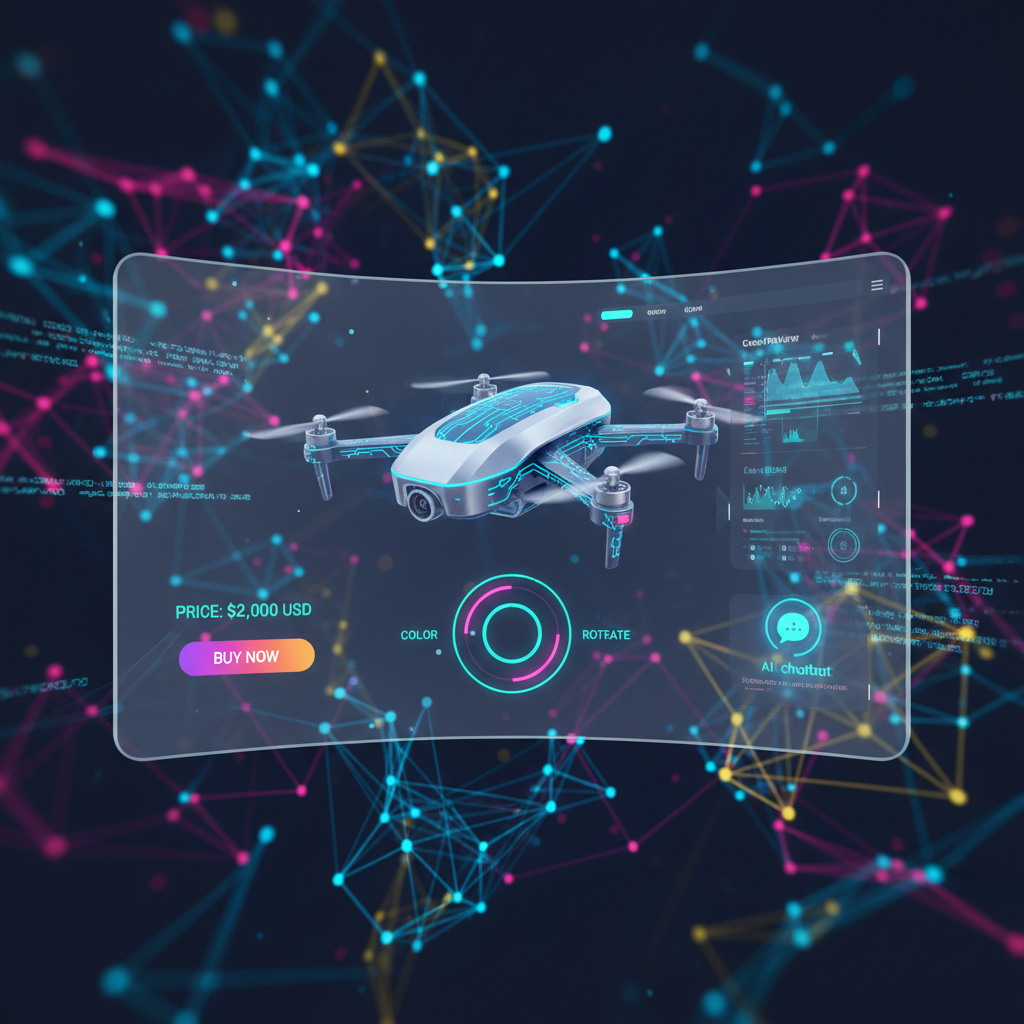
AI 3D Product Modeling: The Game-Changing Strategy for Online Retail
I remember spending countless hours, and frankly, a small fortune, on traditional product photography. The logistics alone were a nightmare: coordinating shoots, shipping products, waiting for edits, and then the inevitable reshoots when a new variant launched. It felt like we were constantly playing catch-up, and the static images, no matter how beautiful, just weren’t cutting it for customer engagement. There had to be a better way to showcase products online.
In this post, you’ll discover how AI 3D product modeling is revolutionizing ecommerce, learn why AI product visualization is now a non-negotiable for online retailers, and get practical insights on implementing AI 3D model generation — all backed by real-world experience.
Why Your Product Presentation Needs an AI Upgrade Now
The ecommerce landscape is more competitive than ever. Customers expect more than just a pretty picture; they want to virtually interact with products, understand every angle, and feel confident in their purchase before it even arrives. In an era where visual content dominates, traditional flat images simply can’t keep up with the immersive experiences modern shoppers demand. Brands still relying solely on static photography are leaving money on the table and facing higher return rates.
The rise of AI has shifted the goalposts, offering unprecedented opportunities for optimizing online product presentation with AI. This isn’t just a trend; it’s a fundamental change in how products are brought to market and displayed digitally. Ignoring this evolution means falling behind competitors who are already leveraging AI solutions for virtual product display to create richer, more engaging shopping experiences.
Understanding AI 3D Product Modeling for Ecommerce
AI 3D product modeling is the process of using artificial intelligence to automatically generate three-dimensional digital representations of products. This technology transforms traditional product imagery or even basic sketches into detailed, interactive 3D models, significantly streamlining the creation of visual assets for online retail. It’s a powerful shift from manual 3D design, offering speed, scalability, and cost efficiency.
What is AI 3D Product Modeling?
AI 3D product modeling refers to the application of artificial intelligence and machine learning algorithms to create, enhance, and manage 3D models of products. Instead of relying on human designers to meticulously craft every polygon, AI can analyze existing images, CAD files, or even text descriptions to rapidly produce high-fidelity 3D assets. This capability is rapidly becoming indispensable for businesses looking to scale their digital product catalogs.
How AI Generates 3D Product Models from Images
AI generates 3D product models from images by employing advanced computer vision and deep learning techniques to infer depth, shape, and texture from 2D inputs. Algorithms can reconstruct the three-dimensional geometry of an object by analyzing multiple angles of a product or even a single photograph, identifying key features and extrapolating missing information. This allows for the creation of realistic 3D product models with AI at speeds previously unimaginable.
The process often involves neural networks trained on vast datasets of 3D objects and their corresponding 2D images. These networks learn to recognize patterns and relationships, enabling them to essentially “imagine” the unseen parts of an object. The result is a fully navigable 3D model, ready for integration into various online platforms, offering interactive 3D product views.
The Benefits of AI Generated 3D Models for Ecommerce
The benefits of AI generated 3D models for ecommerce are extensive, ranging from enhanced customer engagement to significant operational savings. These models provide customers with a far more immersive and informative shopping experience than static images alone. This leads to increased confidence in purchasing decisions and a reduction in post-purchase dissatisfaction.
For businesses, the advantages include faster time-to-market for new products, reduced costs associated with traditional photography, and the ability to easily adapt visuals for different marketing channels. AI product rendering capabilities mean high-quality visuals can be produced on demand, without the need for expensive studio setups.
| Feature | Traditional Product Photography | AI 3D Product Modeling |
|---|---|---|
| Setup Time | Days to Weeks (scheduling, shipping, shooting) | Minutes to Hours (uploading, processing) |
| Cost Per Asset | High (studio, photographer, models, props) | Significantly Lower (software subscription, processing power) |
| Flexibility | Limited (reshoots for new angles/colors) | High (infinite angles, material changes, custom environments) |
| Interactivity | None (static images) | Full (zoom, rotate, configure, AR/VR integration) |
| Scalability | Challenging (physical limitations) | High (process thousands of products simultaneously) |
Enhancing Customer Experience with Interactive 3D Product Views
Customers today crave interaction. They want to spin a product around, zoom in on textures, and even visualize it in their own space using augmented reality. Interactive 3D product views fulfill this desire, providing a dynamic shopping experience that closely mimics examining an item in a physical store. This level of engagement builds trust and helps customers make informed decisions.
The ability to offer an AI 360 product spin from a single photo, or even to create a complete AI 360 product spin from multiple images, means every detail can be explored. This rich visual information can significantly impact conversion rates and customer satisfaction.
Reducing Ecommerce Returns with AI 3D Product Visuals
One of the biggest headaches for online retailers is product returns. Often, returns stem from customers receiving an item that doesn’t match their expectations based on static images. How 3D AI product visuals are reducing ecommerce returns is by providing a far more accurate representation of the product. When customers can thoroughly inspect an item from every angle, they gain a clearer understanding of its size, shape, and features.
This transparency minimizes discrepancies between expectation and reality, leading to fewer “not as described” or “doesn’t fit” returns. It’s a direct path to a healthier bottom line and happier customers.
Best AI 3D Product Modeling Tools for Online Retailers
The market for best AI 3D product modeling tools for online retailers is rapidly expanding, with solutions ranging from comprehensive platforms to specialized plugins. These tools vary in their capabilities, from generating simple 3D models from flat photos to complex AI powered 3D asset generation for ecommerce with advanced material properties. When exploring options, consider ease of use, integration with your existing ecommerce platform, and the quality of the generated models.
Many of these platforms also offer features like virtual staging and product configurators, further enhancing their value. If you’re looking to dive deeper into the vast landscape of available software, you might find a comprehensive guide on various AI tools helpful in identifying the right fit for your specific needs.
The Future of 3D Product Visualization in Retail
The future of 3D product visualization in retail is undeniably intertwined with AI. We’re moving beyond mere static models to dynamic, personalized experiences. Imagine AI not only generating a product in 3D but also automatically placing it in a customer’s digitally scanned living room, or even suggesting complementary items based on their preferences and the visual context. The lines between virtual and physical shopping will continue to blur.
This evolution will see AI playing an even larger role in AI for product design, allowing designers to rapidly prototype and visualize concepts in 3D before a single physical prototype is made. The efficiency and creative freedom this offers are immense.
Real-World Case Study: How “StyleSavvy” Boosted Conversions by 22%
Situation: StyleSavvy, a mid-sized online fashion retailer specializing in unique accessories, struggled with high return rates (averaging 18%) and stagnant conversion rates despite high-quality traditional photography. Customers often cited “item looked different online” as a reason for returns. Manually creating 3D models for their extensive and frequently updated catalog was cost-prohibitive and too slow.
Action: In late 2024, StyleSavvy implemented an AI 3D product modeling solution that could generate ecommerce 3D models from their existing product images. They started with their top 50 best-selling items, focusing on complex pieces like handbags and intricate jewelry. The AI tool automatically created AI 360 product spin views and allowed customers to zoom in on textures and details. They also integrated a “view in your space” AR feature for a selection of their larger bags.
Result: Within six months of deployment, StyleSavvy saw a remarkable 22% increase in conversion rates for products featuring the new AI-generated 3D visuals. Even more significantly, their return rate for these specific products dropped by 15%, directly attributable to customers having a clearer understanding of the product before purchase. The time and cost savings on new product launches were also substantial, allowing them to bring new items to market faster.
Common Mistakes That Are Costing You Results
Even with powerful AI tools, it’s easy to stumble. Avoiding these common pitfalls will ensure you maximize the benefits of AI 3D product modeling.
Underestimating the Importance of Source Imagery
Many assume AI can work miracles with any input, but the quality of your source images directly impacts the output of your 3D model generation AI. Low-resolution, poorly lit, or inconsistent photos will result in subpar 3D models. Invest in good initial product photography, even if it’s just a few angles, to give the AI the best possible data to work with. Think of it as feeding the AI premium ingredients for a gourmet meal.
Neglecting User Experience for 3D Views
Having a 3D model is one thing; making it easy for customers to interact with it is another. A common mistake is embedding a 3D viewer that’s slow to load, clunky to navigate, or not optimized for mobile devices. Ensure your chosen solution provides a smooth, intuitive experience. The goal is to enhance, not hinder, the customer journey. Test extensively across different devices and internet speeds.
Failing to Integrate 3D Models Across the Customer Journey
Don’t just stick your 3D models on the product page and call it a day. Leverage them in your marketing campaigns, email sequences, and even social media. Showcase the interactive nature of your products wherever possible. Many retailers miss opportunities to use these rich assets beyond a single product detail page, limiting their overall impact on engagement and conversions.
Frequently Asked Questions
What is AI 3D product modeling?
AI 3D product modeling is the use of artificial intelligence to create three-dimensional digital models of products, often from 2D images or design files. It automates and accelerates the process of generating realistic, interactive product visuals for online platforms.
How does AI generate 3D product models from images?
AI generates 3D models from images by using deep learning algorithms to analyze visual data, inferring depth, shape, and texture. These algorithms, trained on vast datasets, can reconstruct the full 3D geometry of an object from multiple photos or even a single image, effectively “understanding” its form.
Why is AI 3D product visualization important for ecommerce?
AI 3D product visualization is crucial for ecommerce because it enhances customer engagement, builds purchase confidence, and significantly reduces return rates by providing a more comprehensive and accurate representation of products than traditional 2D images. It creates a more immersive and interactive shopping experience.
What are the benefits of using AI for 3D product models?
The benefits of using AI for 3D product models include faster content creation, reduced photography costs, greater flexibility in showcasing products (e.g., different angles, materials, environments), and improved customer understanding of products, leading to higher conversion rates and fewer returns.
How can online retailers implement AI 3D product modeling?
Online retailers can implement AI 3D product modeling by choosing a suitable AI-powered platform or service that integrates with their existing ecommerce setup. This typically involves uploading existing product images or CAD files, allowing the AI to generate the 3D models, and then embedding these interactive visuals onto product pages.
Why I Disagree With the “Wait and See” Approach
Most people I talk to about emerging tech in ecommerce say, “Let’s wait and see how it plays out, then we’ll jump in.” I think that’s fundamentally wrong when it comes to AI 3D product modeling. My experience has shown that the early adopters aren’t just gaining a slight edge; they’re establishing a significant competitive moat. The learning curve, the integration challenges, and the optimization process all take time. By waiting, you’re not just delaying implementation; you’re delaying the accumulation of invaluable operational experience and customer data that your competitors are already gathering. The future of 3D product visualization in retail is here, not coming.
The shift towards immersive online experiences isn’t a fad; it’s the natural evolution of digital commerce. Ignoring the immediate benefits of AI for creating 360 degree product spin from single photo or how AI creates interactive 3D product views from flat photos means you’re actively choosing to offer a less engaging experience than your forward-thinking rivals.
The power of AI 3D product modeling isn’t just about cool visuals; it’s about fundamentally changing how you present products and connect with customers. Pick one product line, find a good tool, and start experimenting this week. That’s it. You’ll quickly see the difference it makes.