

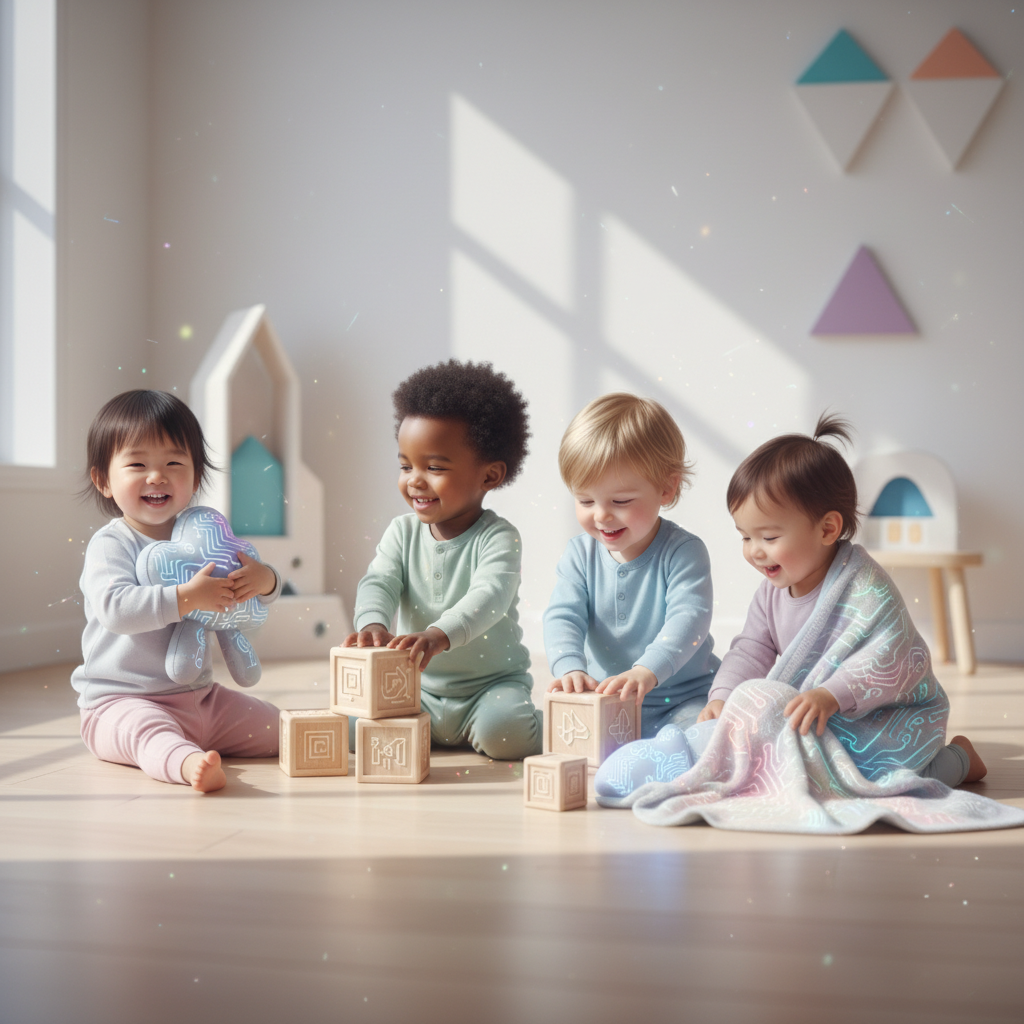
AI Baby Product Photography: The Strategy That Changed Everything
I spent months wrestling with traditional photoshoots for baby products – the logistics, the costs, the endless retakes trying to get that perfect, angelic shot without a crying infant or a toddler melting down. It was a constant uphill battle, eating into budgets and timelines. Frankly, I was exhausted trying to make it all work.
In this post, you’ll discover how AI baby product photography is revolutionizing the industry, learn why ethical considerations are paramount in this space, and get practical guidelines for creating stunning, safe, and appealing visuals – backed by real-world examples from my own experience.
Why Enhanced Product Imagery Matters Now More Than Ever

The digital shelf is more competitive than it’s ever been. Shoppers, especially parents, are making split-second decisions based almost entirely on visuals. If your product imagery doesn’t immediately convey safety, quality, and desirability, you’re losing sales before you even get a chance to tell your story. We’ve seen a massive shift in consumer expectations, demanding not just clear product shots, but engaging lifestyle scenes that resonate emotionally.
This isn’t just about aesthetics; it’s about trust. For baby and children’s products, parents are scrutinizing every detail. Generic or poorly executed photos can inadvertently raise red flags, making a brand seem less trustworthy. Leveraging AI solutions for product photos isn’t just a trend; it’s becoming a necessity for brands looking to cut through the noise and build genuine connections.
The rise of AI has offered an unprecedented opportunity to create high-quality, diverse, and cost-effective AI visual content for children and baby items. It allows brands, big and small, to compete on a level playing field, offering rich visual experiences without the exorbitant costs and logistical nightmares of traditional photoshoots. It’s truly a game-changer for digital photography for baby items.
Navigating the World of AI for Children’s Product Visuals

AI baby product photography involves using artificial intelligence to generate or enhance images of baby and children’s products, often placing them in realistic or aspirational lifestyle settings without the need for physical sets, models, or photographers. This technology allows brands to create diverse and compelling visuals quickly and efficiently, from simple product shots to complex lifestyle scenes. It’s a powerful tool for product image generation AI.
Creating Realistic Baby Product Images with AI
The key to successful AI baby product photography lies in generating images that are indistinguishable from real photographs. This means paying close attention to lighting, shadows, textures, and the overall composition. Modern AI tools are incredibly sophisticated, capable of rendering materials like soft cotton, shiny plastic, or natural wood with remarkable accuracy.
We’ve found that starting with high-quality 3D models of your products, if available, provides the best foundation for AI to build upon. Even with 2D product shots, advanced AI can extrapolate and generate stunning scenes. The goal is always to create realistic baby product images with AI that resonate with parents.
AI for Generating Lifestyle Photos with Children for Baby Brands
AI for generating lifestyle photos with children for baby brands works by compositing product images into AI-generated scenes featuring virtual children or by enhancing existing stock photos with AI. The process involves selecting appropriate backgrounds, virtual models, and props, then using AI to seamlessly integrate the product and ensure consistent lighting and perspective. This allows for the creation of diverse scenarios, from a baby sleeping peacefully in a crib to a toddler playing with a toy in a vibrant nursery.
This capability is incredibly powerful for showcasing how baby items fit into everyday life. It addresses the long-tail keyword of how baby product brands create safe and appealing product photos by allowing them to test various lifestyle contexts without the logistical overhead. These AI generated product visuals can depict a wide range of family dynamics and environments.
Ethical Considerations for AI in Child Product Imaging
Ethical considerations for AI in child product imaging are paramount, focusing on ensuring child safety, promoting positive representation, and maintaining transparency. It’s crucial to avoid anything that could be misinterpreted as unsafe, exploit children, or perpetuate harmful stereotypes. The industry must establish clear guidelines for AI product photography baby products to protect both children and consumers.
When using AI visual content for children, we must always ask ourselves: Is this image appropriate? Does it accurately represent the product’s use? Is it culturally sensitive? These questions are at the heart of responsible ethical AI in child product marketing. Transparency with consumers about the use of AI, even subtly, can also build trust.
Virtual Photography Techniques for Kids Product Marketing
Virtual photography techniques for kids product marketing involve leveraging AI to create entire scenes from scratch or to digitally enhance existing product images. This can include generating diverse backgrounds, adding props, or even simulating different lighting conditions to highlight product features. It’s about building a digital studio that can produce endless variations.
One effective technique is using AI to generate multiple angles and close-ups from a single product shot, saving significant time and resources. Another is to create seasonal or themed visuals on demand, keeping content fresh and relevant. These virtual product imaging for kids approaches offer unparalleled flexibility.
| Feature | Traditional Photography | AI Product Photography |
|---|---|---|
| Cost per image | High (models, studio, crew) | Low (software, processing) |
| Time to generate | Weeks to months | Hours to days |
| Scene diversity | Limited by budget/logistics | Virtually limitless |
| Model availability | Dependent on talent pool | Always available (virtual) |
| Ethical control | Direct human oversight | Requires careful AI prompting & review |
| Consistency | Variable | Highly consistent |
Best Practices for AI Product Photography in Children’s Product Space
The best practices for AI product photography in the children’s product space revolve around safety, authenticity, and appeal. Always ensure that any AI-generated scene depicts the product being used safely and appropriately, adhering to all relevant safety standards. The visuals should be aspirational but also realistic, reflecting the genuine experience of using the product.
For instance, when creating AI photo creation for toys, ensure the virtual children are interacting with the toy in a manner consistent with its age grading and intended use. Avoid overly stylized or unrealistic depictions that could mislead parents. Regularly review your AI generated product visuals for any unintended implications, especially regarding child safety.
When exploring different AI tools for your visual content needs, it’s worth checking out comprehensive guides that compare various options, helping you select the best fit for generating lifestyle photos with children for baby brands. For those looking to dive deeper into how to create images with these powerful platforms, there are many resources available to guide you through the process, from basic prompts to advanced techniques.
Case Study: TinyTots’ Visual Transformation
Situation: TinyTots, a small brand specializing in eco-friendly wooden toys, struggled with inconsistent and costly product photography. Their existing images, while functional, lacked the engaging lifestyle appeal needed to stand out in a crowded market. They couldn’t afford frequent, elaborate photoshoots to showcase their full range of products in diverse settings.
Action: TinyTots decided to integrate AI children’s product photography into their marketing workflow. They invested in a specialized AI image generation platform that allowed them to upload 3D models of their toys. They then used the platform to generate a series of lifestyle images featuring virtual children playing with their wooden blocks, puzzles, and stacking toys in various natural-looking nursery and playroom settings. They focused on prompts that emphasized natural light, soft textures, and diverse child models.
Result: Within three months, TinyTots saw a 25% increase in their website’s conversion rate and a 30% reduction in their overall marketing photography budget. The new AI generated product visuals allowed them to create over 100 unique lifestyle images, showcasing their products in appealing, safe, and diverse scenarios. This dramatically enhanced their product pages and social media presence, directly contributing to a measurable uplift in sales and brand engagement.
Common Mistakes That Are Costing You Results

Overlooking Ethical Guidelines
Many brands jump into AI baby product photography without fully considering the ethical implications. Generating images that depict unsafe play, unrealistic scenarios, or perpetuate stereotypes can severely damage brand reputation. Always prioritize child safety and positive representation in every visual.
Sacrificing Realism for Speed
While AI offers incredible speed, rushing the process can lead to artificial-looking images. Poorly integrated products, inconsistent lighting, or uncanny valley effects with virtual children will undermine trust. Take the time to refine your prompts and review outputs to ensure your AI visual content for children looks genuinely authentic.
Neglecting Brand Consistency
It’s easy to get carried away with the endless possibilities of AI. However, failing to maintain a consistent brand aesthetic across all your AI generated product visuals can confuse customers. Establish clear visual guidelines—color palettes, lighting styles, model demographics—and ensure your AI outputs adhere to them.
Not Optimizing for Different Platforms
A single AI-generated image won’t perform optimally across all platforms. What works for a high-resolution catalog image might be too busy for a small social media ad. Brands often make the mistake of using one-size-fits-all imagery. Customize your enhanced product imagery with AI for each channel, considering aspect ratios, text overlays, and audience engagement patterns.
Frequently Asked Questions

1. What is AI product photography for children’s products?
AI product photography for children’s products involves using artificial intelligence to create or enhance images of baby and children’s items. This can range from generating simple product shots on a white background to creating complex lifestyle scenes with virtual children, all without traditional photoshoots.
2. How does AI generate lifestyle photos with children?
AI generates lifestyle photos with children by either compositing a product into an AI-created scene featuring virtual children or by using advanced algorithms to modify existing images. It leverages sophisticated models to ensure realistic lighting, shadows, and interaction between the product and the virtual environment or child.
3. Why are safety and appeal important in baby product photos created with AI?
Safety and appeal are crucial in baby product photos created with AI because parents prioritize their children’s well-being and are drawn to aesthetically pleasing, trustworthy visuals. Images must depict products being used safely and appropriately, while also being engaging and aspirational to capture parental attention and build confidence in the brand.
4. What are the best AI tools for creating toy product images?
The “best” AI tools for creating toy product images often depend on specific needs and budget, but leading platforms typically offer robust 3D rendering capabilities, extensive asset libraries (for virtual models, props, and environments), and intuitive interfaces for prompt engineering. Many best AI tools on the market today are constantly evolving, so staying updated on reviews and benchmarks is key.
5. How can brands use AI to enhance their children’s product visuals?
Brands can use AI to enhance their children’s product visuals by generating a wider variety of lifestyle images, creating diverse scenes quickly and affordably, ensuring consistent brand aesthetics, and even localizing visuals for different markets. AI allows for rapid iteration and testing of different visual concepts, leading to more effective and engaging marketing materials.
Why I Disagree With the “AI Will Replace All Photographers” Hype
Most people seem to think that AI baby product photography means the end of the road for human photographers. I think that’s wrong because while AI is incredible for generating scale and consistency, it still lacks the nuanced artistic eye, emotional depth, and spontaneous creativity that a human photographer brings to a set. AI is a fantastic tool for efficiency and creating a baseline of content, but for truly iconic, emotionally resonant imagery that captures the soul of a brand, you still need that human touch. It’s about augmentation, not outright replacement.
The future isn’t AI vs. photographers; it’s AI with photographers, allowing them to focus on the truly creative, high-impact shots while AI handles the bulk of the repetitive work.
Pick one thing from this post – maybe focusing on ethical considerations or experimenting with lifestyle scene generation – and try implementing it in your workflow this week. That’s it. You’ll start to see how this technology can genuinely transform your approach to visual marketing.