

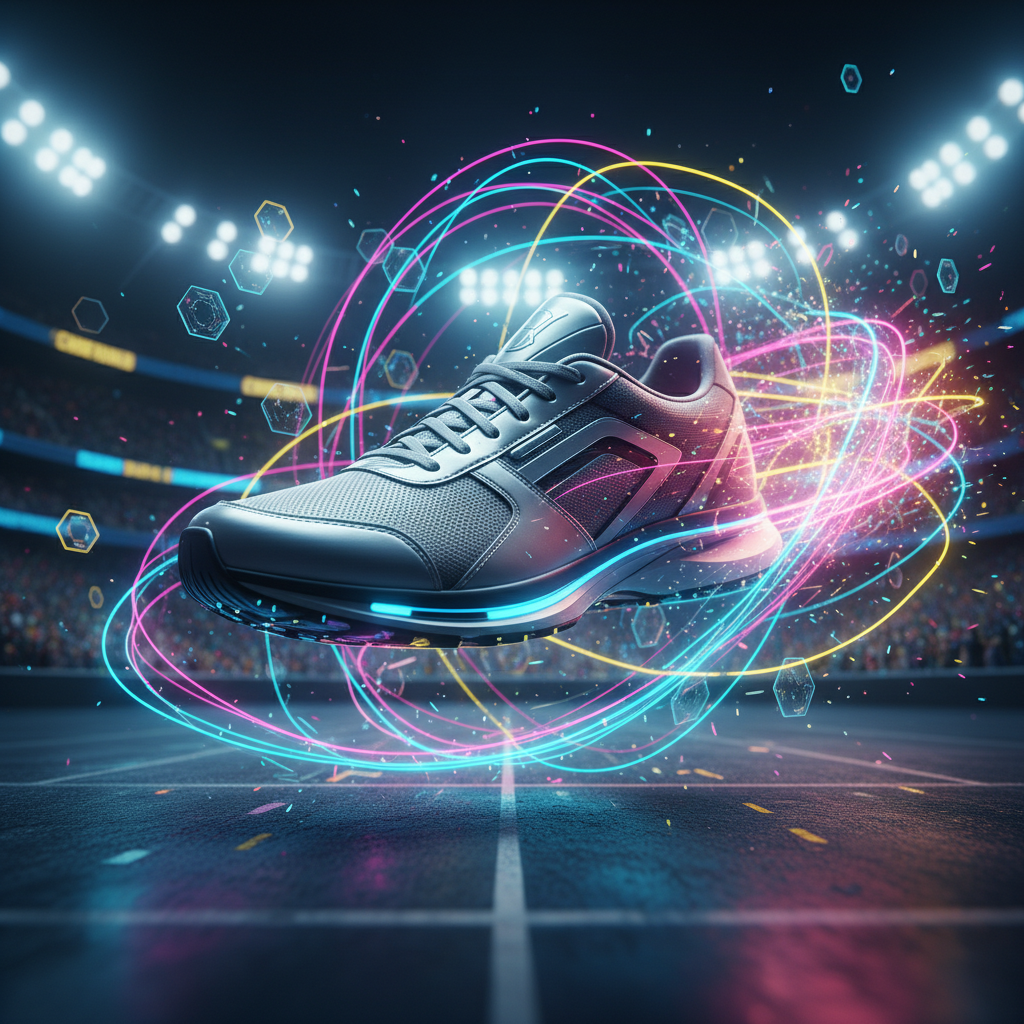
AI Sports Product Photography: The Game-Changing Strategy You Need
I remember the days of lugging heavy lighting equipment, coordinating multiple athletes, and endlessly tweaking studio setups just to get that one perfect shot of a running shoe. It was a logistical nightmare, and honestly, the costs often outweighed the creative freedom. For years, I just accepted it as the price of doing business in sports marketing, a necessary evil to capture the dynamic energy demanded by athletic brands. The sheer effort involved in securing locations, managing talent, and then enduring weeks of post-production for a handful of usable images was a constant drain on resources and creativity.
In this post, you’ll discover how AI sports product photography is revolutionizing the industry, learn why traditional methods are becoming obsolete, and get actionable strategies for creating stunning, high-impact visuals — backed by real-world examples from my own experience and the successes of forward-thinking brands. We’ll explore how AI product photography sports is not just a trend, but a fundamental shift in how athletic products are brought to life visually, offering unprecedented speed, scalability, and creative control.
Why Your Sports Product Visuals Must Evolve Now
The digital landscape has shifted dramatically, and frankly, if your sports brand isn’t adapting, you’re already falling behind. Consumers today demand instant gratification and hyper-realistic visuals that go beyond a static product shot on a white background. They want to see that athletic footwear in action, that gym equipment being pushed to its limits, that sports apparel looking dynamic and aspirational. A recent study indicated that product visuals are the most influential factor for 93% of consumers in their purchasing decisions, highlighting the critical need for compelling imagery. If your visuals don’t immediately convey performance, lifestyle, and aspiration, you risk losing potential customers in a matter of seconds.
The old ways of expensive photoshoots, limited locations, and endless post-production simply can’t keep up with the volume and variety of content needed for today’s multi-channel marketing strategies. Imagine needing hundreds of unique images for a single product launch across e-commerce, social media campaigns, print ads, and influencer collaborations – traditional methods make this an astronomical undertaking. This isn’t just about efficiency; it’s about staying relevant in a fiercely competitive market where every scroll counts. Brands that embrace AI product photography sports are gaining an undeniable edge, delivering captivating content at a speed and scale previously unimaginable. They’re able to A/B test different visual concepts instantly, adapt to trending aesthetics, and flood the market with fresh, engaging artificial intelligence product visuals that keep their audience hooked. The ability to generate diverse scenarios and adapt quickly to market demands is no longer a luxury but a necessity for survival and growth in the sports industry.
Understanding AI Sports Product Photography

AI sports product photography refers to the sophisticated use of artificial intelligence technologies to generate, enhance, or manipulate images of sports and fitness products. This goes far beyond simple filters or basic photo editing; it encompasses advanced techniques like generative adversarial networks (GANs) and diffusion models that can create entirely new scenes, models, and environmental elements from scratch, or refine existing photographs with incredible precision. It’s about leveraging powerful algorithms to produce high-quality, engaging visuals without the traditional constraints of physical photoshoots, offering a truly transformative approach to visual content creation for the athletic market.
This innovative approach allows sports brands to visualize products in dynamic, action-oriented scenarios that would be incredibly complex, time-consuming, or prohibitively costly to capture conventionally. Think about generating a realistic lifestyle shot of a new sneaker on a track, complete with an athlete mid-stride and perfect lighting, or showcasing gym equipment in a futuristic fitness studio, all without ever stepping foot outside your office. This capability is a game-changer for speed, consistency, and creative exploration in marketing, enabling brands to iterate on visual concepts rapidly and present their products in the most compelling light possible. The result is a stream of fresh, aspirational content that resonates deeply with target audiences, driving engagement and sales.
How AI Creates Product Photos for Sports and Fitness Brands
AI creates product photos for sports and fitness brands by analyzing vast datasets of images, understanding visual patterns, and then generating new images based on specific prompts and parameters provided by the user. Essentially, you feed the AI a clean product image – perhaps a 3D model or a high-resolution flat lay – and then describe the desired scene, environment, and action. The AI, leveraging its deep learning capabilities, then constructs a realistic environment, appropriate lighting, shadows, reflections, and even athlete models interacting with your product. This sophisticated process is often referred to as virtual product photography for sports.
The technology can generate an astonishing array of diverse scenarios, from a basketball shoe mid-dunk on a vibrant court to a yoga mat in a serene, sunlit studio overlooking a mountain range. It eliminates the need for physical sets, expensive models, complex lighting arrangements, and extensive travel, providing unparalleled flexibility and efficiency. The sophistication of these AI generated sports gear images means they are often indistinguishable from traditionally shot photos, offering a powerful tool for visual storytelling that was previously out of reach for many brands. Furthermore, the ability to rapidly generate multiple variations of a single scene allows for extensive A/B testing and optimization of visual content, ensuring that every image deployed is maximally effective in capturing consumer attention. This innovative approach is fundamentally changing the landscape of fitness product image generation AI.
The Benefits of Using AI for Fitness Product Photography
The benefits of using AI for fitness product photography are extensive, primarily revolving around significant cost savings, unparalleled speed, and expansive creative freedom. Brands can dramatically reduce expenses associated with traditional photoshoots, including location scouting fees, model hiring, photographer and crew salaries, equipment rental, travel, and extensive post-production editing. This makes it an incredibly cost-effective AI product photography for small sports businesses seeking to compete with larger brands, as well as a powerful efficiency tool for established enterprises. Estimates suggest AI can cut visual content creation costs by 50-80%.
Furthermore, AI drastically speeds up the content creation process. What once took weeks or even months – from concept to final image – can now be accomplished in hours or even minutes. This agility is crucial in fast-paced markets where product launches are frequent and trends evolve rapidly, allowing brands to launch new products or campaigns with a rapid turnaround. This capability for automated product photography sports ensures that marketing teams can always have fresh, relevant content at their fingertips. Creatively, AI enables the generation of countless variations and scenarios that would be physically impossible or financially unfeasible to capture traditionally. This pushes the boundaries of conventional photography, providing unique ways of enhancing sports product visuals using artificial intelligence, exploring diverse aesthetics, and creating highly personalized marketing content tailored to specific audience segments. The ability to visualize a product in any imaginable setting, from a high-performance gym to an exotic outdoor adventure, without logistical constraints, unlocks a new era of visual storytelling.
Creating Realistic Sports Product Images with AI
Creating realistic sports product images with AI involves a combination of high-quality source product images and detailed, descriptive prompts for the AI. The adage “garbage in, garbage out” holds true here: the better the input, the better the output. Brands typically start with a clean, well-lit, high-resolution photograph or a detailed 3D model of their product. This foundational image is then fed into the AI software, which uses it as a base to generate a chosen virtual environment. The AI then meticulously adds elements like accurate shadows, realistic reflections, appropriate textures, and even subtle motion blur to achieve hyperrealism.
The key lies in the AI’s advanced ability to understand context, physics, and lighting principles, ensuring that the product integrates seamlessly and believably into the generated scene. This is particularly useful for AI for creating gym and fitness equipment product photos, where showing scale, weight, and interaction with a human form or specific environment is vital for consumer understanding and trust. For instance, an AI can accurately render how light would fall on a chrome dumbbell in a brightly lit gym, or how a yoga mat would subtly compress under a person’s weight on a wooden floor. With advanced AI tools, users can fine-tune every minute detail, from the texture of a basketball court to the subtle sheen on a new pair of running shorts, or even the sweat on an athlete’s brow, making the generated image virtually indistinguishable from a real photograph. The iterative nature of AI generation also allows for continuous refinement until the desired level of realism and artistic vision is achieved. If you’re looking to dive deeper into the capabilities of these tools, exploring a comprehensive guide to best AI tools can provide invaluable insights into selecting the right platform for your needs.
How Sports Brands Create Dynamic Product Action Photos with AI
Sports brands create dynamic product action photos with AI by leveraging advanced image generation models that can simulate movement, energy, and athletic performance with incredible accuracy. Instead of relying on a photographer to capture a split-second moment during a live action shoot, AI can render an athlete in motion, interacting with the product in a perfectly choreographed and visually impactful way. This is particularly effective for AI solutions for athletic footwear photography and sports apparel, where showcasing the product’s performance attributes in a dynamic setting is paramount. Imagine a sneaker mid-air during a jump shot, or a compression shirt stretching perfectly with an athlete’s powerful swing – these are scenarios AI can create on demand.
The process often involves uploading a static product image and then prompting the AI to generate a scene with an athlete performing a specific action, like running, jumping, lifting weights, or executing a complex yoga pose, all while wearing or using the product. The AI can then add sophisticated elements such as motion trails, strategically blurred backgrounds to emphasize speed, dramatic lighting to highlight muscle definition, and even environmental effects like dust or water splashes. This capability is transforming AI for generating sports product lifestyle shots with athletes, making aspirational marketing more accessible and scalable than ever before. Brands can experiment with countless action poses, body types, and environmental backdrops to find the perfect visual narrative that resonates with their target audience, all without the logistical complexities and costs of traditional action photography. This allows for the creation of compelling narratives that truly bring the product to life, demonstrating its utility and performance in a visually engaging manner.
Virtual Studios for Sports Equipment Product Photos
Virtual studios for sports equipment product photos are essentially sophisticated digital environments where AI can place and “photograph” products. These studios offer limitless possibilities, allowing brands to choose from a vast library of meticulously designed backdrops, customize lighting conditions from sunrise to dramatic spotlight, and even simulate various weather effects – all without any physical setup or logistical hassle. This is a huge advantage, especially for companies selling bulky, heavy, or complex items like treadmills, weight benches, large outdoor adventure gear, or even entire home gym setups.
Instead of renting expensive studio space, transporting heavy equipment, and spending days on set design, brands can simply upload their product images (or 3D models) and select a virtual setting. This could be a sleek, minimalist modern gym, a rugged outdoor mountain trail at dawn, a high-performance athletic track, or a serene, sunlit yoga studio. The AI then renders the product within this chosen environment, ensuring correct scale, perspective, and lighting. This makes AI powered product image creation for fitness brands incredibly efficient, versatile, and scalable. It also enables brands to showcase their products in aspirational, context-rich environments that directly appeal to their target demographic, enhancing the perceived value and utility of the equipment. For those eager to experiment with creating their own stunning visuals, learning how to create images with powerful AI image generators is a crucial step to unlock these virtual studio capabilities.
| Feature | Traditional Photography | AI Sports Product Photography |
|---|---|---|
| Cost | High (equipment, studio rental, models, crew salaries, travel, extensive post-production) | Significantly Lower (software subscription, initial product images, minimal human oversight) |
| Speed | Slow (scheduling, shooting, travel, lengthy post-production, revisions) | Extremely Fast (instant generation, rapid iterations, near real-time adjustments) |
| Flexibility | Limited (physical constraints of location, weather, model availability, equipment) | Unlimited (virtual environments, endless variations in lighting, setting, action, and models) |
| Realism | High (authentic capture of real-world scenes) | High (advanced rendering, often indistinguishable from real photos, continuously improving) |
| Scalability | Low (resource-intensive per shot, difficult to produce high volume of unique content) | High (generate hundreds or thousands of unique images quickly and efficiently) |
| Consistency | Challenging to maintain across different shoots/photographers | Easy to maintain brand guidelines and aesthetic across all generated visuals |
How “FitGear Pro” Revolutionized Their Product Launches
Situation: FitGear Pro, a mid-sized fitness equipment manufacturer specializing in premium home gym gear, struggled significantly with product launch timelines and the sheer cost of visual content. They typically introduced 10-15 new products annually, each requiring a dedicated photoshoot. They’d spend weeks coordinating elaborate photoshoots for each new dumbbell set, resistance band, or yoga mat, often delaying marketing campaigns by 3-4 weeks. Their existing product images, while professionally shot, often felt static and lacked the dynamic energy and aspirational lifestyle appeal their brand aimed for. They needed a way to create high-quality, action-oriented visuals faster, more affordably, and with greater variety to truly showcase their products in use. The bottleneck was costing them market share and precious time-to-market.
Action: In early 2025, FitGear Pro made a strategic investment in an advanced AI photo creation for athletic products platform, specifically one known for its robust generative AI capabilities. Instead of relying on traditional photoshoots, their marketing team began uploading detailed CAD files and basic, high-resolution product shots of their new gear. They then meticulously used the AI to generate a wide array of lifestyle images: dumbbells being used by diverse athletes in sleek, minimalist home gyms, resistance bands stretched by fitness enthusiasts in vibrant urban parks, and yoga mats positioned in serene, sunlit studios with panoramic views. They focused on crafting detailed prompts that emphasized motion, realistic sweat and effort, and aspirational fitness scenarios, ensuring the AI generated sports gear images perfectly aligned with their brand’s high-performance ethos. They also leveraged the AI’s ability to create multiple angles and lighting conditions for each product, something that would have required extensive re-staging in a traditional studio.
Result: The impact on FitGear Pro’s operations was immediate and profound. They cut their product visual creation time by over 70%, from an average of four weeks per launch to less than one week, allowing them to bring new products to market significantly faster. This agility enabled them to create a significantly more diverse and voluminous library of marketing content across social media, their e-commerce website, and digital ad campaigns. Their engagement rates on posts featuring these dynamic AI generated sports gear images saw a remarkable 35% increase, translating directly to higher click-through rates and an estimated 15% increase in conversion rates for products launched using the new visual strategy. Furthermore, they reported a 20% reduction in overall marketing spend for product visuals in the first quarter of 2026, reallocating those savings into broader campaign reach and product development. The AI platform not only solved their immediate logistical and cost challenges but also empowered their creative team to explore visual narratives previously deemed impossible, solidifying FitGear Pro’s position as an innovative leader in the fitness equipment market.
Mistakes That Are Costing You Results
Mistake #1: Treating AI as a “Fix-It-All” Button
Many brands jump into digital product photography AI thinking it’s a magic wand that will instantly produce perfect, publication-ready images from any input, regardless of quality. That’s simply not true. While AI is incredibly powerful, it operates on the principle of “garbage in, garbage out.” Feeding it a blurry, poorly lit, or low-resolution product image will, at best, result in a mediocre AI-generated scene, and at worst, an image that looks artificial and unprofessional. This misconception often leads to frustration and a dismissal of AI’s true potential.
What to do instead: AI is a powerful tool, but it requires good input to shine. Start with high-quality, well-lit, and professionally shot product images as your base. These should ideally be on a clean, neutral background, allowing the AI to easily isolate the product. The cleaner and more detailed your initial product shot, the more realistic, impressive, and brand-consistent the AI-generated scene will be. Think of AI as an incredibly skilled digital artist who can enhance, contextualize, and transform your existing product, rather than fabricating something entirely from scratch. Investing in a solid foundational product image is still paramount, even in the age of AI.
Mistake #2: Neglecting the Prompt Engineering
It’s easy to write a vague prompt like “shoe on a track” and expect amazing results. When the output is generic, uninspired, or doesn’t match the brand’s vision, frustration sets in, and users might wrongly conclude that the AI itself is limited. The quality of the AI’s output is directly proportional to the clarity and specificity of the prompt. A generic prompt will yield generic results because the AI lacks the necessary details to create a truly compelling and unique image. This oversight is one of the biggest barriers to unlocking the full potential of AI tools for sports apparel and sneaker product photography.
What to do instead: Invest time in learning prompt engineering – the art and science of communicating effectively with AI. Be incredibly specific and descriptive in your prompts, painting a vivid picture for the AI. Instead of “shoe on a track,” try “Close-up of a neon green running shoe on a blurred cinder track, dynamic motion blur, athlete’s foot mid-stride, golden hour lighting, realistic sweat droplets, intense focus, professional sports photography style.” Add details about camera angles, lighting conditions, textures, emotions, and desired aesthetics. The more detail you provide, the better the AI can understand and execute your vision, creating stunning and highly relevant visuals that truly stand out. Experiment with different keywords and phrases to discover what resonates best with your chosen AI model.
Mistake #3: Forgetting Brand Consistency
In the rush to generate new visuals and explore the endless possibilities of AI, some brands overlook their established aesthetic, tone, and brand guidelines. This can lead to a fragmented visual identity where AI-generated images, while individually impressive, don’t align with the brand’s overall look and feel. Inconsistent imagery can confuse consumers, dilute brand recognition, and ultimately undermine trust and loyalty. A brand known for its gritty, realistic visuals suddenly producing overly polished, fantastical AI images can be jarring and counterproductive.
What to do instead: Define clear and comprehensive guidelines for your AI-generated visuals, just as you would for traditional photography. Establish preferred lighting styles, color palettes, athlete archetypes, environmental settings, and overall mood that align with your brand’s existing identity. Create a “visual style guide” for your AI prompts. Use AI to amplify and extend your existing brand identity, not to randomly explore every possible visual style. This ensures that all your artificial intelligence product visuals remain cohesive, recognizable, and reinforce your brand’s core message, strengthening your market presence rather than diluting it. Regularly review AI outputs against your brand standards to ensure consistency across all platforms.
Frequently Asked Questions

1. What is AI sports product photography?
AI sports product photography is the application of artificial intelligence technologies to create, enhance, or modify images of athletic and fitness products. It leverages advanced algorithms to generate dynamic, realistic, and aspirational visuals without the need for traditional physical photoshoots, significantly saving time, resources, and expanding creative possibilities for brands in the sports and fitness industry. This includes everything from placing products in virtual environments to simulating athlete interaction and action shots.
2. How does AI create product photos for sports and fitness brands?
AI creates product photos for sports and fitness brands by taking a base image (or 3D model) of a product and then using sophisticated generative AI algorithms to construct virtual environments, realistic models, and dynamic actions around it, all based on textual prompts provided by the user. This process allows for the creation of diverse scenarios, from clean studio shots to action-packed lifestyle images featuring athletes in motion, complete with accurate lighting, shadows, and textures. This is often referred to as virtual product photography for sports.
3. Why should sports and fitness brands use AI for product photography?
Sports and fitness brands should use AI for product photography because it offers significant advantages in cost savings, dramatically faster content creation, and unparalleled creative flexibility. It enables the rapid production of a high volume of engaging, dynamic visuals that resonate with modern consumers’ demands for authentic, action-oriented content, helping brands stay competitive and relevant in a fast-paced market. It also makes cost-effective AI product photography for small sports businesses a reality.
4. What are the benefits of AI in product photography for athletic gear?
The benefits of AI in product photography for athletic gear are numerous. They include substantially reduced expenses on photoshoots, quicker turnaround times for marketing campaigns and product launches, the ability to showcase products in a wide array of virtual scenarios (from extreme sports to serene fitness settings), and the creation of highly realistic and engaging AI generated sports gear images that capture consumer attention and drive sales. It also allows for easy A/B testing of visual concepts.
5. How can sports brands effectively use AI for product visuals?
Sports brands can effectively use AI for product visuals by starting with high-quality, clean product images as their foundation, crafting detailed and specific prompts for the AI to guide its generation process, and rigorously maintaining brand consistency in all generated images. They should leverage the technology to create dynamic action shots, aspirational lifestyle scenes with athletes, and explore diverse virtual environments that would be difficult or prohibitively expensive to achieve through traditional means, thereby enhancing sports product visuals using artificial intelligence.
Why I Disagree With The “AI Will Replace All Photographers” Hype
Most people jump to the conclusion that AI will completely replace human photographers in the sports product space. I think that’s wrong because it misses the crucial role of human creativity, artistic direction, and the nuanced eye that only a person can bring. While AI excels at generating variations, executing prompts with incredible efficiency, and handling the laborious aspects of image creation, the initial vision, the emotional connection, the truly groundbreaking creative concepts, and the subtle storytelling elements still originate from human minds. AI is a powerful tool that augments a photographer’s capabilities, allowing them to focus on higher-level creative strategy, conceptualization, and brand narrative rather than logistical headaches like equipment setup, location scouting, or model coordination. It frees them to dream bigger, not renders them obsolete.
The future of sports product photography isn’t AI or humans; it’s AI with humans, working together to push creative boundaries. Photographers will evolve into “visual directors” or “AI prompt engineers,” guiding the technology to realize their artistic visions. They will be the strategists who understand light, composition, and emotion, leveraging AI to execute their ideas at an unprecedented scale and speed. This collaboration allows for experimentation, iteration, and personalization that was previously unimaginable, leading to richer, more diverse visual content. Pick one thing from this list and try it this week. That’s it. You’ll see the difference in your workflow and your visual content, and you’ll begin to understand how AI can be your most powerful creative partner.