

AI Furniture Visualization: The Strategy That Changed Everything
I remember the days of lugging heavy furniture pieces to rented studios, hiring expensive photographers, and then spending weeks in post-production just to get a handful of decent product shots. The logistics were a nightmare, the costs astronomical, and the flexibility non-existent. If a client wanted to see that sofa in a different color or a new room setting, well, that was another photoshoot waiting to happen. It was a constant source of frustration, eating into budgets and delaying launches.
In this post, you’ll discover how AI furniture visualization has fundamentally transformed how furniture brands operate, learn why it’s no longer a luxury but a necessity for e-commerce, and get practical insights — backed by real-world examples.
Why Visualizing Furniture Matters More Than Ever

The digital landscape has fundamentally shifted consumer expectations. Gone are the days when a single, static product image was enough. Today’s online shoppers, especially for high-ticket items like furniture, demand an immersive experience. They want to see that armchair in a cozy living room, envision that dining table in a modern kitchen, and understand how a piece will fit into their home before they even click “add to cart.” This isn’t just about aesthetics; it’s about building trust and reducing returns.
Many furniture brands are still stuck in the past, relying on outdated product photography methods that are slow, costly, and creatively limiting. They’re missing a massive opportunity to connect with customers on a deeper, more personal level. The rise of visual-first platforms and the sheer volume of online competition means that if your product presentation isn’t captivating, realistic, and highly customizable, you’re simply losing out. This isn’t just a trend; it’s the new standard for retail furniture.
The Power of AI Furniture Visualization

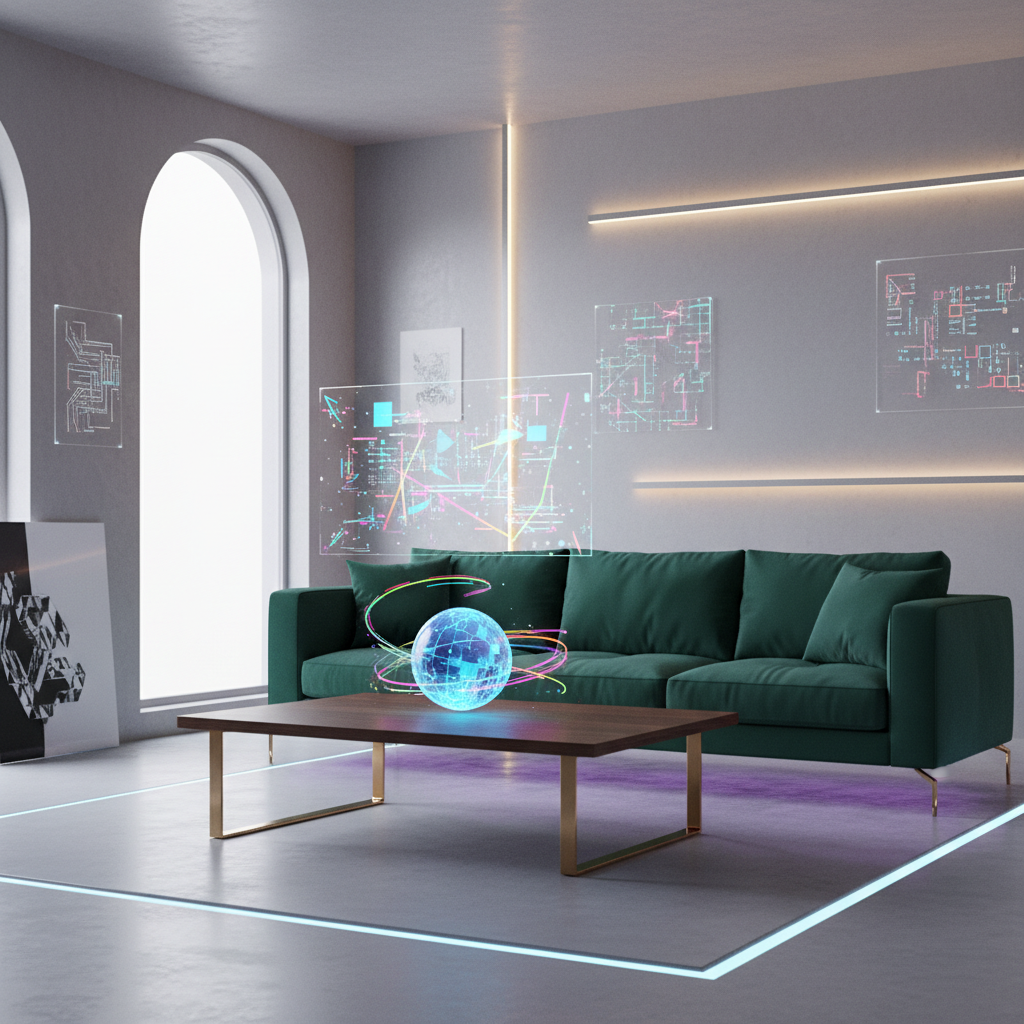
AI furniture visualization is the application of artificial intelligence to generate realistic images and interactive experiences of furniture and home decor products in various settings without the need for physical prototypes or traditional photography. It leverages advanced algorithms to create stunning, photorealistic room scenes, allowing brands to display their products in virtually any environment imaginable. This technology is rapidly becoming indispensable for furniture e-commerce brands looking to scale their visual content.
Transforming Product Photography with AI
The traditional photoshoot model for furniture is notoriously expensive and time-consuming. Imagine the cost of renting a studio, hiring models, stylists, and photographers, then shipping bulky furniture back and forth. How furniture brands reduce photoshoot costs with AI visualization is by virtually eliminating these overheads. Instead of physical shoots, designers upload 3D models of their furniture, and AI takes over, placing them into a vast library of customizable digital room settings. This process dramatically slashes expenses and accelerates content creation.
AI for showing furniture products in different room settings isn’t just about saving money; it’s about unparalleled flexibility. Want to see that sofa in a minimalist apartment, a rustic farmhouse, or a vibrant bohemian space? AI can render it in moments, complete with realistic lighting, shadows, and textures. This capability is a game-changer for marketing, allowing brands to target diverse customer segments with highly relevant visual content.
Best AI Room Staging Tools for Furniture E-commerce Brands
The market for AI room staging tools for furniture e-commerce brands is booming, offering a range of solutions from simple drag-and-drop interfaces to sophisticated platforms for 3D furniture rendering AI. These tools are designed to be user-friendly, enabling even non-technical teams to create professional-grade visuals. Many platforms offer libraries of pre-designed room templates and decor items, while others allow for complete customization, letting you build unique environments from scratch.
For brands selling on platforms like Amazon and Wayfair, AI for creating room scene photos for furniture on Amazon and Wayfair is a crucial competitive advantage. High-quality, diverse imagery directly impacts conversion rates. These tools ensure consistency across product listings and allow for rapid A/B testing of different visual styles to see what resonates best with customers. Leveraging the right AI tools can significantly enhance your product display.
Enhancing Home Decor Sales with AI Visualization
AI home decor visualization extends beyond just furniture, encompassing everything from rugs and lighting to wall art and decorative accents. By integrating these elements seamlessly into virtual room scenes, brands can inspire customers and encourage larger basket sizes. Imagine a customer seeing a coffee table not just as a standalone item, but as part of a beautifully curated living room, complete with a matching rug and throw pillows. This holistic approach to product display creates a more compelling shopping experience.
The ability of AI to create realistic room scenes for furniture means customers can truly visualize how a piece will look in a complete environment. This reduces uncertainty and builds confidence, which is critical for online sales. It’s about selling a lifestyle, not just a product.
| Feature | Traditional Photography | AI Furniture Visualization |
|---|---|---|
| Cost | High (studio, crew, logistics) | Low (software subscription, 3D model creation) |
| Time to Market | Weeks to months | Hours to days |
| Flexibility | Limited (reshoots required for changes) | Unlimited (instant changes to settings, colors, styles) |
| Scalability | Difficult and expensive | Highly scalable for thousands of products |
| Realism | Excellent (if done well) | Excellent (continually improving) |
| Customization | Very low | High (customer can “try” in their home via AR) |
Virtual Staging Furniture and Immersive Experiences
Virtual staging furniture is a subset of AI visualization that focuses on populating empty rooms with furniture and decor. This is particularly useful for real estate agents and interior designers, but it’s also incredibly powerful for furniture retailers. It allows customers to upload a photo of their own room and virtually place furniture items within it, creating a truly immersive shopping experience. This AI technology for visualizing furniture in customer homes bridges the gap between online browsing and real-world application.
The future of retail furniture lies in these immersive experiences. AI-powered virtual showrooms for furniture are emerging, offering customers the ability to “walk through” a digital space filled with products, interacting with them as if they were physically present. This level of engagement is invaluable for creating immersive furniture shopping experiences with AI, leading to higher satisfaction and lower return rates. You can even use AI to create images of new product concepts before they even exist.
Real-World Case Study: “Home Harmony” Furniture
Situation: Home Harmony, a mid-sized online furniture retailer, struggled with high marketing costs and slow product launches. Their traditional photoshoot model meant new collections took months to go live, and they could only afford to showcase a limited number of room settings for each product, leading to generic-looking listings on major marketplaces. They were losing ground to competitors with more dynamic visual content.
Action: In late 2024, Home Harmony invested in a specialized product visualization software that integrated AI furniture visualization capabilities. They hired a small team to convert their existing product catalog into 3D models and then trained the AI to recognize their brand’s aesthetic and product lines. Instead of physical shoots, they began using the AI to generate hundreds of unique room scenes for each product, showcasing items in diverse styles from modern minimalist to eclectic bohemian. They also implemented an augmented reality (AR) feature on their website, allowing customers to visualize furniture in their own homes using AI technology.
Result: Within six months, Home Harmony saw a dramatic shift. Their average product launch time decreased by 70%, allowing them to react faster to market trends. Marketing costs related to product imagery dropped by 55%, freeing up budget for other initiatives. Most impressively, their conversion rates on Amazon and Wayfair increased by 20% due to the richer, more varied product visuals. Customer engagement with the AR feature was high, and they reported a 15% reduction in returns, as customers had a clearer understanding of how furniture would fit in their space. This demonstrated the clear benefits of AI visualization for furniture retailers.
Common Mistakes That Are Costing You Results

Mistake #1: Treating AI Visualization as a “One-and-Done” Solution
Many brands think they can just plug their 3D models into a generic AI tool once and be done. That’s a huge oversight. AI solutions for furniture e-commerce product display require ongoing refinement. You need to continuously feed the AI new data, fine-tune prompts, and experiment with different styles to keep your visuals fresh and relevant. The “set it and forget it” mentality will lead to stale, generic images that don’t stand out. Instead, dedicate resources to iterating and improving your AI-generated content.
Mistake #2: Neglecting the Human Touch in AI-Generated Scenes
While AI is incredible at generating realistic scenes, it can sometimes lack the subtle nuances of human design. Over-reliance on purely automated processes can lead to images that feel sterile or uninspired. The key is to use AI as a powerful assistant, not a replacement for creative direction. Have experienced interior designers review and guide the AI’s output, ensuring the mood, styling, and aesthetic align perfectly with your brand’s vision. This blend of AI interior design tools with human expertise is crucial.
Mistake #3: Underestimating the Importance of High-Quality 3D Models
The output of AI furniture visualization is only as good as the input. If your 3D furniture models are low-resolution, poorly textured, or inaccurate, no amount of AI magic will make the final images look professional. Investing in high-quality, detailed 3D models is foundational. Think of it as the digital equivalent of having a well-made physical product. Shoddy models will result in shoddy visuals, undermining the very purpose of reducing marketing costs with AI furniture rendering.
Frequently Asked Questions

1. What is AI furniture visualization?
AI furniture visualization is a technology that uses artificial intelligence to create photorealistic images and interactive experiences of furniture products in various digital room settings, eliminating the need for traditional photography and physical staging.
2. How does AI help visualize furniture products in different settings?
AI utilizes algorithms to place 3D models of furniture into diverse virtual environments, adjusting lighting, shadows, and textures to match the scene. This allows brands to showcase products in a wide array of room styles and contexts instantly.
3. Why should furniture brands use AI for product display?
Furniture brands should use AI for product display to significantly reduce costs and time associated with photoshoots, increase flexibility in showcasing products in different settings, and provide a more engaging and immersive shopping experience for customers.
4. What are the benefits of AI room staging tools for e-commerce?
The benefits for e-commerce include lower operational costs, faster content creation, the ability to create vast libraries of diverse product images, improved customer engagement through realistic visuals, and a potential reduction in product returns.
5. How can AI reduce furniture photoshoot expenses?
AI reduces furniture photoshoot expenses by eliminating the need for physical studios, photographers, stylists, models, and furniture transportation. Instead, it relies on digital 3D models and AI algorithms to generate high-quality visuals at a fraction of the traditional cost.
Why I Disagree With the “AI Will Replace All Human Creativity” Crowd
Most people scream that AI is coming for all our jobs, especially in creative fields like design and photography. I think that’s wrong because it fundamentally misunderstands how true innovation works. While AI can certainly automate repetitive tasks and generate a massive volume of content, it still lacks genuine intuition, emotional understanding, and the ability to truly innovate beyond its training data. I’ve seen firsthand that the most impactful AI furniture visualization projects are those where human designers and marketers actively guide the AI, using it as an incredibly powerful tool to amplify their creative vision, not replace it. It’s about collaboration, not annihilation.
If you’re still wrestling with the old ways of furniture product photography, it’s time to seriously consider how AI furniture visualization can streamline your operations and elevate your brand. Pick one aspect – perhaps reducing photoshoot costs or enhancing your Amazon listings – and explore an AI solution this week. That’s it. You’ll quickly see the difference it makes.